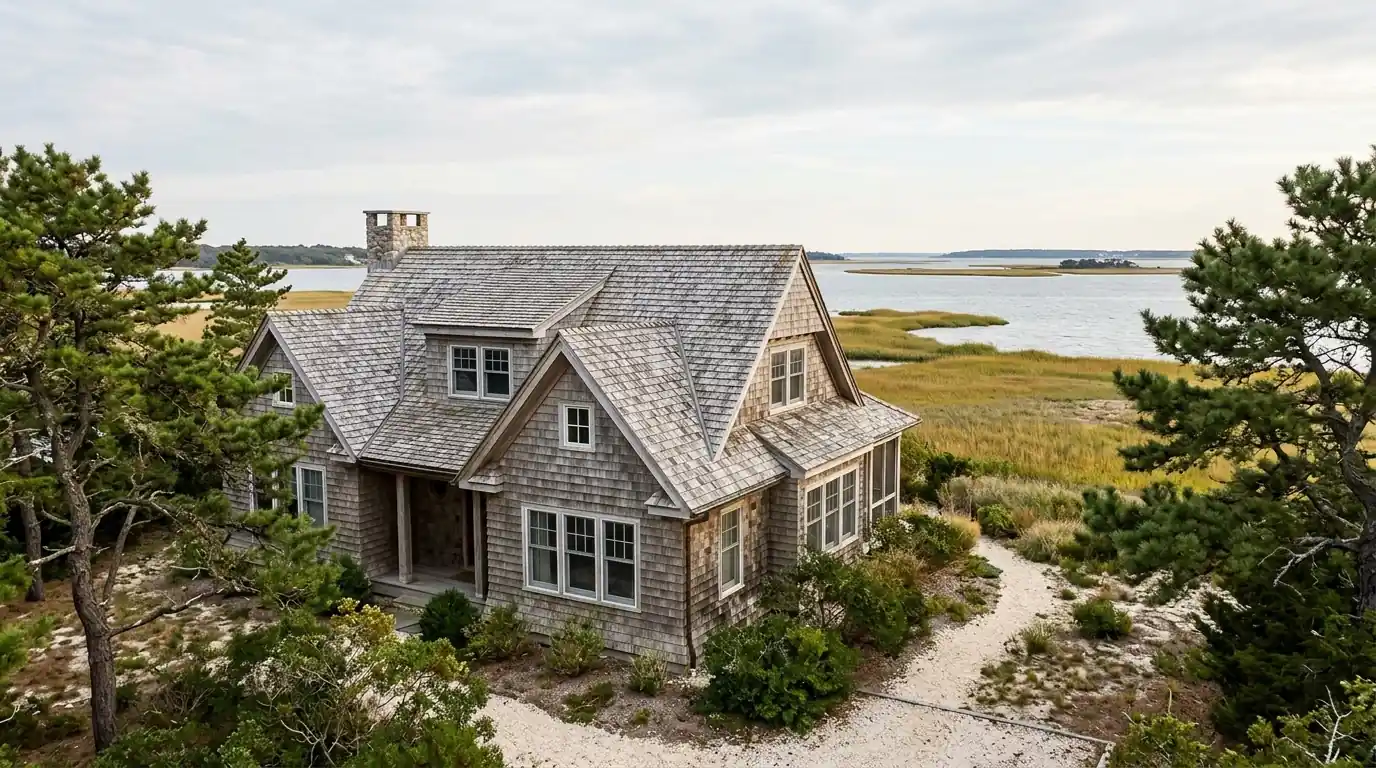
A cedar roof in Toms River can last 25 to 35 years if it's installed with breathing room underneath, stainless steel fasteners and regular cleaning. Signs it needs attention include cupped or split shakes, moss on shaded slopes, and rusty streaks from failing nails. We repair isolated damage and replace roofs that are past saving. Call (732) 419-1462.
Signs your cedar roof is asking for help
Cedar ages gradually, which makes problems easy to overlook until a leak appears. Here's what we look for when we climb a wood roof.
Cupping and curling
Shakes that curl at the edges or dish in the middle have dried unevenly, usually because the back side stays damp. Curled pieces catch wind and let driven rain slip underneath into the courses below.
Splits that line up
A split in one shake is normal. When splits fall directly above the gaps in the course below, water has a straight path to the underlayment, and that is where most cedar leaks begin.
Moss and dark patches
Green moss and black, soft areas on north slopes or under trees mean the wood stays wet too long. Left alone, those areas rot through within a few seasons.
Rust streaks below nails
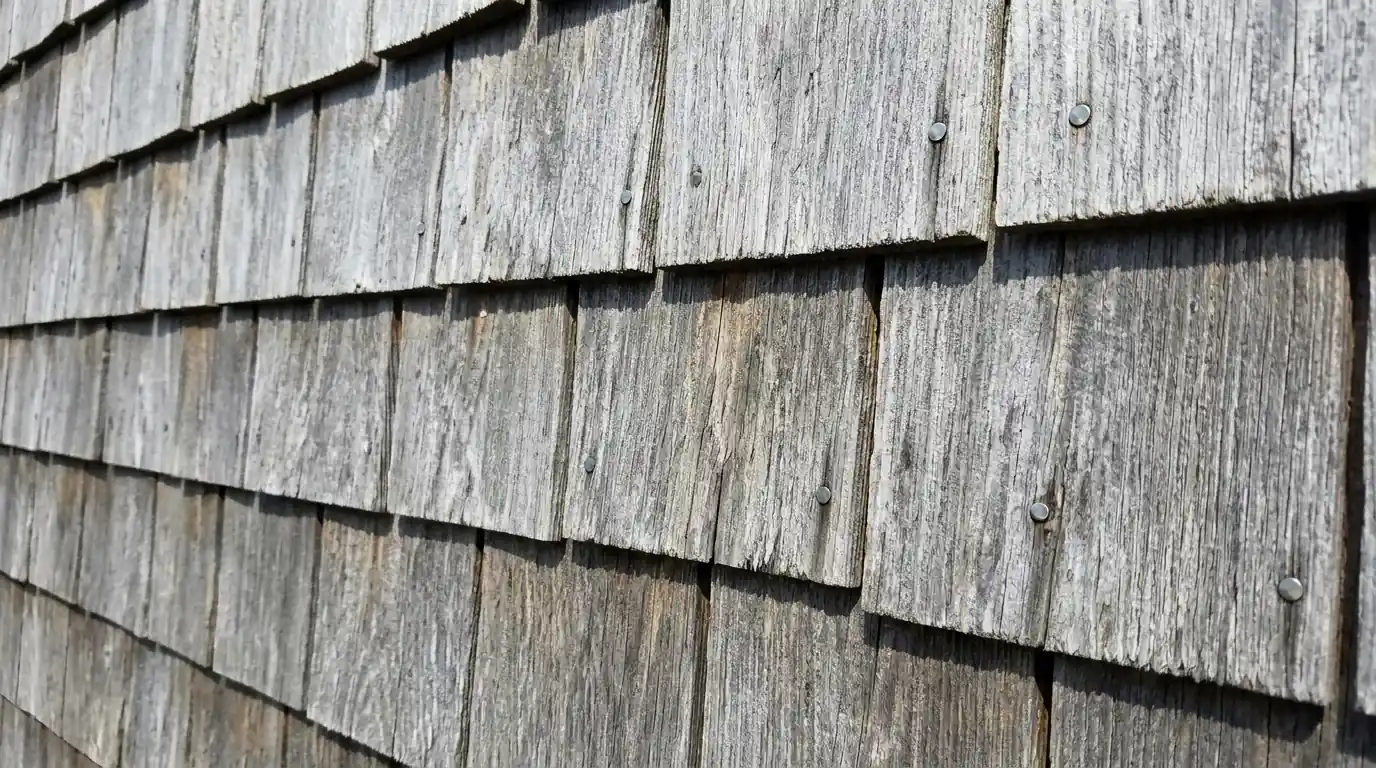
Plain steel or electro-galvanized nails corrode in salt air, leaving orange streaks and eventually letting shakes slide out of place. It's a sign the roof is losing its grip.
Thin, eroded shakes
Decades of sun and rain wear wood down until the butts are paper-thin and the grain stands up. At that point patching no longer holds, and replacement is the smarter spend.
Shakes or shingles: two different cedar looks
People use the words interchangeably, but cedar shakes and cedar shingles are different products with different personalities on a roof.
| Type | How it's made and looks | Good fit for |
|---|---|---|
| Hand-split and resawn shakes | Split face on top, sawn back; thick butts and rugged, irregular shadow lines | Rustic cottages and homes wanting a heavy, textured roof |
| Tapersawn shakes | Sawn on both sides but thick, so they read as tailored yet substantial | Colonials and shingle-style homes wanting crisp lines |
| Sawn cedar shingles | Thinner and smoother, laid at a smaller exposure for a refined, tight pattern | Smaller cottages, dormers, and homes with cedar shingle siding |
| Pressure-treated or fire-retardant grades | Factory-treated cedar that resists decay or meets stricter fire requirements | Shaded lots and homes where extra rot resistance justifies the cost |
How we build a cedar roof that can breathe
Wood shingles last longest when air moves under them and water drains away quickly. Each step below is designed around that idea.
Strip and inspect the deck
Old cedar is removed down to the deck or the original spaced boards. Many older homes have skip sheathing with gaps between boards, and we decide whether to keep it, fill it or overlay it.
Day 1Lay ice barrier and breathable mat
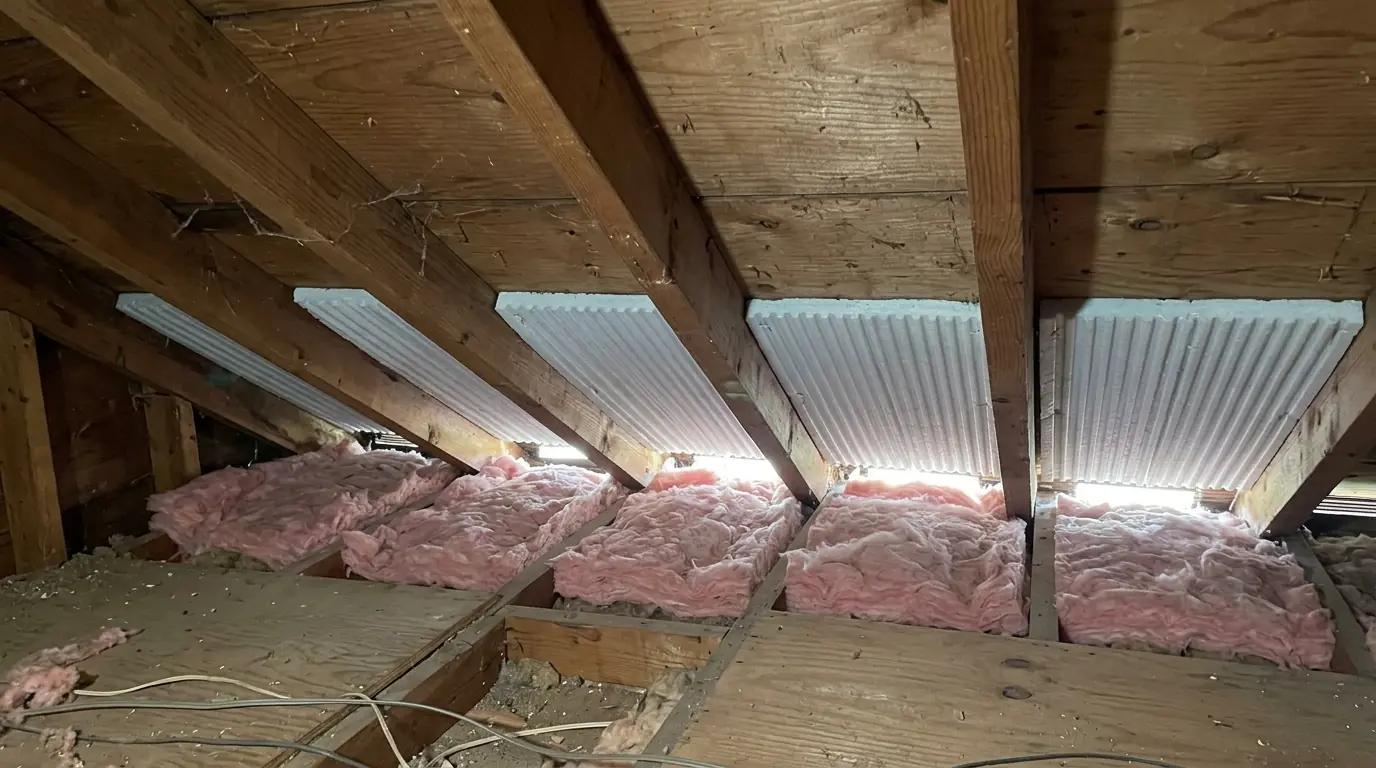
Ice and water barrier goes along eaves and valleys. Over the field, a three-dimensional ventilation mat such as Cedar Breather lifts the wood off the deck so both faces dry evenly after rain.
Day 1 to 2Install with stainless steel fasteners
Every shake or shingle is fastened with Type 316 stainless nails near salt water. They cost more than galvanized, but they won't rust out long before the cedar wears away.
3 to 7 daysKeep joints and gaps correct
Each piece gets a small side gap for swelling, and joints are offset at least an inch and a half from the course below. Interlay felt goes between courses on shakes.
Throughout installFinish hips, ridge and venting
Pre-built cedar hip and ridge units cap the peaks over a ridge vent, so warm, damp attic air escapes. We clean the site and pick up every stray nail with a magnet.
Final day
What cedar roof work costs around Toms River
Cedar is labor-intensive and material prices change with supply. These are 2026 ranges for typical Ocean County homes.
| Work | Typical range | What moves the number |
|---|---|---|
| Full cedar shake replacement | $34,680 to $62,450 | Shake grade, roof size, pitch and deck work |
| Sawn cedar shingle replacement | $31,290 to $55,860 | Exposure size and number of courses |
| Section repair, 20 to 60 pieces | $740 to $2,380 | Access, pitch and finding pieces of the right thickness and color |
| Cleaning and preservative treatment | $1,960 to $4,870 | Roof area, moss load and product used |
These are typical ranges, not a quote, since cedar pricing depends heavily on what we find once we're on the roof.
Keeping a wood roof healthy between replacements
Cedar rewards small, regular attention. Clearing pine needles and leaves out of keyways and valleys each fall stops debris from holding water against the wood. Trimming branches back from the roof lets sun reach shaded slopes and dries them faster after a storm.
Every few years, a gentle cleaning removes moss and algae without the high-pressure washing that strips wood fibers. A breathable preservative can then slow graying and decay. Avoid paints and glossy sealers that sit on the surface, since they trap moisture inside the wood and speed up rot. Oil-based treatments that soak in and let the cedar breathe are the safer choice on a coastal roof. If you'd rather never think about it, synthetic shake offers a similar look with no treatment cycle.
When a few shakes split or slip, a targeted repair keeps the roof going. We slide out damaged pieces, cut new ones to thickness and fasten them under the course above without disturbing the surrounding wood.
Cedar roof plus cedar siding: plan them together
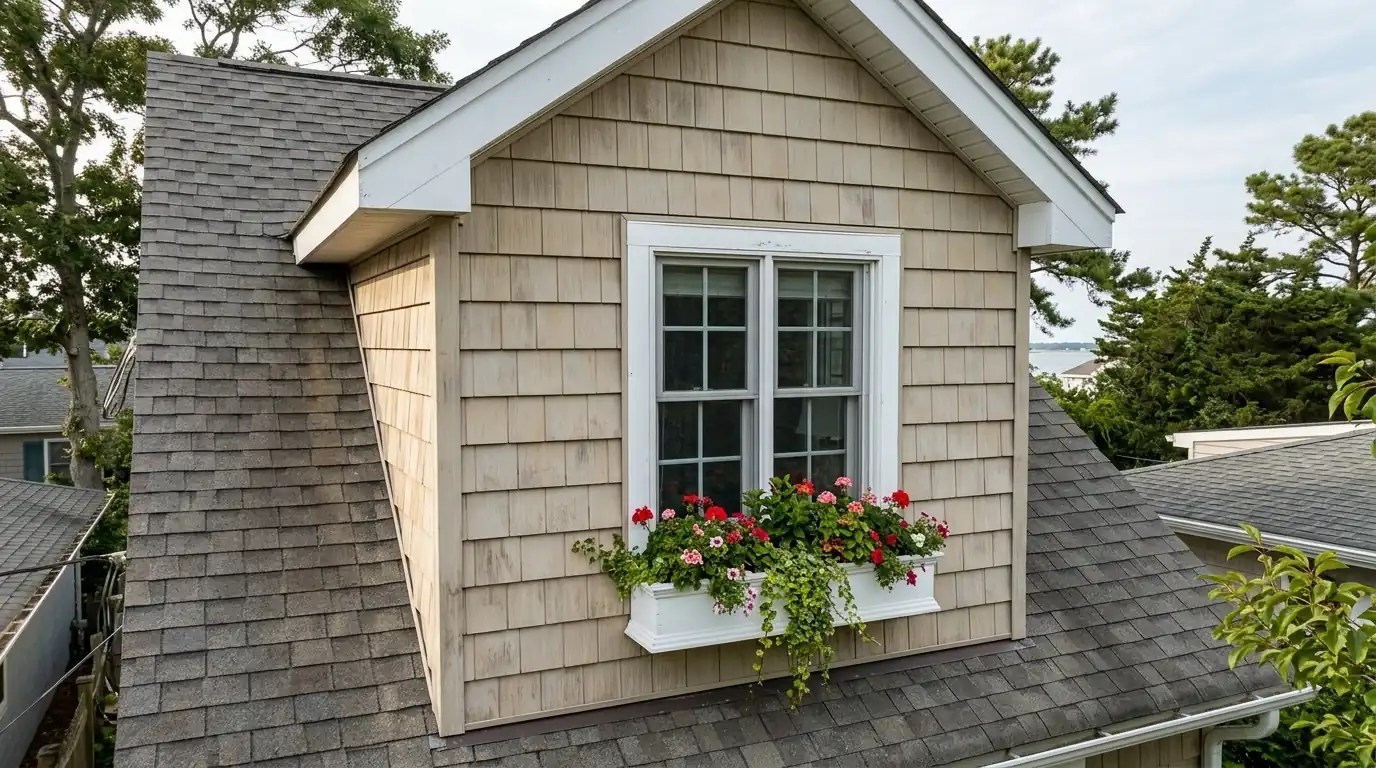
Many shore cottages wear cedar on both the roof and the walls. When the roof is due, it often makes sense to look at the cedar shake and clapboard siding at the same time. Both age in similar ways, stainless fasteners serve both, and replacing worn wall shingles alongside the roof keeps the colors weathering together. Even if the siding has years left, we check the trim, sidewall flashing and kickouts where roof meets wall, since that junction is where water damage tends to hide.
Making cedar last in Ocean County's damp, salty air
Toms River gives cedar a hard time. Humid summers, foggy mornings off Barnegat Bay and shade from pitch pines and oaks keep wood damp for long stretches. Salt mist corrodes ordinary nails, especially in bay sections like Bay Shore and on the barrier island. Nor'easters drive rain upward into the courses, which is why tight joint offsets and good underlayment matter so much here.
Cedar still appears all over the region, from older cottages near the water to shingle-style colonials built later. Many of those original roofs were laid directly over solid decking or with steel nails, which explains why they're failing early. When we replace them, the breathable mat and stainless fasteners make the biggest difference. We also cut back overhanging limbs and clear valleys where pine needles collect, since sunlight and airflow do as much for a cedar roof as anything we nail down.
Where we do this work most
We work across all of Toms River (08753, 08755 and 08757) and these neighboring towns every week, along with the rest of Ocean County and southern Monmouth County.
- Silverton, Toms River08753
- Pleasant Plains, Toms River08755
- West Dover, Toms River08755
- Ortley Beach, Toms River08751
- Lakewood08701
- Brick08723
- Jackson08527
- Howell07731
- Manchester08759
- Berkeley Township08721
- Lacey Township08731
- Stafford Township08050
- Barnegat08005
- Wall Township07719
- Freehold07728
- Point Pleasant08742