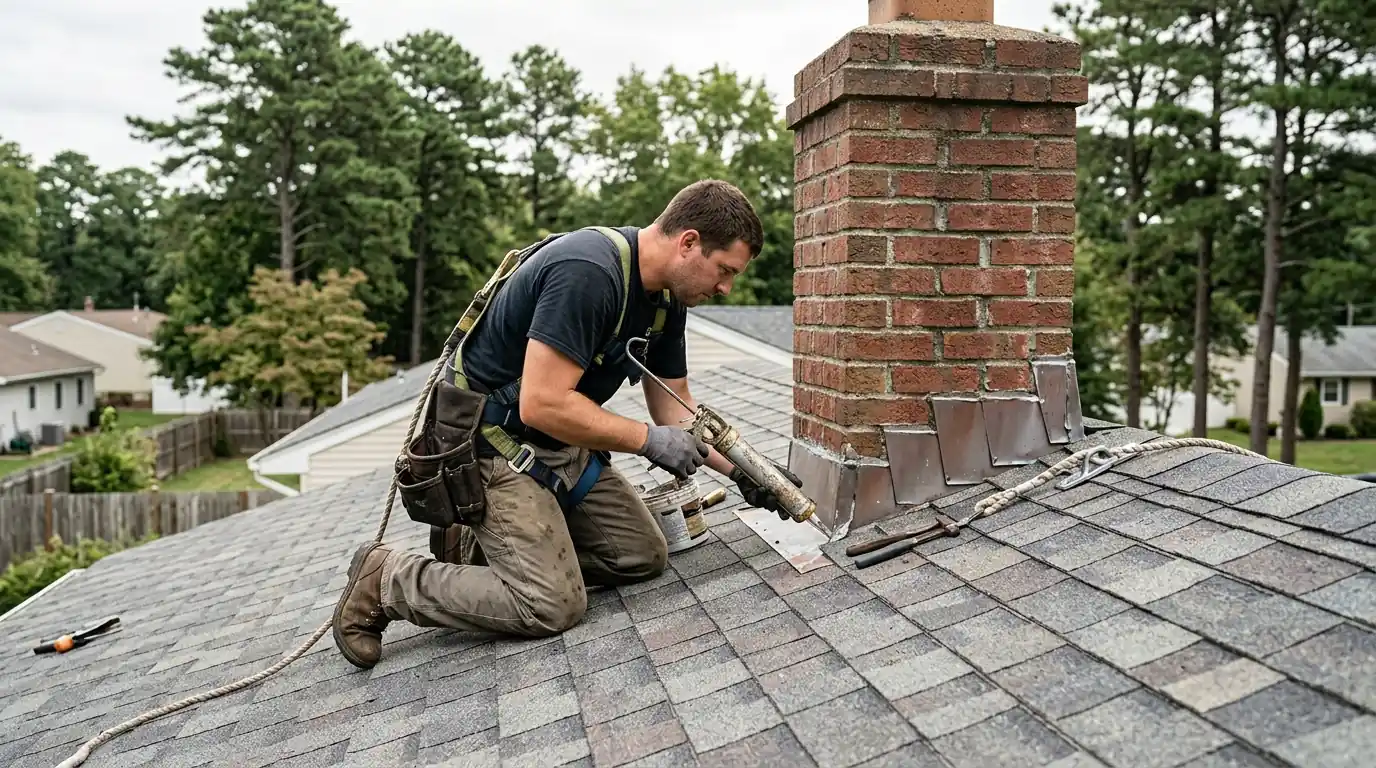
Most roofs around Toms River benefit from a tune-up every one to two years, plus a quick look after a hard nor'easter. On a typical visit we reseal exposed flashing and fasteners, replace pipe boots that have split, secure loose or lifted shingles, and clear valleys and gutters. Call (732) 419-1462 to put your roof on a schedule.
What our roofers check and fix on a tune-up visit
A tune-up is hands-on work, not a walk around the yard with binoculars. Here is what we go over on a typical asphalt shingle roof, and most of it gets fixed during the same visit.
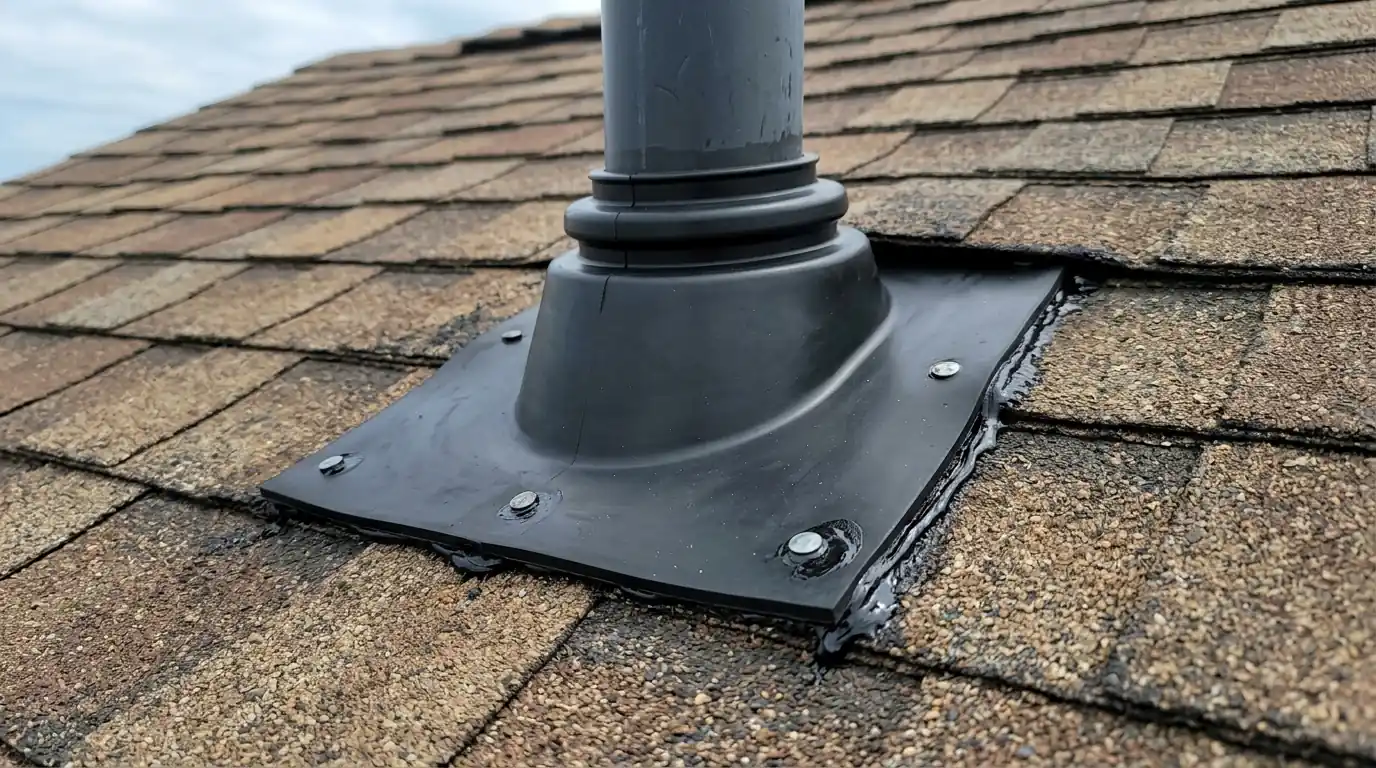
- Rubber pipe boots on plumbing vents, replaced when the collar has cracked or pulled away from the pipe
- Step and counter flashing at sidewalls and chimneys, resealed where old caulk has shrunk or split
- Exposed nail heads on ridge cap and flashing, sealed so they can't wick water into the deck
- Lifted or creased shingle tabs, hand-sealed with roofing cement or swapped for new ones
- Valleys cleared of pine needles, oak leaves and granule buildup that slow runoff
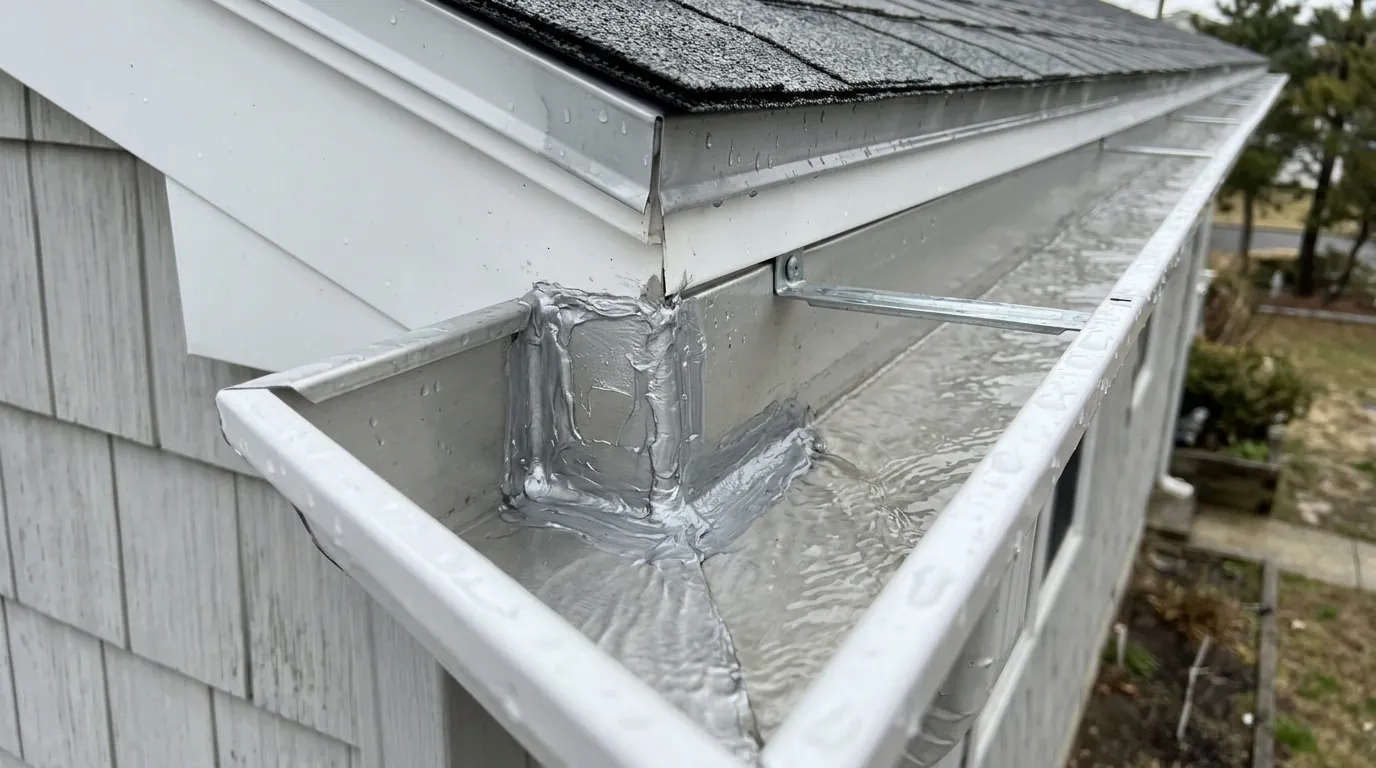
- Gutters and downspouts flushed so water leaves the roof edge quickly
- Ridge and box vents checked for wind damage, nests and clogged screens
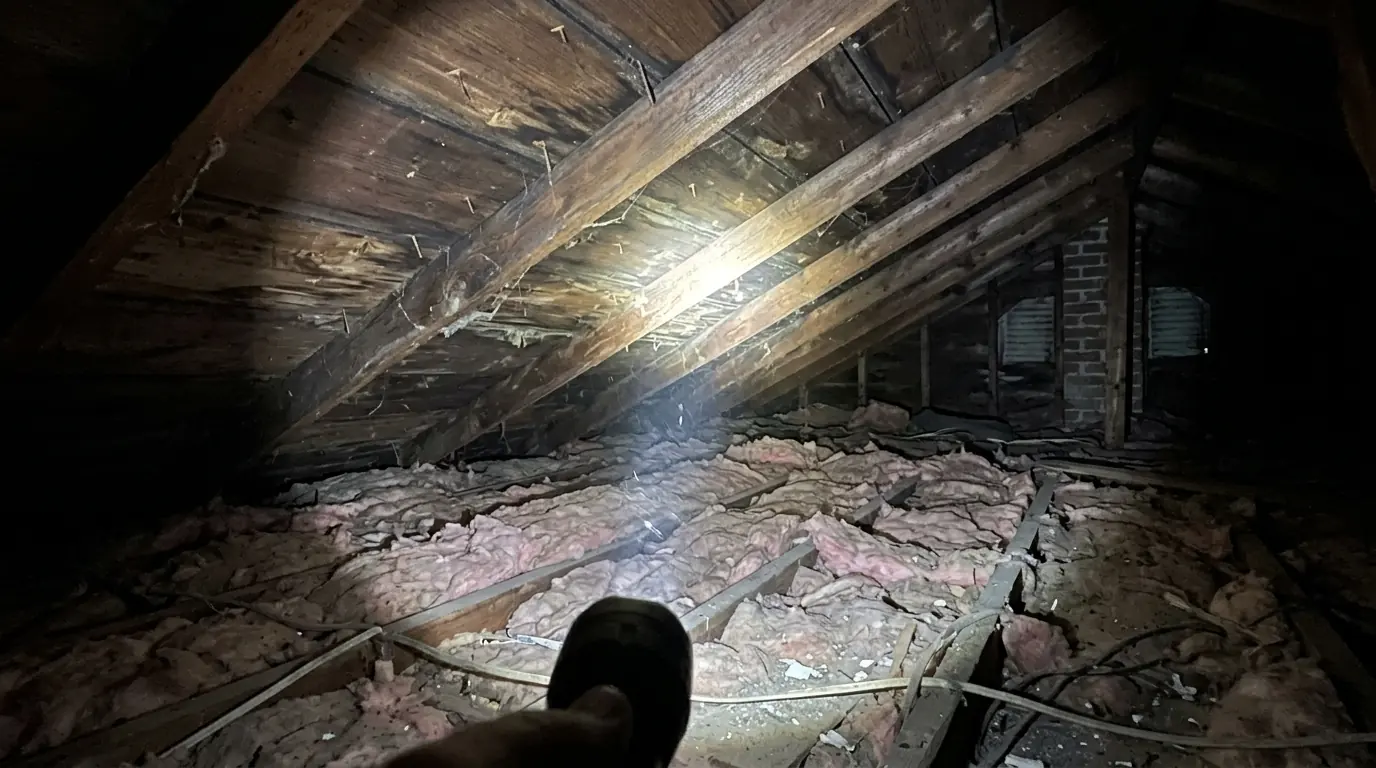
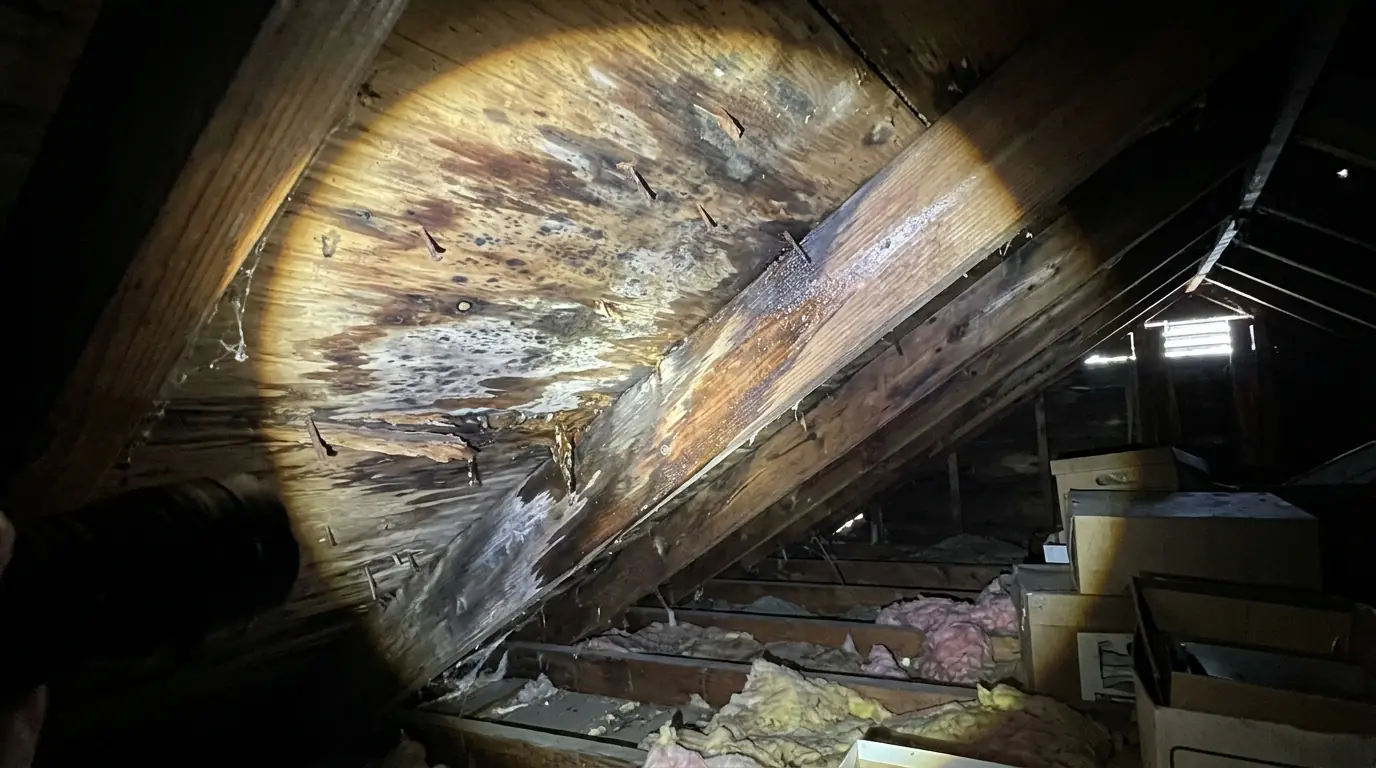
- A look into the attic from the hatch for daylight, damp sheathing or fresh stains
When to book a tune-up through the shore year
Consistency matters more than the exact month, but each season near the bay leaves its own marks on a roof.
| Timing | What the roof just went through | Where we spend the most time |
|---|---|---|
| Early spring (March to April) | Freeze-thaw cycles, snow load, winter nor'easters | Pipe boots, lifted tabs, ice-stressed gutters and hangers |
| Late spring (May to June) | Pollen, pine shedding, the first heavy thunderstorms | Valleys, gutter outlets, sealant at skylights and chimneys |
| Fall (October to November) | Summer heat, strong UV, remnants of tropical storms | Sealing ahead of winter, clearing leaves, checking ridge cap |
| After any major storm | Gusts strong enough to lift shingles or drop limbs | Missing or creased shingles, impact marks, flashing pulled loose |
Small wear points that turn into ceiling stains
Most leaks we trace start at one of these spots. None of them costs much on its own, which is the whole point of catching them early.
Cracked pipe boots
The rubber collar around a plumbing vent usually gives out years before the shingles do. Sun and heat split it, and rain runs straight down the pipe into the attic, often landing on a bathroom ceiling first.
Shrunken sealant
Caulk and roofing cement at walls, chimneys and skylights dry out and pull away from the metal. A bead that looked solid three summers ago can have a gap you could slide a business card into.
Wind-lifted tabs
Once a shingle's adhesive strip lets go, every gust lifts and drops it. The tab creases at the nail line, then tears off in the next storm and leaves the nails beneath it exposed.
Clogged valleys
Valleys carry more water than any other part of the roof. Needles and leaves pile up there, dam the flow and push water sideways under the shingle edges during a downpour.
Backed-up gutters
When gutters overflow, water sits against the drip edge and fascia. That rots the board behind the gutter and, in winter, gives ice a head start at the roof edge.
What a roof tune-up usually costs in Toms River
These are typical 2026 ranges for single-family homes in Ocean County. Your number depends on roof size, pitch, height and how much we find once we're up there.
| Work | Typical range | What moves the number |
|---|---|---|
| Standard tune-up visit (one or two story, walkable pitch) | $285 to $640 | Roof size, number of penetrations, how much sealing is needed |
| Pipe boot replacement | $165 to $390 each | Boot style, pipe diameter, shingle condition around it |
| Resealing chimney or sidewall flashing | $240 to $780 | Length of flashing, chimney width, whether step flashing must be replaced |
| Replacing a handful of loose or damaged shingles | $215 to $560 | Number of shingles, how easily the color and style can be sourced |
| Valley and gutter clearing added to a visit | $135 to $310 | Linear feet, debris volume, roof height |
These are general ranges, not a quote. We give you a firm price after we've seen the roof.
Why a scheduled visit costs less than waiting for a drip
By the time water shows up on drywall, it has usually been getting in for a while. Insulation soaks it up first, then the ceiling board, and only then do you see a stain. A tune-up moves the repair to the cheap end: a new boot or a bead of sealant instead of a section of decking, new insulation and a repainted ceiling.
There's also the roof's overall life to think about. Shingle makers such as GAF and Owens Corning design their products around proper installation, ventilation and reasonable upkeep, and their published warranty terms generally exclude damage from neglect. Keeping a simple record of each visit, with photos, gives you a clear history if you ever need it. When a tune-up shows a roof is past saving, we'll say so plainly and walk you through your replacement options.
What about the black streaks and moss on the north side?
Those dark streaks are usually algae, a common sight on shaded slopes after humid shore summers. They look bad but rarely hurt the shingle on their own. Moss is different: it holds moisture against the mat and can lift tabs as it grows. We note both on every visit, remove moss by hand where it's taking hold, and talk through gentle cleaning options. We never pressure wash shingles, since that strips the granules that protect them from the sun.
How the bay, the pines and the wind wear on Toms River roofs
Roofs around Toms River take weather from two directions. Nor'easters push wind-driven rain off the ocean and across Barnegat Bay, while the pine and oak cover inland, from Pleasant Plains out toward Berkeley Township, drops needles that fill valleys and gutters all year. Summers are humid, which keeps north slopes damp and gives algae and moss an easy start.
A lot of the housing here is 1950s to 1980s ranches, capes, split-levels and bi-levels, often on their second or third roof, with older vent stacks and chimneys that carry more flashing than newer homes. Raised homes rebuilt after Sandy have taller walls and harder access, so wind hits them harder. Single-story homes in 55+ communities have low, simple roofs, but owners there usually prefer someone else climb the ladder, which is exactly what a tune-up is for. Bayfront homes in sections like Shelter Cove also see sealant age faster under strong sun and salt spray.
Where we do this work most
We work across all of Toms River (08753, 08755 and 08757) and these neighboring towns every week, along with the rest of Ocean County and southern Monmouth County.
- Silverton, Toms River08753
- Pleasant Plains, Toms River08755
- West Dover, Toms River08755
- Ortley Beach, Toms River08751
- Lakewood08701
- Brick08723
- Jackson08527
- Howell07731
- Manchester08759
- Berkeley Township08721
- Lacey Township08731
- Stafford Township08050
- Barnegat08005
- Wall Township07719
- Freehold07728
- Point Pleasant08742