If your Toms River roof is open to the weather or leaking hard, call (732) 419-1462 at any hour. We answer 24/7, cover the opening with a weighted, fastened tarp or a temporary membrane, help you slow the water inside, and then schedule the permanent repair once the storm passes and the deck has been checked.
When a roof problem can't wait until morning
Some roof damage can sit for a few days. These situations can't, because every hour of rain adds to the cost of the drywall, insulation and flooring underneath.
A tree or large limb on the roof
Pitch pines and oaks drop heavy limbs in a nor'easter. Even if the branch looks small from the yard, it can crack rafters or punch through sheathing, and rain then runs straight into the attic.
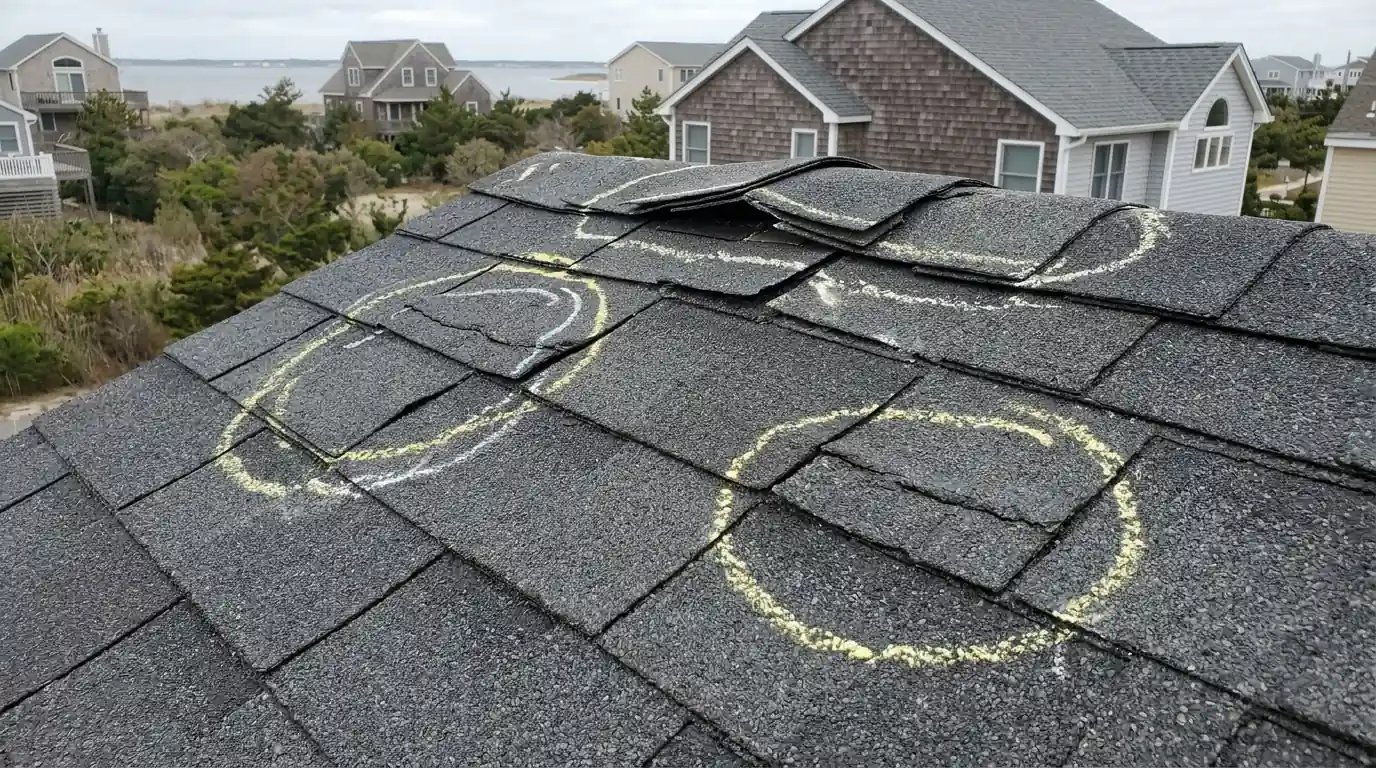
A whole section of shingles gone
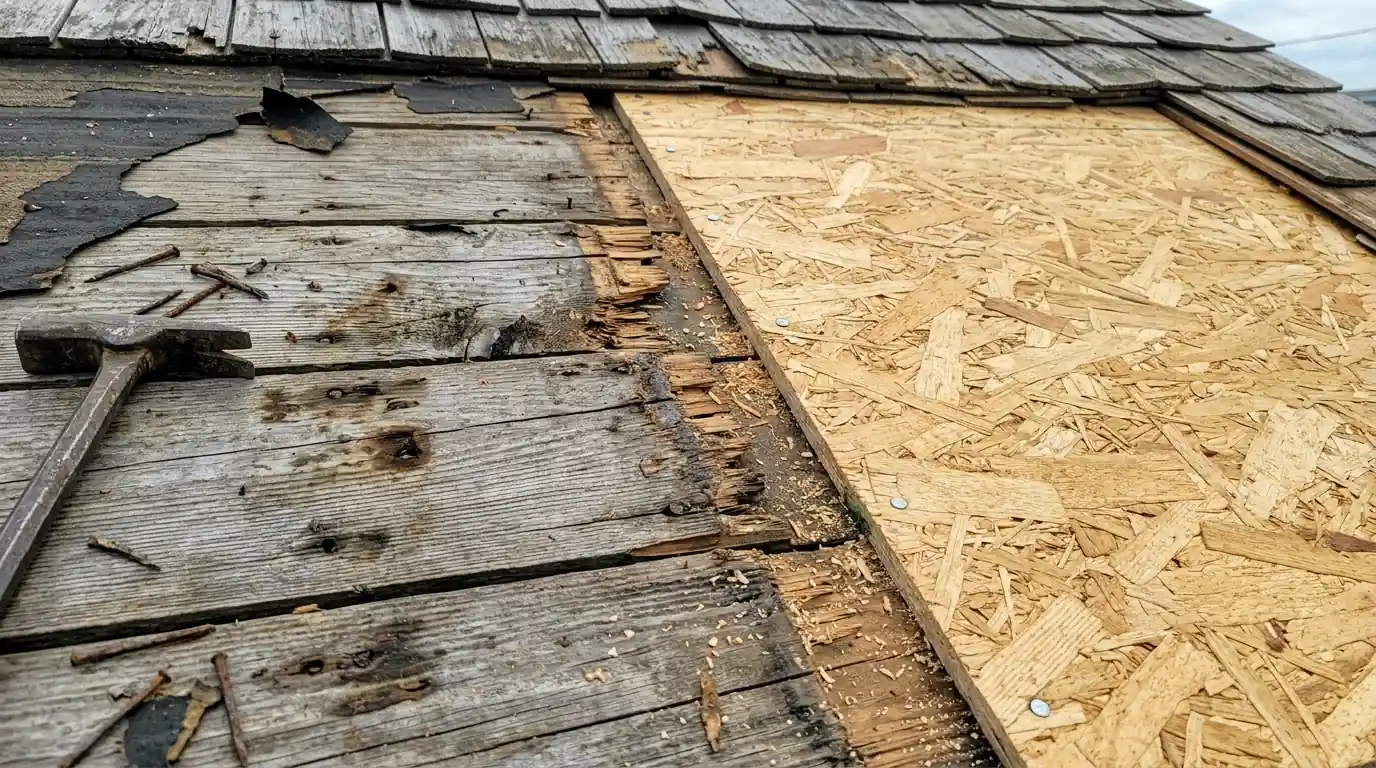
When wind strips a run of shingles and the felt beneath them, bare plywood is left facing the sky. Wet OSB swells and weakens quickly, so covering it fast often saves the deck itself.
Water dripping from a light fixture
Water that finds an electrical box is a safety problem first. Shut the circuit off at the panel, keep people away from that room and call us so we can stop the source above.
A sagging, bulging ceiling
A drooping ceiling usually means water is pooling on top of the drywall. It can drop without warning, so keep the room clear and put a bucket under the low point before anything else.
Flashing torn loose and flapping
Loose metal at a wall or chimney works back and forth in the wind, tearing shingles and opening a bigger gap each minute. Once it starts banging, it rarely settles back down on its own.
What you can safely do while we're on the way
Please stay off the roof and off ladders in wind or rain. Everything useful right now happens indoors.
Make the room safe
Turn off breakers feeding any wet fixtures or outlets. Move people and pets out. If the ceiling is bulging, keep everyone clear of it, because a waterlogged ceiling panel is heavy enough to hurt someone.
First 5 minutesCatch and steer the water
Set buckets, bins or a trash can under each drip. A small puncture at the lowest point of a bulge, with a bucket beneath, lets water drain in one place instead of spreading across the ceiling.
5 to 15 minutesMove what can't get wet
Pull rugs, electronics, papers and furniture out of the path. Lay towels at doorways to keep water from traveling into the next room or soaking into hardwood floors.
15 to 30 minutesTake photos as you go
Photograph the ceiling, the drips and anything damaged before you move it. If a limb is on the roof, take pictures from the ground. These images help later with repairs and with any insurance conversation.
As you work
How we dry in an open roof during a storm
Our first visit is about stopping water, not finishing the repair. Here's what happens once our roofers arrive.
Read the roof from the ground first
We look at wind, footing and any limb still resting on the roof before anyone climbs. If it's unsafe to go up in the dark or in a gale, we work from the attic until conditions allow.
10 to 20 minutesClear debris that can be moved safely
Smaller branches come off by hand. A large limb that has gone through the roof may need a tree crew, and we tarp around it when it can't be lifted out right away.
15 to 60 minutesCover the opening past the ridge
A heavy tarp is run from below the damage up over the ridge onto the other slope, so water can't run underneath it. Edges are wrapped around boards and fastened, not left to flap in the wind.
30 to 90 minutesCheck the attic and the inside
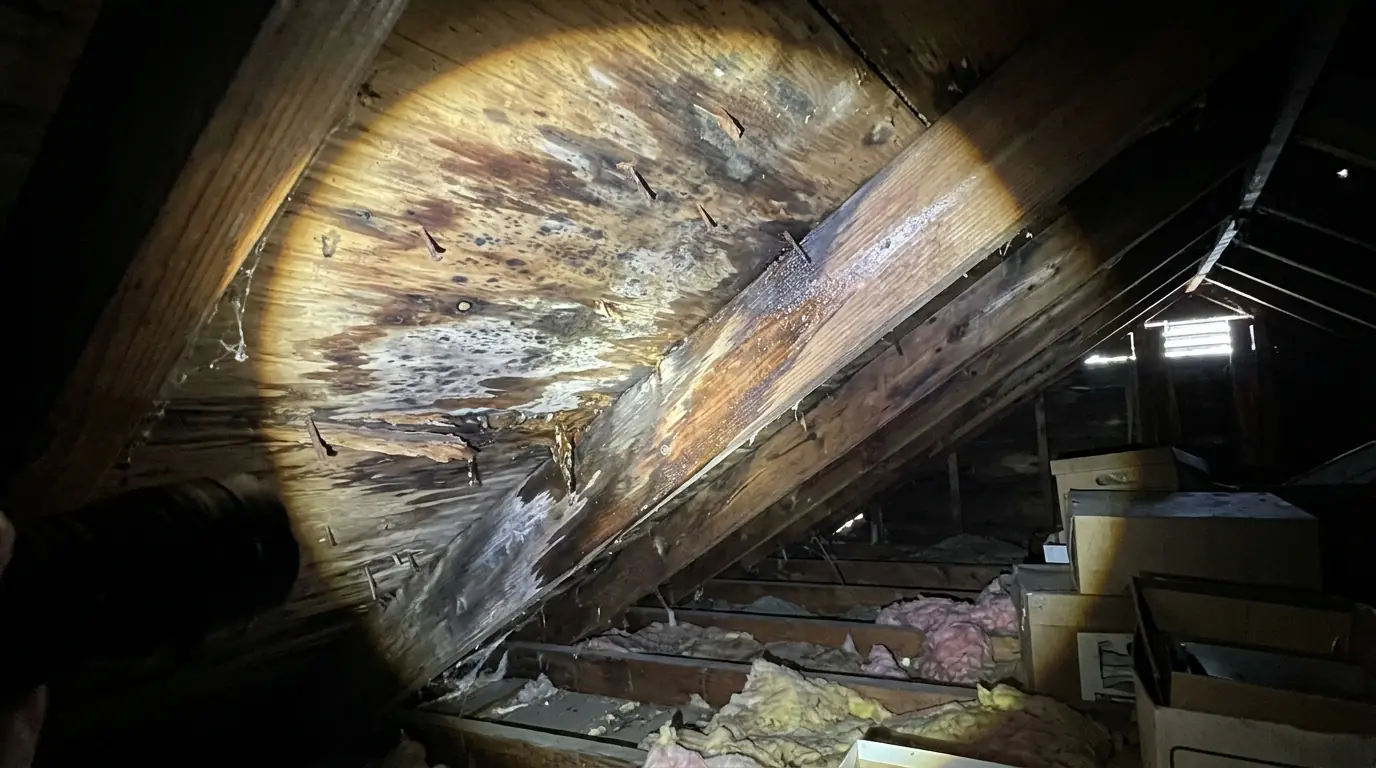
We look at the attic for soaked insulation and broken framing, then tell you which rooms need drying. Wet insulation pulled out early keeps ceilings from staying damp for weeks.
20 to 40 minutesSet the permanent repair
Once the weather settles, we come back to replace damaged decking, underlayment and shingles. You get photos of the damage and a written scope so you know exactly what the lasting repair includes.
Next clear weather window
Typical costs for emergency tarping and the repair that follows
Emergency work is priced by the size of the opening, the height and pitch of the roof, and what the weather allows. These 2026 ranges are for Ocean County homes.
| Work | Typical range | What moves the number |
|---|---|---|
| Emergency tarp on a small opening | $465 to $1,180 | Story height, roof pitch and whether boards are needed to hold the edges |
| Large tarp spanning a full slope | $1,240 to $2,860 | Slope size, ridge length and wind conditions while installing |
| Temporary peel-and-stick dry-in over exposed deck | $890 to $2,370 | Square footage and whether the deck is dry enough for the membrane to bond |
| Permanent repair after limb damage | $2,650 to $9,400 | Number of broken rafters, sheathing replaced and how much roofing must match |
These ranges depend on the damage, roof height and access, and time of day; we explain the price on site before work starts, and nothing here is a quote.
Why a tarp is a bridge, not a fix
A well-fastened tarp can hold back rain for weeks, but sun breaks down the plastic and wind keeps working the edges. We'd rather not leave one up much past a few weeks. The permanent repair replaces any wet sheathing, puts down new underlayment and ice barrier where it belongs, and ties new shingles into the old.
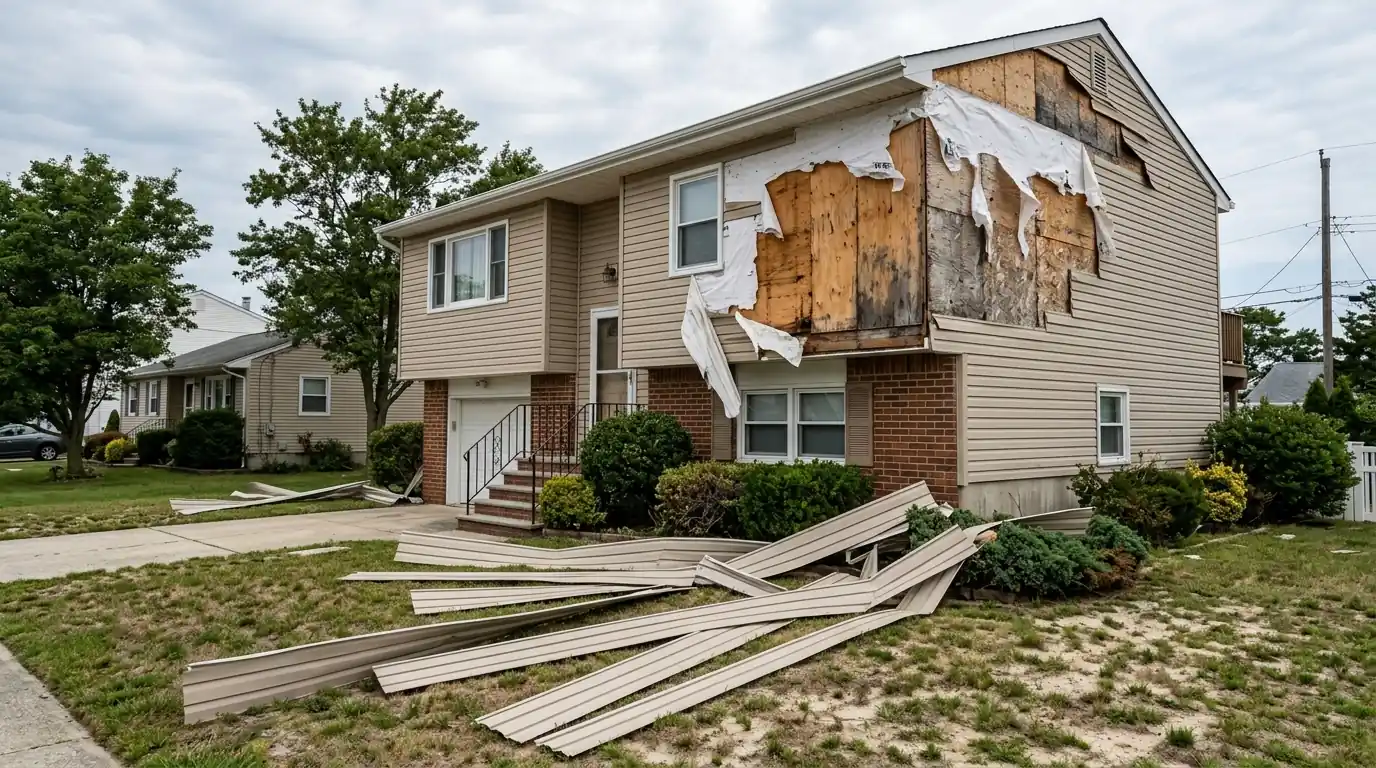
If the limb or wind did harm across several slopes, the follow-up work is often closer to a full storm damage repair, and torn panels on the walls go to our siding repair side. Our guide on documenting wind damage for an insurance claim explains what photos and notes help most.
Emergency roof calls along Barnegat Bay and the pines
Most of our late-night calls come during nor'easters and summer thunderstorms. A coastal low can blow for two days straight, and gusts off Barnegat Bay hit waterfront sections like Bay Shore, Coates Point and Shelter Cove first. Inland in Pleasant Plains and West Dover, the danger is overhead: tall pitch pines and oaks shed limbs when the ground is soaked and the wind turns.
Raised homes on the barrier island and along the bay lagoons add another challenge. A roof that sits three stories up needs more setup before anyone can safely climb in wind, so we sometimes start inside the attic and finish the tarp at first light. In the 55+ communities in the township, where many homes are single-story ranches with low-slope roofs, a tarp often goes on quickly, but we take extra care to keep debris off walkways and neighbors' yards.
Where we do this work most
We work across all of Toms River (08753, 08755 and 08757) and these neighboring towns every week, along with the rest of Ocean County and southern Monmouth County.
- Silverton, Toms River08753
- Pleasant Plains, Toms River08755
- West Dover, Toms River08755
- Ortley Beach, Toms River08751
- Lakewood08701
- Brick08723
- Jackson08527
- Howell07731
- Manchester08759
- Berkeley Township08721
- Lacey Township08731
- Stafford Township08050
- Barnegat08005
- Wall Township07719
- Freehold07728
- Point Pleasant08742