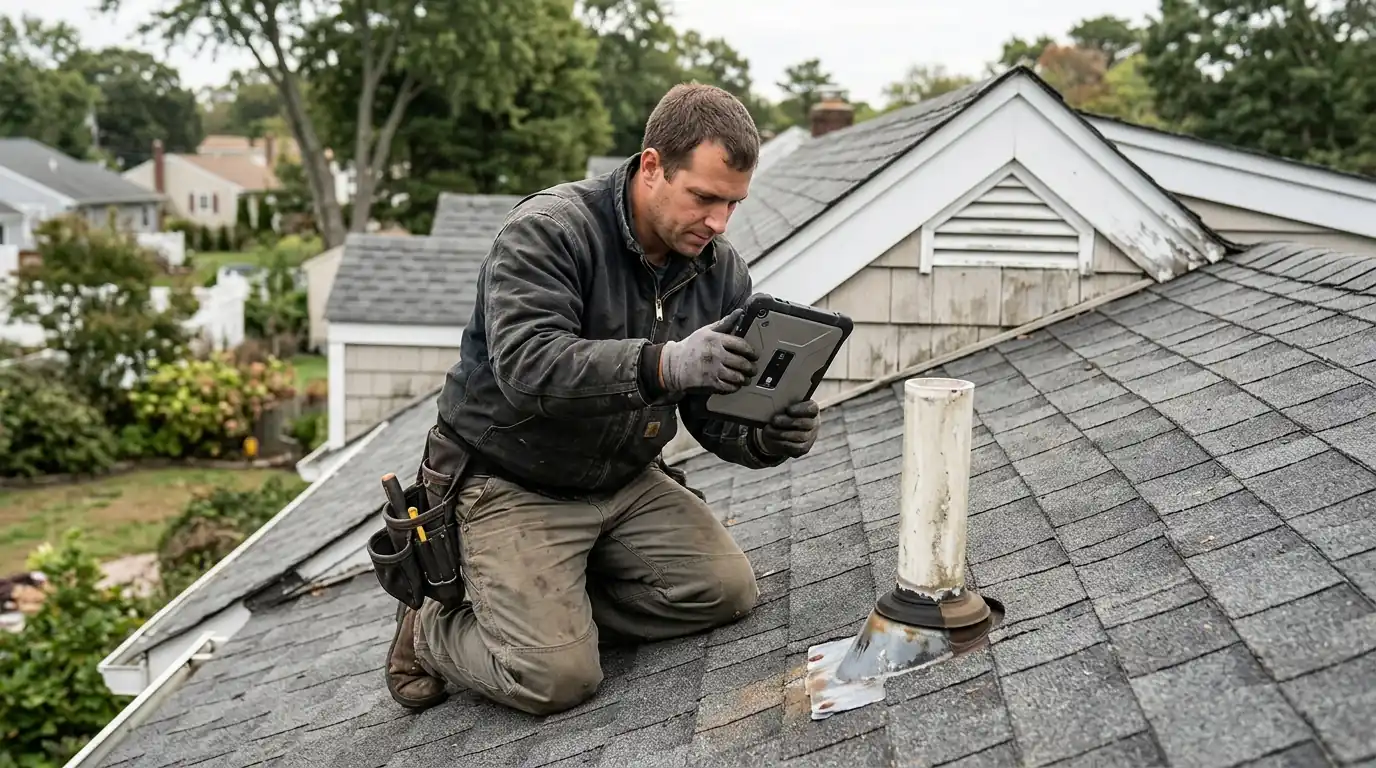
A roof inspection is a hands-on check of your shingles, flashing, vents, gutters and attic, ending in a photo report that ranks what needs attention now, soon, or simply watching. Around Toms River it makes sense after a hard nor'easter, before buying a house, and every two or three years otherwise. Call (732) 419-1462 to set one up.
What we look at on the roof and in the attic
A proper inspection covers more than a quick glance from a ladder. These are the areas we work through on every house, along with what each one tells us.
Shingle field
We check for creased or missing tabs, granule loss, curling, cracking and blistering. We also lift a few tabs gently to see whether the sealant strips still hold, since unsealed shingles are the first to blow off in a gust.
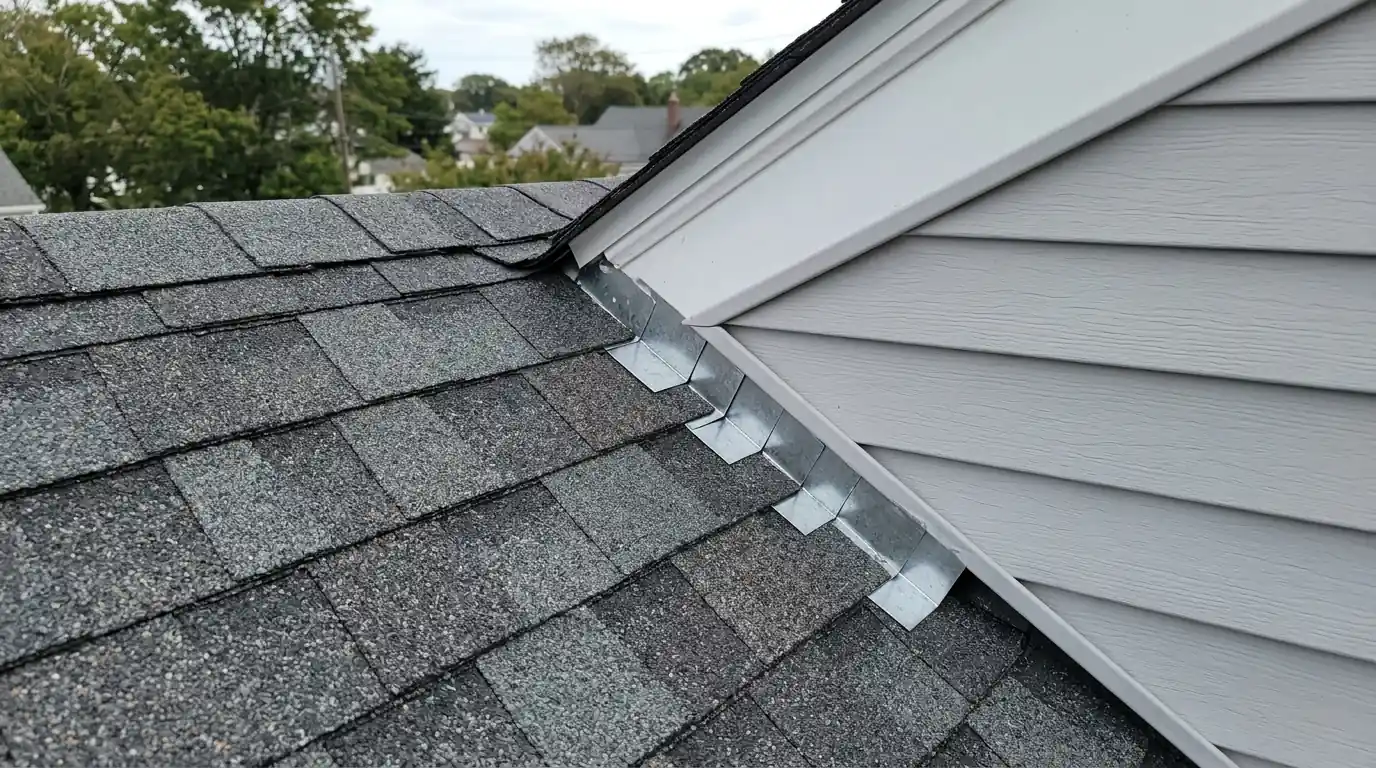
Flashing
Step flashing along walls, counter flashing at chimneys, skylight kits such as VELUX flashing frames, and valley metal all get a close look. Gaps, rust and dried-out sealant at these joints cause more leaks than worn shingles do.
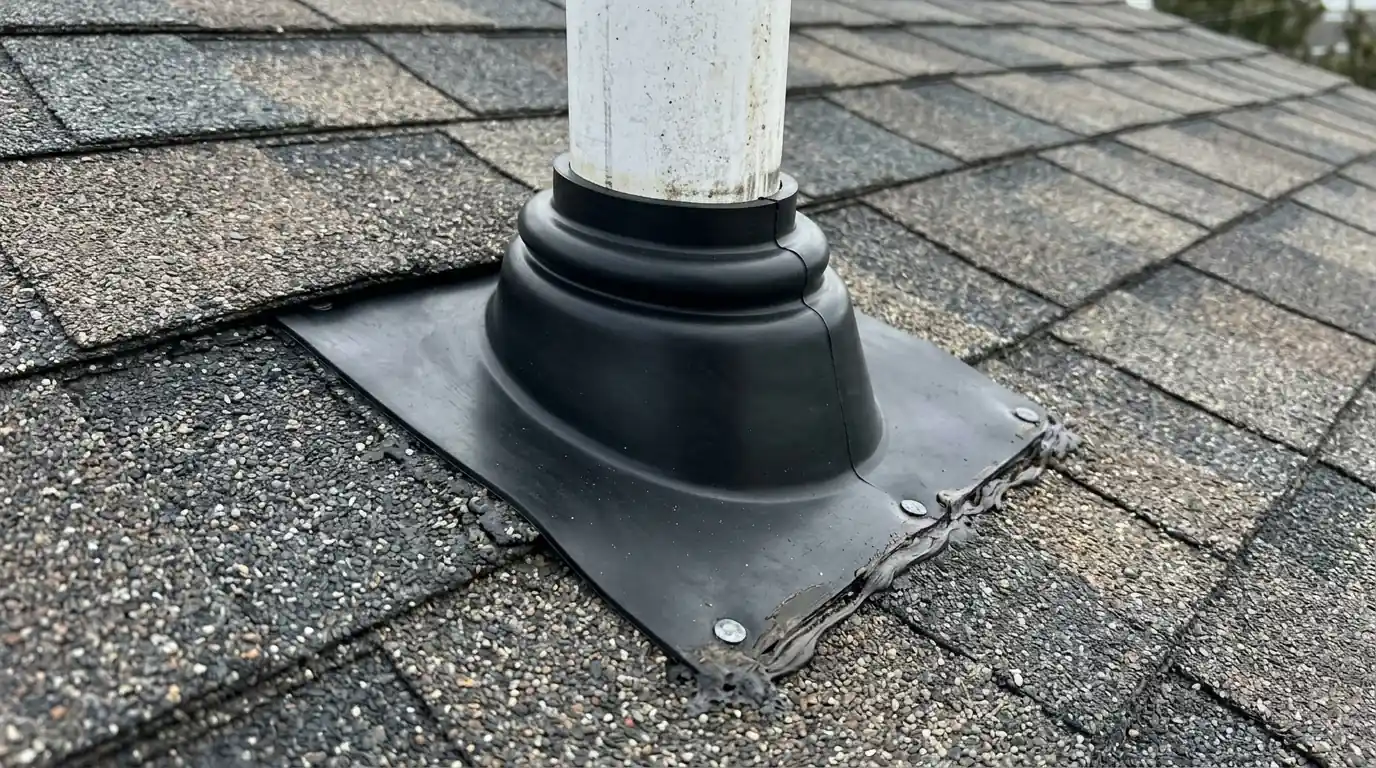
Pipe boots and vents
Rubber collars on plumbing vents crack in the sun after ten years or so. We check every boot, every bathroom and kitchen exhaust cap, and the ridge vent for crushed or missing sections.
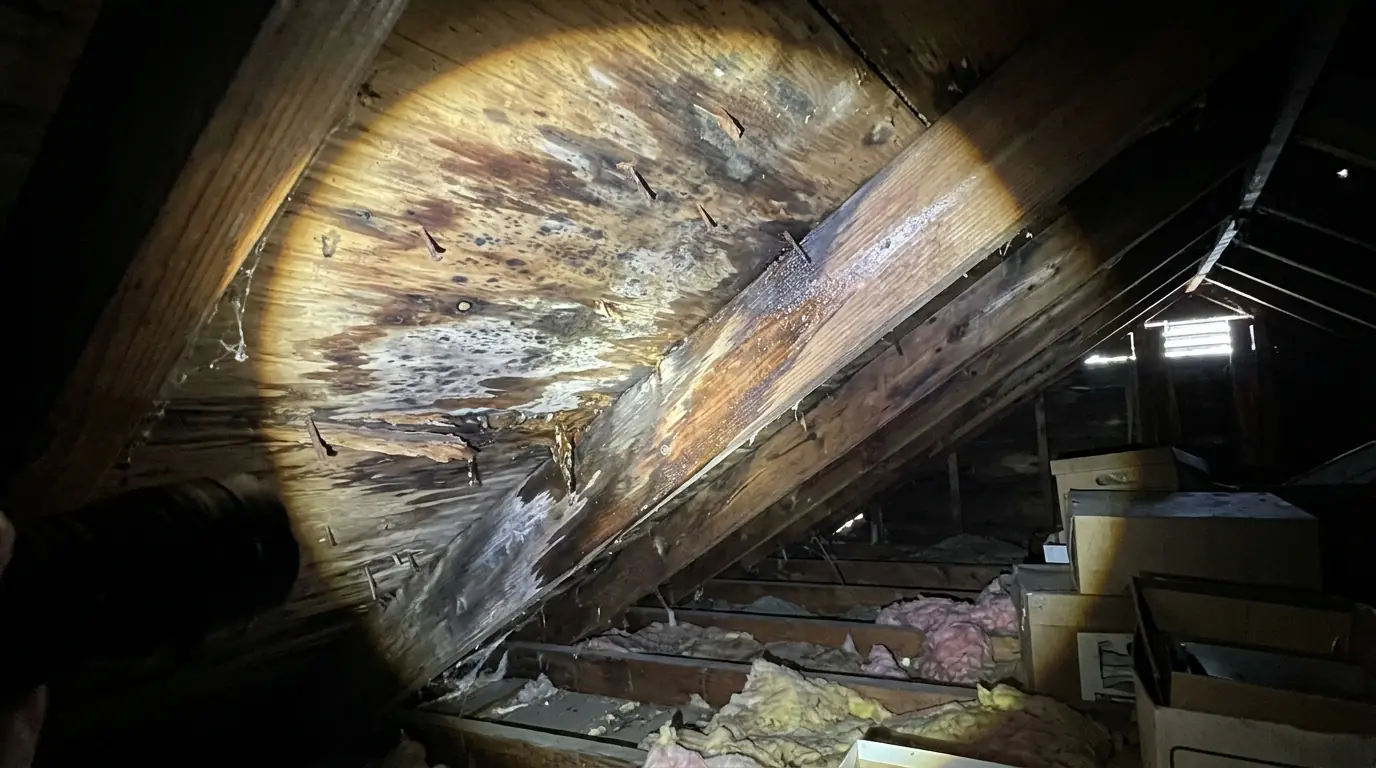
Attic sheathing
From inside, we look for water stains, dark mold spotting, frost marks and daylight around nails. A flashlight on the underside of the roof often reveals problems the shingles above still hide.
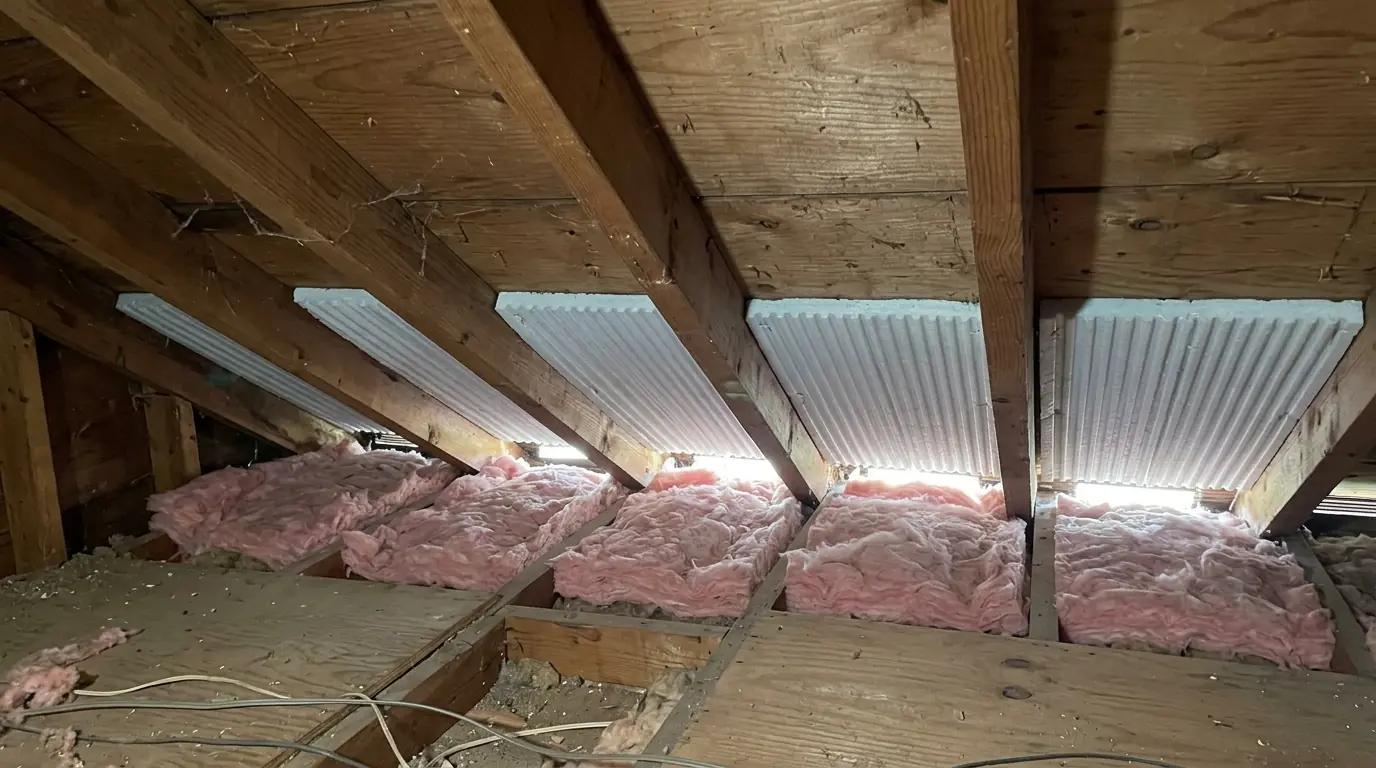
Ventilation balance
We compare soffit intake against exhaust at the ridge or gable. An attic that can't breathe cooks shingles in summer and builds frost on the plywood in winter, both of which shorten roof life.
Gutters and edges
Drip edge, fascia, gutter pitch and downspout discharge are part of the roof system. Overflowing gutters and rotted fascia show up first along the eaves, often before any leak reaches the ceiling.
Chimney and masonry
Cracked crowns, missing caps and loose mortar joints let water into the chimney chase. We note them along with the roof flashing, since the two problems often look identical from inside the house.
When an inspection is worth the call
Not every roof needs a yearly visit. Timing depends on age, exposure and what just happened to the house. Here's how we'd think about it for homes around the county.
| Situation | Suggested timing | What we focus on |
|---|---|---|
| Roof under 10 years old, inland | Every 3 years | Pipe boots, sealant strips, attic ventilation |
| Roof 10 to 20 years old | Every 2 years | Granule loss, flashing, ridge cap, valley wear |
| Home on the barrier island or bayfront | Every year, ideally in spring | Salt corrosion on metal, wind lift at edges and ridge |
| After a nor'easter or tropical storm | Within a week or two | Missing or creased shingles, lifted ridge, siding damage |
| Before buying a house | During the contract's inspection window | Remaining life, active leaks, layers of old roofing |
| Before listing your home | Two to three months ahead | Repairs a buyer's inspector is likely to flag |
What happens during the visit
Most single-family inspections take about an hour. Larger homes, steep roofs or tight attics take a bit longer.
Talk first
We start with a few questions: how old the roof is, whether you've seen stains or drips, and what prompted the call. That points our attention to the right spots and saves time on the roof.
5 to 10 minutesGround walk
Before climbing, we circle the house looking at roof lines for sags, gutters for overflow marks, and siding below valleys for water staining. Binoculars help on steep or high sections.
10 minutesOn the roof
Where it's safe to walk, we go up and work slope by slope, photographing each issue with a wide shot for context and a close shot for detail. Steep or fragile roofs get a ladder and drone-style pole camera check instead.
20 to 40 minutesIn the attic
We check the underside of the deck, insulation depth, vent openings and the bathroom fan ducts. Fans venting straight into the attic are a common cause of moisture we find around the shore.
10 to 20 minutesWalk you through it
Before leaving, we show you the photos on a tablet and explain what matters. The written photo report follows, sorted into fix now, plan for, and keep an eye on.
10 minutes, report within a few days
What a roof inspection costs around Toms River
Pricing reflects the time on site and the report. These 2026 ranges cover most homes in Ocean County and southern Monmouth County.
| Work | Typical range | What moves the number |
|---|---|---|
| Single-family home, walkable roof, with photo report | $185 to $345 | Roof size, attic access |
| Steep, two-story or multi-level roof | $265 to $480 | Pitch, height, need for extra ladder setup |
| Post-storm inspection with damage photos | $215 to $390 | Amount of damage to document, siding included |
| Small repairs done during the visit | $95 to $440 | Sealing flashing, replacing a pipe boot, a few shingles |
Every roof is different, so use these as rough guidance. We tell you the exact price on the phone before we come out.
Reading the report without a roofing dictionary
A good report shouldn't need a translator. Ours lists each finding with a photo, a one-line description, and a plain note on what happens if you leave it alone. A cracked pipe boot might say: likely to leak into the bathroom ceiling within a season or two. That's more useful than a page of jargon.
If repairs are needed, we price them separately so you can decide what to do and when. Small items such as a lifted shingle or a dried-out flashing joint can often be handled right during the visit. Larger work, such as roof leak repair at a chimney or a section of soft decking, gets its own written price.
When the roof is near the end of its life, we'll say so directly and give an honest estimate of how many seasons remain. You can then plan a replacement on your own timeline rather than during a storm. If you need a formal letter for a sale or an insurer, our roof certification service covers that.
What shore weather does to roofs between inspections
Toms River roofs live through a full menu of weather every year. Winter nor'easters push rain sideways under shingle edges and lift ridge caps. Humid summers bake attics and break down rubber pipe boots faster than in drier climates. On the barrier island and along the bay in Shelter Cove, salt air corrodes nails, drip edge and chimney flashing years ahead of schedule.
Inland, tall pines drop needles that pack into valleys and gutters, holding moisture against the shingles. Much of the local housing, from 1950s capes to 1980s split-levels, has had at least one reroof, and some still carry two layers, which hides deck problems. Homes raised after Hurricane Sandy bring their own set of concerns: new roof-to-wall joints and long, exposed eaves that catch wind. Each of those shapes where we look first, and how long we spend on each part of the house.
Where we do this work most
We work across all of Toms River (08753, 08755 and 08757) and these neighboring towns every week, along with the rest of Ocean County and southern Monmouth County.
- Silverton, Toms River08753
- Pleasant Plains, Toms River08755
- West Dover, Toms River08755
- Ortley Beach, Toms River08751
- Lakewood08701
- Brick08723
- Jackson08527
- Howell07731
- Manchester08759
- Berkeley Township08721
- Lacey Township08731
- Stafford Township08050
- Barnegat08005
- Wall Township07719
- Freehold07728
- Point Pleasant08742