Yes, we cover Normandy Beach on both sides of the Toms River and Brick line, including the bay-side lagoon streets. Our most common work here is wind damage: lifted shingles, torn ridge cap, loose siding and failed flashing. Many homes use the 08739 mailing ZIP. Call (732) 419-1462 any time, 24/7, and we'll come as fast as conditions allow.
A narrow strip that faces two waters
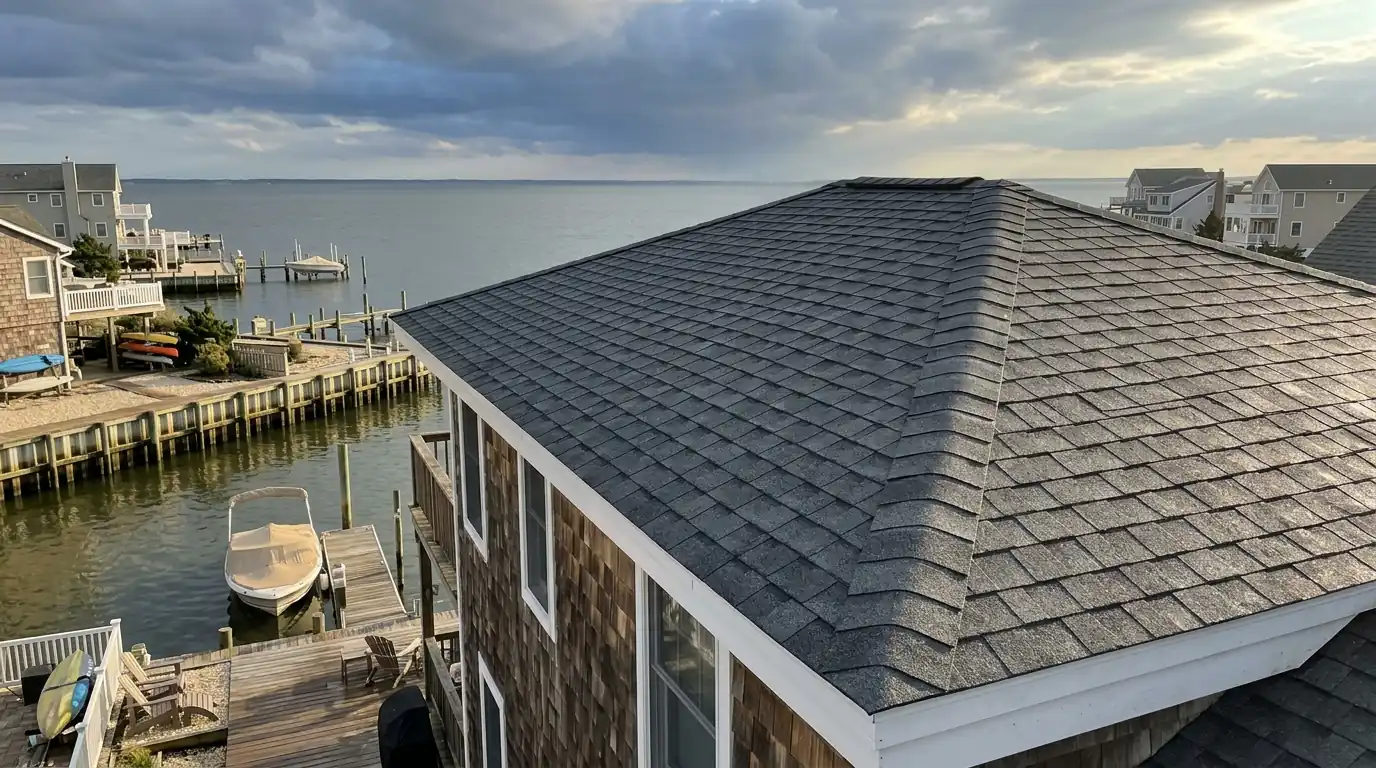
Normandy Beach sits between Mantoloking to the north and Lavallette to the south, and from most streets you can walk to the ocean beach or the bay in a few minutes. On the ocean side, dunes line the beach, and at the Brick end a steel seawall built after Sandy lies buried beneath them along Route 35. The bay side has lagoons, bulkheads and docks. In between, houses run from small mid-century cottages to large raised homes built since 2012.
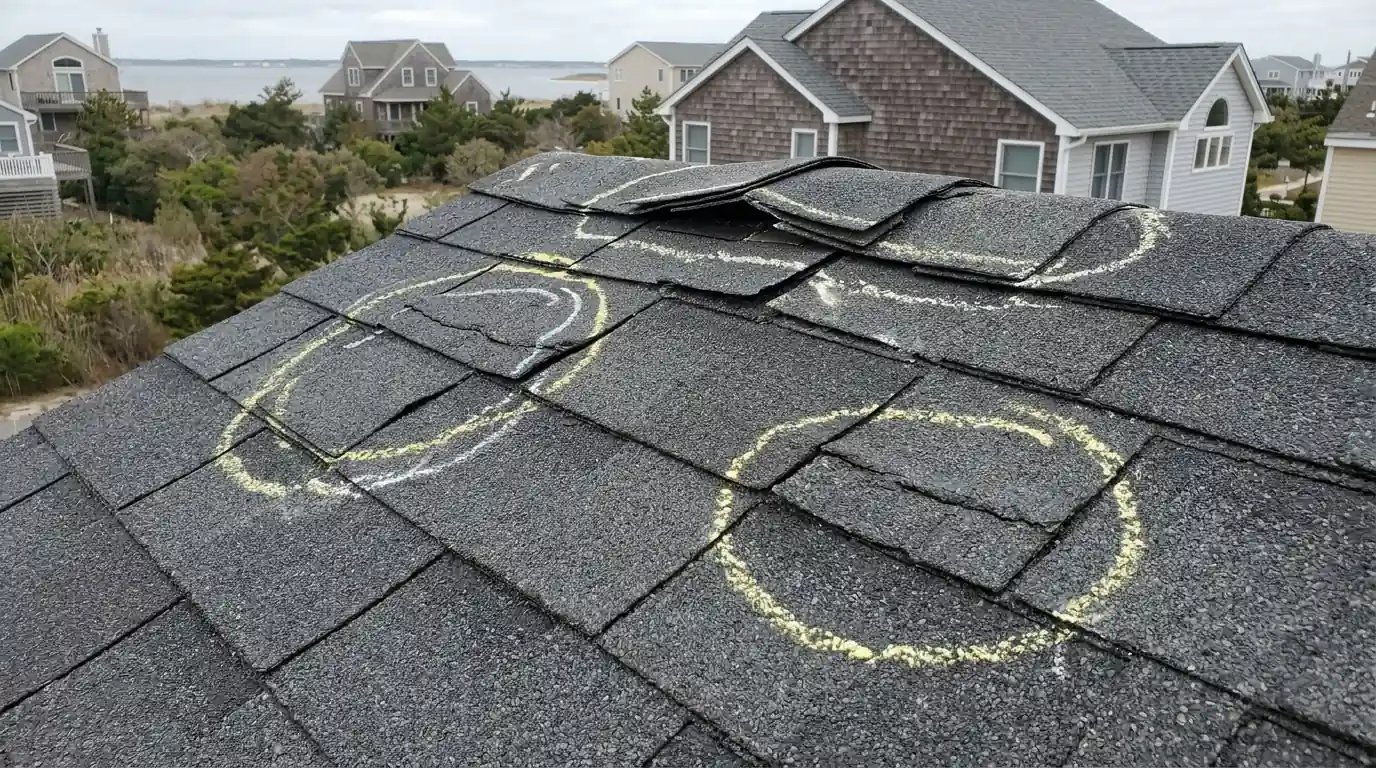
Because the strip is so narrow, there's no shelter from any direction. A nor'easter drives rain sideways off the ocean, and a summer squall comes across the bay. That's why we see damage on all four sides of a roof here, not just the windward slope, and why wind and storm damage roof repair is most of what we do in this neighborhood. The township line matters too: whether your home is in Toms River or Brick decides which office handles a permit, and we sort that out for you.
Signs a Normandy Beach roof took wind damage
Some damage is obvious. Most of it isn't, until the next rain. Look for these from the ground or the attic.
Creased tabs
A shingle that lifted and folded back shows a straight line across it. Its seal is broken, and it will lift again in the next blow.
Ridge cap gaps
Missing or shifted cap pieces along the peak leave nail holes and the ridge vent open to driving rain, which then drips straight into the attic insulation.
Granules in the gutters
A sudden pile of sand-like granules in the gutters after a storm means shingles were scoured, usually on the ocean-facing slope where wind hits hardest.
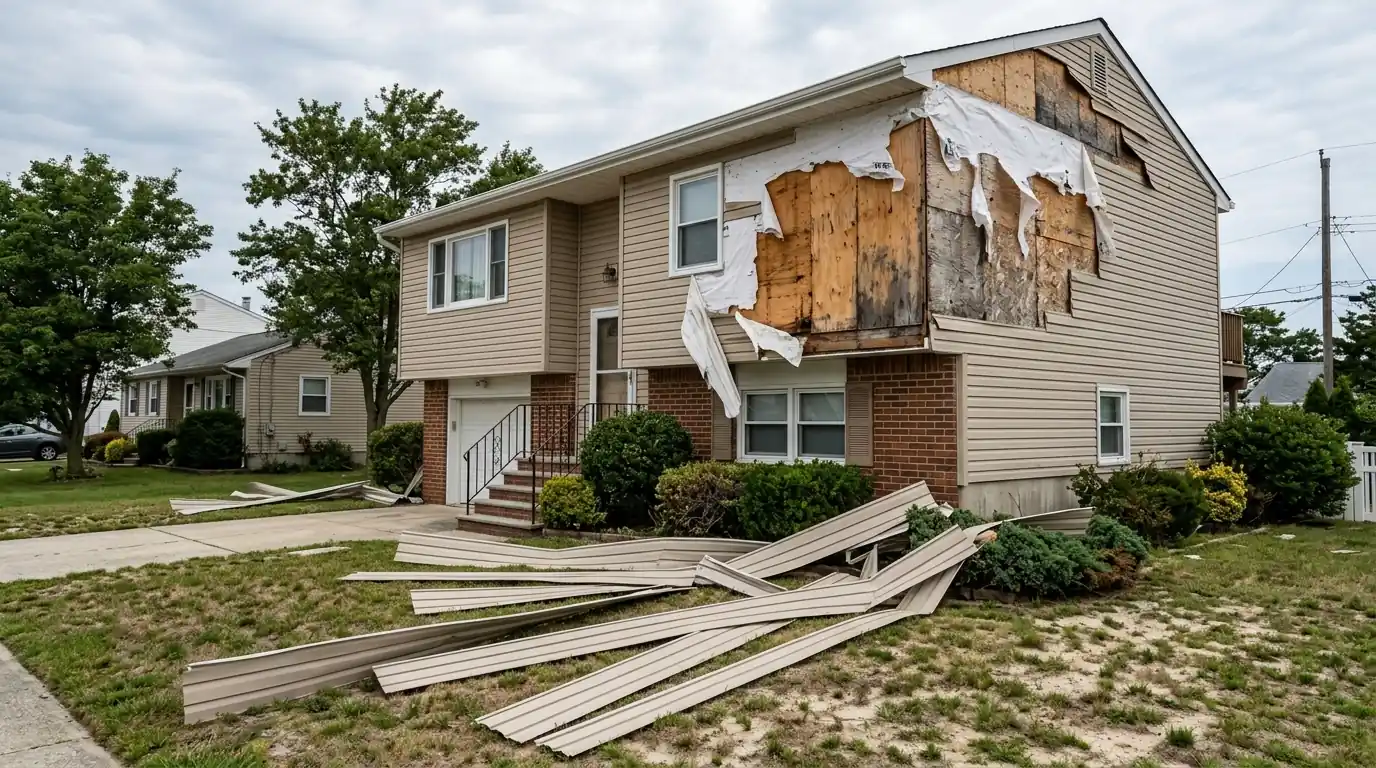
Loose siding corners
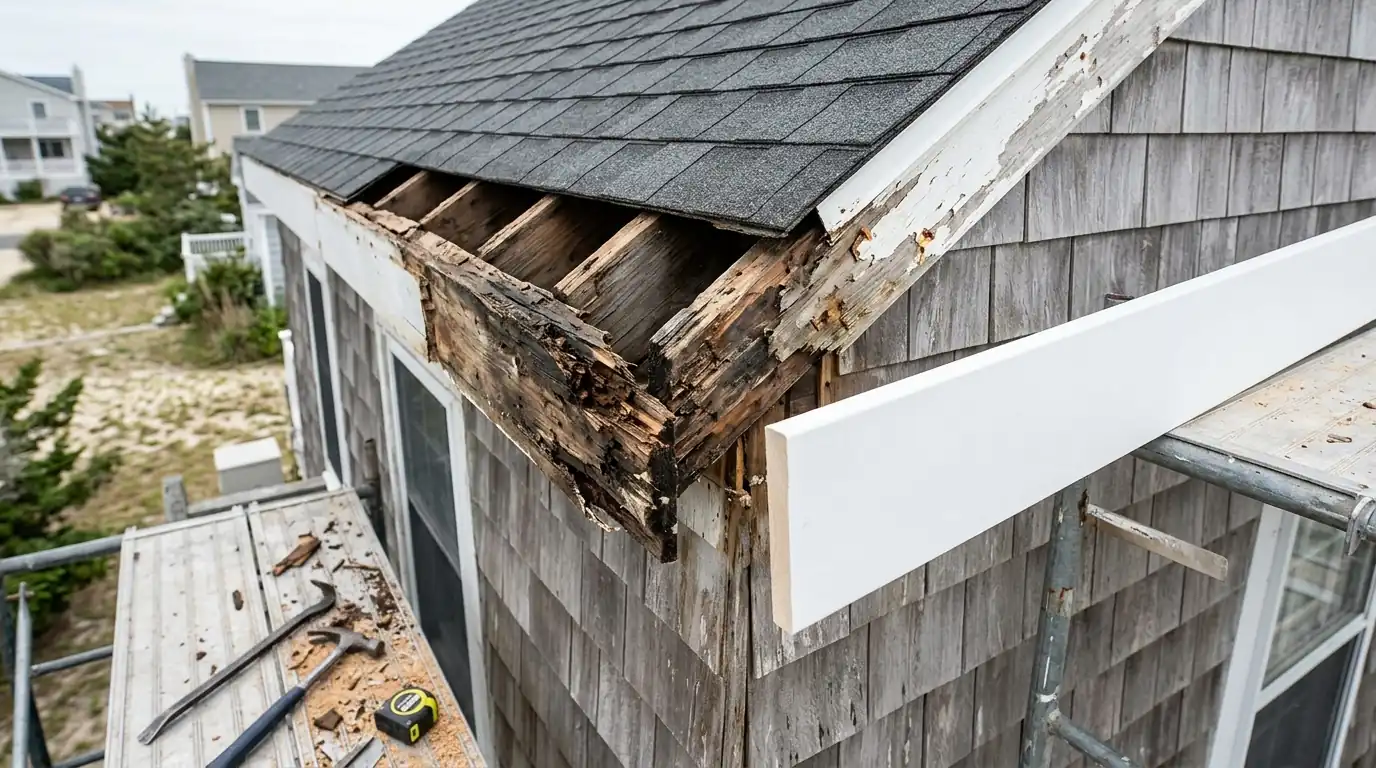
Panels that rattle or bow at outside corners and along J-channel have slipped out of their locks, and they can tear away completely in the next storm.
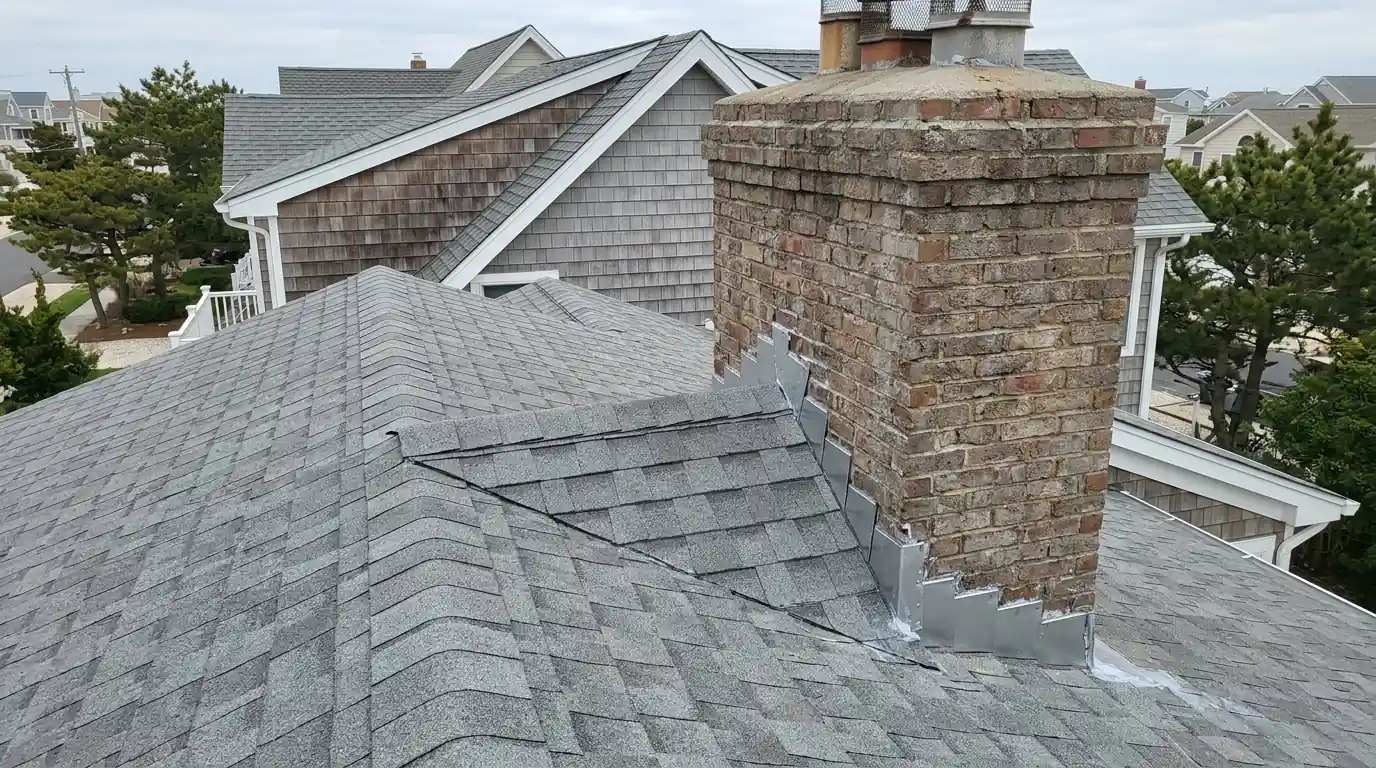
Lifted flashing
Step and counter flashing pulled away from a wall or chimney is a direct route for wind-driven rain, and the leak often shows up rooms away.
Damp attic sheathing
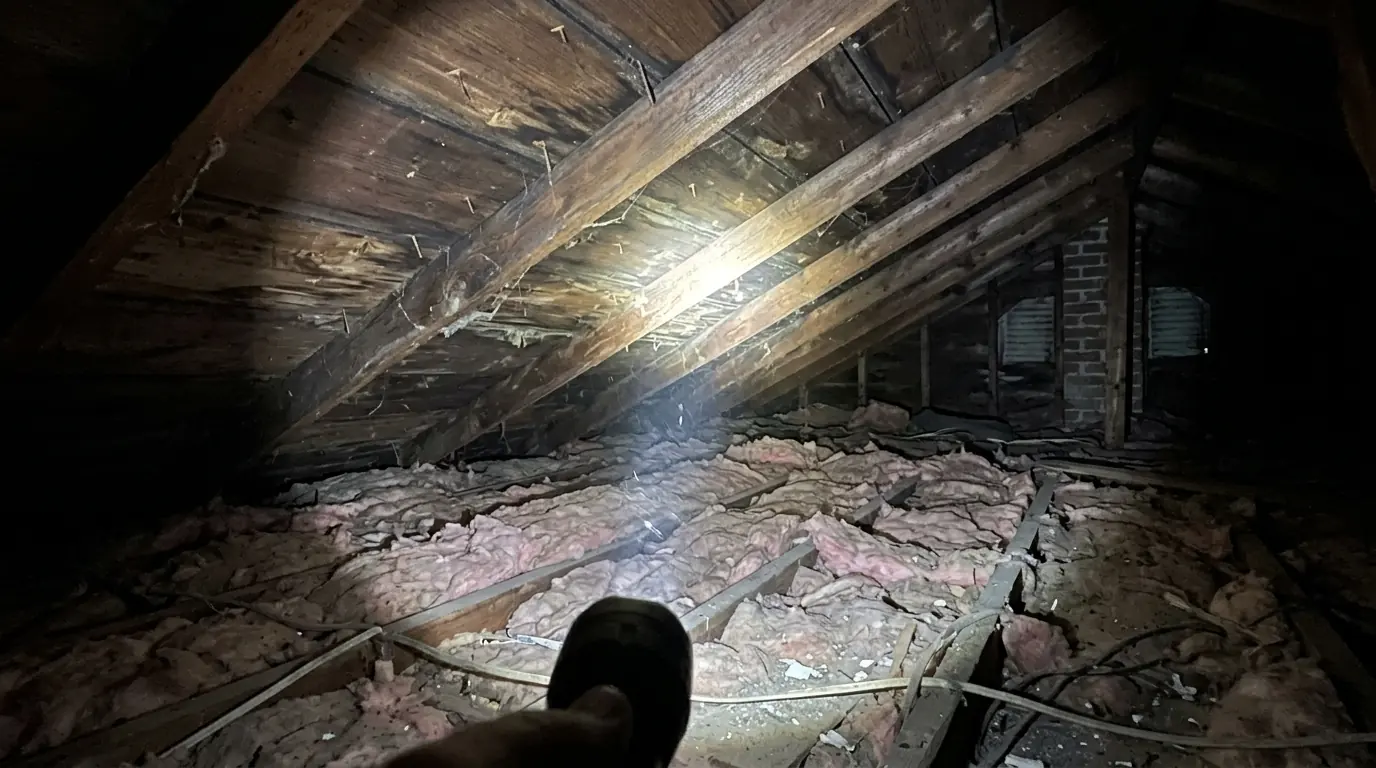
Dark spots on the plywood or wet nail tips in the attic after a storm point to water entry, often days before any ceiling stain appears below.
What happens after you call us from Normandy Beach
We answer 24/7. Here's how a storm call usually unfolds, from the first conversation through emergency tarping to the permanent fix.
Talk it through
We ask where water is showing and what you can see from inside, and help you protect furniture and floors safely while we get moving.
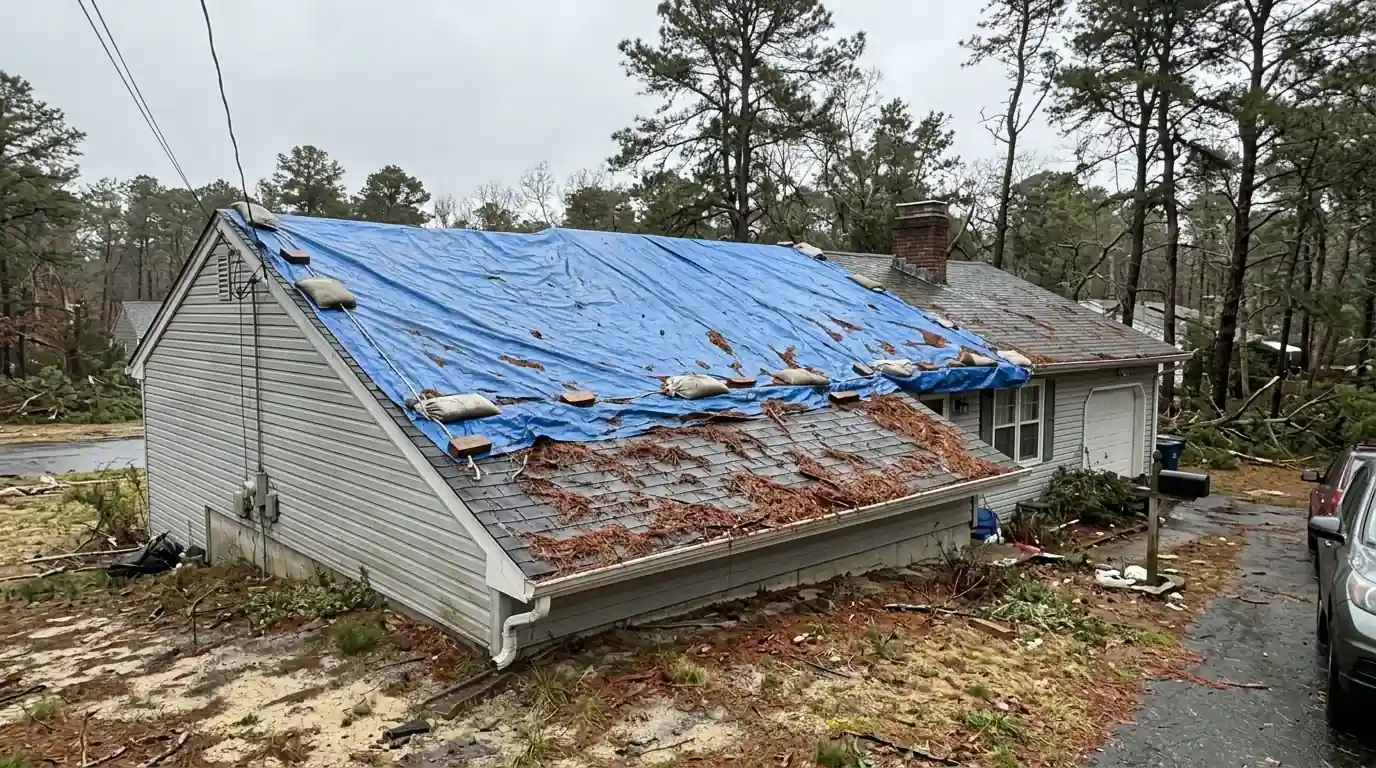
First few minutesStop the water
We put a tarp, a temporary seal or a patch right at the source. Nothing fancy, just enough to keep rain out of the house until the weather clears.
As soon as roads and wind allowPhotograph everything
We take dated photos of each damaged area, inside and out, and share them with you. Our guide to documenting wind damage for a claim explains why they help.
During the visitMake the permanent repair
We replace creased shingles and ridge cap, reset or renew flashing, and refasten or replace loose siding using high-wind details, then walk you through the photos.
Once the weather clears