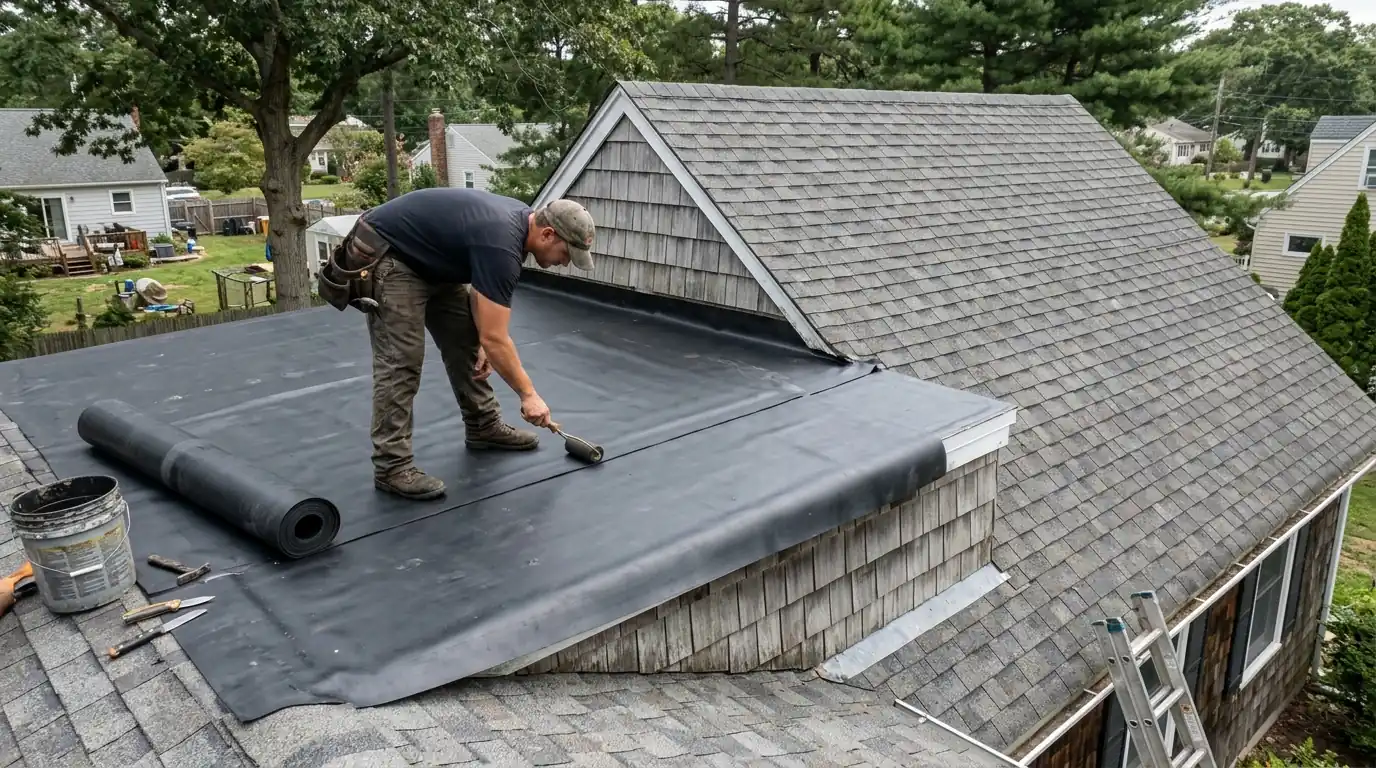
EPDM is a synthetic rubber membrane used on roofs with less than about a 2-in-12 pitch, where shingles would leak. On Toms River homes it covers porches, dormers, garages and additions. A fully adhered EPDM roof usually lasts 25 to 30 years and costs less than many flat roof systems. Call (732) 419-1462 and we'll check whether EPDM or TPO suits your roof.
Where rubber roofing belongs on a shore house
Most homes have at least one low-slope area tucked somewhere. These are the spots we cover with EPDM most often.
Shed dormers on capes
Wide dormers added to 1950s and 1960s capes often have very shallow roofs. Shingles on these slopes leak in driving rain, so a single sheet of EPDM is usually the better fix.
Front and back porches
Porch roofs tie into the house wall right below second-floor windows. A membrane with a proper wall flashing keeps water out of the ceiling and the header beneath it.
Attached garages and carports
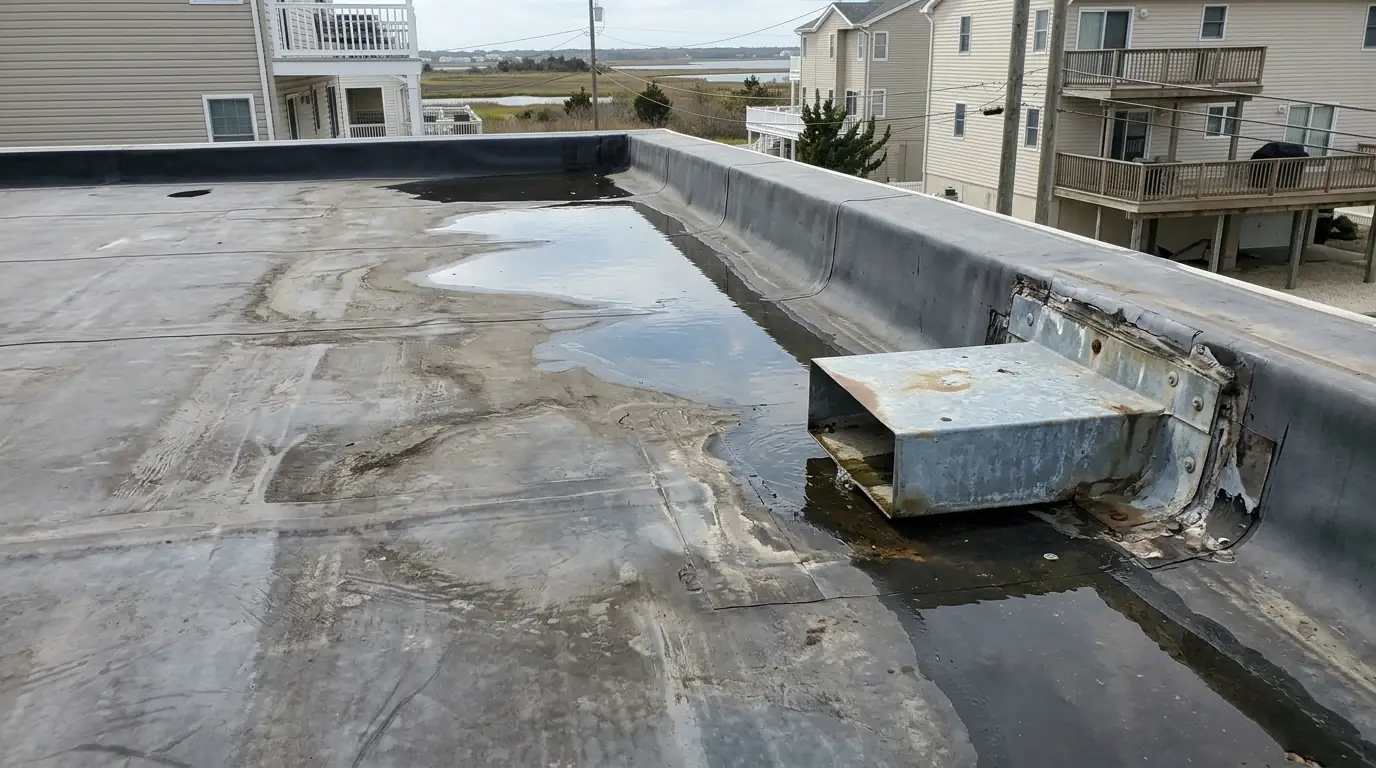
Flat garage roofs often see ponding near the house wall. EPDM tolerates standing water better than most materials and can be laid over tapered insulation to improve drainage.
Rear additions and sunrooms
Additions built onto ranches and split-levels frequently have nearly flat roofs. We tie the membrane into the main roof shingles with metal edge and careful laps so the junction stays watertight.
Raised home decks and entries
Homes raised after Sandy sometimes have covered entries and roof-level landings under living space. Rubber membrane suits these areas where water sits longer before draining away.
When EPDM is the better pick over TPO
Both are single-ply membranes for flat roofs, and both work. These are the factors that tip a residential job one way or the other.
| Factor | EPDM rubber | TPO |
|---|---|---|
| Seams | Joined with seam tape and primer; no torch or heat welder | Hot-air welded, which creates a strong fused seam |
| Small, cut-up roofs | Large sheets often cover a dormer or porch with no seams at all | Better suited to larger open areas where welding is efficient |
| Color and heat | Usually black, which absorbs heat and helps snow melt in winter | Usually white, which reflects sun and keeps rooms below cooler |
| Repairs years later | Easy to patch with compatible tape and cover strip | Older TPO can be harder to weld new patches to |
| Track record | Used on roofs for over 50 years, with a long history in cold climates | Newer, with a chemistry that has improved over time |
How we install a fully adhered rubber roof
Fully adhered EPDM is glued down across its entire surface, so wind has nothing to lift. Here's the work from start to finish.
Remove the old roof and check pitch
Old rolled roofing, modified bitumen or tired rubber comes off. We check for soft deck and use a level to see where water ponds, since drainage problems are cheaper to fix now than later.
Morning, day 1Build slope and a smooth base
Tapered insulation or cover board goes down where water needs to move toward a gutter or scupper. A smooth, clean base keeps the membrane from wrinkling or wearing on fastener heads.
Day 1Relax and glue the sheet
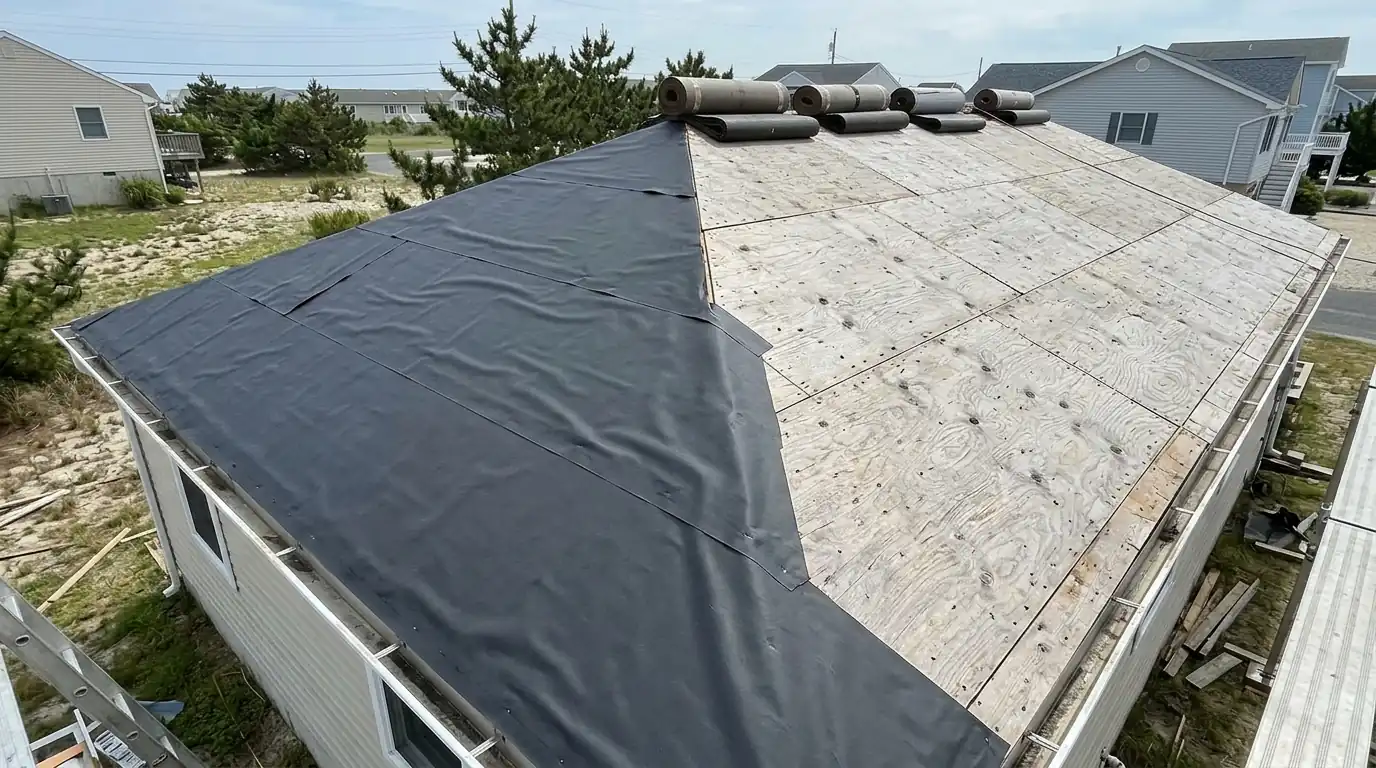
The EPDM is unrolled and left to relax so it lies flat. Bonding adhesive is rolled onto the board and membrane, then the sheet is folded in and pressed down with a stiff broom and roller.
Day 1, afternoonTape seams and flash edges
Any seams get primer and factory seam tape rolled firmly in place. Inside and outside corners, pipes and wall junctions get factory-made or uncured flashing pieces rather than folded field membrane.
Day 2Terminate and test drainage
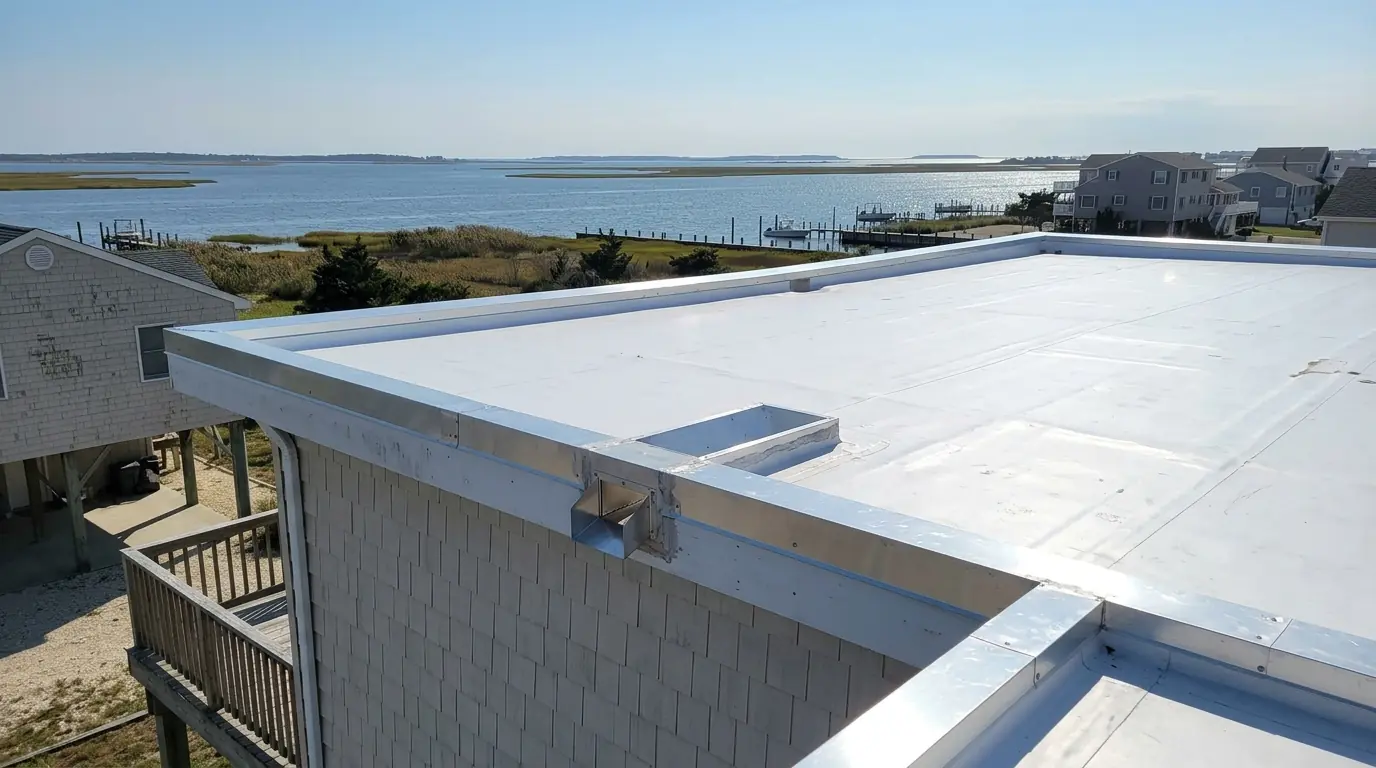
Metal drip edge or gravel stop finishes the roof edge, and a termination bar seals the membrane up the wall under the siding. We run a hose to confirm water reaches the gutter cleanly.
Day 2, final hour
EPDM roof prices for porches, dormers and additions
Low-slope areas on houses tend to be small, so the setup and detail work carry a bigger share of the price. These are typical 2026 ranges.
| Work | Typical range | What moves the number |
|---|---|---|
| Porch or entry roof, up to 150 sq ft | $1,870 to $4,260 | Wall flashing details and tear-off of old material |
| Shed dormer roof | $3,240 to $7,580 | Dormer width, access from the main roof, window flashing |
| Garage or addition, 300 to 600 sq ft | $5,960 to $13,470 | Tapered insulation, deck repair and number of penetrations |
| Section repair or seam rework | $465 to $1,390 | Size of the damaged area and condition of the surrounding membrane |
Treat these as ranges for planning, not a quote; we price your low-slope roof after seeing the deck and drainage in person.
Getting the transition between rubber and shingles right
Most EPDM leaks we see on houses aren't in the rubber at all. They happen where the flat section meets a shingled slope or a wall, places where two trades worked at different times and nobody owned the junction. Water runs down the shingles, hits the low roof and finds the seam.
On those transitions, we run the membrane up under the shingles by at least a foot and a half, lap ice and water barrier over it, and finish with metal flashing so the shingles can be replaced later without disturbing the rubber. Where the low roof meets a wall, the EPDM goes up behind the siding with a termination bar and counter flashing above.
If your low roof has blisters, splits or ponding but the rest of the membrane is sound, flat roof repair may be enough. When it's time to redo the whole house, we can coordinate the rubber sections with a full roof replacement so all the transitions are rebuilt together.
Habits that help a rubber roof reach 30 years
EPDM needs very little care, but a few simple habits go a long way.
- Keep foot traffic to a minimum and lay plywood down if you must walk on it
- Clear leaves and pine needles away from scuppers and gutters each fall
- Never chip ice or snow off with a shovel or metal tool
- Keep grills, deck chairs and planters off the membrane
- Look at the seams and corner patches after any big nor'easter
- Keep tree limbs trimmed so they can't scrape or puncture the surface
- Call us about any blister, split or puddle that stays more than two days
Low-slope roofs on Toms River homes and what they face
Ocean County's housing stock is full of low-slope sections. Capes from the postwar decades often grew shed dormers, ranches picked up rear additions, and bi-levels gained flat-roofed porches over the years. Many of those were roofed with rolled asphalt that lasts barely a decade, which is why we replace so many with EPDM around Gilford Park and the older sections of town.
Weather here tests flat roofs harder than shingled ones. Nor'easters push water sideways against wall junctions, and heavy summer downpours overwhelm small scuppers. Pine needles pile up at roof edges and build dams. In winter, black EPDM soaks up sun, which helps melt snow faster than a lighter membrane. For raised homes rebuilt after Sandy, low roofs over entries and decks sit in direct wind, so fully adhering the membrane rather than ballasting or loose-laying it keeps everything firmly in place.
Where we do this work most
We work across all of Toms River (08753, 08755 and 08757) and these neighboring towns every week, along with the rest of Ocean County and southern Monmouth County.
- Silverton, Toms River08753
- Pleasant Plains, Toms River08755
- West Dover, Toms River08755
- Ortley Beach, Toms River08751
- Lakewood08701
- Brick08723
- Jackson08527
- Howell07731
- Manchester08759
- Berkeley Township08721
- Lacey Township08731
- Stafford Township08050
- Barnegat08005
- Wall Township07719
- Freehold07728
- Point Pleasant08742