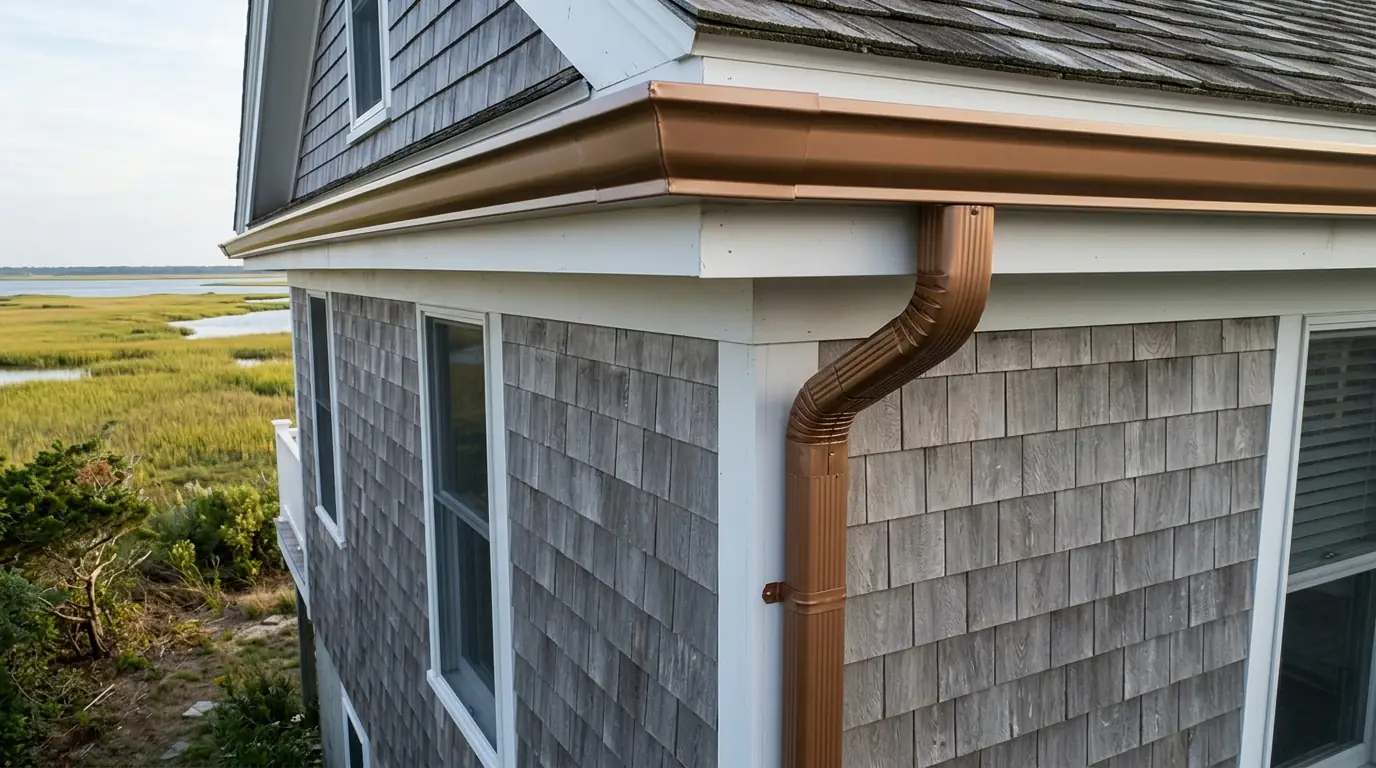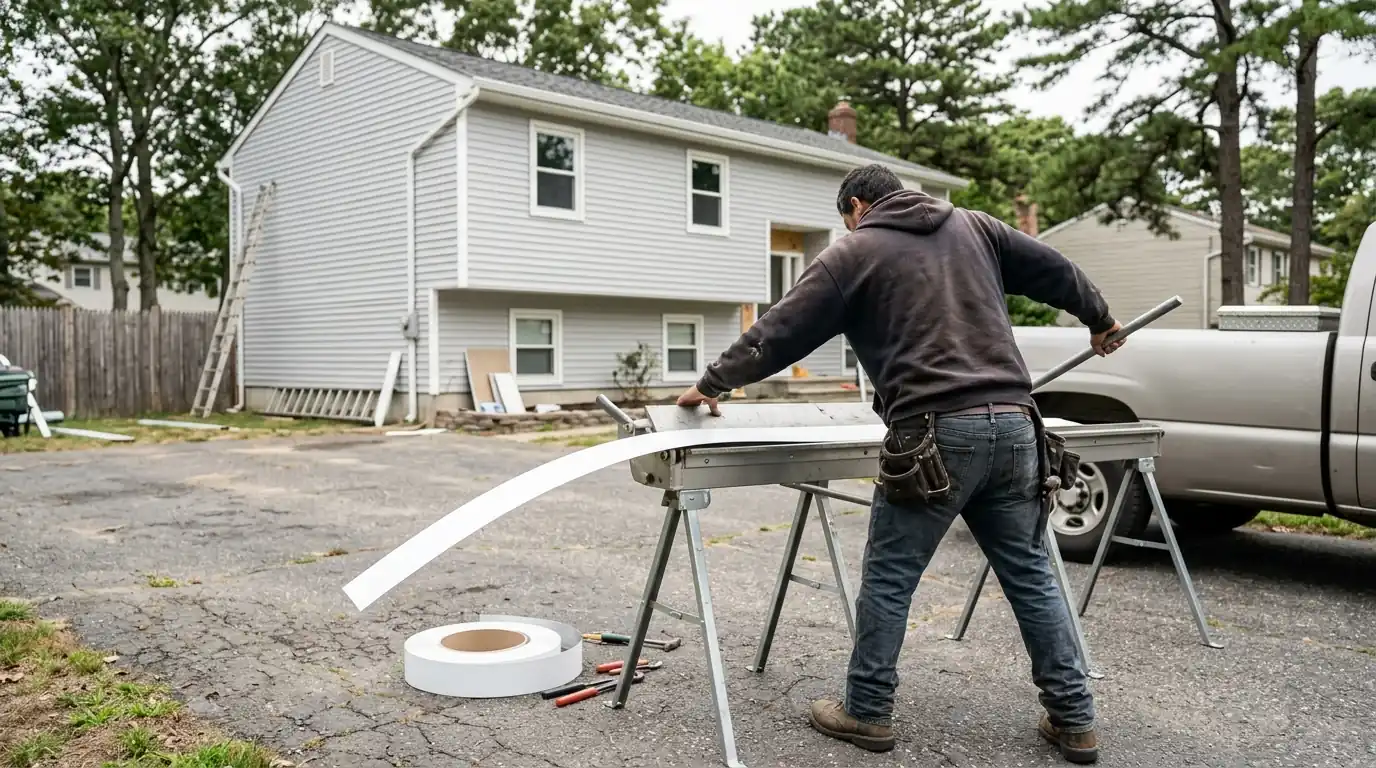
Window capping wraps existing wood trim in aluminum coil bent on site to fit each opening, while PVC trim replaces wood boards outright with a material that can't rot. Around Toms River, we cap trim that's still solid and swap in PVC wherever we find soft wood. Either way, you stop painting window trim, and the details are built to shed water.
Capping, PVC boards or new wood: fitting the fix to the trim
Which route fits depends on the shape the wood is in and the look you want. Here's how we sort it out.
| Option | Best for | What to know |
|---|---|---|
| Aluminum coil capping | Window and door casings, sills and garage jambs where the wood is still sound | Bent on site to the trim profile in a color that suits the siding; must never cover soft wood |
| Cellular PVC trim boards | Corner boards, frieze, rakes, water tables, skirt boards and rotted casings | Cuts like wood and won't rot or absorb water; joints need room for expansion |
| PVC wrapped in coil | Fascia and rake boards behind gutters and along roof edges | PVC base for strength, aluminum cover for a crisp edge that lines up with the drip edge |
| Primed wood, repainted | Historic homes where the look of real wood trim matters most | Lowest upfront cost, but back on the repaint schedule within a few years near the bay |
Signs your trim is ready for capping or replacement
Walk around the house with a screwdriver and look for these. Each one tells us something about the wood underneath.
Paint peeling in the same spots every year
Repeat peeling on sills and lower casings means moisture is getting into the wood from behind or below. Paint won't stick to wood that stays damp, which is why the cycle never ends on those boards.
Soft spots under a probe
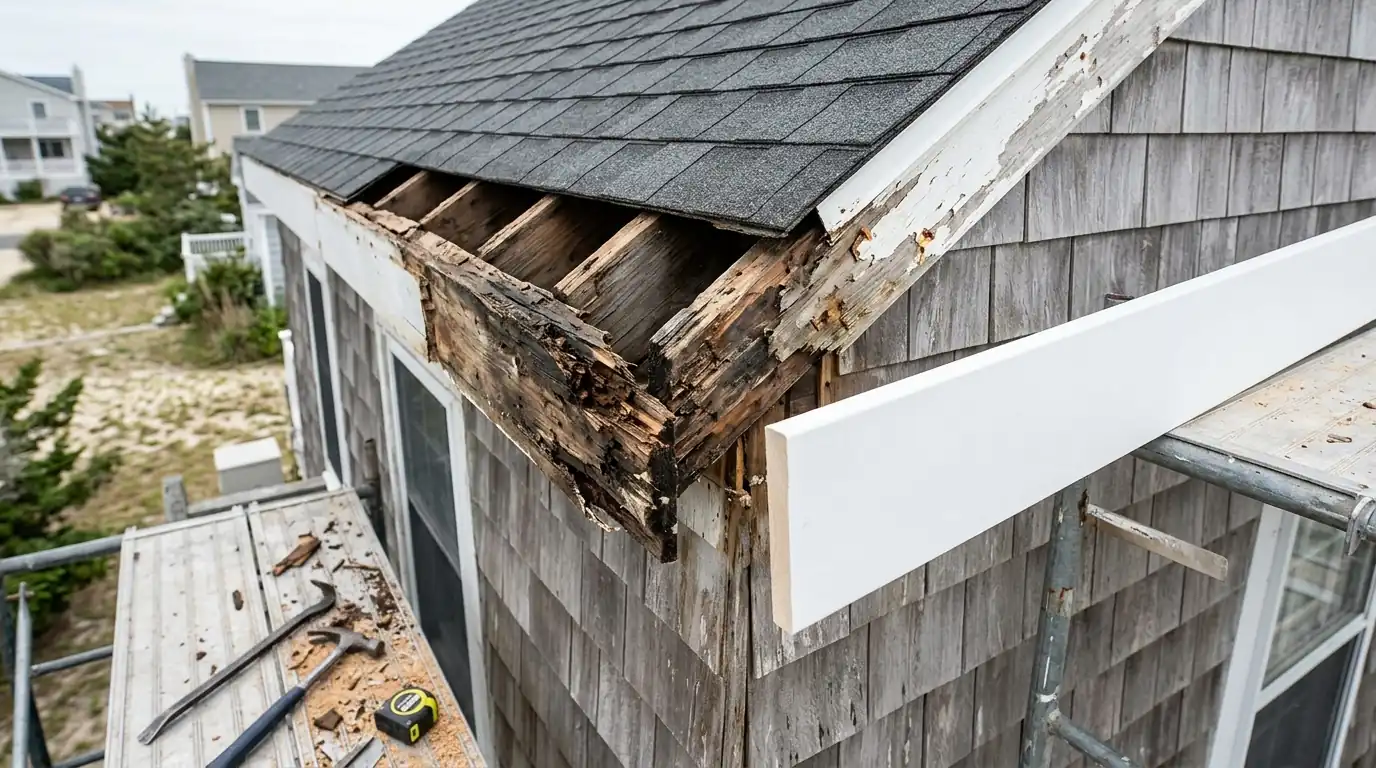
Press a screwdriver into sill corners, the bottoms of corner boards and where trim meets the roof. If it sinks in, the wood has rot that has to come out before anything gets covered.
Gaps where trim meets siding
Open joints between casings and siding, or cracked caulk lines, let wind-driven rain behind the siding. That water often shows up as a stain inside under the window or rot at the sill.
Old capping with dents and loose edges
Capping from decades ago was often thin and face-nailed. Once it pops loose, water slips behind it and can't escape. Peel back a corner and you'll often find dark, wet wood.
Swollen, split garage door jambs
Garage jambs take splashback from the driveway and constant bumps. Swollen, split wood at the bottom of the jambs is one of the most common spots where we swap in PVC.
How we cap a window so water can't hide behind the metal
Good capping looks simple, but the order of operations is what keeps the wood under it dry.
Probe and repair first
We test every sill, casing and brick mold. Rotted sections get cut out and replaced with PVC or treated wood, and failed caulk at the window frame gets cleaned out before any metal goes on.
First hour per sideBend to the profile
Coil stock goes through a brake set up in your driveway, and each piece is bent to the exact shape of that opening's trim. Custom bends fit tighter than stock shapes and leave fewer seams.
On site, as we goSill first, then sides, then head
Pieces go on bottom to top so every upper piece laps over the one below, the same way shingles do. Water running down the window always ends up on the outside of the metal.
20 to 40 minutes per windowFasten at the edges, loosely enough to move
We use colored trim nails placed where the metal can shift a little with temperature. Nailing too tight causes oil-canning, the wavy look capping gets when it bakes in afternoon sun.
Same stepSeal only where it belongs
We seal the joint between capping and the window frame and at vertical seams, but leave the bottom edge of each sill open to drain. Sealing everything traps water, which is exactly how bad capping rots good wood.
Last pass
Typical capping and PVC trim prices in Toms River
Trim work is priced per opening or per run, plus any repairs we find. These are 2026 planning ranges, not quotes.
| Work | Typical range | What moves the number |
|---|---|---|
| Capping a standard window | $185 to $415 each | window size, mulled units, rot repair at the sill |
| Capping an entry door | $265 to $540 | sidelights, transom, threshold and jamb condition |
| Capping a two-car garage door opening | $395 to $860 | jamb rot, header width, PVC jamb replacement |
| PVC corner boards, installed | $310 to $720 per corner | wall height, staging, two-story corners |
| Whole-house trim package with a siding job | $3,860 to $11,450 | window count, frieze and rake runs, amount of rotted wood |
Totals swing with how many openings get capped and how much rot turns up once we start probing, which is why we look before we price.
PVC behaves differently than wood, so we install it differently
Cellular PVC boards, from makers like AZEK and Versatex, cut and rout like lumber but don't take on water, so they don't rot, cup or feed carpenter ants. The tradeoff is movement. A long PVC board grows and shrinks along its length with temperature far more than pine does, and a dark board on a south wall gets hot enough to move noticeably.
So we glue scarf joints with PVC cement instead of butting boards together, fasten closer than we would with wood using stainless or coated fasteners, and plan joints for the season we're working in. Fastener holes get plugs or PVC filler so they disappear. Aluminum coil, such as the trim coil Alside sells alongside its siding, covers what stays wood. If you want to paint PVC, a light color keeps heat down, and the board makers list the paints they approve.
We also tie trim into the roof edge. Fascia behind a gutter is where wood trim rots first, so when we replace it we'll look at the soffit and fascia along the whole run and whether the gutters are pitched right.
What to decide before we bend the first piece
These choices shape the materials we bring and how the finished trim looks against your siding.
- Trim color: blend with the siding, contrast it, or stay classic white
- Smooth or woodgrain texture for PVC boards
- Flat capping, or a profile that echoes the old brick mold shape
- Whether corner boards stay wood, get capped or become PVC
- Whether garage jambs and door trim are part of the job
- If new windows are coming, cap after they're in, not before
- Whether you might want darker painted PVC trim someday
Why trim fails first on Jersey Shore houses
On most homes around Toms River, siding outlasts trim. Window sills sit flat enough to hold water, corner boards wick moisture up from mulch beds, and the fascia behind a gutter stays damp whenever a clog of pine needles backs it up. Add humid summers and salty air on the bay side, and painted pine and fir trim can start breaking down within a decade.
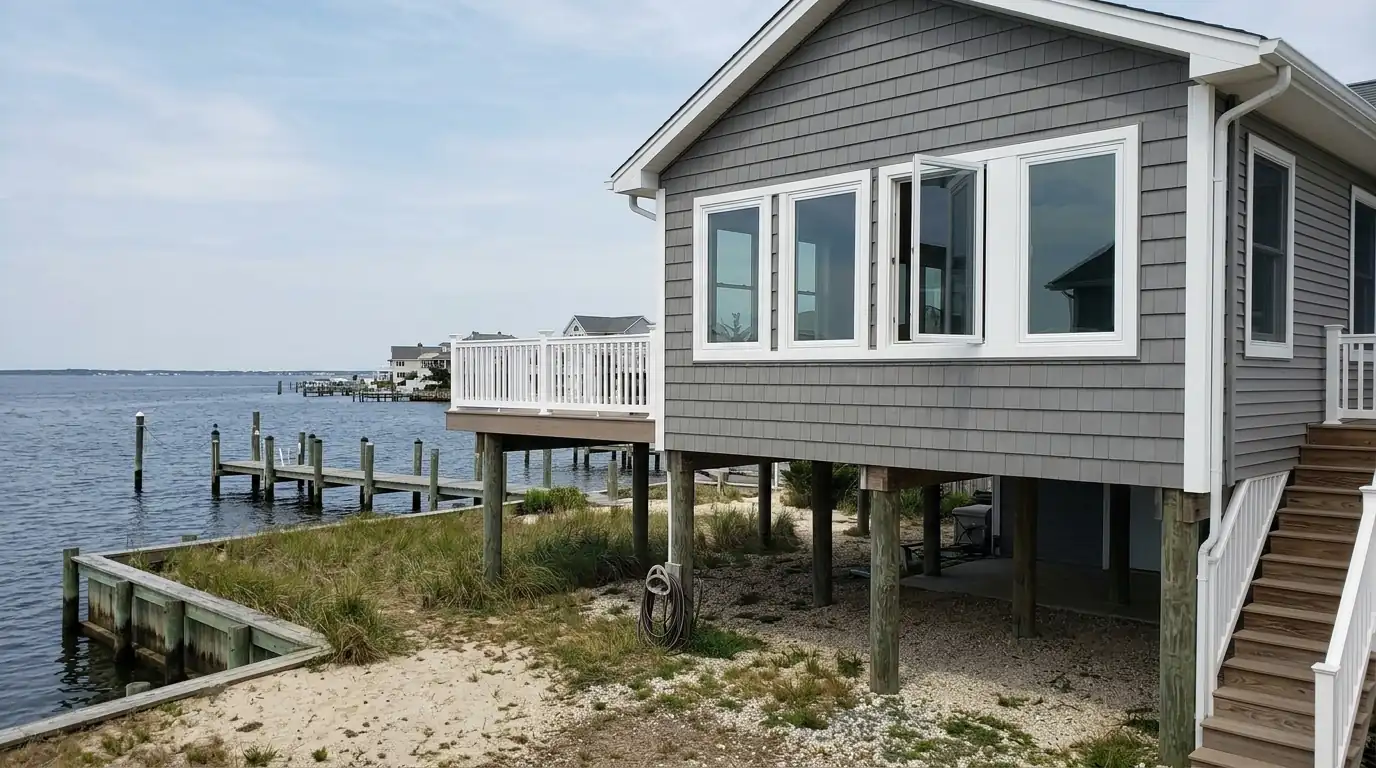
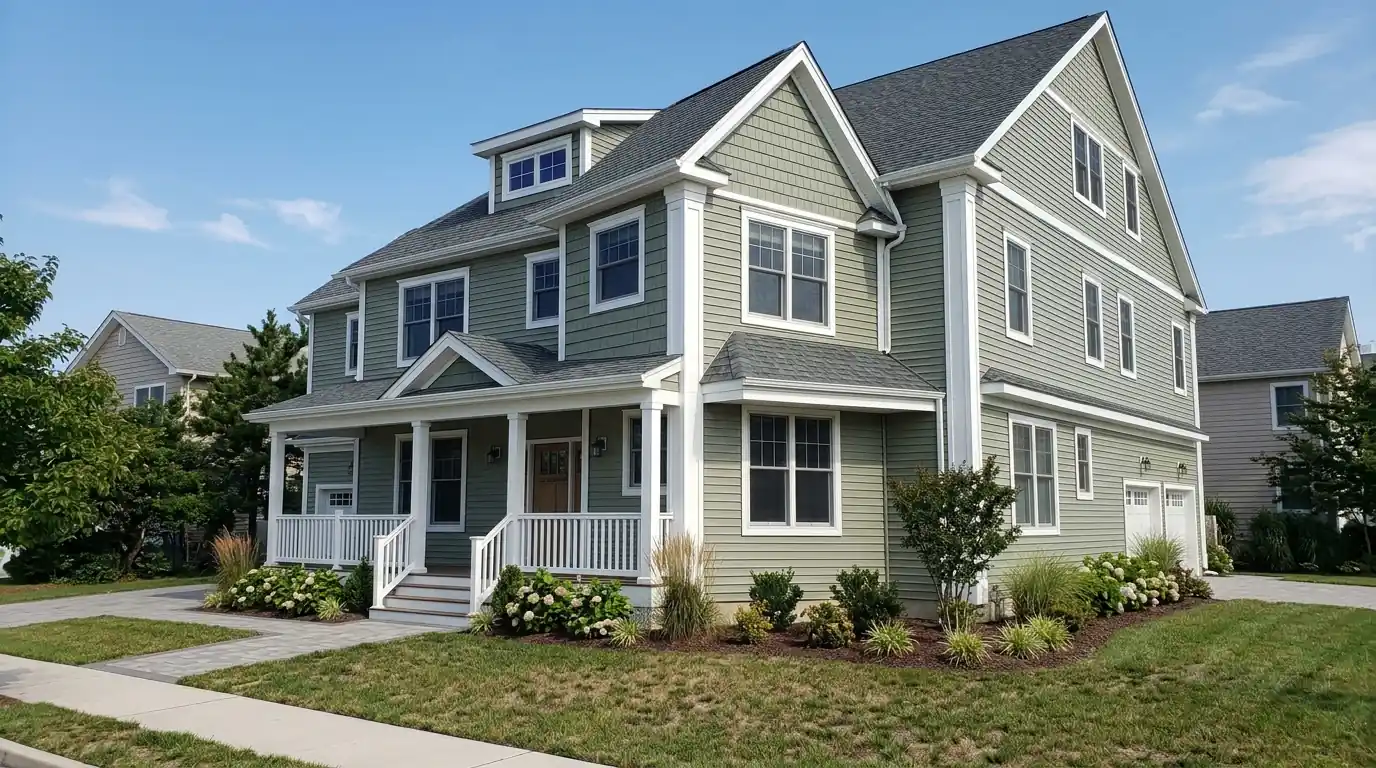
Capes and ranches from the 1950s through the 1980s often still have original wood brick mold under layers of paint, and some carry thin capping from an earlier siding job. Homes in bayfront sections like Shelter Cove and on the barrier island take the worst of the salt. There, stainless fasteners and PVC boards make the biggest difference, and we look hard at every sill facing the water. On newer colonials, the long frieze and rake runs high on the gables are usually the first boards we swap for PVC.
Where we do this work most
We work across all of Toms River (08753, 08755 and 08757) and these neighboring towns every week, along with the rest of Ocean County and southern Monmouth County.
- Silverton, Toms River08753
- Pleasant Plains, Toms River08755
- West Dover, Toms River08755
- Ortley Beach, Toms River08751
- Lakewood08701
- Brick08723
- Jackson08527
- Howell07731
- Manchester08759
- Berkeley Township08721
- Lacey Township08731
- Stafford Township08050
- Barnegat08005
- Wall Township07719
- Freehold07728
- Point Pleasant08742