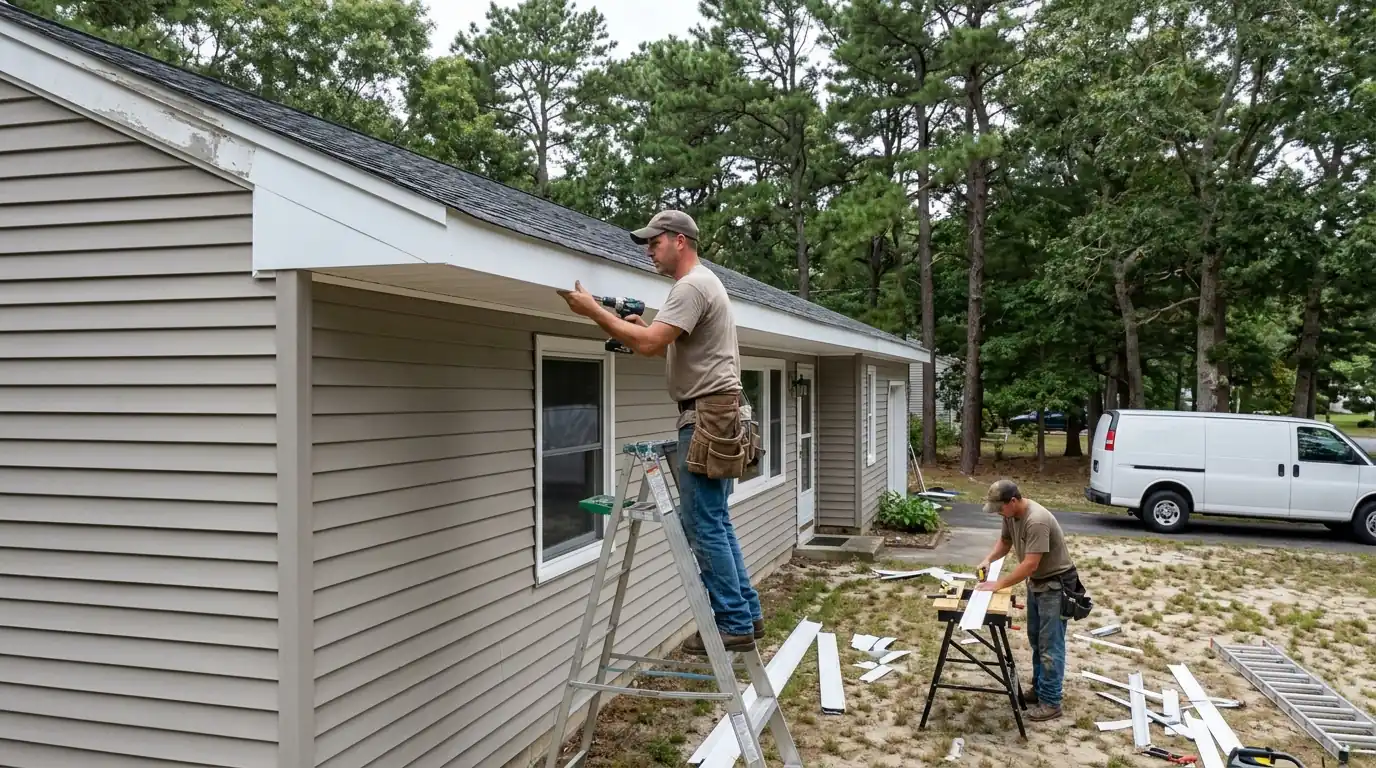
Rotted fascia should be replaced, not painted over, because the gutter hangers and the roof's drip edge both depend on it. In Toms River we usually cut out the bad sections, install new lumber, then cap it with aluminum coil or PVC trim and add vented soffit where the attic is short on intake air. Call (732) 419-1462 to have us look.
Which soffit and fascia materials hold up best at the shore
There are four common ways to finish a roof edge around Toms River. The right one depends on your budget, the look you want and how close the house sits to salt water.
| Material | Where it fits | What to know |
|---|---|---|
| Painted wood fascia and plywood soffit | Historic homes where the look matters, or short sections next to existing painted trim | Needs paint every few years; bare end grain rots quickly near the bay |
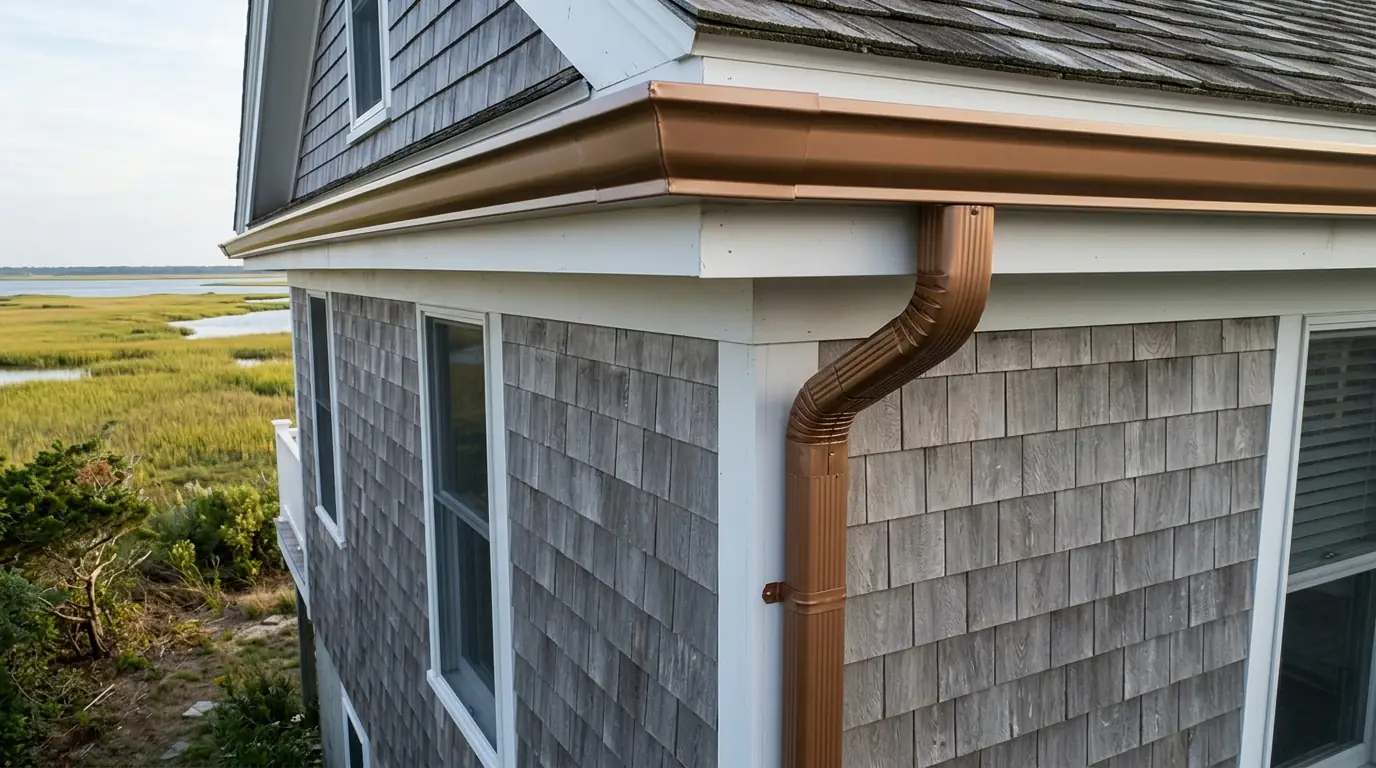
| Wood fascia capped with aluminum coil | Most ranches, capes and split-levels when the board underneath is sound | Bent on site to fit the board; colors match common gutter and siding shades |
| Cellular PVC fascia boards | Bayfront and island homes, or any edge that has rotted more than once | Won't rot or absorb water; needs proper expansion gaps and stainless fasteners |
| Vented vinyl or aluminum soffit panels | Under almost any eave, especially where the attic lacks intake air | Comes in solid, center-vent and fully vented panels; aluminum stands up better to heat |
What's usually wrong when we pull the old trim
Homeowners call about one symptom. Once the gutter or the old capping comes off, we usually find a short list of underlying causes.
Overflowing gutters
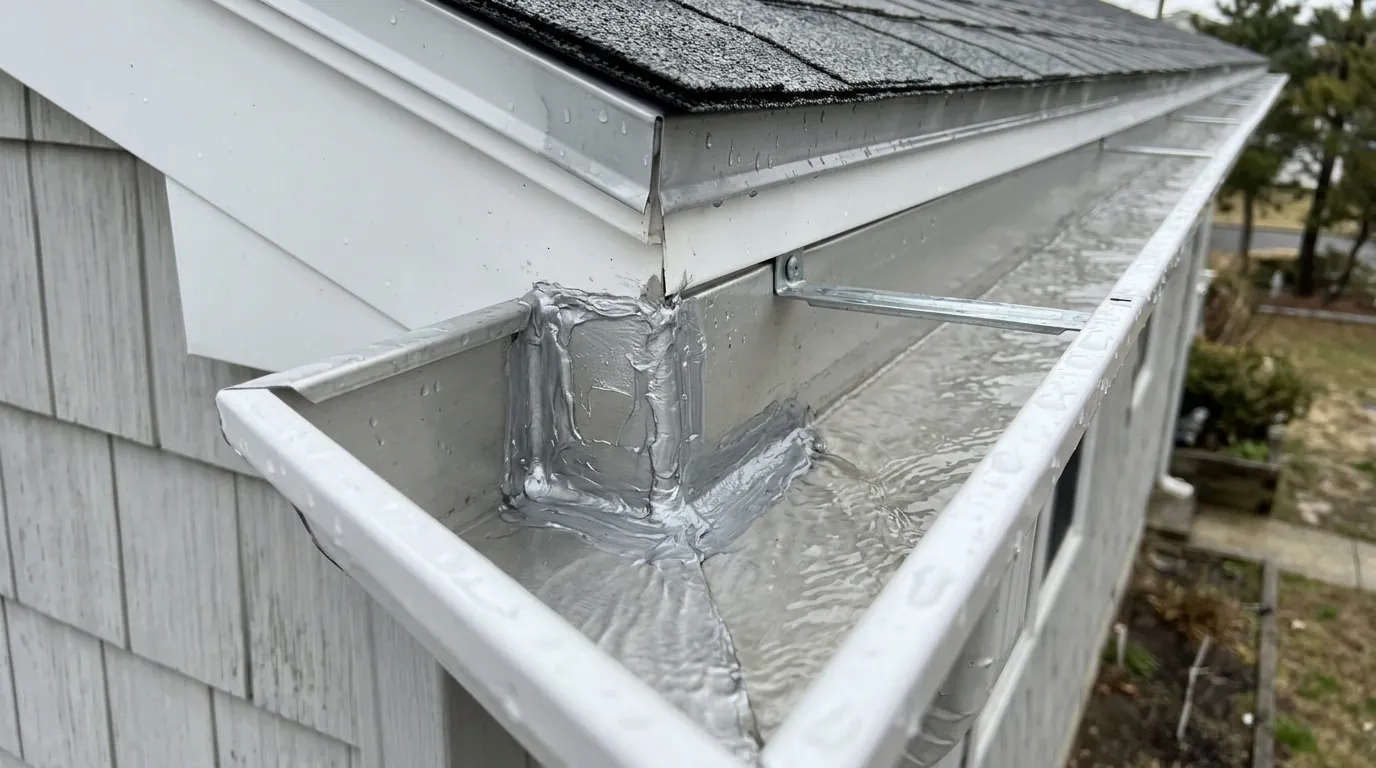
Water that spills over the back of a clogged gutter runs straight down the face of the fascia. Years of that soaks the board from behind, where paint can't protect it and nobody sees it.
No drip edge at the eave
Without a metal drip edge, water curls under the first course of shingles and wets the top of the fascia every rain. Older reroofs around Ocean County often skipped it.
Capping nailed over rot
Aluminum wrapped over soft wood hides the problem for a while. The rot keeps spreading underneath until the capping bulges, gutters loosen or a section drops away.
Animal entry points
Squirrels, starlings and raccoons look for a soft corner or a loose soffit panel. Once they're in the attic, they nest in insulation and chew wiring, so we close every gap.
Blocked or missing soffit vents
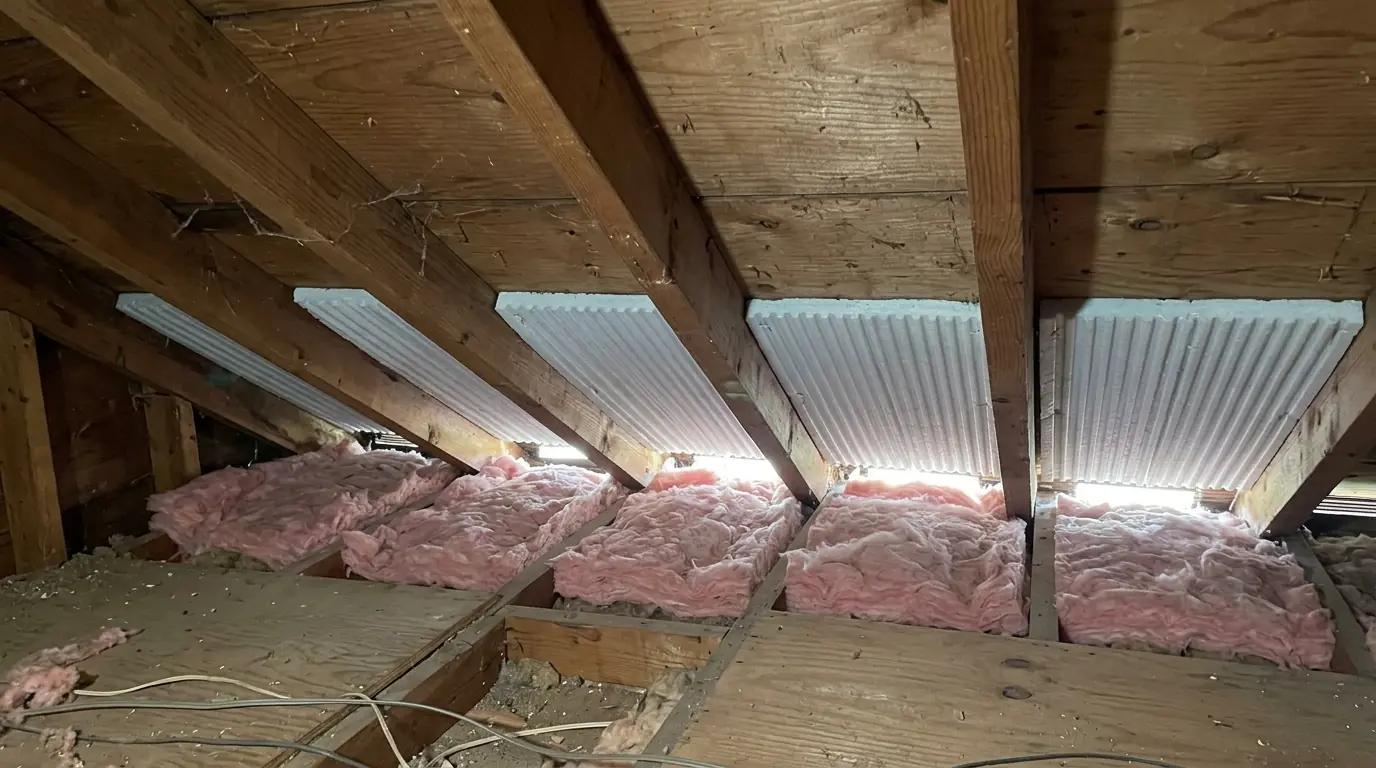
Solid plywood soffit, or vents painted over and packed with insulation, starve the attic of intake air. The result is a hot, damp attic that ages shingles and sheathing faster.
How we rebuild a rotted roof edge
Most soffit and fascia jobs on a single-story home are finished in one day. Larger homes, or work combined with new gutters, may take two.
Remove gutters and old trim
Gutters come down carefully so they can be rehung if they're in good shape. We strip off old capping and soffit panels to expose the rafter tails and the full length of the fascia.
Morning, 1 to 3 hoursProbe and mark every soft spot
Each section of board and each rafter tail gets probed. We photograph the rot and mark exactly what will be cut, so the scope you approved doesn't quietly grow.
30 minutesReplace lumber and repair rafter tails
Rotted fascia is cut back to sound wood and replaced with primed lumber or PVC. Soft rafter tails get sistered with new wood so the gutter and drip edge have something solid to fasten into.
2 to 5 hoursInstall soffit and keep the airway open
New soffit panels go into J-channel or F-channel. Where the attic needs intake air, we use vented panels and check from inside that insulation isn't blocking the path above them.
1 to 3 hoursCap, add drip edge and rehang gutters
Fascia gets wrapped in coil stock bent on site, drip edge goes in where it's missing, and gutters go back up on hidden hangers with the correct pitch.
Afternoon, 2 to 3 hours
Typical soffit and fascia costs around Toms River
These are 2026 ranges we see across Ocean County. Exact pricing depends on how much wood is rotten, the height of the eave and the material you choose.
| Work | Typical range | What moves the number |
|---|---|---|
| Fascia board replacement | $14 to $32 per linear foot | Board size, wood or PVC, and whether rafter tails need repair |
| Aluminum coil capping over sound fascia | $8 to $17 per linear foot | Board height, corners and returns, and color |
| Vented soffit, vinyl or aluminum | $11 to $26 per linear foot | Eave depth, removal of old plywood and channel trim |
| Full roof-edge rebuild on a ranch or cape | $2,840 to $7,650 | Perimeter length, extent of rot and whether gutters are reused |
| Sealing animal entry points | $265 to $790 | Number of openings and whether damaged soffit must be replaced |
These figures are ranges, not quotes. We price your job only after seeing the roof edge in person.
Why fascia work and ventilation belong in the same conversation
Soffit is the intake side of your attic's breathing. Air should enter low at the eaves, sweep up under the roof deck and leave through a ridge vent or other exhaust. When soffit is solid wood or the vents are buried, that loop breaks. Summer heat builds up under the shingles, and in winter, warm moist air condenses on the cold sheathing.
That's why we treat a soffit job as a chance to fix the airflow too. We'll look into the attic, add baffles where insulation is pushed against the roof deck and tell you honestly if the exhaust side needs work. Our attic ventilation service covers that in detail. Shingle makers such as GAF and CertainTeed spell out balanced intake and exhaust in their installation guides, so ventilation matters for the product warranty as well as for comfort.
If your window and door trim shows the same peeling and soft spots, our PVC trim and window capping work uses the same materials and can be done on the same visit.
What to check along your roof edge this weekend
You don't need a ladder for most of this. A walk around the house with binoculars will tell you a lot.
- Paint that's peeling or bubbling along the fascia, especially behind gutter corners
- Capping that bulges, waves or has pulled loose at the seams
- Soffit panels that sag, rattle in wind or have separated from the channel
- Dark gaps at corners or returns where a bird or squirrel could slip inside
- Gutters tipping forward away from the board
- Scratching or rustling in the attic around dawn and dusk
- Vent openings in the soffit that are painted shut or covered over
How shore weather wears down soffit and fascia in Ocean County
Fascia sits right where wind-driven rain hits hardest. When a nor'easter blows in off Barnegat Bay, rain runs up under shingle edges and down the face of the trim for hours. On houses in Shelter Cove, Bay Shore and the other bayfront sections, that wetting comes with salt, which is why we lean toward PVC boards and stainless fasteners close to the water.
Inland, the issue is more often pine needles. Gutters along wooded streets off Route 9 and Route 571 clog quickly, overflow and soak the board behind them. The ranches, capes and bi-levels built across Toms River from the 1950s through the 1980s often still have their original wood fascia, sometimes capped once already. Humid July and August weeks keep that wood damp, and once rot starts in the end grain at a corner, it moves fast. Squirrels from the surrounding pines find those soft corners quickly, and we close them off as part of the job.
Where we do this work most
We work across all of Toms River (08753, 08755 and 08757) and these neighboring towns every week, along with the rest of Ocean County and southern Monmouth County.
- Silverton, Toms River08753
- Pleasant Plains, Toms River08755
- West Dover, Toms River08755
- Ortley Beach, Toms River08751
- Lakewood08701
- Brick08723
- Jackson08527
- Howell07731
- Manchester08759
- Berkeley Township08721
- Lacey Township08731
- Stafford Township08050
- Barnegat08005
- Wall Township07719
- Freehold07728
- Point Pleasant08742