Yes, we work in Bay Head, from the oceanfront blocks to the bayside streets near Twilight Lake. Our most common jobs here are cedar shake and shingle repairs, full cedar or composite shake roofs, and wall shingle replacement on older cottages. For a visit or a question at any hour, call (732) 419-1462.
Signs a cedar roof or wall in Bay Head needs attention
Cedar ages slowly and tells you when it's struggling. These are the clues we look for on older Bay Head houses.
Cupped or curled shakes
Shakes that curl up at their edges catch the wind and let rain slip underneath. Whole courses curling usually means the wood is past saving.
Splits that line up
When a crack in one shake sits right over the gap in the course below, water has a direct path to the underlayment. We replace those pieces and stagger the joints properly.
Green and black growth
Moss and lichen hold moisture against the wood on shaded slopes. Left alone, they soften the shakes and speed up rot, especially on the bay side where morning fog lingers.
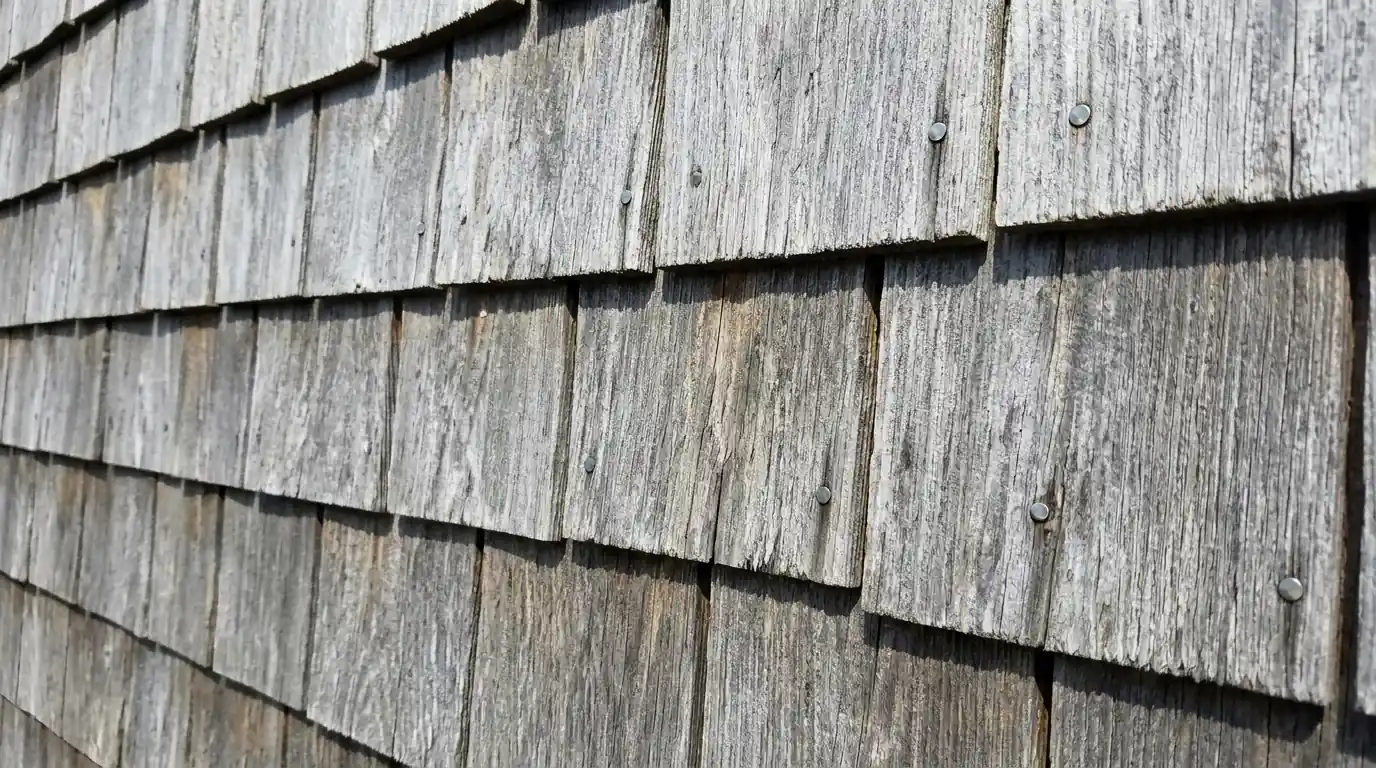
Rust streaks below nails
Plain steel nails corrode in the salt air and stain the shingles beneath them. Eventually the heads let go and shingles slide out of place on walls and roofs alike.
Soft spots at the eaves
Gutters that overflowed for years can rot the first few courses and the sheathing behind them. Pressing gently on the lowest shakes often reveals the trouble early.
Old cottages between the ocean and the bay
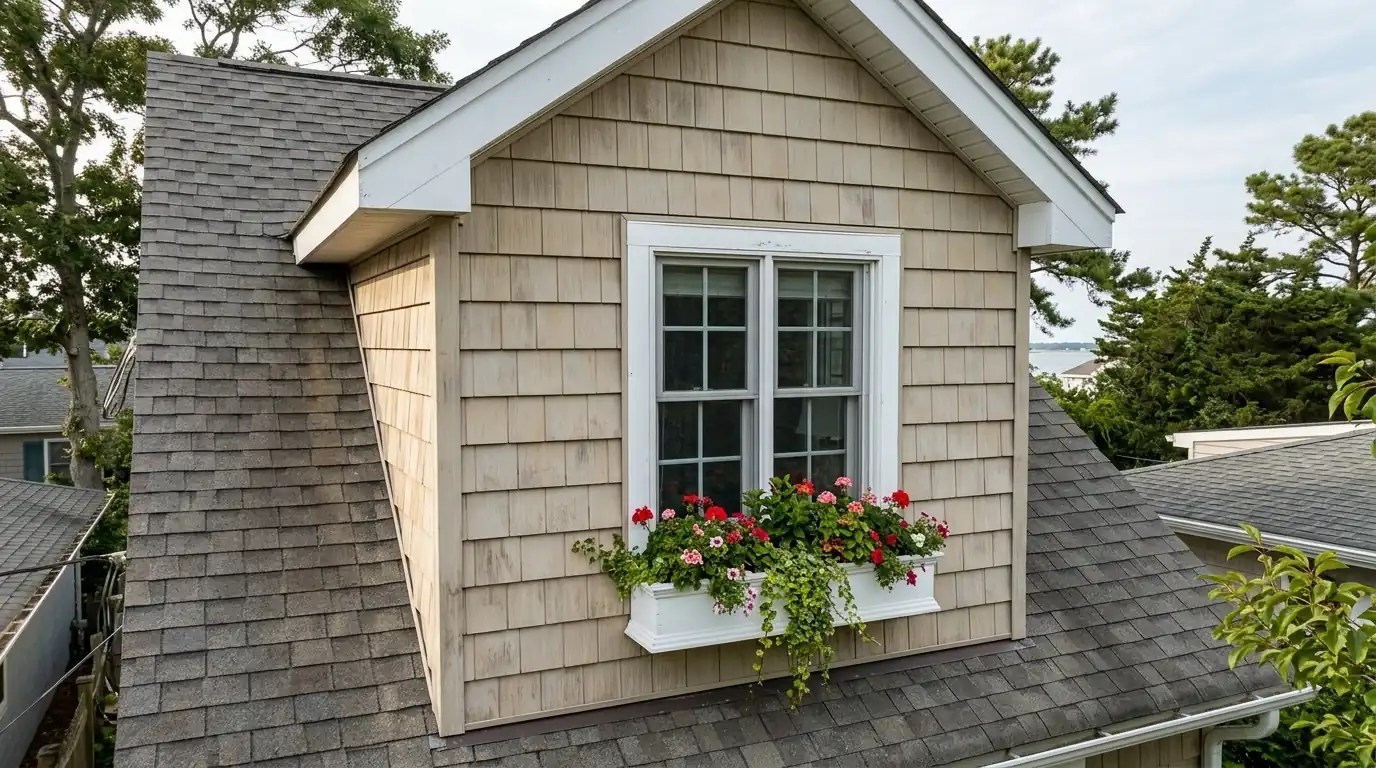
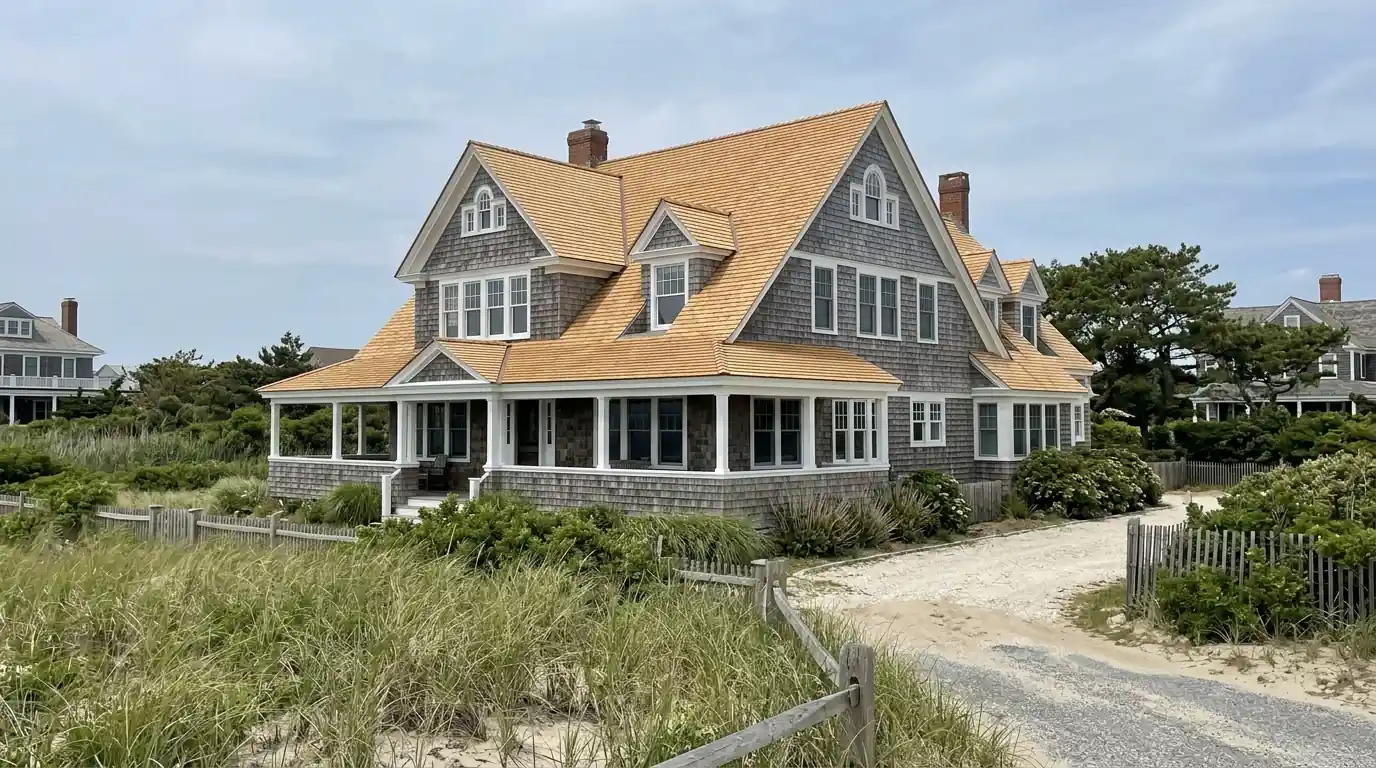
The borough sits at the head of Barnegat Bay, where the barrier island narrows and the train line ends. Much of town was laid out in the late 1800s, and the historic district now counts hundreds of contributing buildings. Their roofs tend to be steep, with dormers, turrets and wide overhangs, over walls of wood shingles patched across many decades.
Those houses face two kinds of weather in a short walk. On the ocean blocks, salt spray rides in on east winds and wears at fasteners and trim. On the bay side near Twilight Lake, damp westerly air and fog keep shaded slopes wet longer. A stone seawall built in 1882 and later buried under the dunes helped shield the town during Hurricane Sandy, but wind still found every loose shingle and open seam. We tailor the work to which side of town your house faces.
How we replace cedar on a historic Bay Head home
Cedar work on an older house moves slower than a standard shingle job, and that's on purpose.
Record what's there
We photograph exposure, coursing, trim profiles and any decorative patterns before anything comes off. That record guides the new work so the house keeps its original lines.
First visitOpen one section at a time
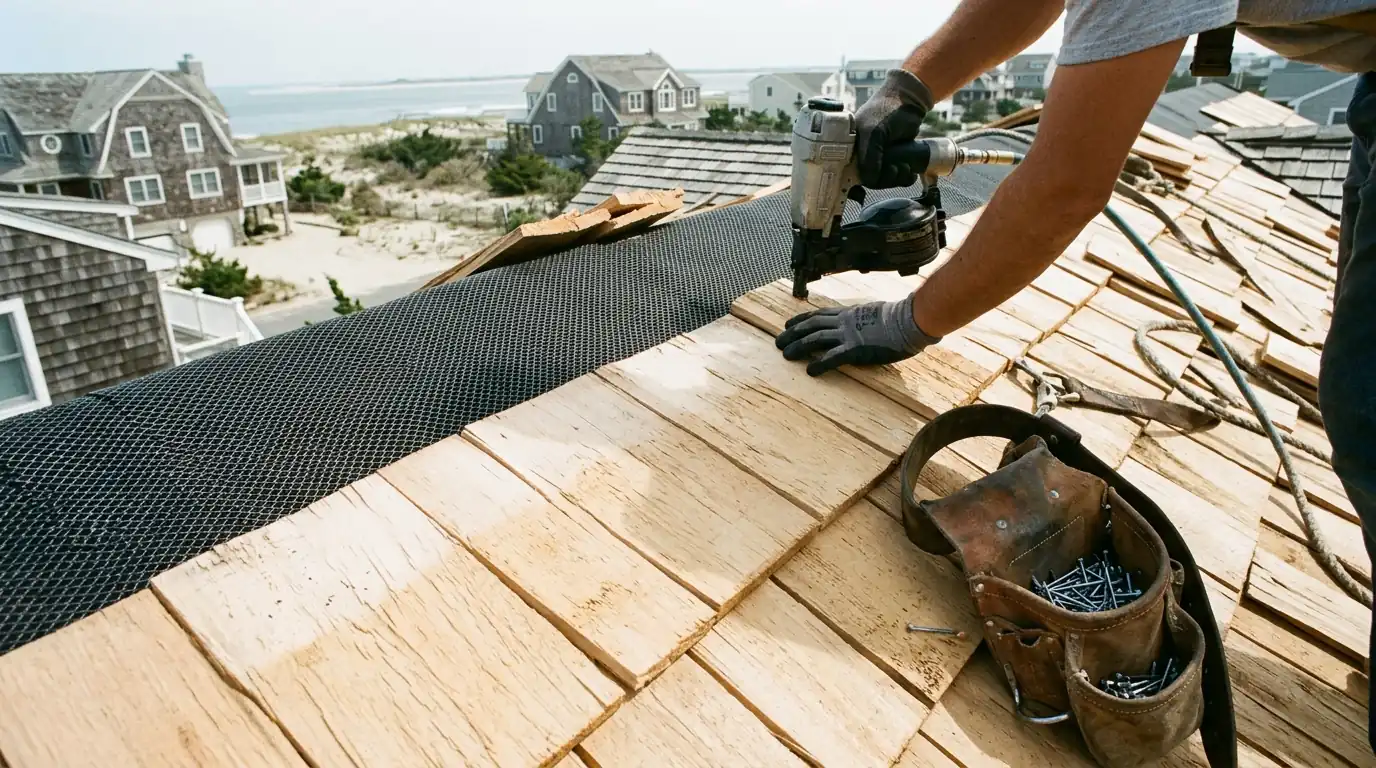
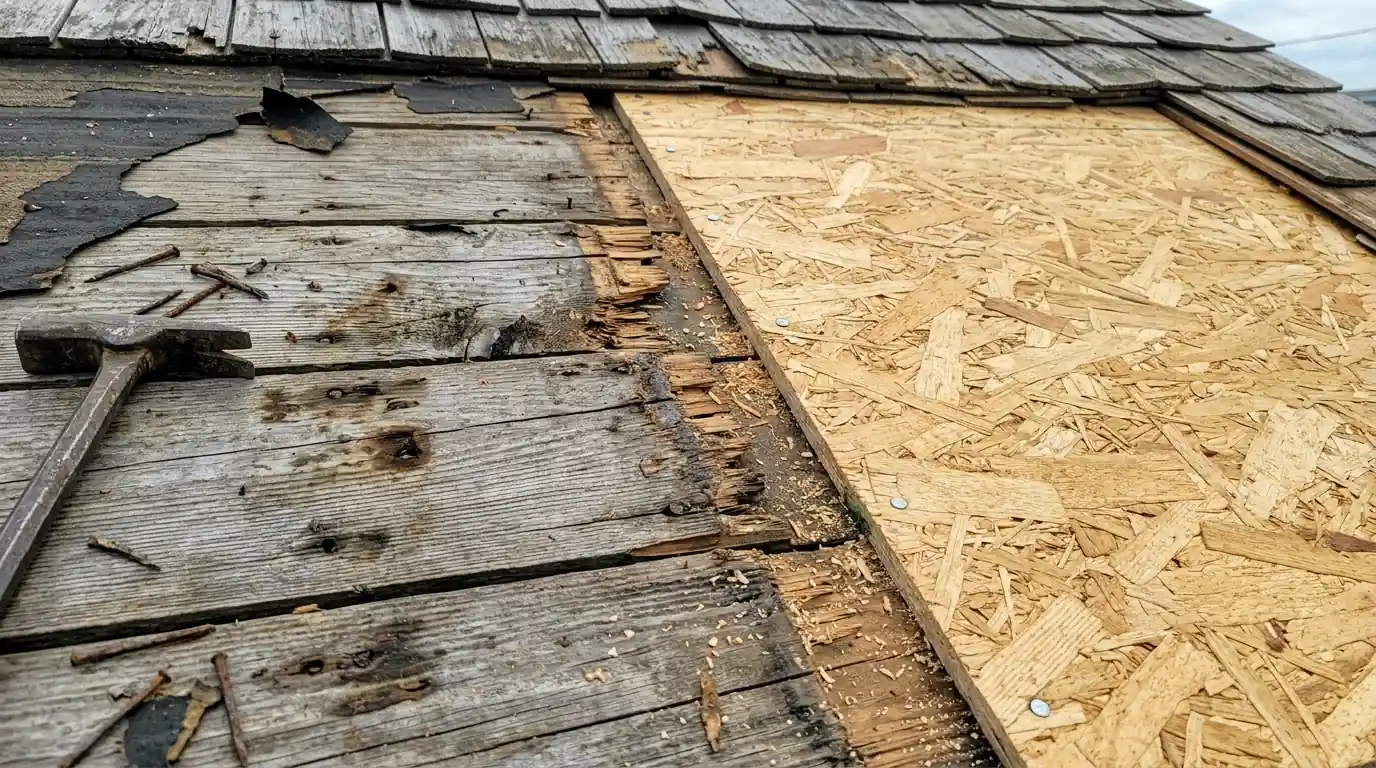
We remove shakes in manageable sections rather than stripping the whole roof at once, so a sudden shower can't soak an old plank deck. Every section is dried in before day's end.
Daily, through the jobRepair the deck and add airflow
Old skip sheathing or planks get repaired where they're soft. A breathable underlayment or ventilation mat lets the cedar dry from behind, which adds years to its life.
As each section opensInstall with stainless fasteners
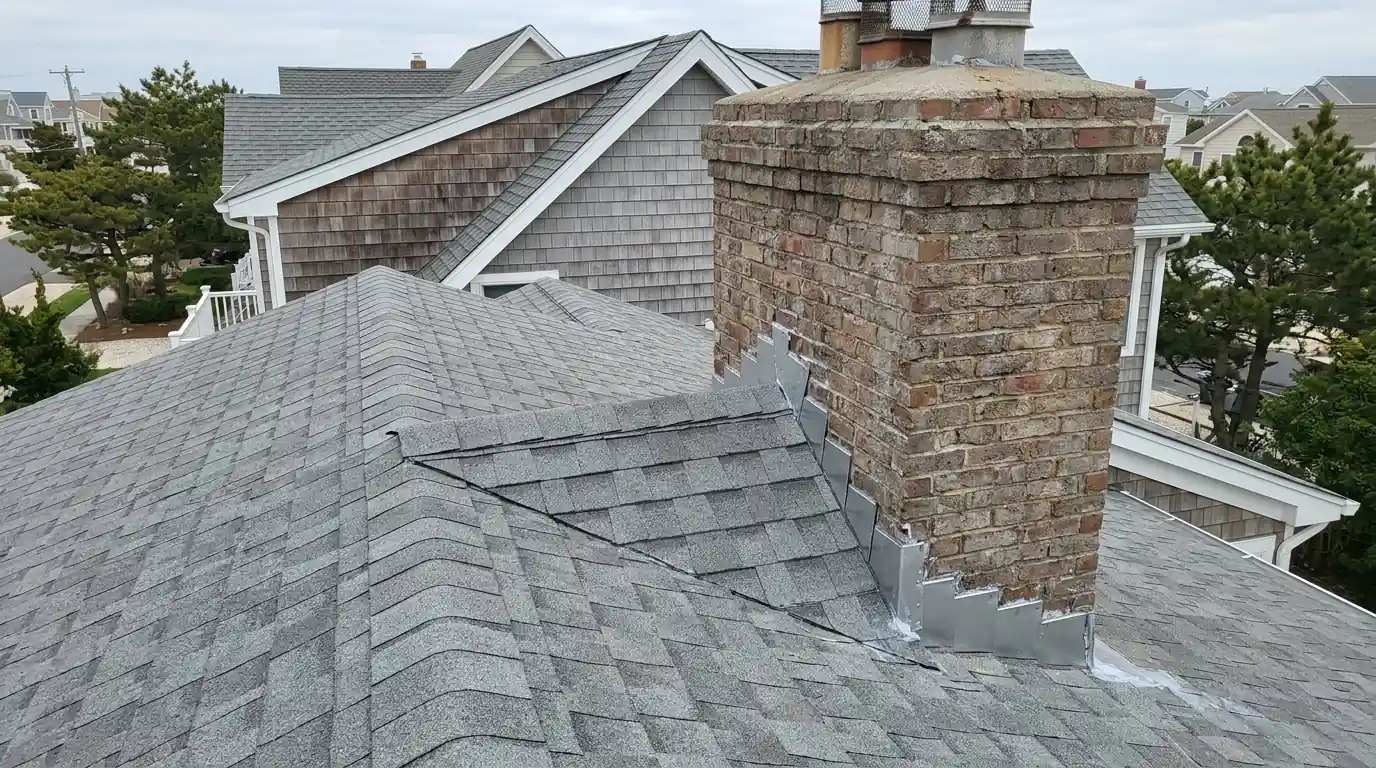
New cedar goes on with stainless nails at the spacing and exposure the material calls for. Flashing at dormers and chimneys is copper or heavy aluminum, chosen to match the house.
Several days to a few weeks
Want the look without the upkeep?
Some Bay Head owners love the look of cedar but not the maintenance. Composite shake and slate products from brands like DaVinci and CertainTeed come close to the texture of real wood or stone, weigh less than slate and don't rot or split. They can be a good fit for steep roofs on newer homes built to match the old ones. Our synthetic slate and shake roofing page explains the tradeoffs, and cedar shake roofing covers the real thing. Call (732) 419-1462 to compare both on your house.