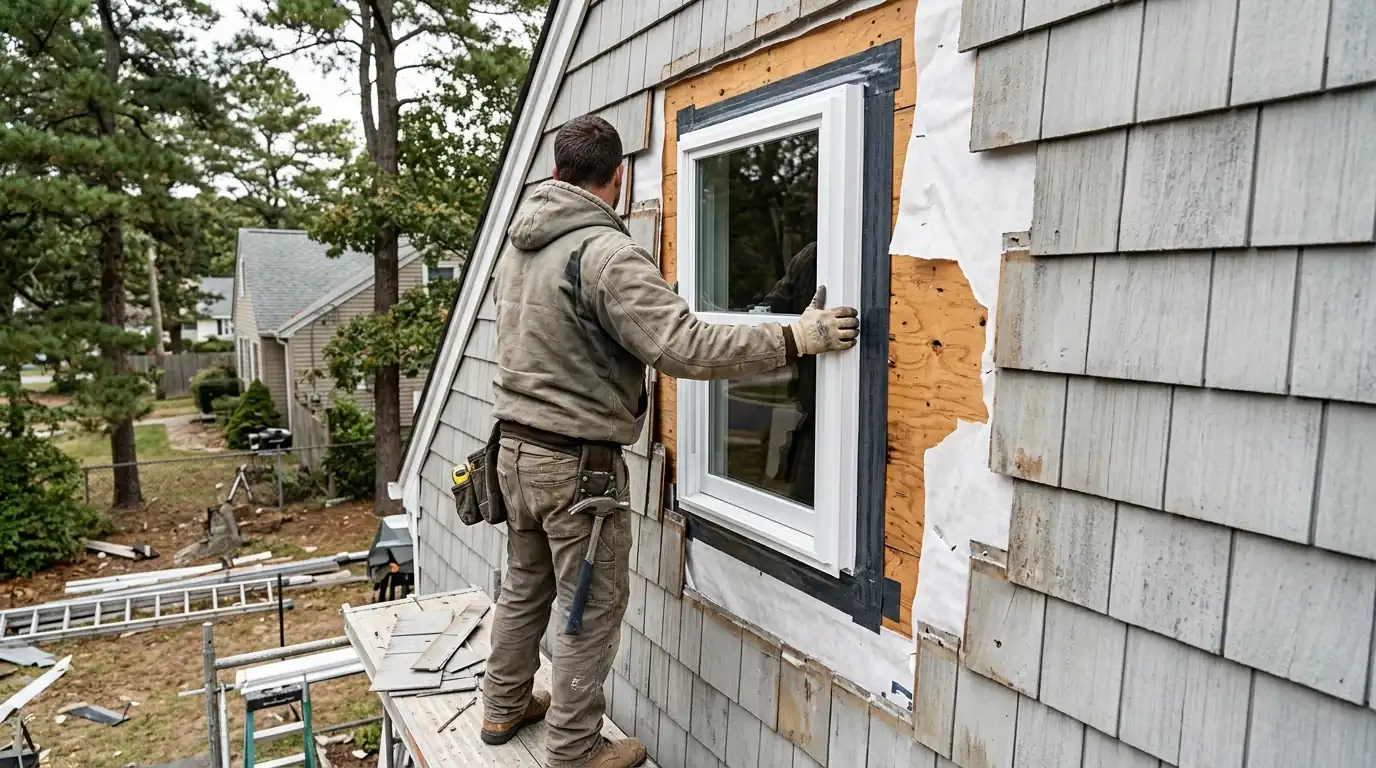
Most Toms River homes get vinyl replacement windows one of two ways: as inserts into sound existing frames, or full-frame when the old frames are rotted or the siding is coming off anyway. Full-frame costs more but lets us flash the opening properly. Look for NFRC-labeled windows with low-E glass, and put windows ahead of siding when you're doing both.
Insert or full-frame: picking the right install
The choice comes down to the condition of the existing frames and whether the siding is changing. Here's the tradeoff in plain terms.
| Question | Insert (pocket) install | Full-frame install |
|---|---|---|
| What comes out | Old sashes and stops; the original frame and trim stay | Everything down to the rough opening framing |
| When it fits | Square, dry, solid wood frames with no rot at the sill | Rotted sills, out-of-square openings, or new siding going on |
| Glass area | Slightly smaller, since the new frame sits inside the old one | Full glass size, sometimes larger than before |
| Water protection | Relies on the old frame and exterior trim staying sound | New sill pan and flashing tied into the house wrap |
| Disruption | Interior trim usually stays put; quicker per window | Exterior trim and some siding come off; interior trim may be reset |
What matters on the window itself at the shore
Window brochures throw plenty at you. These are the details worth comparing for a house near the bay.
The NFRC label
Each window carries an NFRC label listing U-factor and solar heat gain coefficient. A lower U-factor means less heat lost in winter. Compare those numbers across brands rather than the marketing names on the brochure.
Low-E glass and gas fill
Low-E coatings reflect heat back into the room in winter and cut solar heat in summer. Argon gas between the panes adds a bit more insulation. Both come standard on most decent vinyl windows now.
Welded vinyl frames and sashes
Fusion-welded corners don't separate the way screwed corners can. Multi-chambered frames add stiffness and insulation, and solid locks pull the sashes tight against the weatherstrip when you close them.
A design pressure number for wind
Windows list a design pressure, or DP, reflecting the wind load they're tested to resist. Near the bay and on the barrier island, a higher DP matters more than in sheltered inland neighborhoods.
Styles that suit the house
Double-hungs suit capes and colonials, sliders fit ranches and bi-levels, and casements catch breezes on a bay-facing wall. Vinyl lines such as Alside's come in all three, so one product family can cover a mixed house.
How a window replacement runs, from tape measure to cleanup
Most homes are done in one or two install days. Here's what happens along the way.
Measure every opening
We measure each window at several points, check frames for square and probe sills for rot. That tells us which openings take an insert and which need full-frame work, so the order is right the first time.
First visit, about an hourOrder and plan the sequence
Custom vinyl windows are built to those measurements, which takes several weeks. Meanwhile we plan the sequence, especially if siding, capping and PVC trim or roof work is part of the same project.
While windows are builtRemove the old unit, protect the room
Drop cloths go down inside, then sashes or the whole frame come out along with old weights, pulleys and debris. Empty weight pockets get packed with insulation so they stop leaking cold air.
Install dayPan, flash and set
Full-frame openings get a sloped sill pan, then the window is set level and plumb, fastened and flashed with tape lapped shingle-style. Inserts go into a cleaned frame and get shimmed so the sashes run smoothly.
30 to 90 minutes per windowInsulate, seal and trim
Gaps between window and framing are filled with low-expansion foam. Exterior joints get sealed where they're meant to be, the outside is capped or trimmed, and interior stops are reset or replaced.
Same dayTest every window with you
We open, close and lock each window, check the tilt-in sashes and show you how screens and cleaning work. Old units and debris leave with us.
End of the job
Replacement window costs around Toms River in 2026
These are installed ranges for vinyl windows on Jersey Shore homes, meant for planning rather than as a quote.
| Work | Typical range | What moves the number |
|---|---|---|
| Vinyl double-hung, insert install | $645 to $1,190 per window | size, glass package, color, exterior capping |
| Vinyl double-hung, full-frame install | $1,080 to $1,970 per window | rot repair, siding removal around the opening, new trim |
| Bay or bow window | $3,870 to $7,460 | number of units, roof over the bay, interior seat board |
| Vinyl sliding patio door | $2,480 to $4,940 | width, sill condition, glass options |
| Whole-house set of 14 to 20 windows | $11,600 to $29,800 | mix of install types, upgrades, exterior trim work |
Window sizes, the install method each opening needs and what we find once old frames come out all move the price, so we measure before giving a number.
Windows and siding: why the order matters
When siding and windows are both on the list, the windows should go in first or at the same time. A window installed after new siding is finished has to be flashed into a wall that's already closed, which means more caulk and less real flashing. With the siding off, the window's nailing flange and flashing tape lap into the new house wrap, so water running down the wall stays on the outside.
If you're replacing windows now and siding later, we'll often suggest full-frame on the worst openings and inserts on the rest, then plan the trim so it can be recapped or wrapped cleanly when new siding goes on. It saves tearing out good work in a few years.
Leaks around windows often aren't the glass or the frame at all. They come from missing sill pans, reversed laps in the house wrap, or caulk doing a job that flashing should have done.
Things to decide before we measure
A few choices up front keep the order simple and avoid surprises on install day.
- Which rooms need windows that open wide for escape or airflow
- Interior and exterior frame colors; darker vinyl costs more
- Grids between the glass, or clear glass
- Tempered glass in spots like bathrooms and next to doors
- Whether any openings should change size or style
- Full or half screens on double-hungs
- Whether siding or trim work is planned in the next few years
Windows that hold up to bay wind and salt air
Toms River homes take weather from two directions: southwest summer breezes off the bay and northeast gales in a nor'easter. Wind-driven rain gets pushed sideways into weep holes and around frames, so the way an opening is flashed matters as much as the window. Salt air also pits cheap hardware, so we pay attention to locks and balances on homes closer to the water.
Much of the housing stock here is 1950s to 1980s ranches, capes and bi-levels, many with original wood windows or early replacements that now fog and stick. Elevated homes rebuilt after Sandy face more wind at height, which is why we check the design pressure number on every window we quote for a raised house near the bay or ocean. In the 55+ communities around Manchester and Whiting, HOA approval on color and grids comes first; our guide to approvals in 55+ communities covers how that tends to go.
Where we do this work most
We work across all of Toms River (08753, 08755 and 08757) and these neighboring towns every week, along with the rest of Ocean County and southern Monmouth County.
- Silverton, Toms River08753
- Pleasant Plains, Toms River08755
- West Dover, Toms River08755
- Ortley Beach, Toms River08751
- Lakewood08701
- Brick08723
- Jackson08527
- Howell07731
- Manchester08759
- Berkeley Township08721
- Lacey Township08731
- Stafford Township08050
- Barnegat08005
- Wall Township07719
- Freehold07728
- Point Pleasant08742