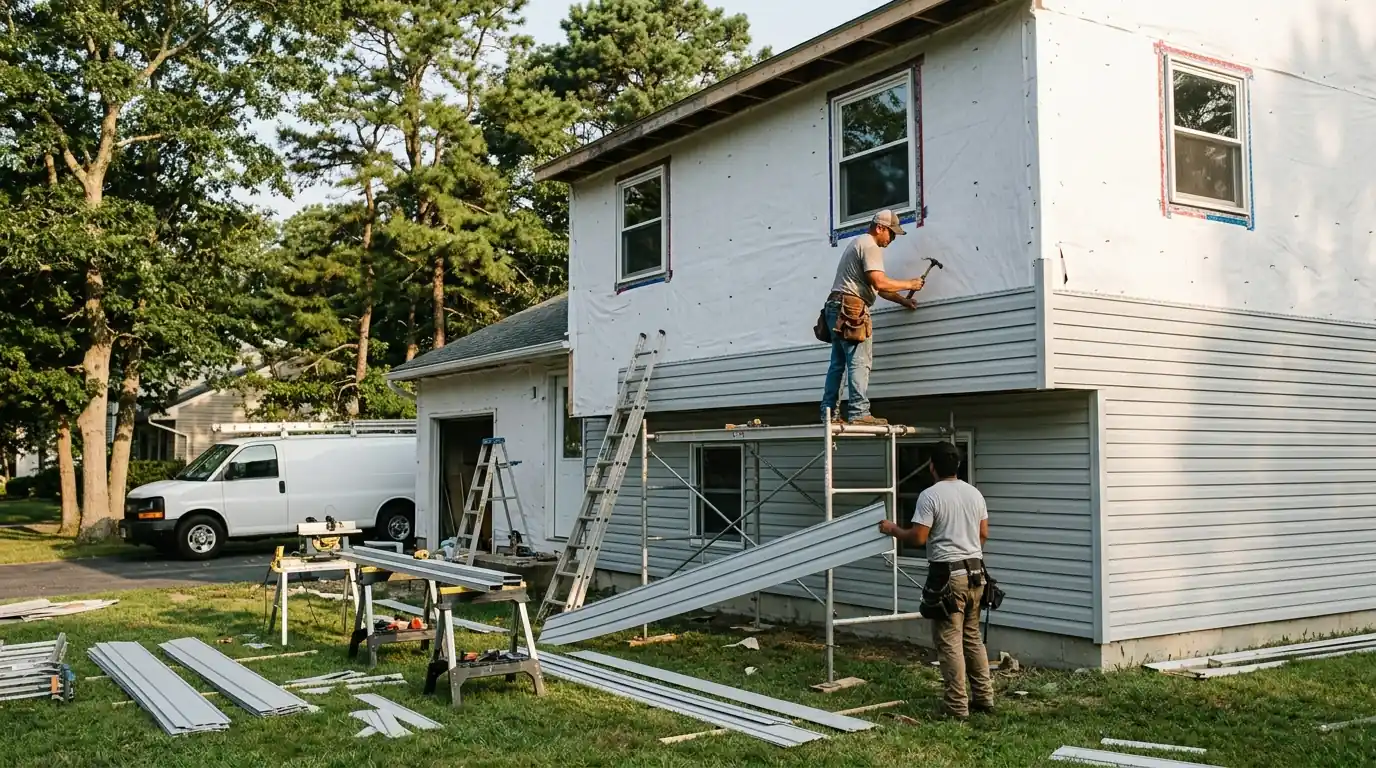
For most Toms River homes, a premium-thickness vinyl tested for high wind speeds is the best value siding available. Whether to choose insulated panels depends on your walls, budget and how much the house rattles in a nor'easter. A typical ranch or cape takes three to five working days. Call (732) 419-1462 to have us measure and talk through colors on site.
Choosing a vinyl profile that suits your house
The profile is the shape of each panel, and it sets the character of the whole house. These are the styles we install most around Toms River.
Traditional clapboard
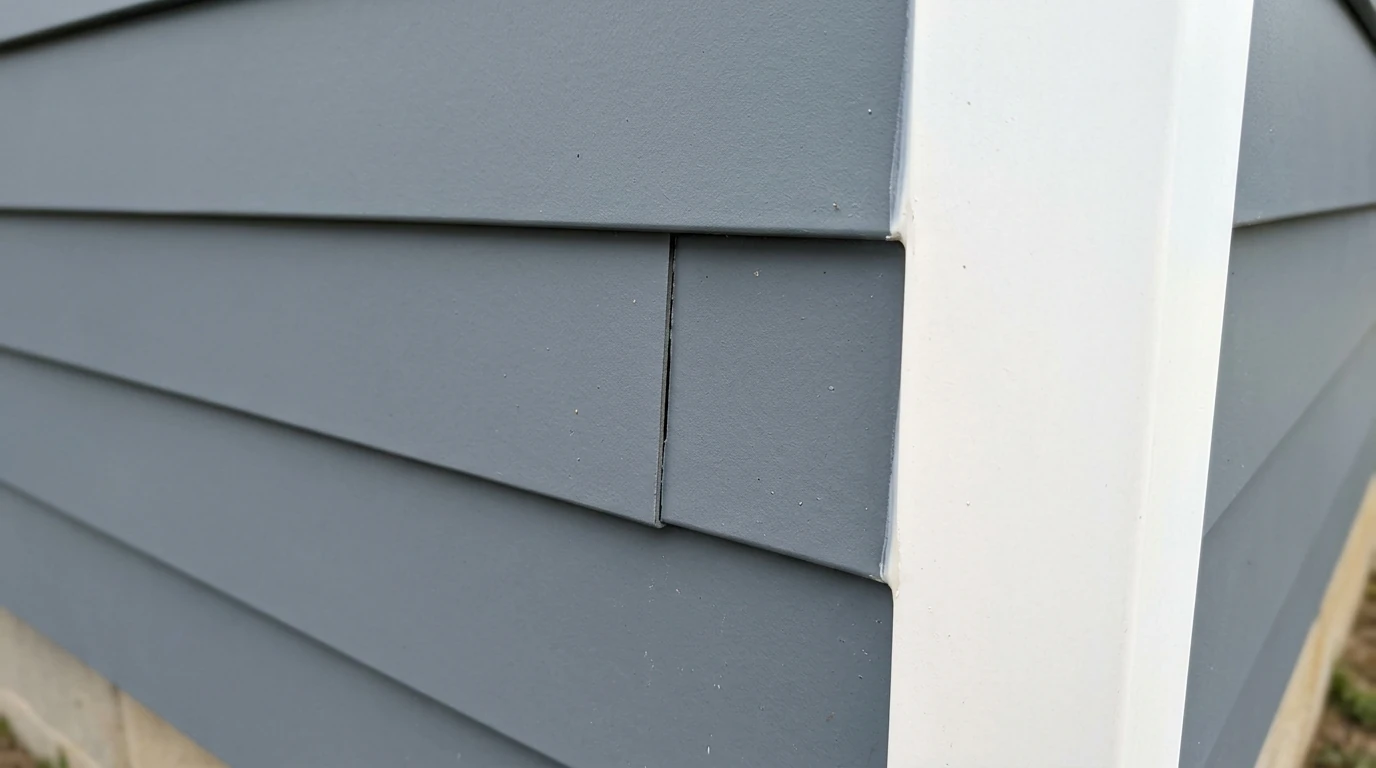
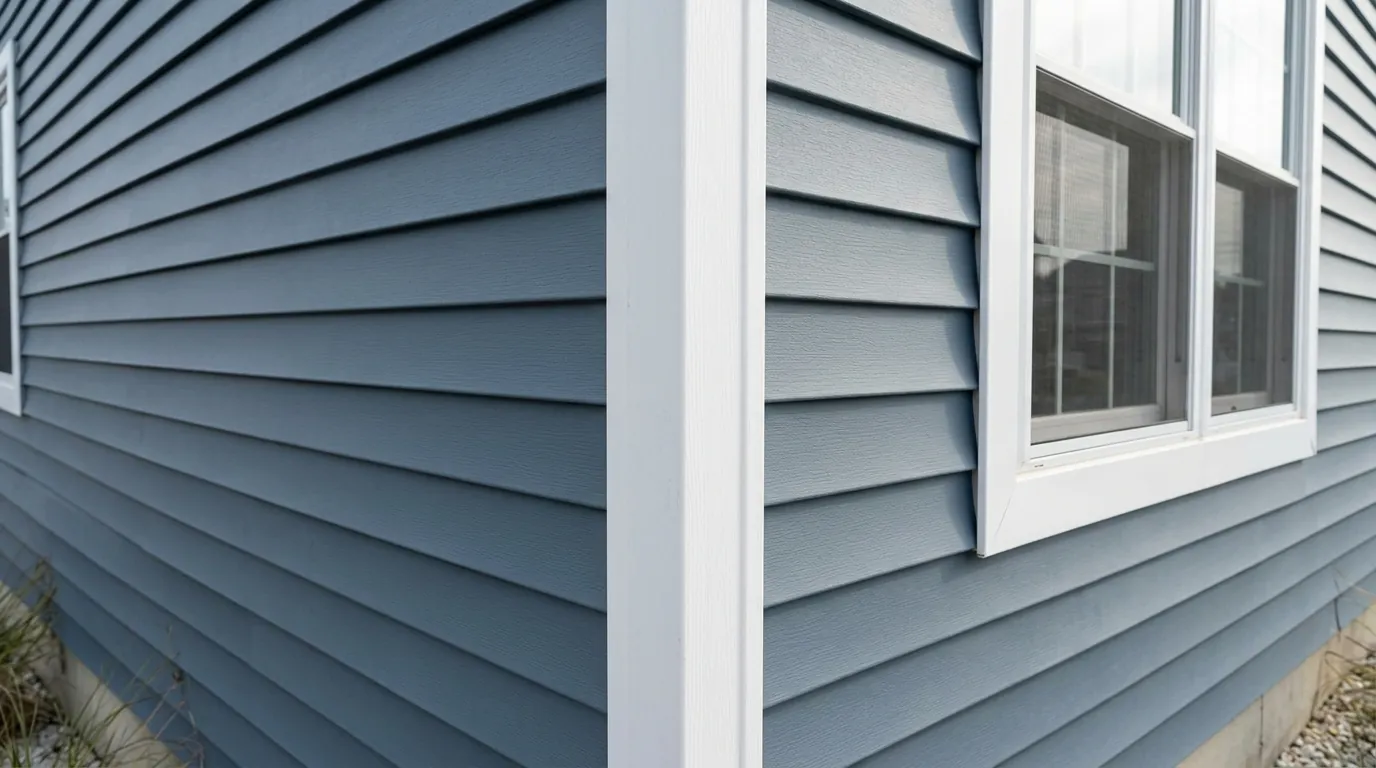
A straight, slightly beveled lap in 4 or 5 inch exposures. It suits colonials and capes and reads as classic New England siding from the street, which is why it's the most popular choice we see.
Dutch lap
Each course has a scooped groove along the top that throws a deeper shadow line. Dutch lap gives a ranch or split-level more texture and hides minor wall waviness better than a flat clapboard.
Board and batten
Vertical panels with raised battens, used on gables, entry bumps or a whole farmhouse-style home. Paired with horizontal lap on the lower walls, it breaks up a large flat elevation nicely.
Vinyl shakes and scallops
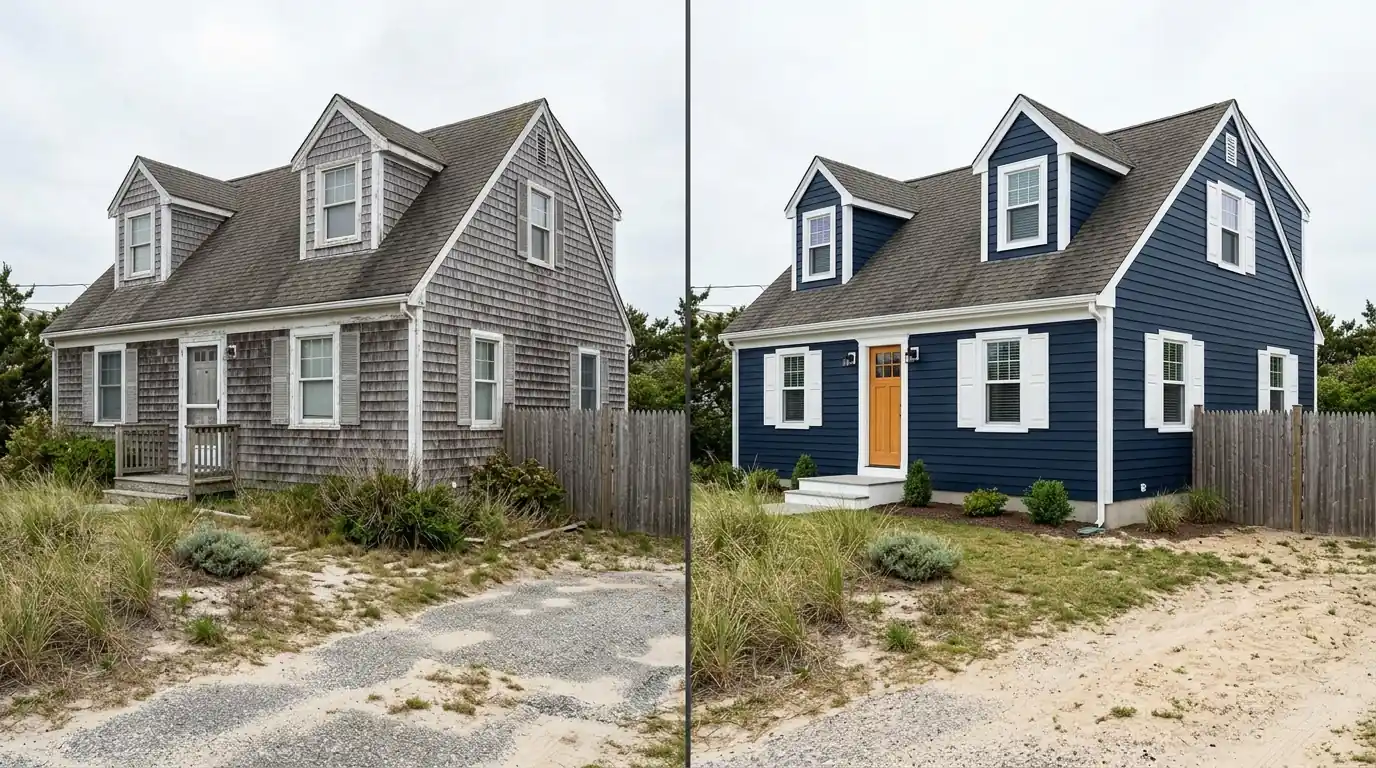
Molded shake panels give the look of cedar shingles without staining or splitting. Many shore homes use them on gables and dormers as an accent over clapboard below.
Insulated vinyl
Panels with contoured foam fused to the back. They're stiffer, lie flatter on uneven walls, resist dents and add a little insulating value. Alside, CertainTeed and Mastic all offer insulated lines.
Standard, premium or insulated: what changes as you go up
Most manufacturers sell vinyl in several grades. Thickness and stiffness drive how the wall looks in low sun and how well the panels ride out wind.
| Grade | Typical thickness | Best suited for |
|---|---|---|
| Builder grade | About 0.040 to 0.042 inch | Sheds, detached garages and tight budgets; more prone to waviness and wind rattle |
| Premium | About 0.044 to 0.048 inch | Most homes around Toms River; stiffer panels tested to higher wind speeds |
| Super premium | 0.050 inch and up | Exposed bayfront walls, two-story elevations and homeowners who want the straightest look |
| Insulated | Premium panel plus foam backer | Older homes with wavy walls, drafty rooms or a lot of street noise |
How a vinyl siding job goes from tear-off to cleanup
A full re-side on a single-story home usually takes three to five working days, and a two-story colonial takes a bit longer. Here's how the work is sequenced.
Measure, choose and order
We measure every wall, window and door, then sit down with you on profile, color, grade and trim. Material is ordered once you approve, and we pull the township permit when the job requires one.
1 to 2 weeks before startStrip the old siding and inspect the walls
Old siding comes off one elevation at a time so the house is never left open overnight. We check sheathing for rot or soft spots and replace damaged sections before anything new goes on.
Day 1Wrap the house and flash the openings
House wrap goes on shingle-style with taped seams. Windows and doors get flashing tape at the sill first, then the sides, then the head, so water always laps outward.
Day 1 to 2Set trim, channels and starter strip
Corner posts, J-channel around openings and a level starter strip go up next. Getting this layer straight is what keeps every course of siding level around the house.
Day 2Hang the panels and finish details
Panels are nailed in the center of slots, left loose enough to move with temperature. We finish with mounting blocks for lights and spigots, utility trim under windows and soffit tie-ins.
Day 2 to 5Clean up and walk the job
Scrap and old siding leave the property, and we run a magnet over the yard for nails. You walk every side of the house with us before we call it done.
Final afternoon
What vinyl siding costs on a Toms River house in 2026
Siding is priced by the square (100 square feet of wall). These ranges cover tear-off, wrap, trim and installation on typical Ocean County homes.
| Work | Typical range | What moves the number |
|---|---|---|
| Premium vinyl, single-story ranch | $13,400 to $22,700 | Wall area, number of windows and gables, and trim choices |
| Premium vinyl, two-story colonial | $21,600 to $36,900 | Height, staging, number of corners and openings |
| Insulated vinyl upgrade | $2,150 to $5,480 added | Total wall area and the line you choose |
| Sheathing repair found during tear-off | $95 to $165 per sheet | Extent of rot, usually under windows and at corners |
| Shake or board and batten accent on gables | $1,260 to $3,850 | Gable size, height and the profile you pick |
Every house is different. These are general ranges, not quotes, and we confirm pricing only after measuring yours.
The details that keep vinyl straight and dry for decades
Vinyl siding is a rain screen, not a waterproof skin. Some water always gets behind it, especially in sideways rain off the bay. What keeps your walls dry is the layer underneath: house wrap lapped the right way, flashing tape at every window and door, and kickout flashing where a roof edge meets a wall. When we tear off older siding and find rot, it's almost always at one of those spots.
Vinyl also moves. A 12 foot panel can grow and shrink about a half inch between a January morning and a sunny August afternoon. Nailing too tight causes the waves and buckles you see on poorly installed houses. We leave the right gap at every channel and hang panels by their slots, which is what manufacturers such as CertainTeed and Mastic call for to keep their product warranties in force.
If you're still deciding between materials, our post on vinyl or fiber cement for a shore house compares the two side by side, and our fiber cement siding page covers the heavier option. Homes getting new windows at the same time should look at replacement windows so the flashing is done once, in the right order.
Questions to settle before your siding is ordered
Siding is a big purchase you'll live with for a long time. These are the decisions we'll work through with you before anything is ordered.
- Which profile and exposure fits the style of the house
- Color, keeping in mind that darker vinyls need a line made for deeper colors
- Standard, premium or insulated panels, and the wind speed each one is tested to
- Whether window and door trim gets capped in aluminum or replaced with PVC
- If new gutters, soffit or windows make sense on the same project
- Any HOA or community color rules that apply to your street
- Where outdoor lights, hose bibs, vents and cables will get mounting blocks
Picking vinyl for wind, salt and sun around Toms River
Wind resistance matters more here than in most of New Jersey. Nor'easters and the occasional tropical storm drive gusts straight off Barnegat Bay and the ocean, and cheaper panels can pop loose from each other and peel off a wall. For homes in Ortley Beach, Normandy Beach and the bayfront sections, we steer toward premium or super premium lines with a strong nail hem and a high tested wind speed.
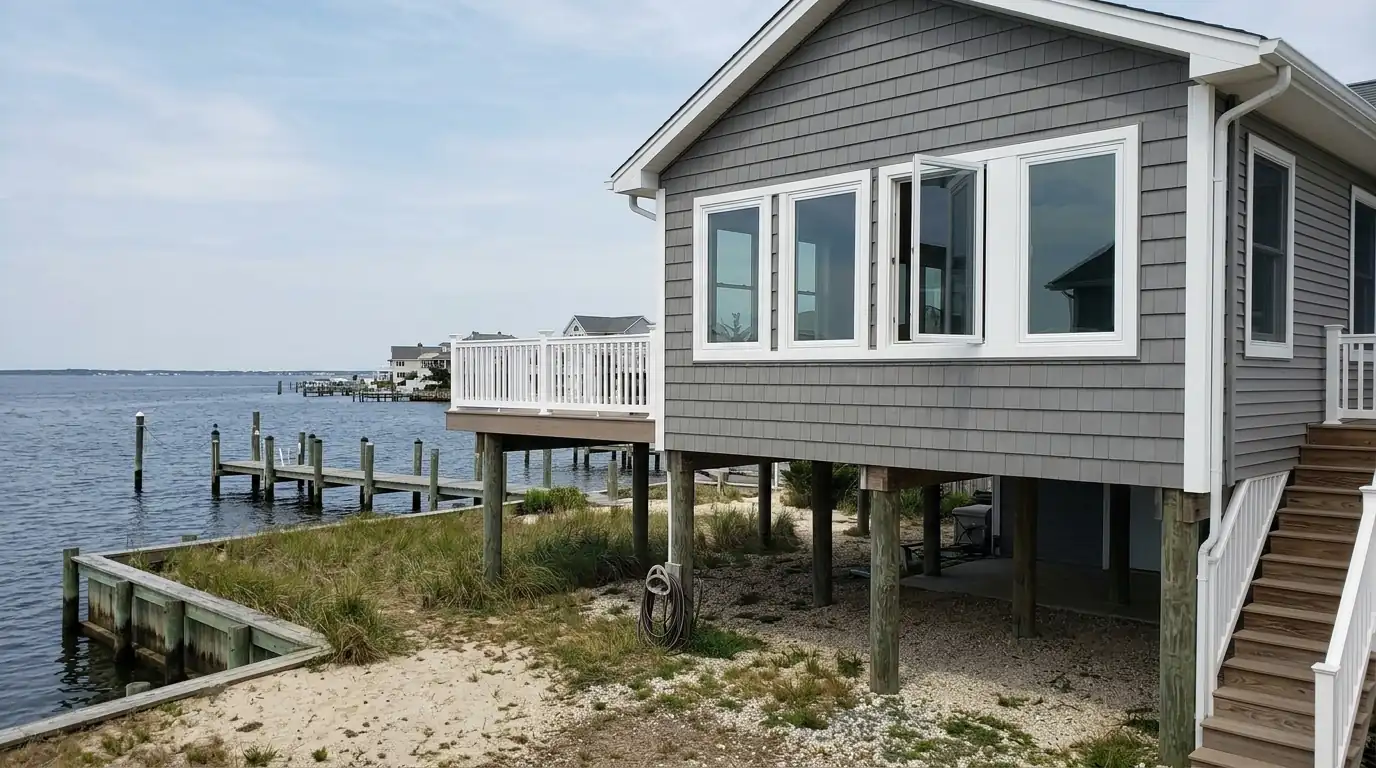
Sun is the other factor. South and west walls take a lot of heat in July, and dark colors on low-grade vinyl can warp near grills and reflective windows. Across the inland neighborhoods off Route 37 and Hooper Avenue, many 1960s and 1970s split-levels and bi-levels still wear their first aluminum or thin vinyl siding. Re-siding them with insulated panels flattens wavy walls and quiets the rattle you hear in a storm. On raised post-Sandy homes, we also plan siding around tall foundation walls, lattice and stair landings.
Where we do this work most
We work across all of Toms River (08753, 08755 and 08757) and these neighboring towns every week, along with the rest of Ocean County and southern Monmouth County.
- Silverton, Toms River08753
- Pleasant Plains, Toms River08755
- West Dover, Toms River08755
- Ortley Beach, Toms River08751
- Lakewood08701
- Brick08723
- Jackson08527
- Howell07731
- Manchester08759
- Berkeley Township08721
- Lacey Township08731
- Stafford Township08050
- Barnegat08005
- Wall Township07719
- Freehold07728
- Point Pleasant08742