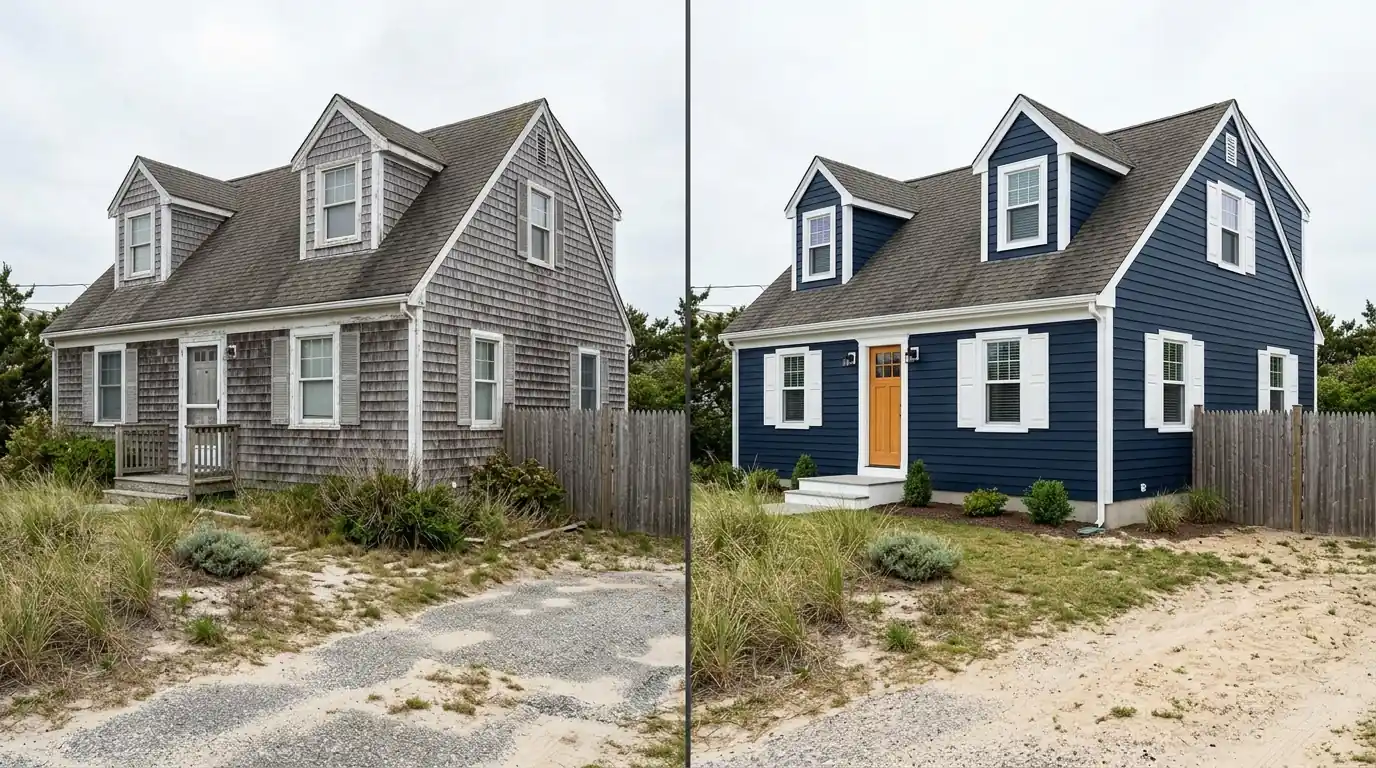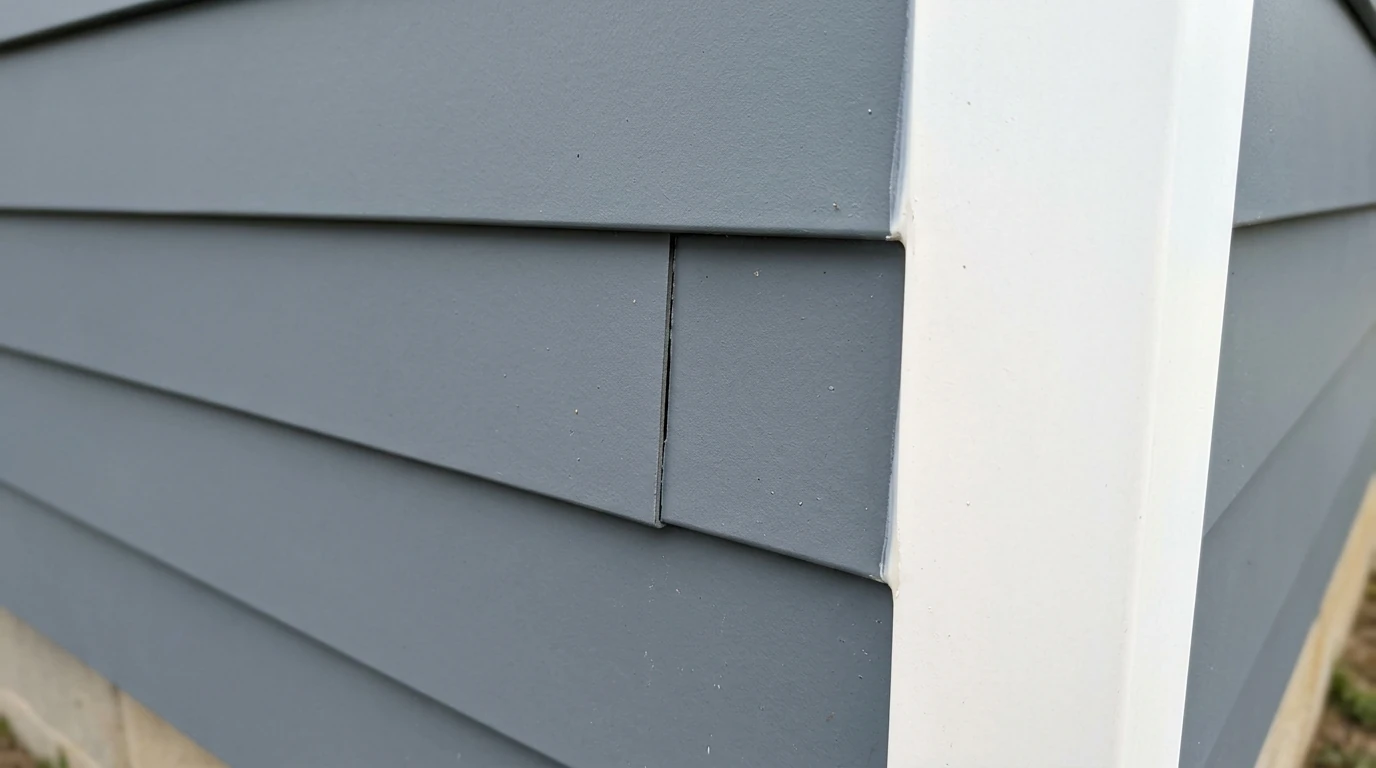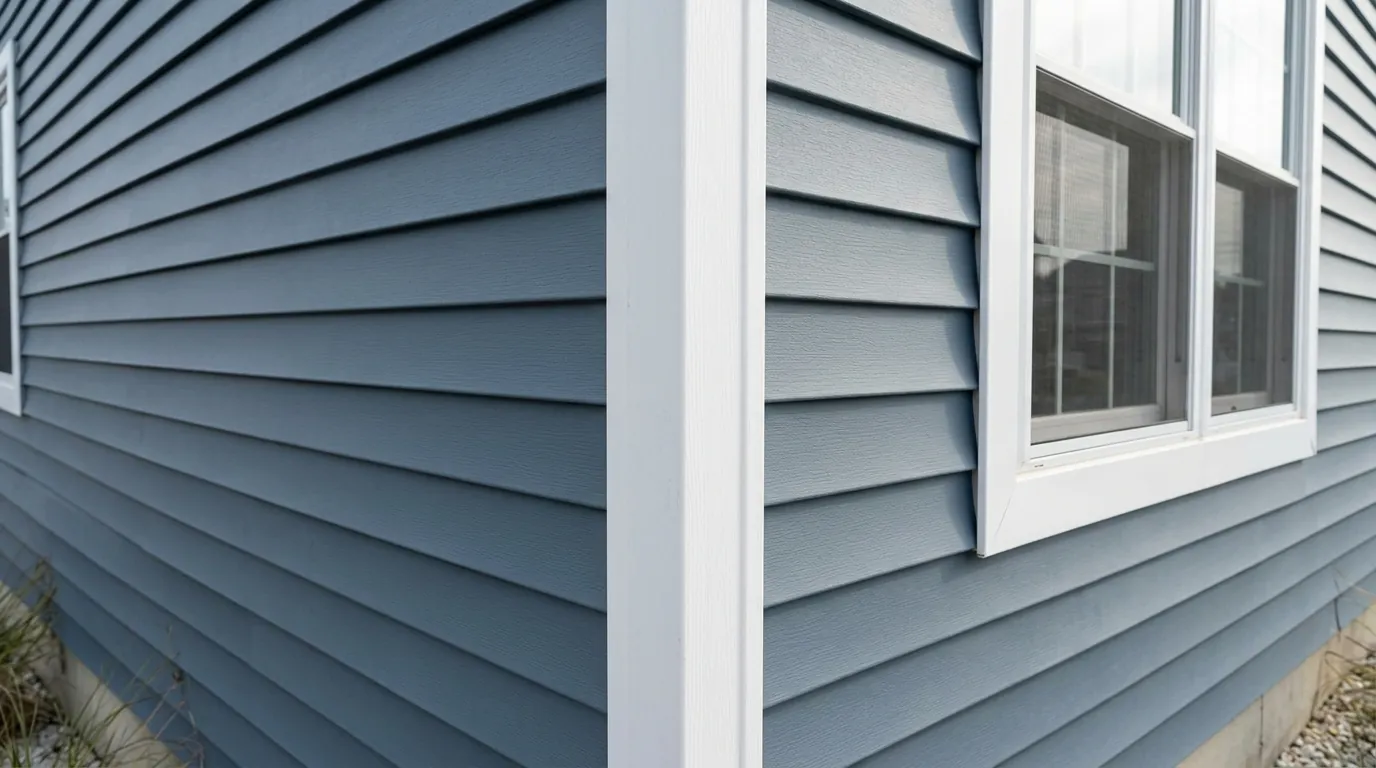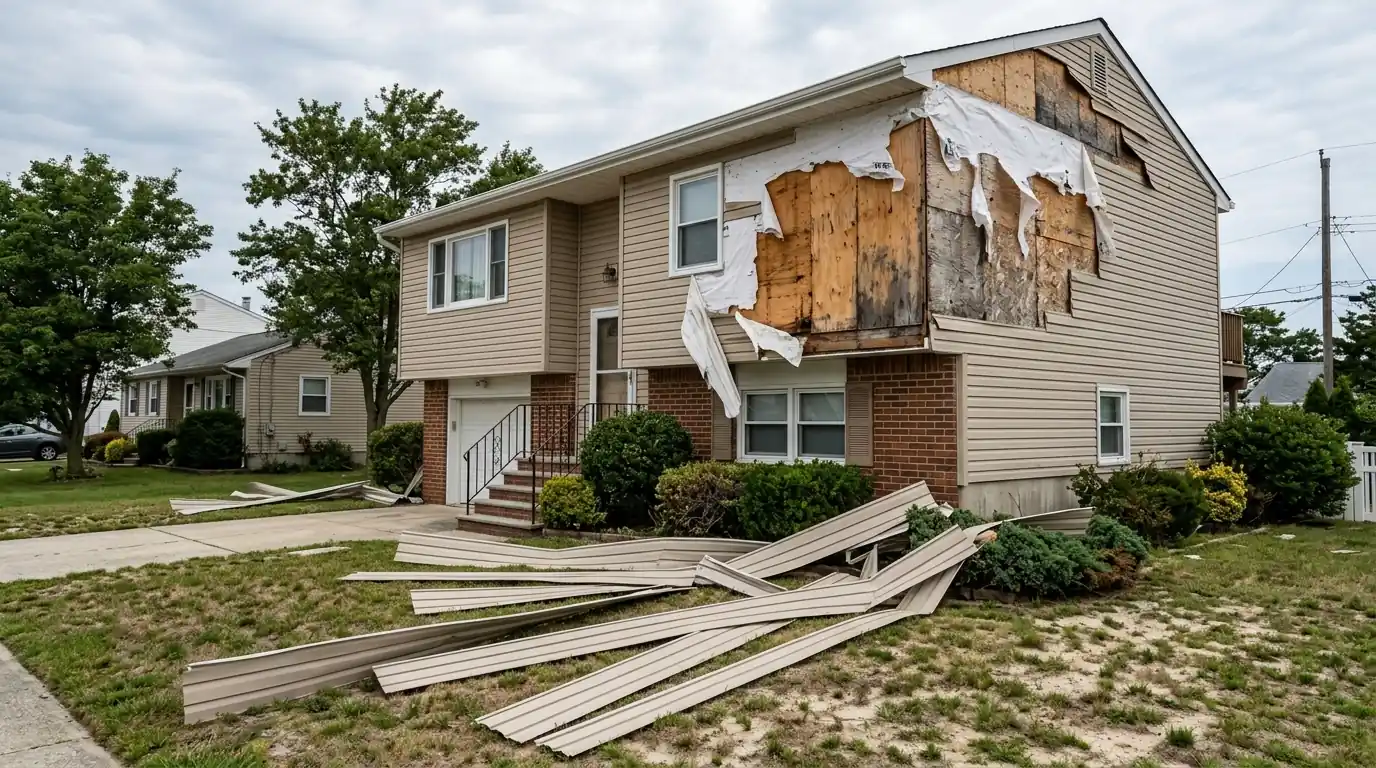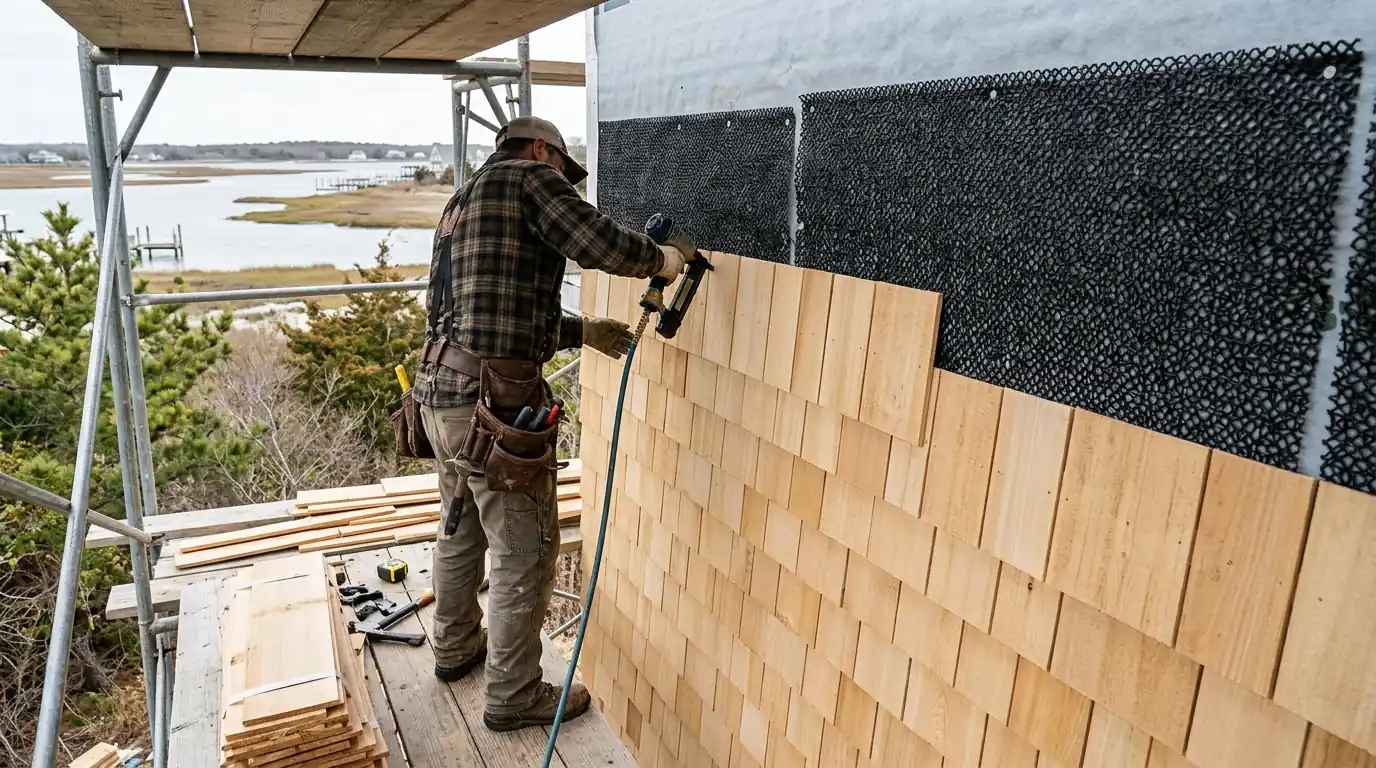
Yes, cedar siding holds up well around Toms River when it's done right: a drainage gap behind it, back-primed boards or good shingles, stainless steel nails that won't streak in salt air, and a finish plan you can keep up with. Expect restaining every few years if you want color, or very little upkeep if you let it weather gray.
Shingles, shakes or clapboard: which cedar suits your house
All of these are real wood, but they look, install and age differently. Here's how we explain the choice when we're standing in your driveway.
Eastern white cedar shingles
The classic shore shingle. Sawn smooth and laid in straight courses, they weather from honey tan to a soft silver gray within a couple of seasons near the water. They suit capes, cottages and shingle-style colonials.
Western red cedar shingles
Richer color, tighter grain and a little more stability. Many homeowners pick red cedar when they plan to stain, since it takes semi-transparent and solid finishes evenly and keeps a crisp, even look.
Hand-split or rough-sawn shakes
Thicker butts and deeper shadow lines give a rustic texture. Shakes suit gables, dormers and accent walls, though they cost more and need extra care at window heads.
Cedar bevel clapboard
Tapered horizontal boards with a clean, traditional line. Clapboard looks dressier than shingles and shows paint or solid stain well, which is why it turns up on older colonials and Victorian homes.
Fancy-cut shingles
Fish scale, diamond and half-round butts dress up gables and porch fronts. We weave them among standard shingles to echo the trim on older homes in places like Island Heights.
Cedar look-alikes for low upkeep
If restaining sounds like a chore, polymer shake panels such as CertainTeed Cedar Impressions or fiber cement shingle siding like James Hardie's HardieShingle copy the pattern. We'll price them beside real wood.
Gray, stained or painted: picking a finish you can live with
The finish decides how the wall looks in five years and how often someone climbs a ladder. Most shore homeowners pick one of these four.
| Finish | How it looks over time | Upkeep to expect |
|---|---|---|
| Natural weathering | Turns silver gray, unevenly at first; walls under deep eaves stay browner for years | Very little; wash off mildew and swap split pieces as they appear |
| Bleaching oil | Speeds up an even driftwood gray so the house doesn't look patchy during the change | One or two coats early on, then the wood is left alone |
| Semi-transparent stain | Grain stays visible under a tint of color; fades gently instead of peeling | Recoat roughly every three to five years on sunny and bay-facing sides |
| Solid stain or paint | Opaque color that hides grain and looks sharp on clapboard | Recoat every several years; watch for peeling where moisture gets behind the film |
How a cedar re-side goes, from tear-off to the last course
A wall of cedar goes up slower than vinyl because every piece is fitted by hand. This is the order we follow on most homes.
Strip and open up the wall
We remove the old siding one elevation at a time so the house is never left open overnight. Soft sheathing, a rotted sill plate or old water damage around windows gets cut out and replaced before anything new goes on.
Day 1Wrap and add a drainage gap
New house wrap goes up shingle-lapped, followed by a rainscreen mat or thin furring strips. That small air space lets cedar dry from the back, the biggest single factor in how long it lasts by the water.
Day 1 to 2Flash the openings
Windows, doors, hose bibs and vent hoods get flashing tape and metal head flashing. If you're also getting new windows, we set them first so their flashing laps correctly into the fresh wrap.
Day 2Back-prime and pre-stain
When you want color, we coat the backs and cut ends of clapboards, or order factory pre-stained shingles. Sealing every side keeps moisture from wicking in unevenly and cuts down on cupping along the sunny walls.
Before hangingCourse it out with stainless nails
We snap level lines, keep joints staggered between courses and leave a small gap between shingles for swelling. Every nail is stainless steel, because galvanized and bright nails bleed black streaks once salt air reaches them.
2 to 6 daysTrim, seal the right joints, finish
Corner boards, window casings and the water table get finished, and only the joints meant for sealant get it. Then the first finish coat goes on, cedar scraps get raked up and we walk the house with you.
Final day
What cedar siding runs on a Toms River home in 2026
Cedar costs more than vinyl and usually more than fiber cement, mostly in hand labor. Typical ranges, not a quote.
| Work | Typical range | What moves the number |
|---|---|---|
| Eastern white cedar shingle siding, installed | $11.40 to $18.75 per sq ft | wall height, staging, number of windows, rainscreen choice |
| Cedar bevel clapboard, installed and primed | $10.60 to $17.30 per sq ft | board grade (clear or knotty), width, paint or stain |
| Re-siding a typical cape or ranch in cedar shingle | $23,400 to $41,900 | wall area, tear-off, sheathing repairs found under the old siding |
| Patch repair after a storm or a woodpecker | $585 to $2,240 | blending weathered color, height, how far the damage runs |
| Restaining a whole house | $3,150 to $7,280 | prep washing, stain type, number of stories, condition of the old coat |
Final cost hinges on what's behind the old siding, the cedar grade you choose and access around the house, so we price after seeing the walls in person.
Why cedar fails early, and how we keep it from happening
Most cedar problems we're called about aren't the wood's fault. Shingles nailed straight to sheathing with no drainage space stay damp for days after a nor'easter, then cup and split. Bright steel nails rust out and leave black tear stains down a wall within a season or two. Clapboards caulked tight at every lap trap water that should have run out.
We build a wall that sheds water at the face and dries at the back. That means a vented gap, flashing at every opening, stainless fasteners and finish on all sides of boards that will be stained. It also means keeping the bottom course well above soil and mulch, and clear of the shingles where a dormer wall meets the roof.
Cedar moves, too. It swells in a humid August and shrinks in a dry January, so we space each piece for the season it goes up in.
Questions to settle before you order cedar
Settle these at home first. They change the material list and the price most.
- Do you want the house to weather gray, or hold a color?
- Will you restain every few years yourself, or hire it out?
- Does an HOA or historic district limit siding materials on your street?
- Are the windows due for replacement in the next five years?
- Which walls take the bay or ocean wind head on?
- Would fancy-cut shingles on a gable or porch suit the house?
- Is a cedar look-alike worth pricing next to real wood?
Cedar on bayfront and barrier island homes
Around Toms River, the side of a house facing Barnegat Bay or the ocean weathers at a different speed than the side facing the street. Salt-laden wind grays the exposed walls fast, while walls under deep eaves and behind tall pines stay tan and can hold mildew through our humid summers. We plan stain colors and recoat schedules around those differences rather than treating the house as one surface.
On elevated post-Sandy homes in places like Ortley Beach, cedar walls run higher and catch more wind, so staging, fastening and corner details take more care. Older capes and cottages in the bayside sections often carry two or three layers of past siding. Under them there is sometimes original cedar, occasionally sound enough to keep on a sheltered porch wall. Pine needles collecting against the bottom course are another local hazard, so we keep that first row high and easy to sweep clear.
Where we do this work most
We work across all of Toms River (08753, 08755 and 08757) and these neighboring towns every week, along with the rest of Ocean County and southern Monmouth County.
- Silverton, Toms River08753
- Pleasant Plains, Toms River08755
- West Dover, Toms River08755
- Ortley Beach, Toms River08751
- Lakewood08701
- Brick08723
- Jackson08527
- Howell07731
- Manchester08759
- Berkeley Township08721
- Lacey Township08731
- Stafford Township08050
- Barnegat08005
- Wall Township07719
- Freehold07728
- Point Pleasant08742