Yes. We work across Middletown Township, from the bayshore neighborhoods off Route 36 to Lincroft, Navesink and the streets near Exit 114 of the Parkway. Most jobs here are full roof replacements on large colonials and split-levels, storm repairs after nor'easters off the bay, and siding on raised homes. Call (732) 419-1462, 24/7.
Bayshore or inland: what we see on Middletown roofs
With close to 59 square miles counting water, Middletown has more variety than most townships. These are the patterns our roofers notice.
Bay wind in Belford and Port Monmouth
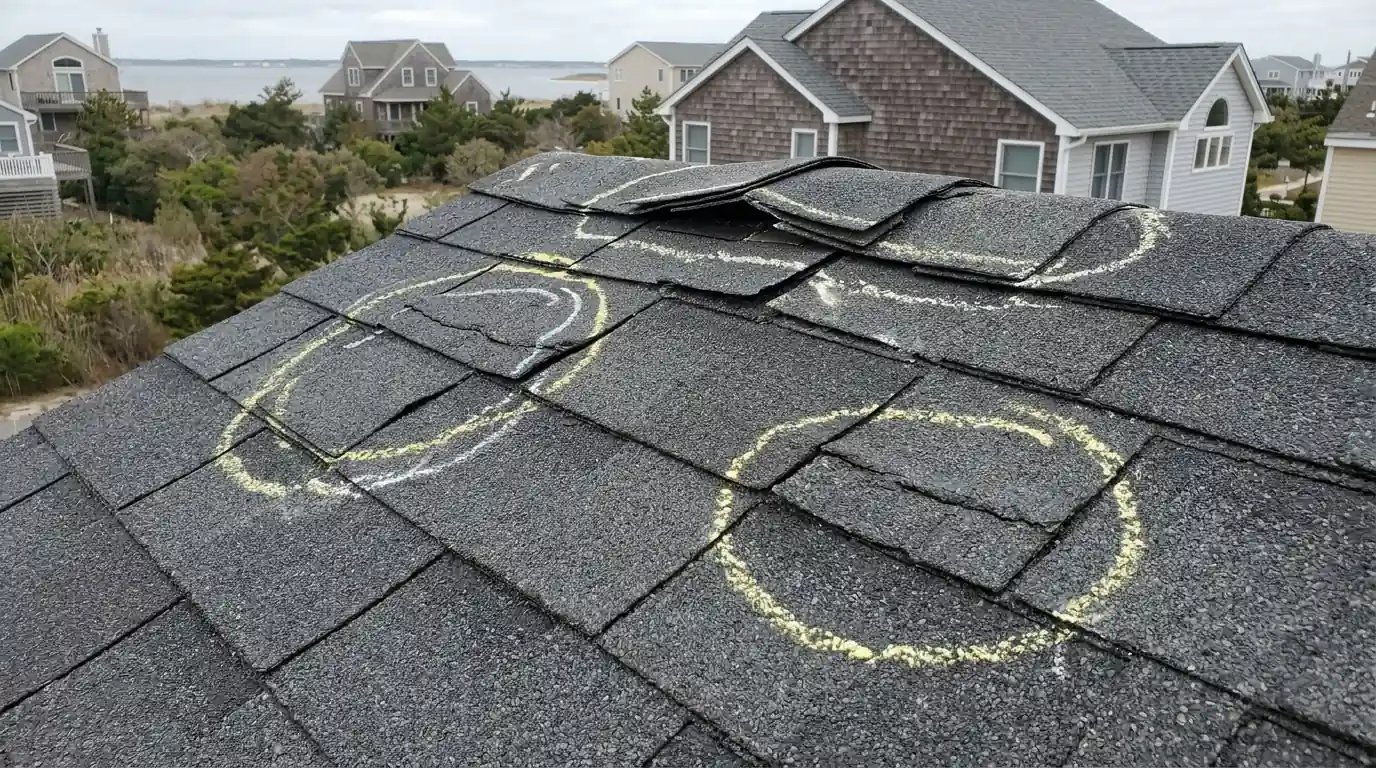
Homes near the water take north and east wind straight off the bay. Shingle edges lose their seal, ridge caps lift, and gutters on the windward side get bent or pulled loose.
Raised homes after Sandy
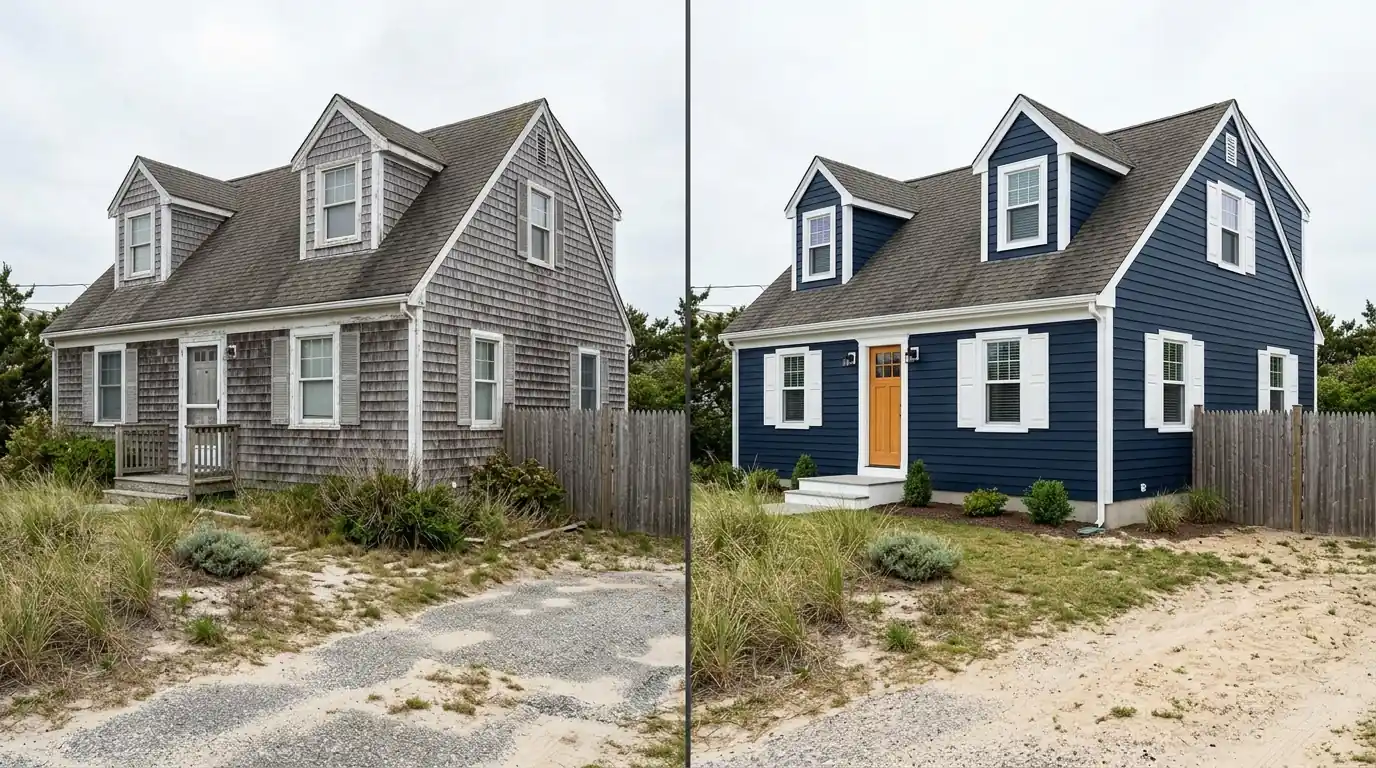
Many bayshore houses were lifted after the 2012 flooding. Taller walls catch more wind and need siding fastened for it, while new stair and porch roofs add more flashing joints.
Big roofs in Lincroft
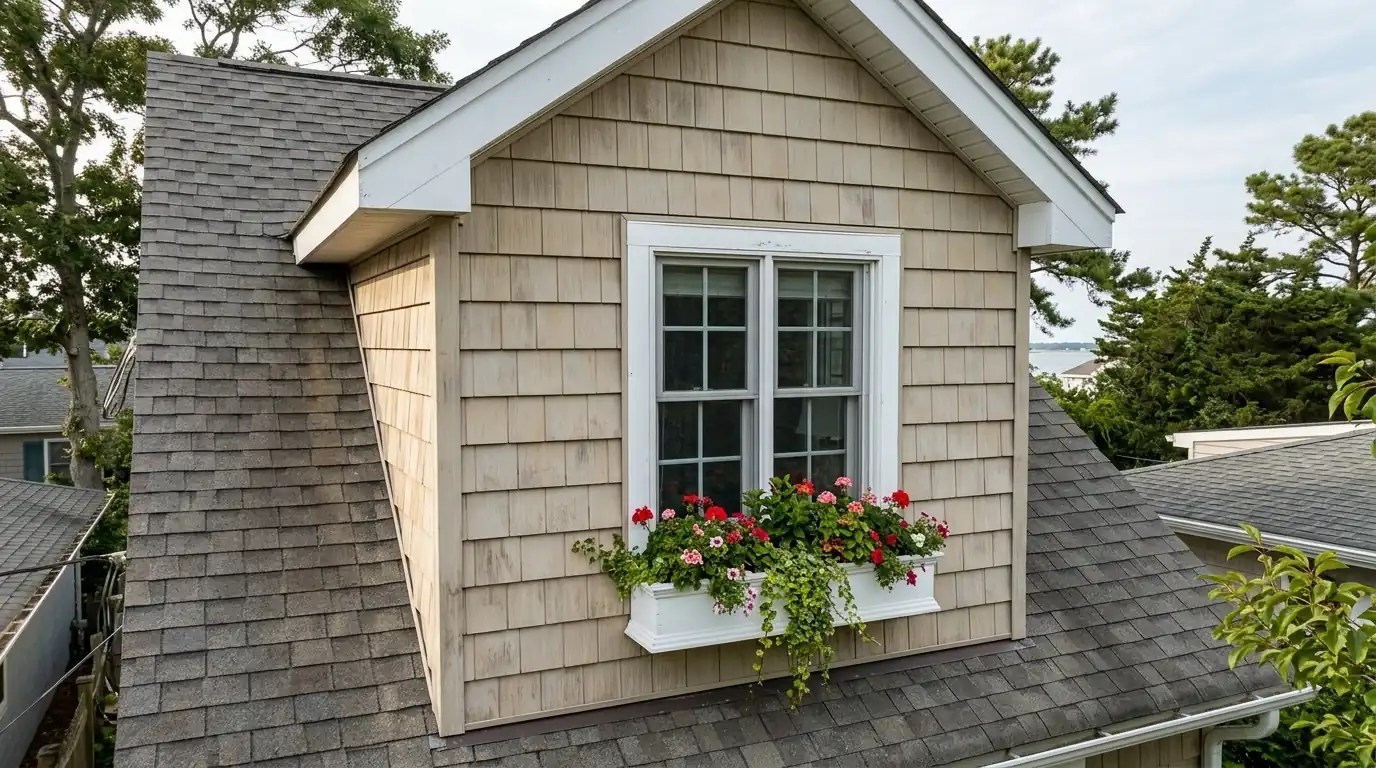
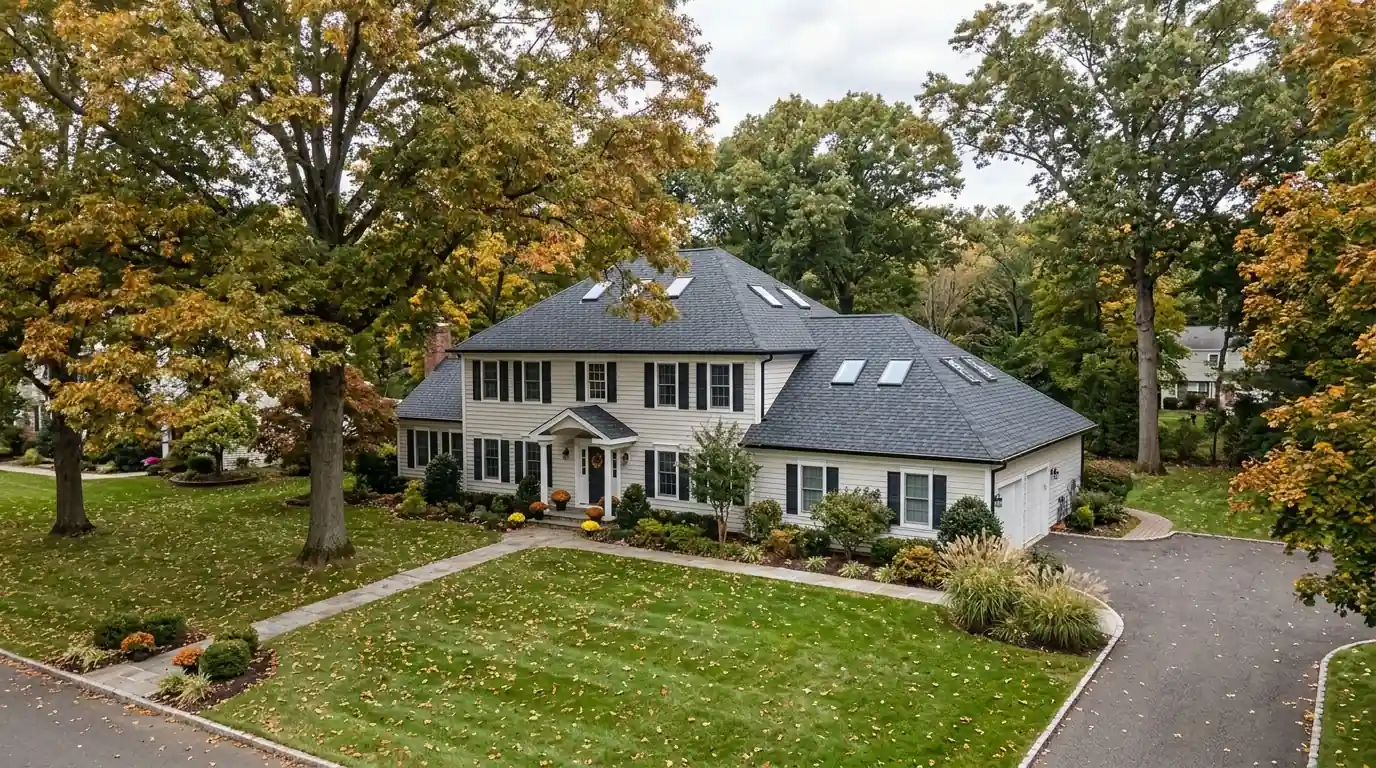
Large colonials inland carry wide roofs with many valleys, skylights and dormers. When those homes reach their second roof, the replacement is a serious project worth planning well ahead.
Shade around the parks
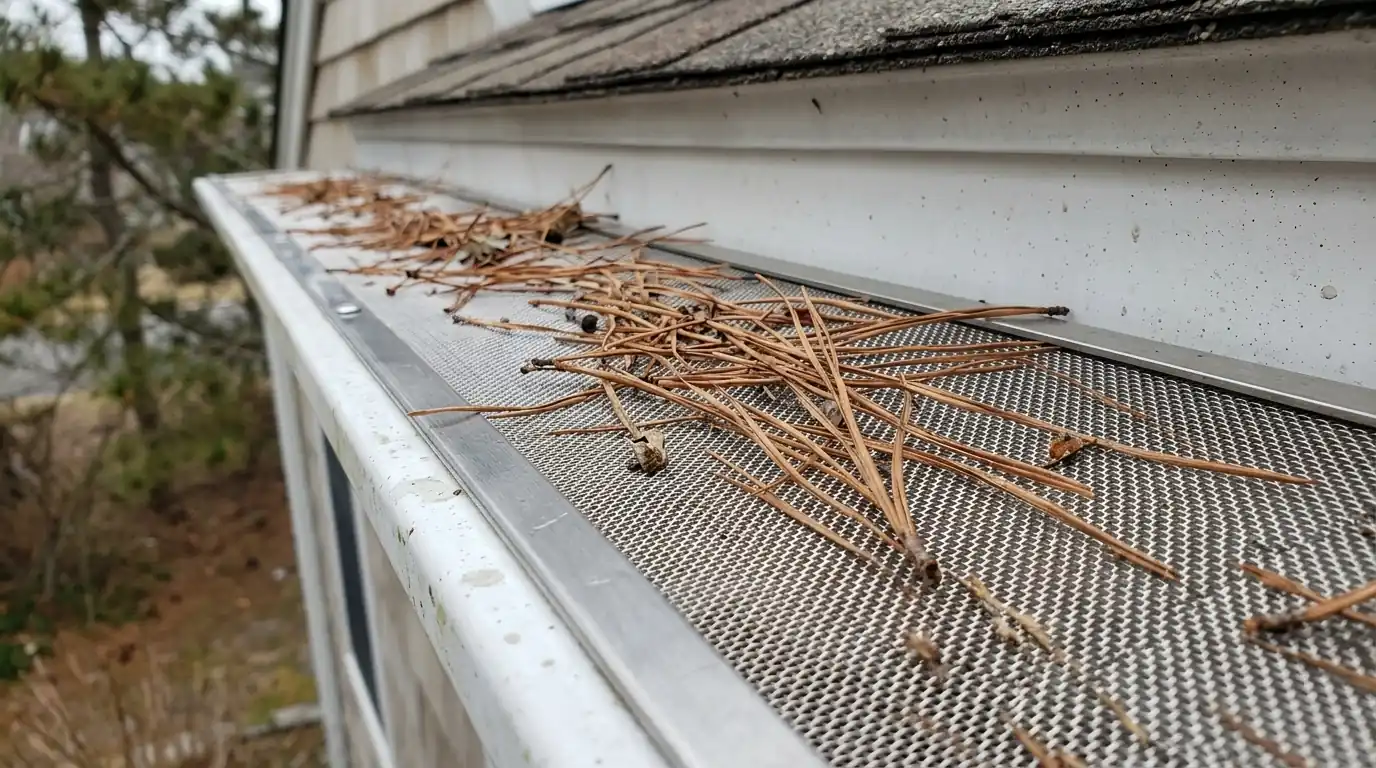
Streets near Hartshorne Woods, Poricy Park and Thompson Park sit under mature hardwoods. Leaves pack the gutters, where micro-mesh gutter guards help, and shaded north slopes grow moss and algae.
How bay weather and big trees age a Middletown roof
On the bayshore, weather comes in across Raritan and Sandy Hook Bays with nothing to slow it down. A northeast storm can push water into low streets and drive rain sideways into siding laps and window trim. Salt still shortens the life of steel flashing near the water.
Inland, the hills toward the Navesink River and the wooded lots in Lincroft change the problem. Wind matters less than shade, falling limbs and summer heat on dark shingles. Many of these subdivisions were built in the second half of the 1900s, so whole neighborhoods are now replacing roofs within a few years of each other.
What a roof replacement on a large Middletown colonial looks like
Big roofs take more planning. Here's how we run a typical replacement on a two-story inland home.
Inspect the roof and attic
We check shingles, valleys, skylights and flashing, then go into the attic to look at ventilation, insulation and any stained or soft decking before we put a plan together.
About 90 minutesPick materials for the house
Architectural shingles from lines such as CertainTeed, GAF or Owens Corning cover most homes. For a slate look without the weight, synthetic slate is worth considering on larger colonials.
Before schedulingTear off and repair the deck
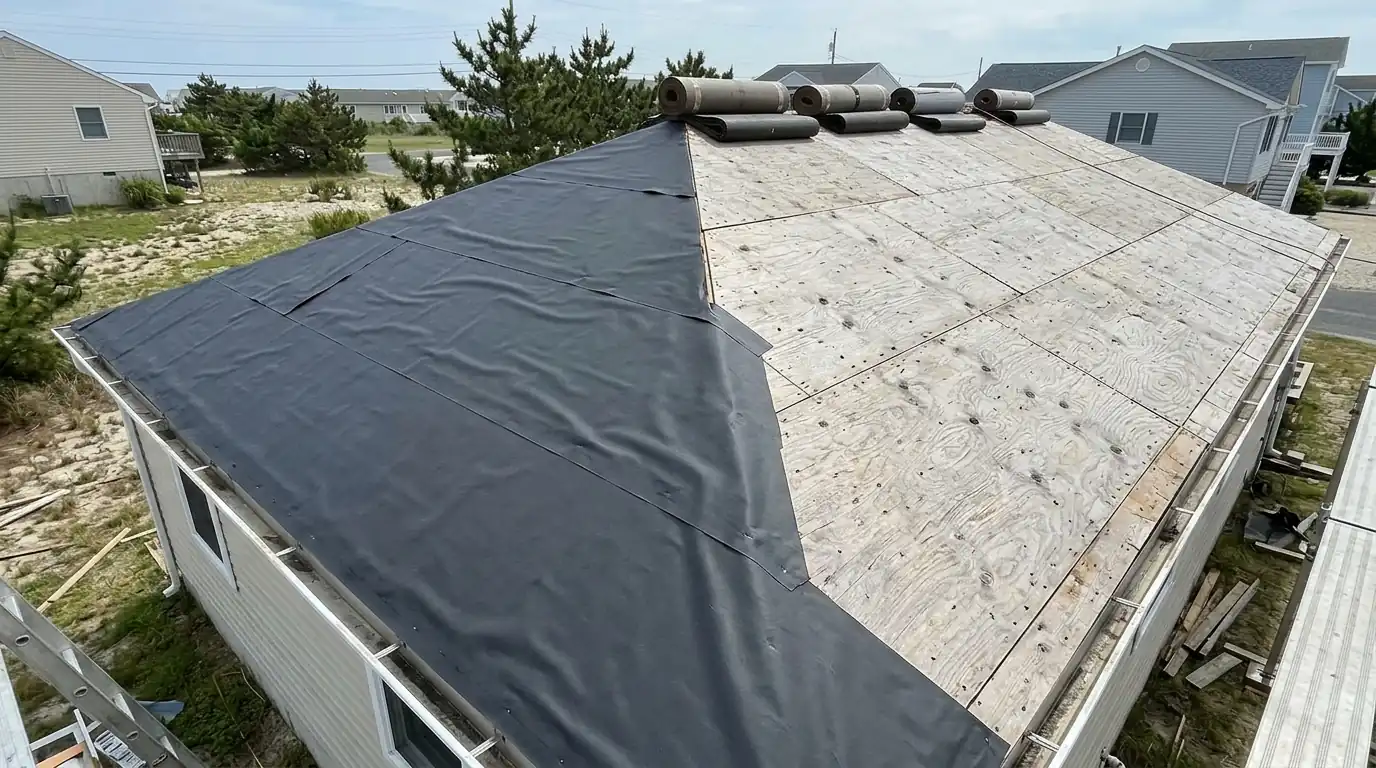
Old layers come off in sections. We replace rotted plywood, especially around valleys and skylights, and re-nail the deck so the new shingles have a solid base.
Day 1Dry in, flash and shingle
Ice and water barrier goes along the eaves and in valleys, then synthetic underlayment, new step flashing at walls and fresh skylight flashing where needed, followed by shingles.
Day 1 to Day 3Ventilate and clean up
Ridge vent and clear soffit intake let the attic breathe. A magnet sweep of the lawn and driveway picks up stray nails before we leave.
Final day
Before you call about a bayshore home in Belford or Leonardo
A few details help us plan the visit and bring the right materials. Our guide to roofs and siding on raised homes covers more.
- Whether the house was raised after Sandy, and roughly when
- The age of the roof, if you know it, and any past repairs
- Where you see stains, drafts or loose siding, and on which side
- Whether the leak shows in every rain or only with wind off the bay
- Photos from the ground taken after the most recent storm
- Any association rules on colors or materials for your street