We serve all of Mantoloking, from the Bay Head line south to the Brick beach blocks. Most of our work here is roof replacement and repair on large homes, synthetic slate and cedar roofs, fiber cement and cedar siding, and flashing on complicated rooflines. Call (732) 419-1462 any time, day or night, to reach us.
Rebuilt after Sandy? Check the roof details now, not after the next storm
Sandy damaged roughly nine of every ten properties in the borough, and more than 50 homes had to come down entirely. Many houses went back up quickly in the years that followed, when every roofer on the shore was booked solid. If yours was built or reroofed in that rush, a roof inspection is worth doing now. We check flashing, fastening and attic airflow, then hand you photos and a plain answer. Call (732) 419-1462.
How we take on a roof for a large Mantoloking home
Big roofs with many planes need more planning than a ranch. Here's the order we follow.
Walk every roof plane, then the attic
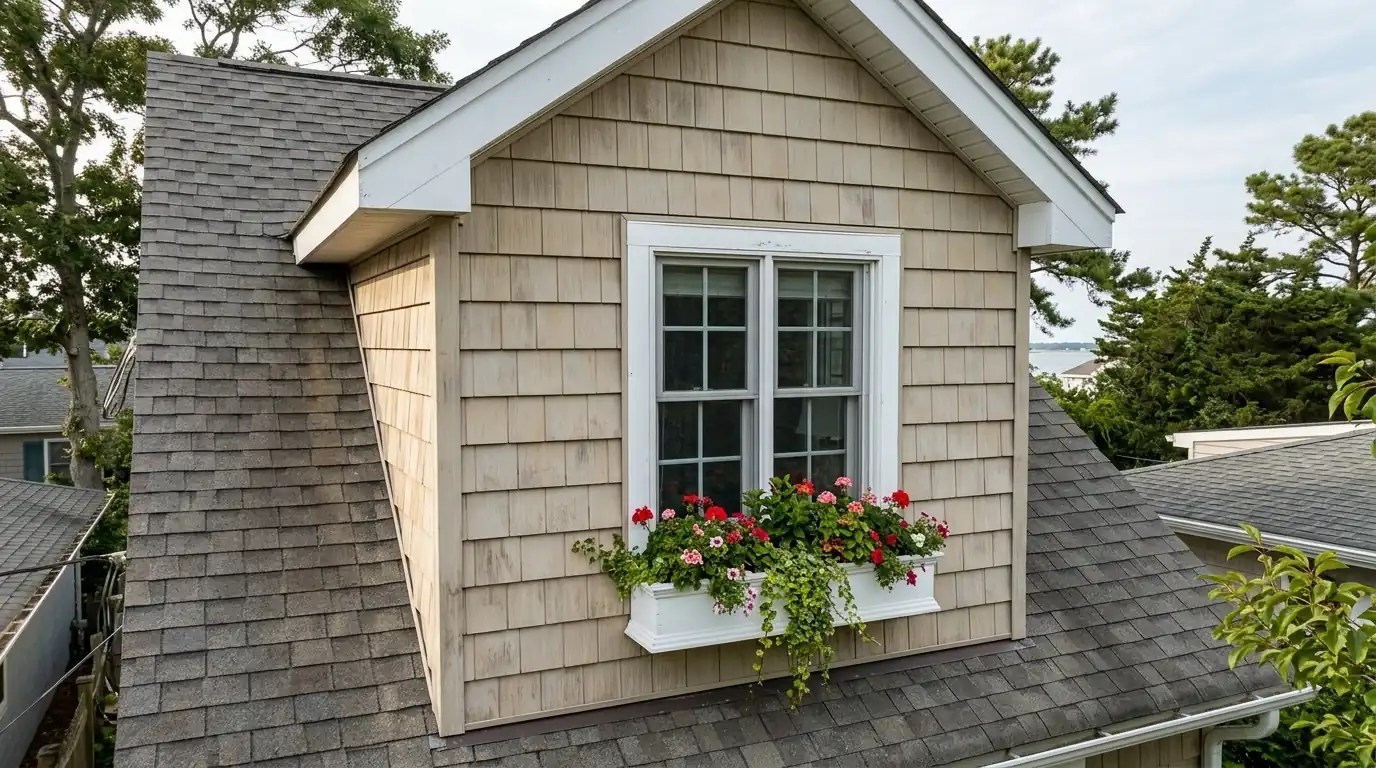
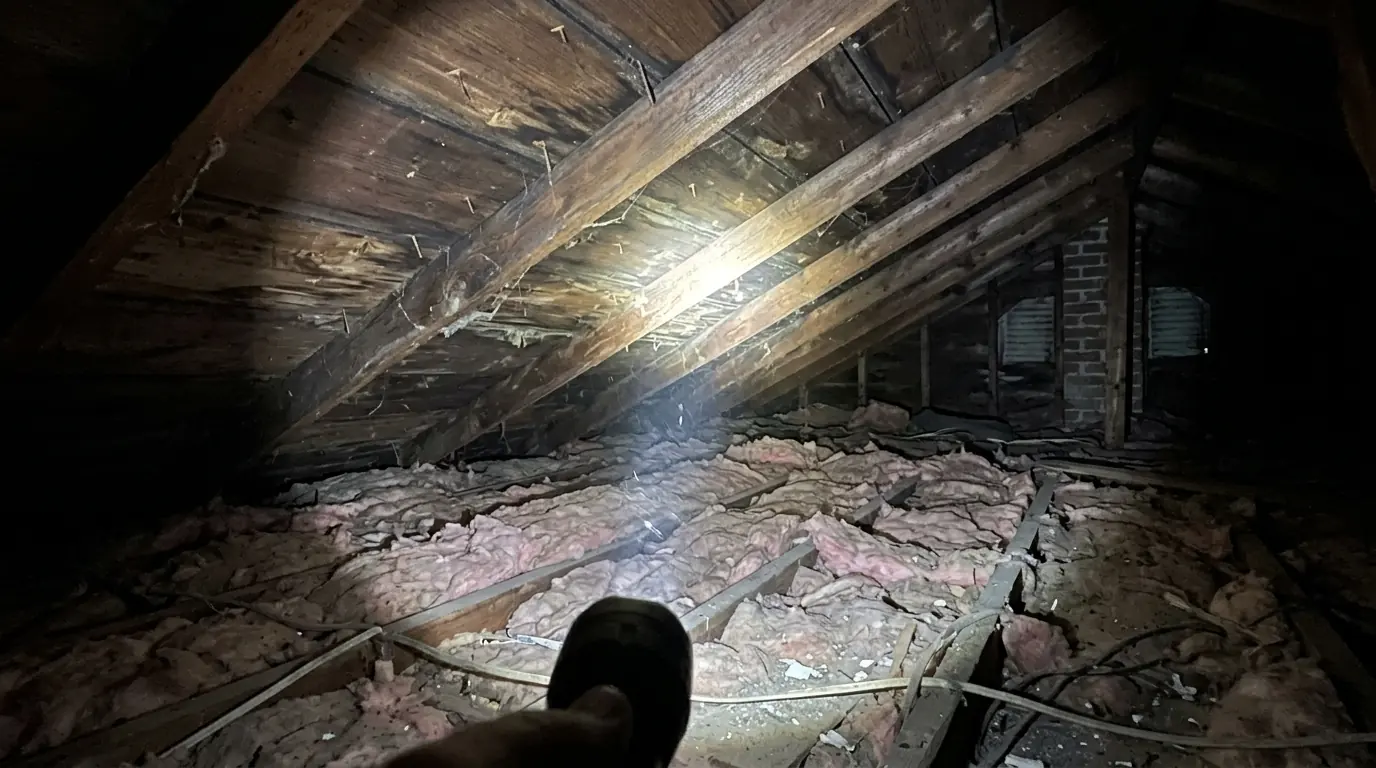
We look at every valley, dormer and wall joint, then go into the attic to check sheathing, venting and any old stains. On homes this size, problems usually hide where two roof planes meet a wall.
Day 1, about 2 hoursPick the material together
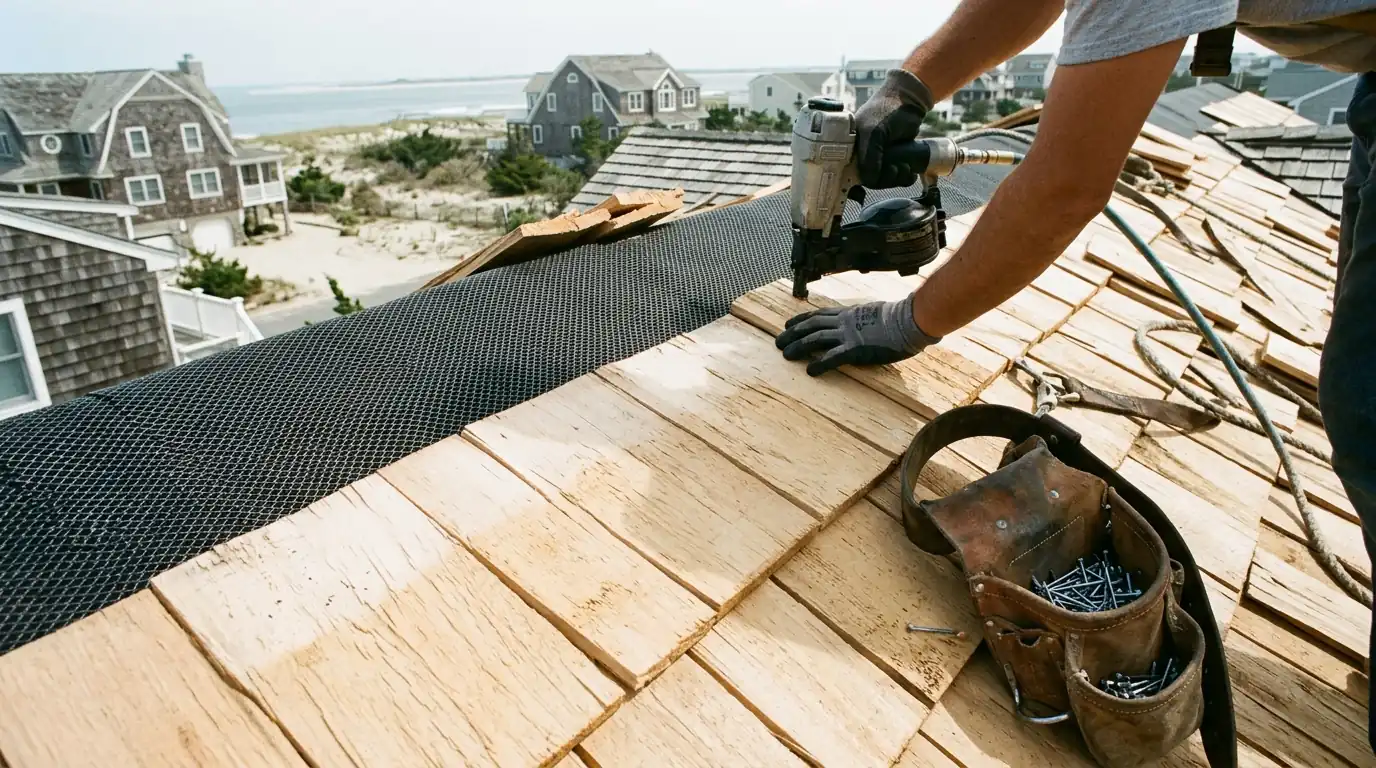
Many owners here choose synthetic slate from DaVinci or CertainTeed for the look without the weight, while others keep cedar or go with heavyweight architectural shingles. We lay out the tradeoffs in wind, salt and upkeep.
Within the weekProtect the property
Before tear-off we cover plantings, pool areas, glass deck rails and hardscape, and we stage the dumpster so it doesn't block narrow driveways off Route 35.
Morning of day 1Tear off and dry in by section
We open only what we can close the same day. Each section gets deck repairs, ice and water barrier and underlayment before the crew moves on, so an afternoon squall off the ocean never finds an open roof.
3 to 8 days, depending on sizeFlash, finish and sweep
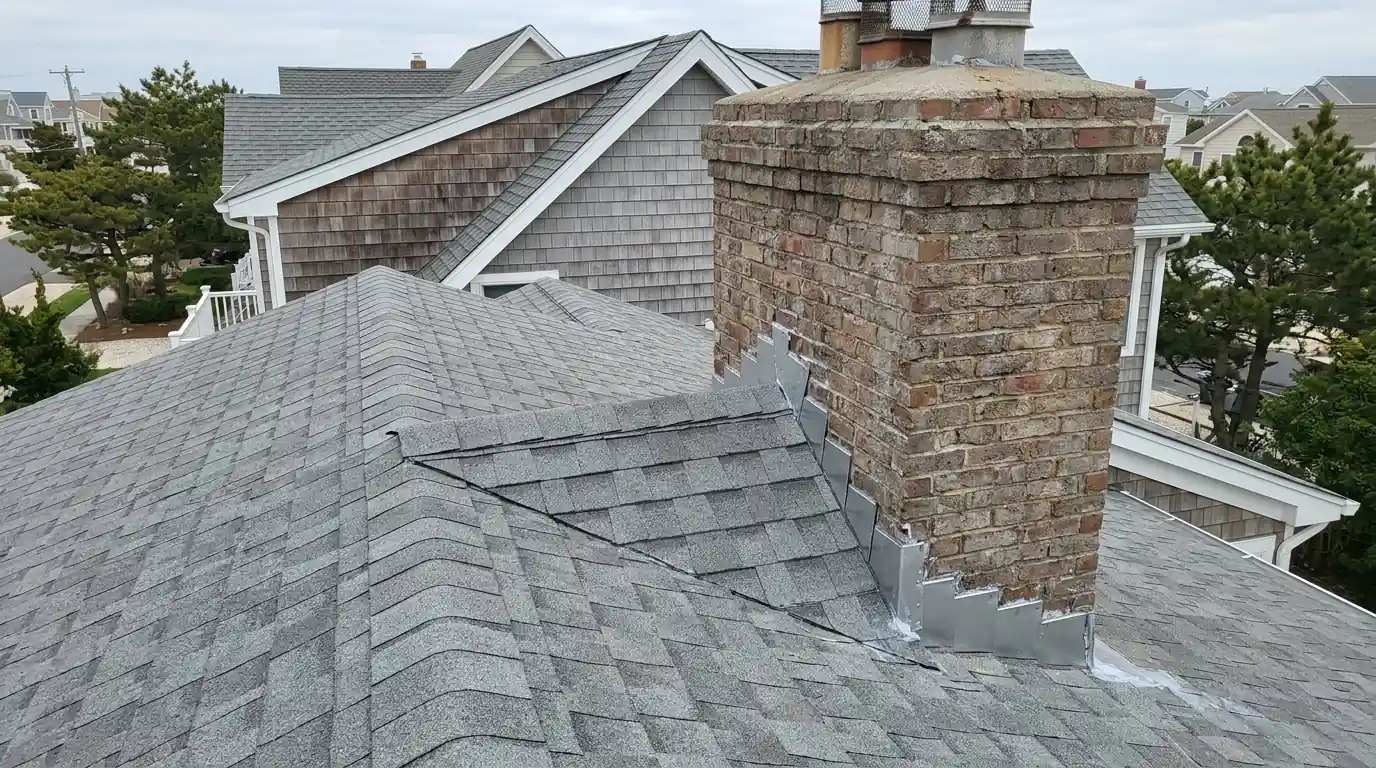
New step and counter flashing, ridge venting and trim go on last. Then we sweep the lot with magnets and walk the job with you before we leave.
Final day
Ocean on one side, the bay on the other
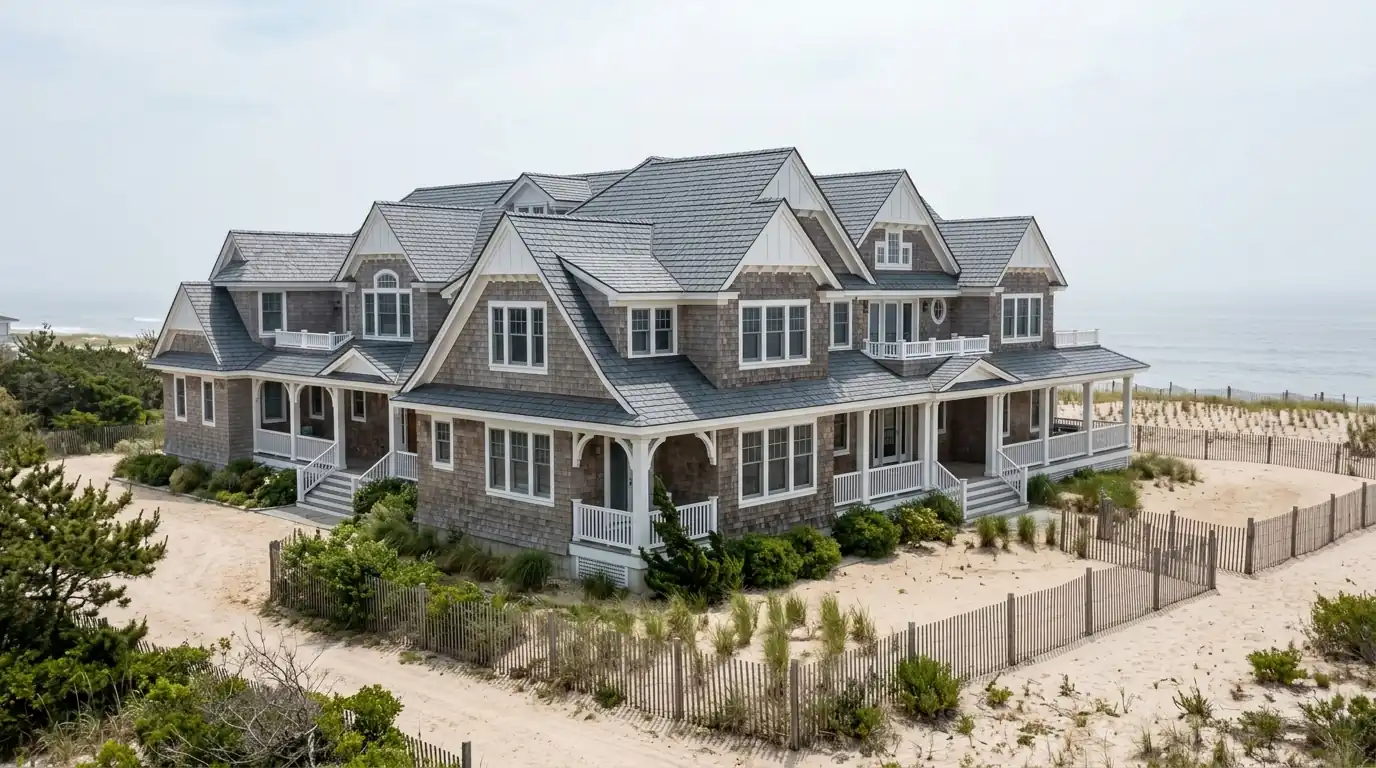
Mantoloking has been a borough since 1911, and its older summer homes are big, shingle-sided houses with deep porches, many gables and plenty of trim. Next to them stand homes rebuilt after Sandy opened a breach between ocean and bay near the Mantoloking Bridge. Newer houses tend to be taller and raised higher, with large windows and decks facing the water.
The weather here doesn't let up. Salt spray reaches every block, wind comes hard off the ocean in a nor'easter and swings around off the bay in summer storms, and there are almost no trees to slow it down. That combination wears out exposed fasteners, cracks caulk around big windows and loosens siding at upper corners. Neighbors in Bay Head and Normandy Beach deal with the same mix, and we bring the same approach there.
Siding and trim details we watch on Mantoloking homes
Roofs get the attention, but walls on these houses take just as much weather. On every visit we check:
- Cedar shingle siding for cupping, splits and rusted fasteners on the ocean side
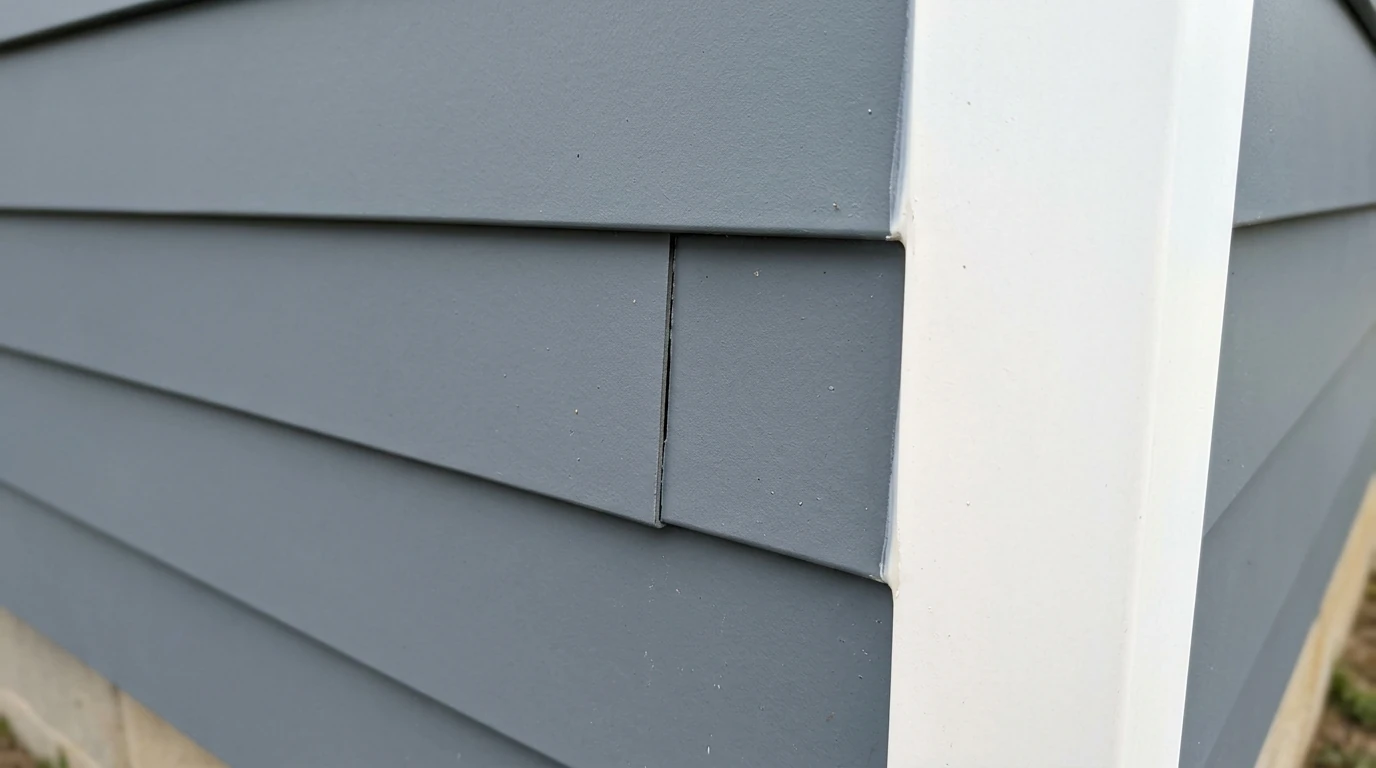
- Fiber cement joints and caulk lines around tall windows and sliders
- Corner boards and frieze trim where wind-driven rain gets behind the wall
- Deck ledger flashing where outdoor living space meets the house
- Soffit vents under wide eaves for blockage or loose panels
- Gutter hangers and downspout straps that salt has corroded