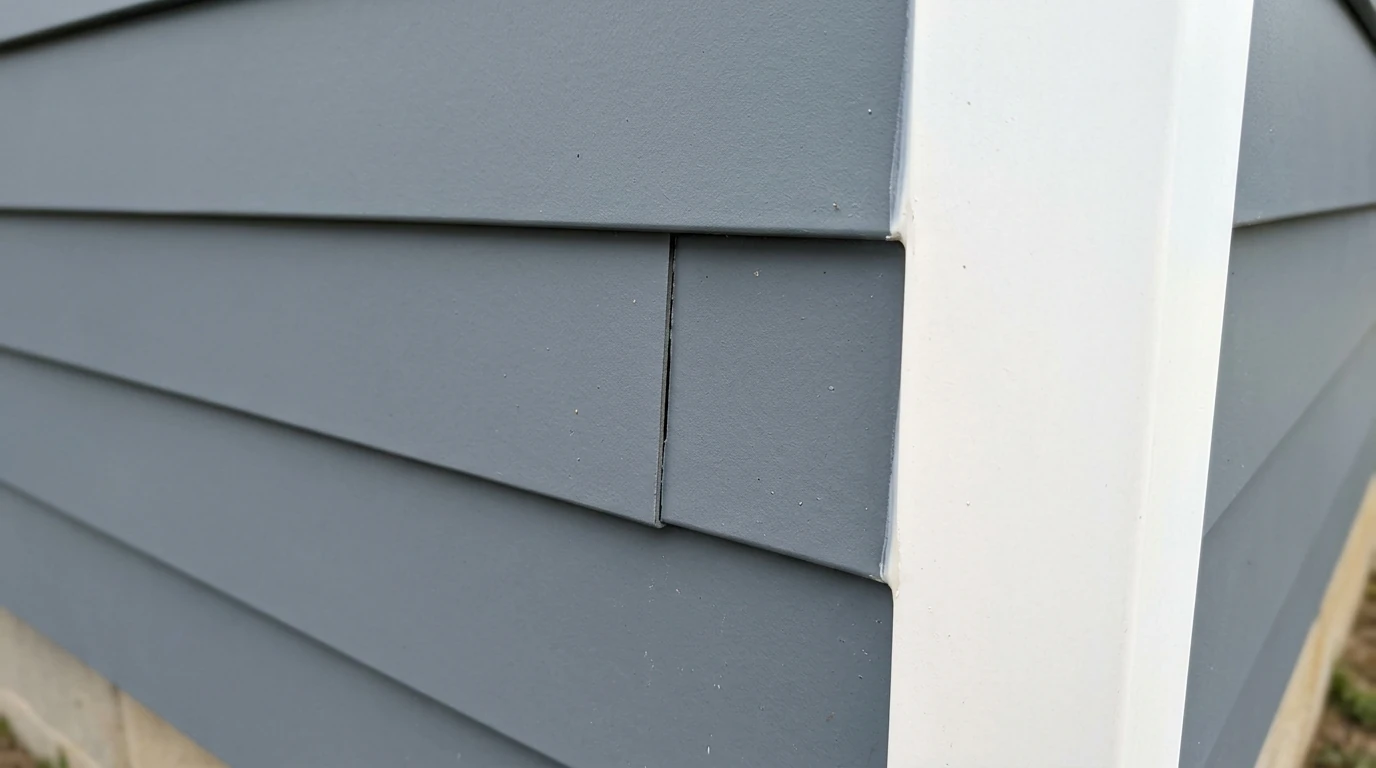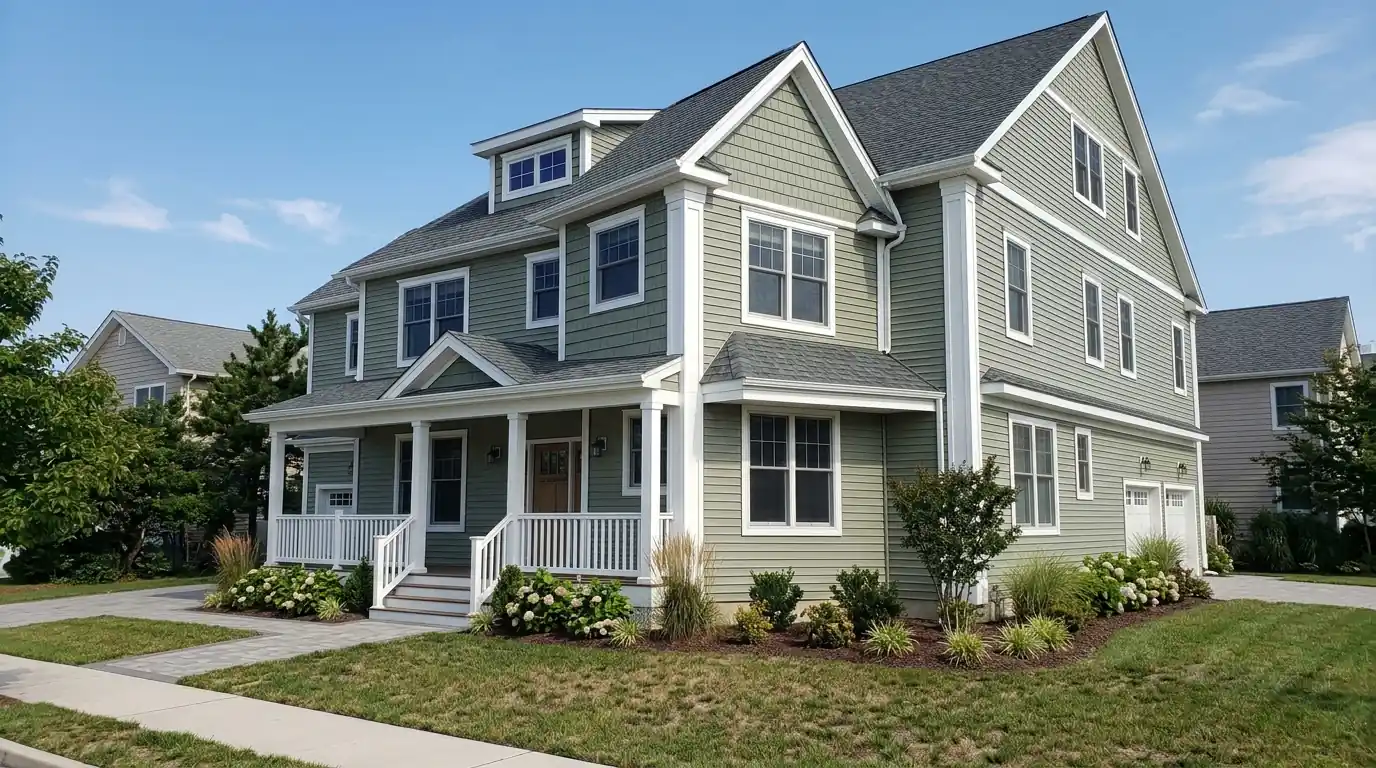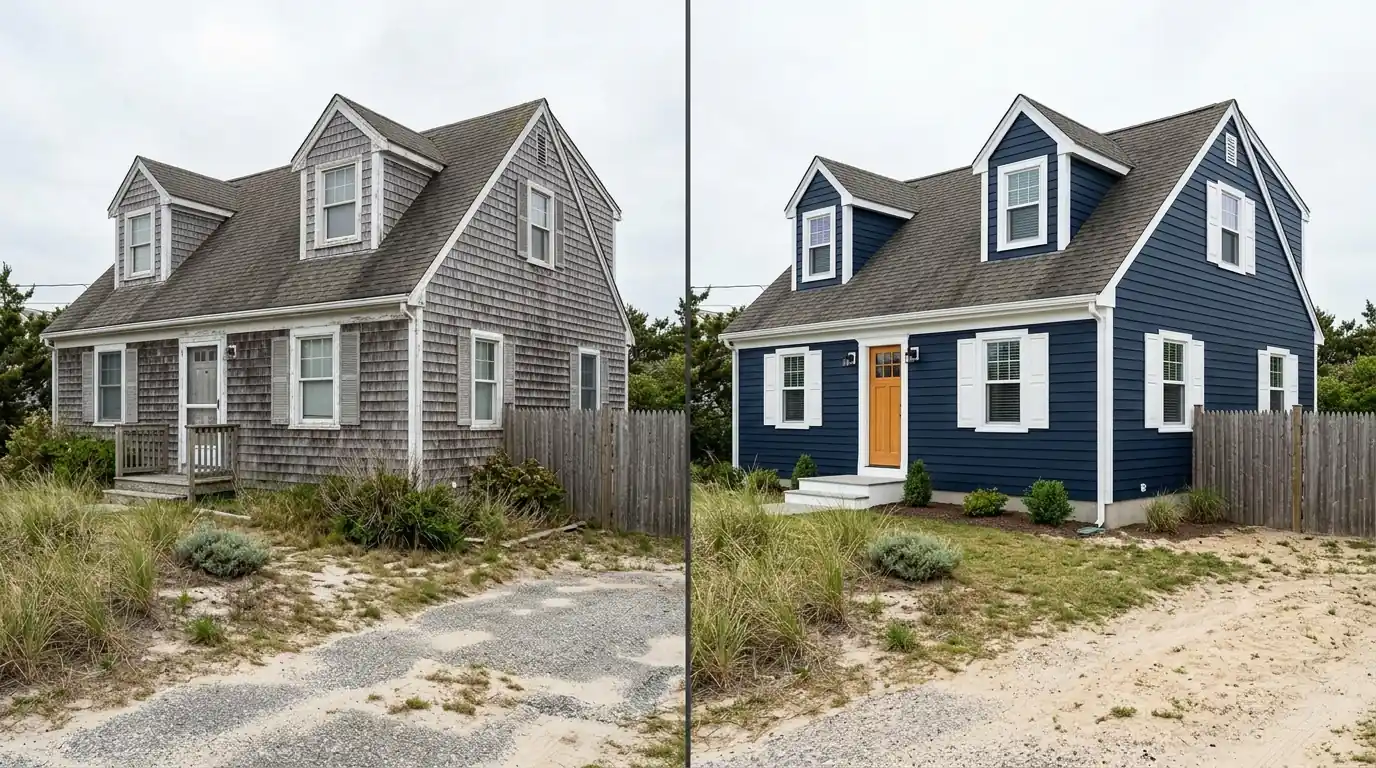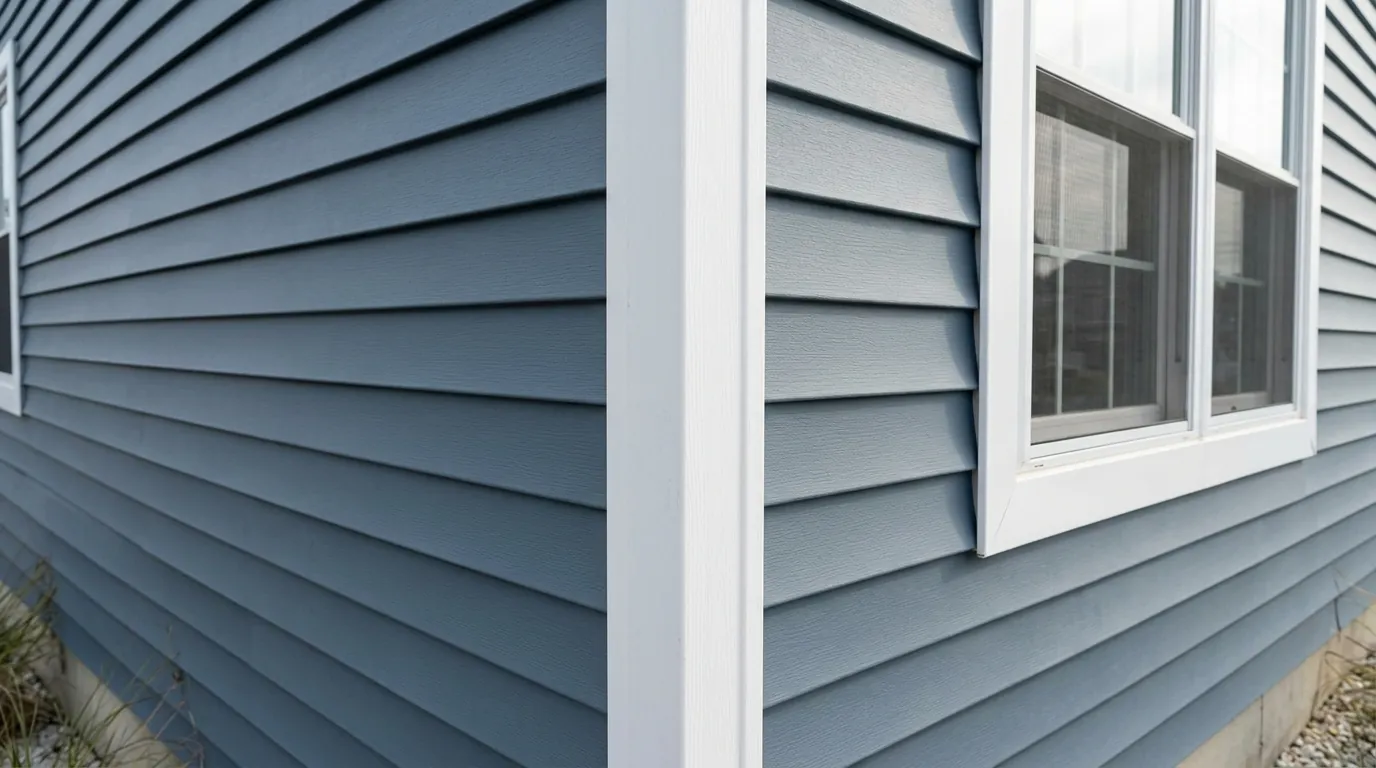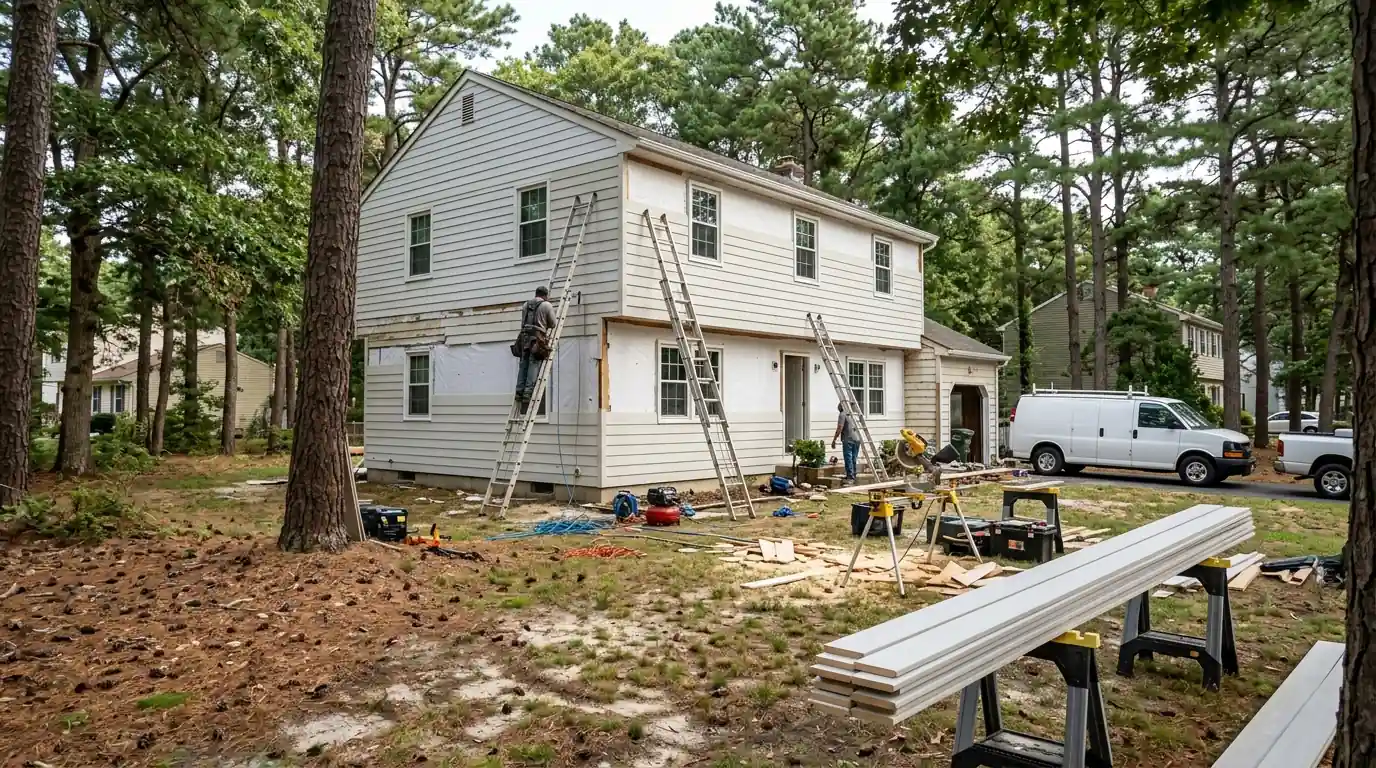
Engineered wood siding suits many Toms River homes, especially mainland ranches, colonials, additions and detached garages away from direct ocean spray. LP SmartSide is treated wood strand board, lighter than fiber cement and sold primed or prefinished. It lasts when it goes up exactly to LP's instructions, with sealed cut edges, proper clearances and a sound coat of paint.
Engineered wood next to vinyl and fiber cement
Homeowners usually come to us weighing three sidings. Here's how they compare on the points that matter in Ocean County. For a closer look at the other two, see vinyl or fiber cement for a shore house.
| What you're weighing | Engineered wood | Vinyl or fiber cement |
|---|---|---|
| Look up close | Deep cedar-style grain and crisp shadow lines; reads like painted wood | Vinyl shows seams and a sheen; fiber cement comes close to wood with a flatter grain |
| Weight and handling | Light enough for 16-foot lengths, so fewer butt joints across a wall | Vinyl is lightest; fiber cement is heavy and brittle until it's fastened |
| Knocks from hail or a stray ball | Tough and resists dents | Vinyl can crack in cold snaps; fiber cement can chip at corners |
| Moisture sensitivity | Needs sealed cut edges, painted faces and ground clearance | Vinyl ignores moisture; fiber cement tolerates oceanfront exposure better |
| Painting | Ships primed or factory finished; repaints well with acrylic latex | Vinyl color is fixed; fiber cement repaints much like engineered wood |
Where engineered wood earns its place on a shore-area home
It isn't the answer for every wall. These are the jobs where we reach for it first.
Mainland colonials and split-levels
On homes set back from the water, SmartSide lap gives a painted-wood look at a price close to fiber cement, and the lighter boards go up faster with fewer seams across each wall.
Board and batten gables
SmartSide panels with battens create a farmhouse texture on gables, dormers and bump-outs. Panels cover big areas with few joints, so the vertical lines stay straight and the wall reads clean.
Detached garages, sheds and pool houses
Outbuildings take bumps from mowers, bikes and bins. Engineered wood shrugs off most of those knocks, and it pairs with trim and fascia pieces from the same product line for a finished look.
Additions next to painted wood
When an older home has painted clapboard you want to keep, new SmartSide lap on an addition can wear the same paint color, so the old and new walls blend instead of looking bolted on.
Houses heavy on trim detail
The SmartSide trim line lets corners, frieze boards and window surrounds share one material and one paint coat. If you'd rather never paint trim again, we pair the siding with PVC trim boards instead.
How we install SmartSide so the manufacturer's conditions are met
LP publishes detailed installation instructions, and manufacturer warranties generally depend on following them. These are the steps where we're most careful.
Check the wall and sheathing
After tear-off we inspect the sheathing, replace any soft panels and confirm where the studs fall. Engineered wood gets nailed into framing or approved sheathing, so a solid base matters more here than under vinyl.
Day 1Wrap, flash and mark clearances
House wrap goes on shingle-lapped with taped seams. We mark the bottom course well above finished soil and hold the siding off roof surfaces, decks and patios by the distances LP's instructions call for.
Day 1Seal every field cut
SmartSide is treated through its core, yet cut edges still need primer or paint. Each cut end, notch and hole we make gets sealed the same day, so moisture never finds a raw edge to wick into.
ThroughoutNail snug, never sunk
We use galvanized or stainless nails of the size LP specifies, driven snug to the face. An over-driven nail that breaks the surface becomes a water entry point, so we set nailer pressure and check as we go.
2 to 5 daysGap and back the butt joints
Board ends get the small expansion gap LP calls for, with joint flashing or sealant behind the seam. That keeps water off the sheathing even when the gap opens slightly during a cold snap.
As boards go upPaint or touch up the finish
Primed siding gets two coats of 100 percent acrylic latex within the window LP recommends. Prefinished ExpertFinish boards get touch-up paint on nicks and cut edges. Before we leave, offcuts get picked up and we point out spots to watch.
Final 1 to 2 days
Engineered wood siding prices around Toms River
These ranges reflect 2026 Jersey Shore labor and material. Use them for planning; they aren't a quote.
| Work | Typical range | What moves the number |
|---|---|---|
| SmartSide lap, primed, installed | $8.35 to $13.60 per sq ft | wall height, tear-off, trim count; paint not included |
| SmartSide ExpertFinish prefinished lap | $9.70 to $15.20 per sq ft | color line, touch-up needs, delivery |
| Painting primed siding after install | $2.15 to $3.90 per sq ft | two coats, number of stories, separate body and trim colors |
| Board and batten gable accent | $1,380 to $4,260 | gable height, staging, batten spacing |
| Full re-side of a two-story colonial | $19,800 to $36,400 | wall area, sheathing repairs, window count, finish choice |
The final number depends on your wall area, how many openings get trimmed out and what turns up under the old siding once it's off.
The mistakes that give engineered wood a bad name
Most failures blamed on engineered wood trace back to the install. Some composite sidings from decades ago did swell and rot, and that reputation still follows the category. Current SmartSide uses a zinc borate treatment and resin-coated strands, but no treatment can rescue a bottom course buried in mulch or a board end left raw under a dripping gutter.
On houses we're asked to repair, the same handful of errors keeps showing up: siding run straight down onto a roof with no gap, nails punched through the face, cuts never painted, and kickout flashing missing where a roof edge dies into a wall. Each one lets water sit on the wood. Get those details right at install and the material behaves.
Paint is the other half. Engineered wood relies on its coating as the first barrier, so a peeling, chalky coat isn't only cosmetic. Plan to repaint about as often as you would painted clapboard, and touch up dings when you spot them.
Before you choose primed or prefinished
Answer these and we can price the right version the first time.
- Do you want a factory color, or a custom paint color?
- Who will handle future repainting: you, a painter or us?
- How close is the nearest wall to the bay, a lagoon or the ocean?
- Where does siding meet a roof, deck or patio?
- Lap, panel, or a mix with board and batten?
- Should trim be engineered wood to match, or PVC that never needs paint?
- Is window replacement planned before or alongside the siding?
Engineered wood in Ocean County's wooded, humid neighborhoods
Much of mainland Toms River sits under tall pines and oaks, with homes built from the 1960s through the 1990s. Those lots stay shaded and damp after rain, needles pile against foundations, and humid summers keep walls slow to dry. Engineered wood does well there when the bottom course sits high and the gutters actually carry water away from the wall.
Closer to the bay and out on the barrier island, we're more cautious. Wind-driven rain and salt spray work at every joint and nail, and those walls get less forgiveness. On such homes we often steer the exposed elevations toward fiber cement and save SmartSide for sheltered walls, garages and outbuildings. In bayside sections like Silverton, the call usually depends on how squarely a wall faces the water. Raised homes and newer colonials in the same streets often end up with a mix: fiber cement on the windward walls, engineered wood everywhere else.
Where we do this work most
We work across all of Toms River (08753, 08755 and 08757) and these neighboring towns every week, along with the rest of Ocean County and southern Monmouth County.
- Silverton, Toms River08753
- Pleasant Plains, Toms River08755
- West Dover, Toms River08755
- Ortley Beach, Toms River08751
- Lakewood08701
- Brick08723
- Jackson08527
- Howell07731
- Manchester08759
- Berkeley Township08721
- Lacey Township08731
- Stafford Township08050
- Barnegat08005
- Wall Township07719
- Freehold07728
- Point Pleasant08742