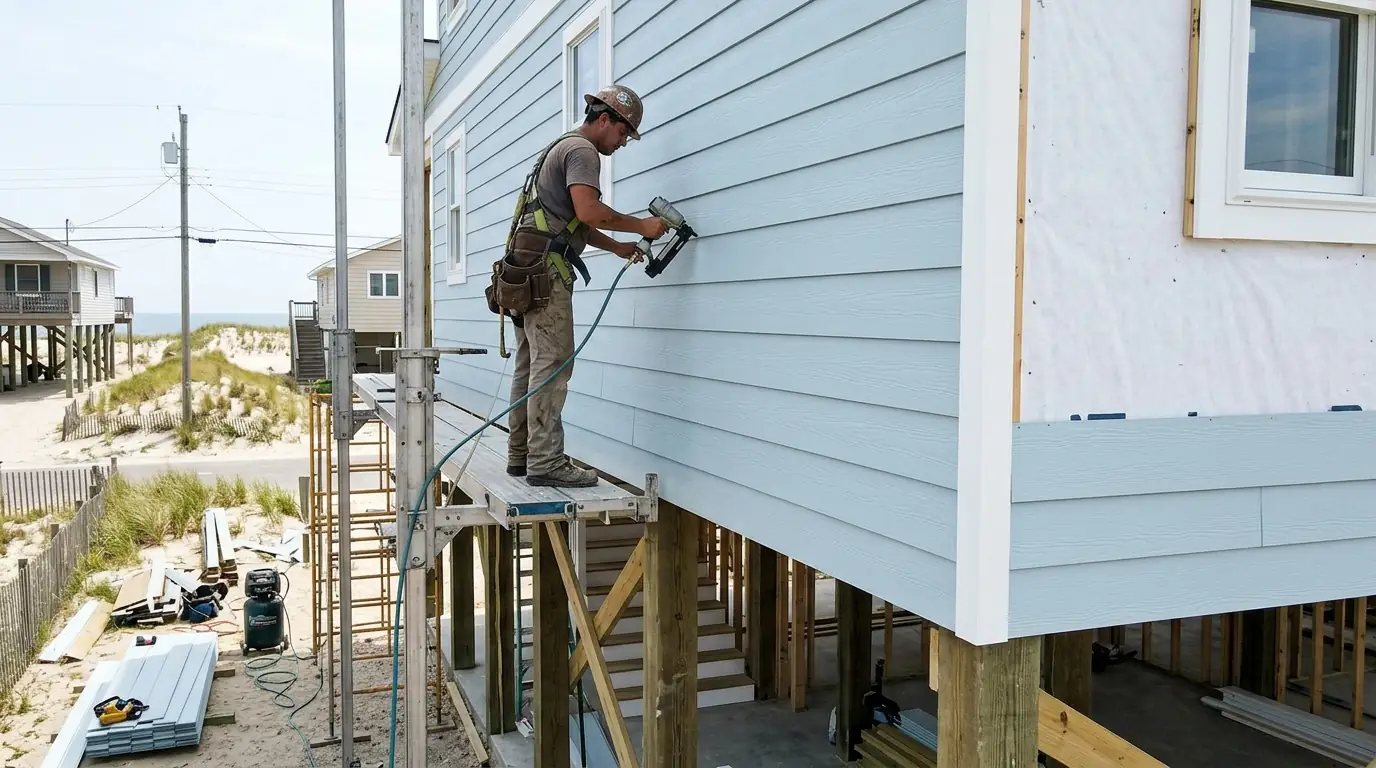
Fiber cement holds up very well around Toms River, including near the bay, as long as it's installed with the right clearances, flashed butt joints and corrosion-resistant fasteners. It costs more than vinyl and takes longer to put on, but it resists dents, fire and woodpeckers and holds factory color for years. Call (732) 419-1462 to compare options for your house.
Fiber cement styles that suit shore houses
The same material comes in several shapes. Most of the homes we side mix two of them, using one on the main walls and another on gables or accents.
Smooth or wood-grain lap
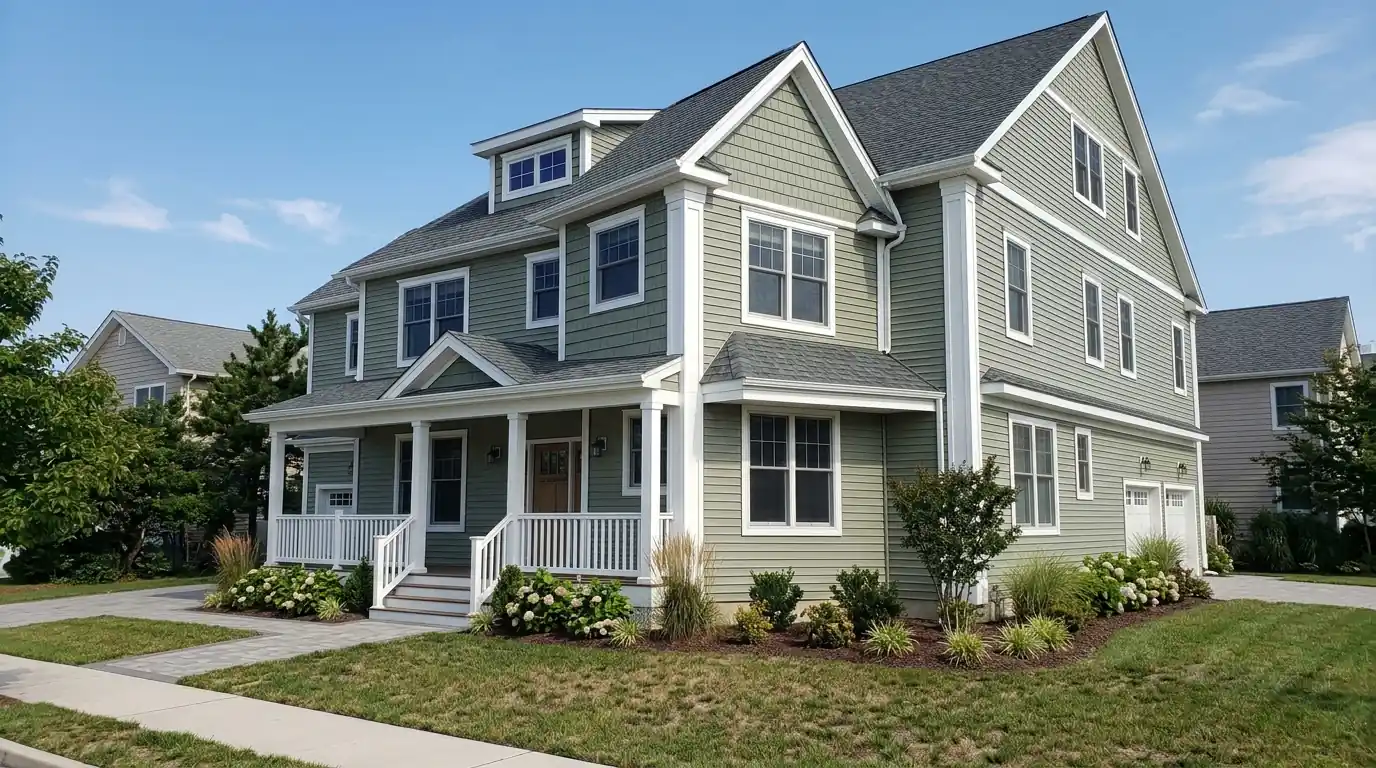
Long horizontal planks in exposures from about 5 to 7 inches. Smooth lap reads like freshly painted clapboard, while the cedarmill texture gives a subtle grain. Either one works on colonials, capes and ranches.
Straight-edge shingle panels
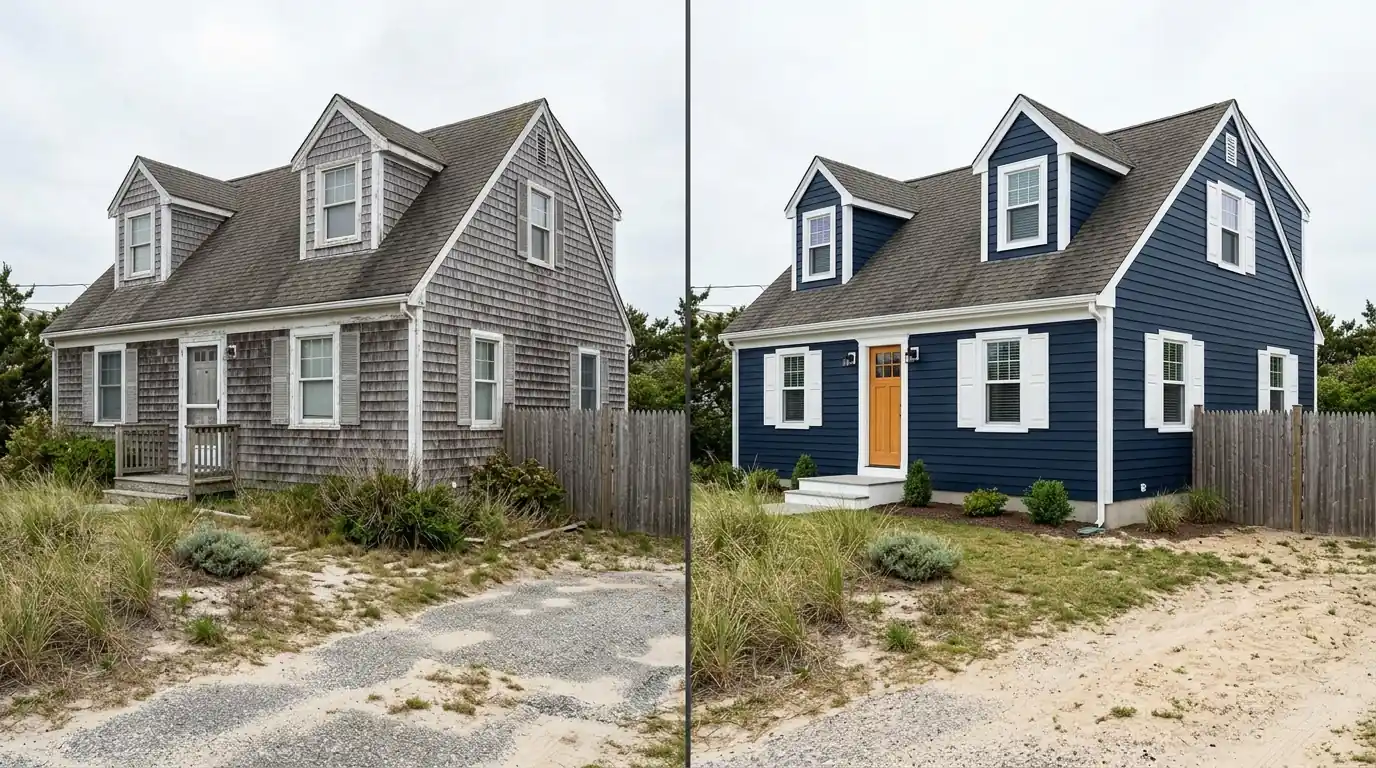
Panels molded to look like rows of cedar shingles, without the splitting, cupping or staining. They're a natural fit on gables, dormers and whole cottage-style homes near the water.
Vertical panel with battens
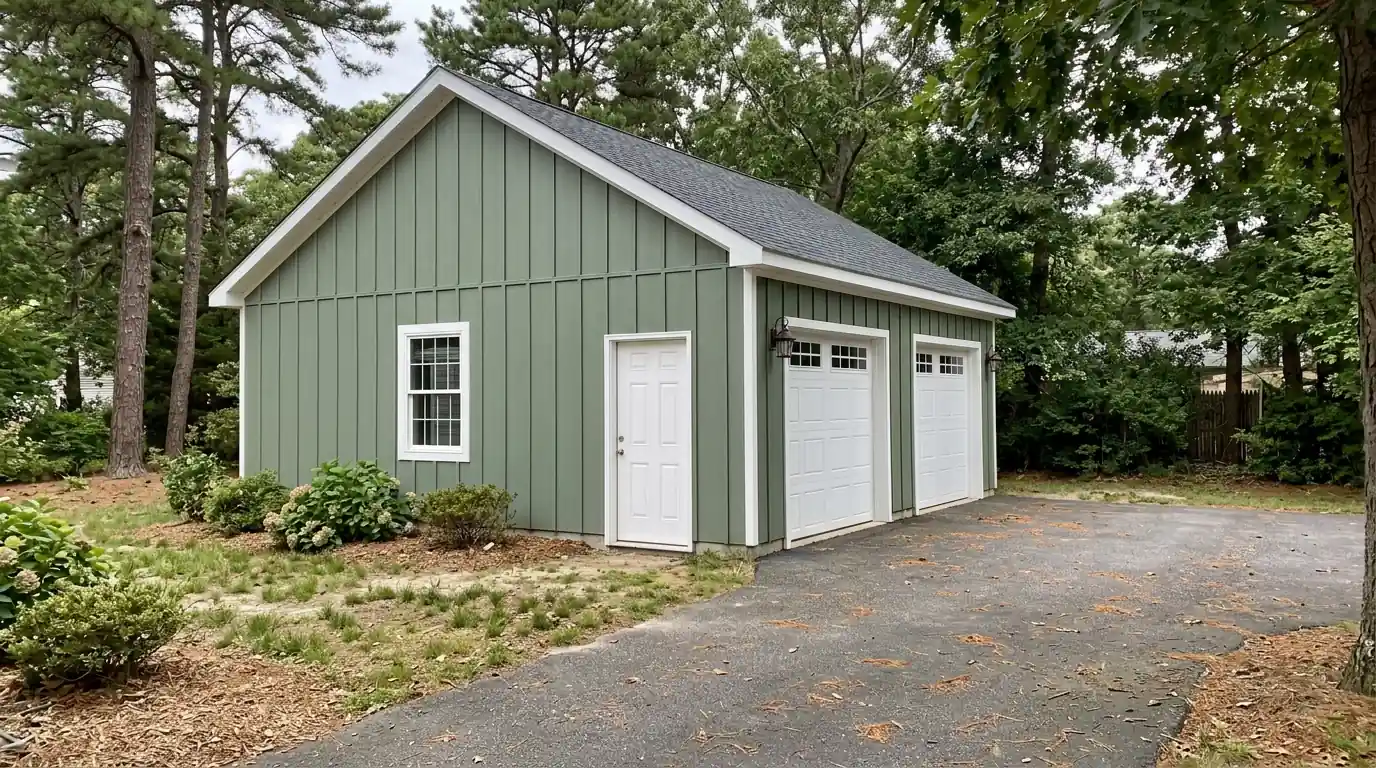
Large sheets with separate trim battens create a board and batten look. It's popular on farmhouse-style additions, garages and upper walls of raised homes, where long vertical lines suit the height.
Fiber cement trim
Corner boards, window casings and frieze boards in the same material. Many homeowners pair fiber cement siding with cellular PVC trim instead, especially along the bottom edge where water sits.
Fiber cement and vinyl side by side
These are the two materials most Toms River homeowners weigh against each other. Neither is wrong, and the right choice depends on budget, look and exposure.
| Question | Fiber cement | Vinyl |
|---|---|---|
| How does it look up close? | Deep, crisp shadow lines and a painted wood appearance | Good in premium grades, though seams and lap joints are more visible |
| How does it handle impact? | Very dent resistant; hail and mower stones rarely mark it | Can crack in cold weather or dent from hard impacts |
| What about fire? | Noncombustible | Melts and deforms near grills or fire pits |
| What upkeep does it need? | Repaint every 10 to 15 years or more with factory finish; recaulk joints as needed | Wash occasionally; never needs paint |
| How does the cost compare? | Usually 50 to 90 percent more than premium vinyl installed | Lower installed cost and faster installation |
How we install fiber cement so it lasts
Fiber cement is far less forgiving than vinyl. Most of the work is in preparation and details you won't see once the job is done.
Prepare the walls and wrap
After tear-off and any sheathing repair, we apply house wrap with lapped, taped seams and flash every window and door. On exposed walls we may add a rainscreen gap so water drains and the back of the planks dries.
Day 1 to 2Set clearances at the bottom
Planks stop above grade, above roof lines and above decks by the distances the maker specifies. Those gaps keep the bottom edge out of splash water and snow, which is where fiber cement can wick moisture.
Day 2Cut with dust control
We cut with fiber cement blades and shears outdoors, using dust collection and wetting where needed. Cut edges get sealed or primed as the manufacturer directs before they go on the wall.
Throughout the jobFlash every butt joint
Where two planks meet, a small piece of flashing goes behind the joint so water that gets past it drains outward. It's a cheap detail that many installers skip and later regret.
Day 2 to 5Fasten and finish trim
Planks are blind nailed or face nailed with corrosion-resistant fasteners into the sheathing or studs. Trim joints are caulked with a paintable sealant, and nail heads and cuts get touched up with the factory color.
Day 3 to 6
Fiber cement siding prices around Toms River in 2026
Fiber cement is labor-heavy, so installed cost runs well above vinyl. These ranges assume tear-off, wrap, flashing and trim on typical Ocean County homes.
| Work | Typical range | What moves the number |
|---|---|---|
| Single-story ranch or cape | $26,300 to $44,800 | Wall area, window count and trim choice |
| Two-story colonial | $41,500 to $72,900 | Height, staging time and number of corners and openings |
| Shingle-style gable accents | $2,370 to $6,940 | Gable size and access |
| Factory finish instead of field painting | $2,860 to $7,250 added | Color line and the amount of trim to paint on site |
| Rainscreen gap on exposed walls | $1,980 to $5,630 added | Wall area and the rainscreen product chosen |
Ranges only, not a quote. We give you a price once we've measured your home and you've picked a style.
Why the install matters more than the brand
Most fiber cement problems we see on Jersey Shore homes are installation problems, not product failures. Planks set tight to a roof or deck wick water and swell at the bottom edge. Butt joints without flashing let water into the wall. Fasteners that aren't rated for coastal exposure rust and stain the finish. None of these show for a few years, and then they all show at once.
James Hardie, the best-known maker, publishes detailed installation instructions, and its product warranty generally depends on following them, including clearances, fastener type and joint treatment. Other makers have similar requirements. We install to those instructions on every wall, because it's what keeps the siding performing, not just what keeps the paperwork valid.
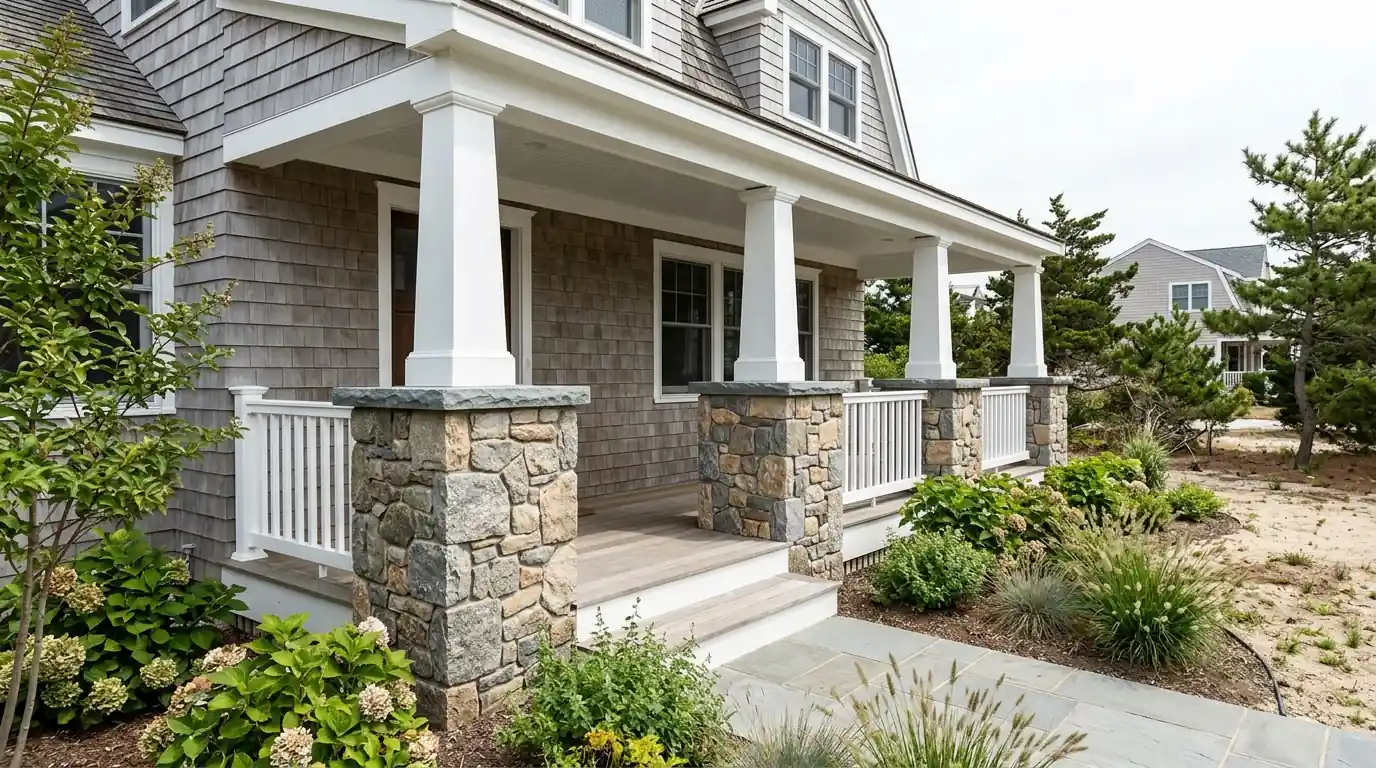
If you're still deciding between materials, our vinyl or fiber cement post covers the tradeoffs in more depth. If you like the look of wood grain with lighter weight, our engineered wood siding page is worth a read, and fiber cement pairs well with a stone veneer wainscot along the foundation.
Questions to ask any fiber cement installer
Whoever installs your fiber cement, these are the questions that separate a careful job from a quick one.
- What clearance will you leave above grade, roofs, decks and patios?
- How are butt joints flashed, and what goes behind them?
- Which fasteners will you use, and are they suitable near salt water?
- How will you control silica dust while cutting?
- Will the siding be factory finished or painted on site, and when?
- How are cut edges sealed or primed before installation?
- Will a rainscreen gap be used on the walls that face the bay?
How fiber cement handles Ocean County weather
On the mainland side of Toms River, fiber cement handles the summer hail, winter freeze-thaw cycles and the woodpeckers that go after cedar on wooded lots near the Pine Barrens. Its weight also keeps it quiet in a nor'easter; there's no rattling, even on a gable facing the bay.
Closer to the water, in Shelter Cove, Coates Point and on the barrier island, salt spray is the bigger concern. Factory finishes hold up well, but fasteners and flashing need to be the right metal, and trim joints need good caulk. Raised post-Sandy homes are a strong fit, since the tall walls look best with long planks and the material tolerates wind well. Many of the newer colonials in Toms River and the larger renovations in Bay Head, Point Pleasant and Lavallette use fiber cement for its painted wood look. On older ranches and capes, it's a strong choice when the homeowner wants something more substantial than vinyl.
Where we do this work most
We work across all of Toms River (08753, 08755 and 08757) and these neighboring towns every week, along with the rest of Ocean County and southern Monmouth County.
- Silverton, Toms River08753
- Pleasant Plains, Toms River08755
- West Dover, Toms River08755
- Ortley Beach, Toms River08751
- Lakewood08701
- Brick08723
- Jackson08527
- Howell07731
- Manchester08759
- Berkeley Township08721
- Lacey Township08731
- Stafford Township08050
- Barnegat08005
- Wall Township07719
- Freehold07728
- Point Pleasant08742