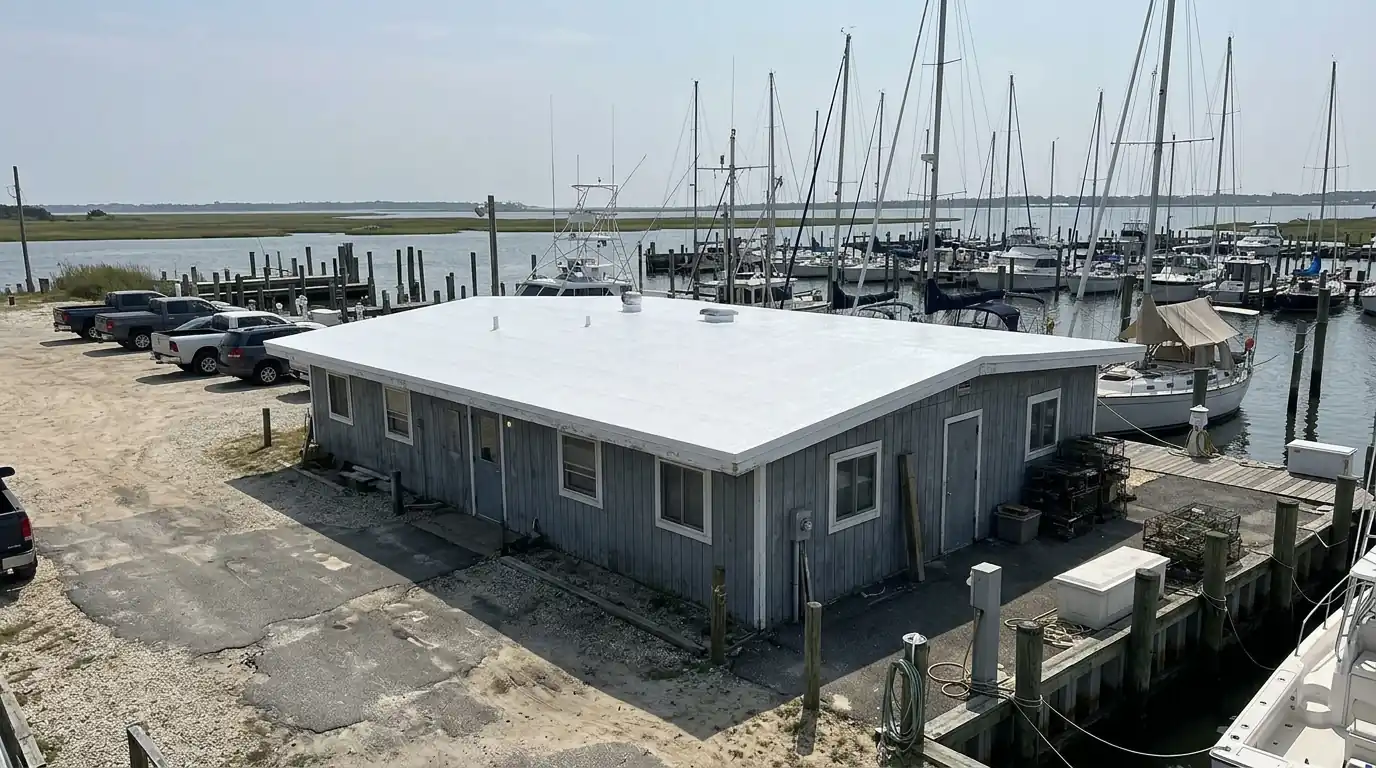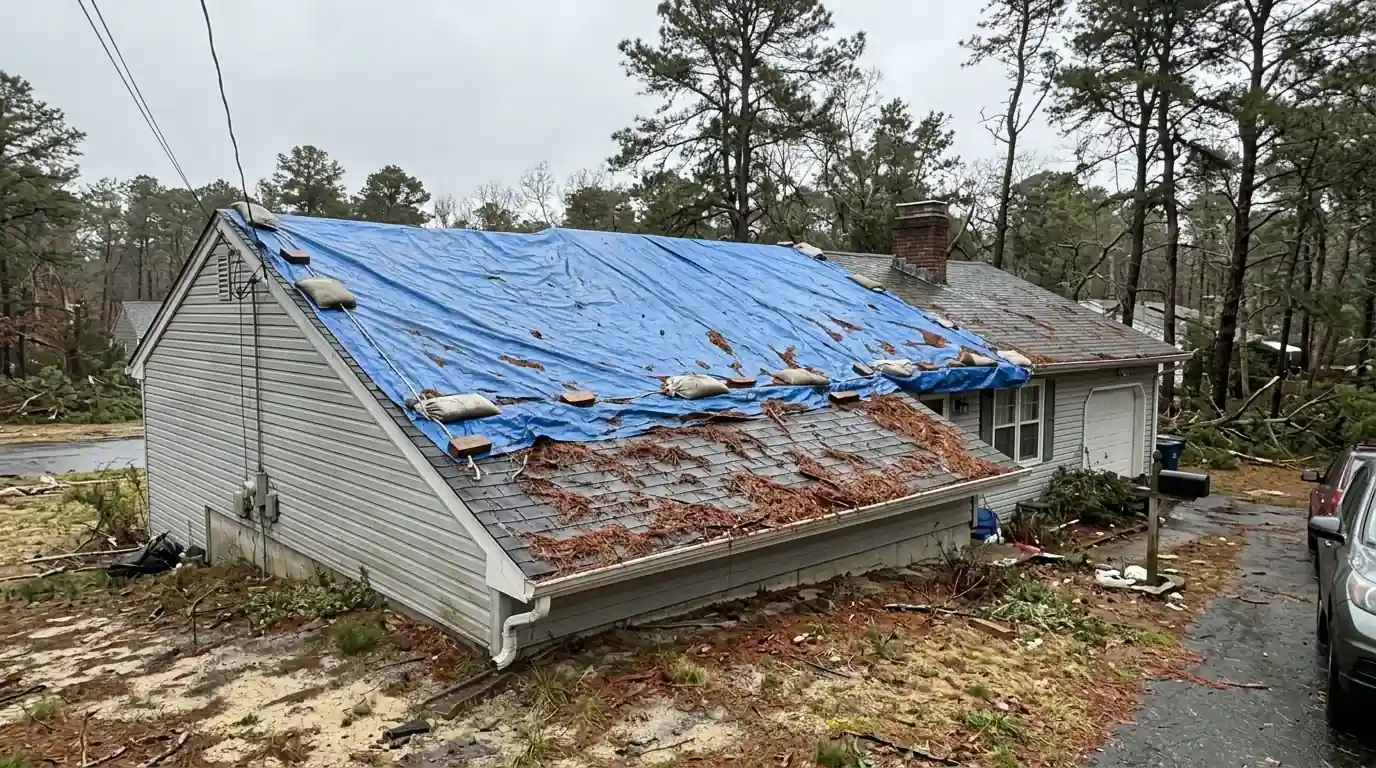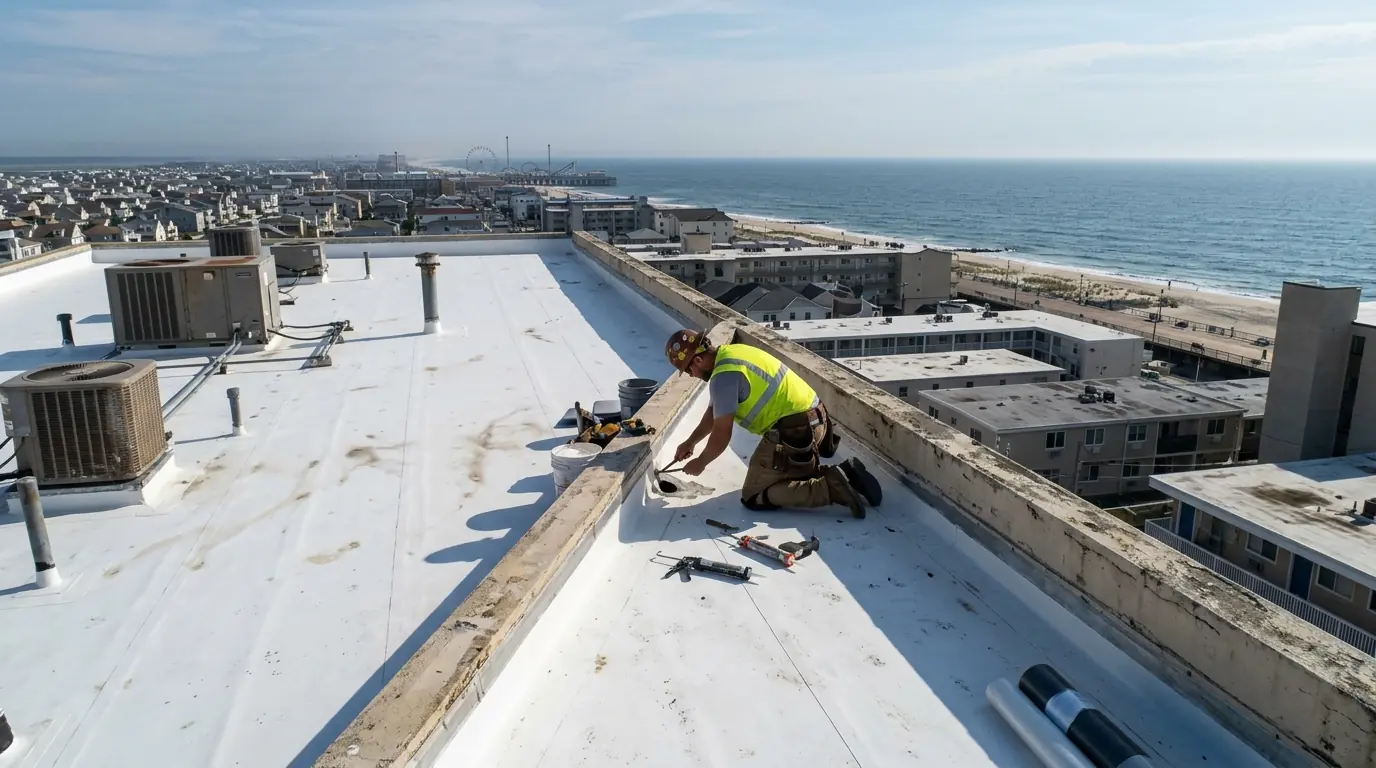
Yes, our crews work throughout Seaside Heights, from the oceanfront blocks near Casino Pier back to the bayside streets. We mostly handle flat roof repair, membrane replacement, wind-torn siding and corroded flashing on multifamily and rental buildings. It's a quick drive over the Mathis and Tunney bridges on Route 37. Call (732) 419-1462, 24/7.
Five things salt air does to a Seaside Heights roof
Close to the ocean, wear shows up in a different order than it does on the mainland. These are the problems we find first.
Rusting fasteners and drip edge
Plain steel nails and painted steel drip edge corrode quickly here. Rust streaks under the eaves usually mean the metal is thinning and the roof edge is starting to let go in high wind.
Split seams on flat roofs
Many buildings near the boardwalk have low-slope roofs over apartments and storefronts. Sun, salt and constant building movement open the seams and blister older modified bitumen, and the first sign is often a stain on a top-floor ceiling.
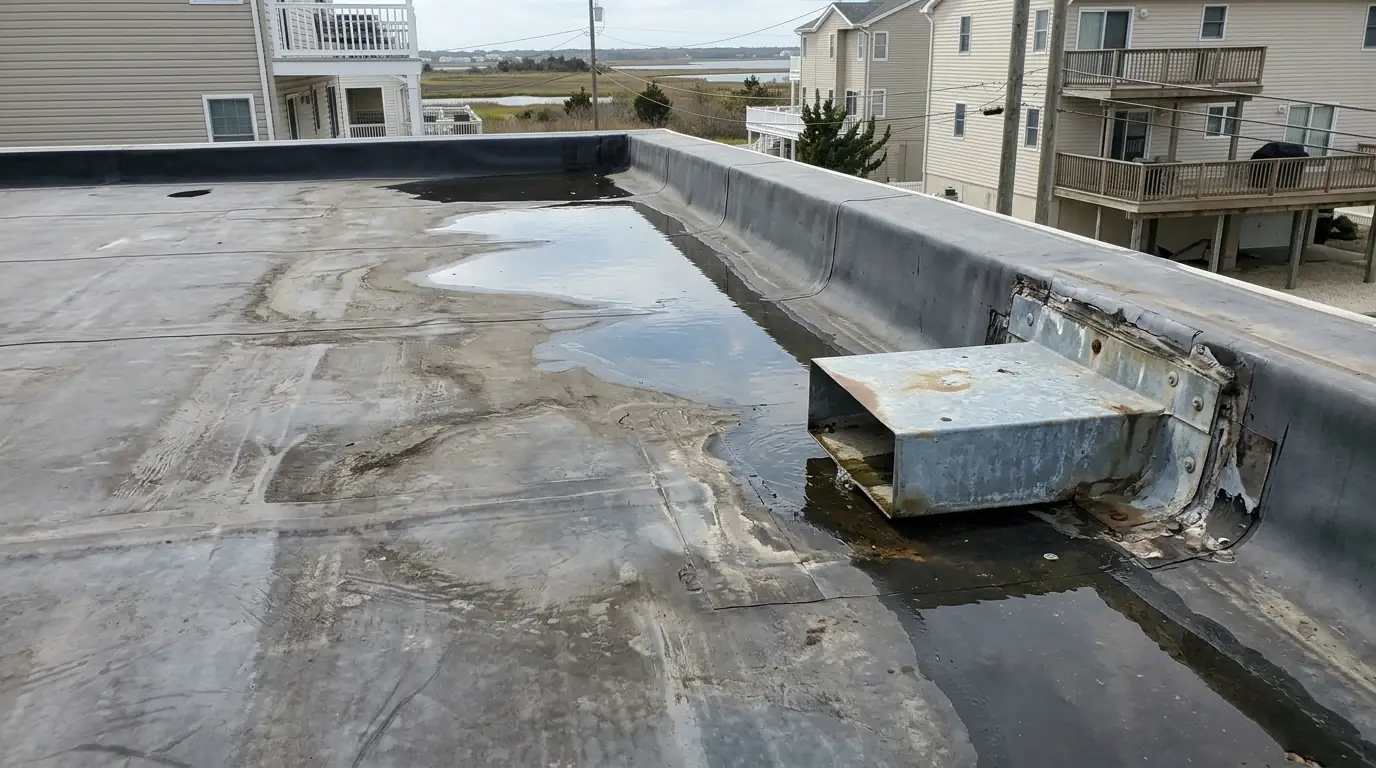
Clogged scuppers
Sand and debris pack into scuppers and drains, so water ponds for days after a storm. Standing water ages a membrane faster than almost anything else.
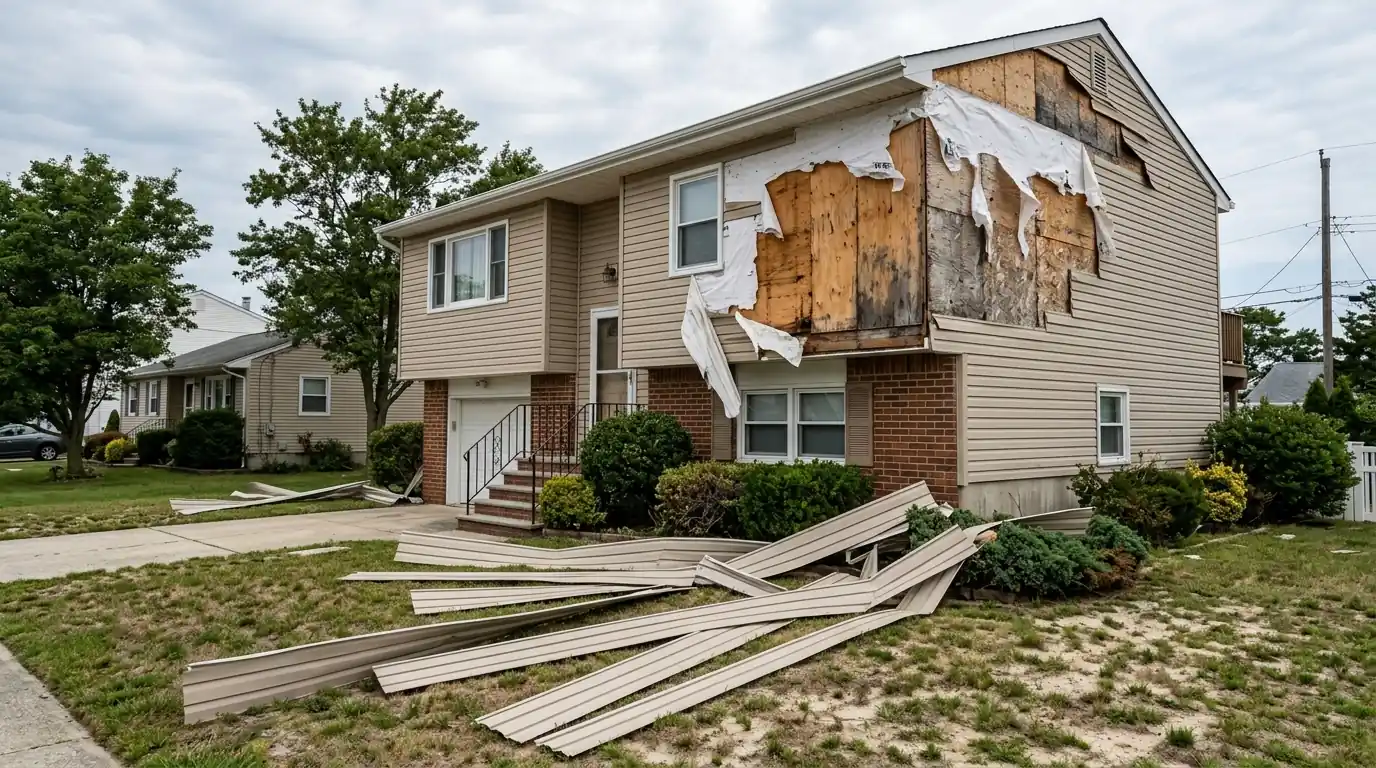
Loose vinyl on the windward wall
Siding facing the ocean takes gust after gust all winter. Once a single panel slips out of its lock, the next storm can peel a whole run off the wall.
Corroded curbs and vent hoods
Rooftop units and exhaust hoods rust at their bases, and the flashing around them fails right along with the metal, letting water run straight down into the units below.
How Seaside Heights rebuilt after Sandy and what that means for your roof
Sandy flooded much of the borough in October 2012 and wrecked the boardwalk. The Jet Star roller coaster at Casino Pier ended up sitting in the ocean, an image people up and down the shore still remember. Less than a year later, in September 2013, a fire that started near Funtown Pier burned north along the boardwalk until crews stopped it at Lincoln Avenue.
A lot of the roofs here were replaced in the rebuilding years that followed, which puts many of them past the ten-year mark now. On the ocean blocks, that's about when salt-exposed shingles, sealants and flashing start to show their age. The rest of the housing is a mix of older cottages, duplexes and apartment buildings, which is unusual for a shore town and means plenty of flat roof repair and shared walls. When siding comes loose, quick siding repair keeps rain out of the sheathing.
How we work around a busy summer block in Seaside Heights
Tight lots, rental turnovers and boardwalk traffic shape how we run a job here.
Walk the roof and the street
We check the roof, the attic or top-floor ceilings, the parking situation and where a dumpster or trailer can sit without blocking neighbors or rental guests.
Day 1, 30 to 45 minutesPlan around tenants
For rentals, we line work up with turnover days or the off-season when we can, and give you a clear window to pass along to guests.
Same dayTear off and dry in
Old material comes off in manageable sections, and anything opened gets covered before we leave each day. Ocean wind shifts fast here, so nothing stays loose overnight.
Day 1 to 2Install with salt in mind
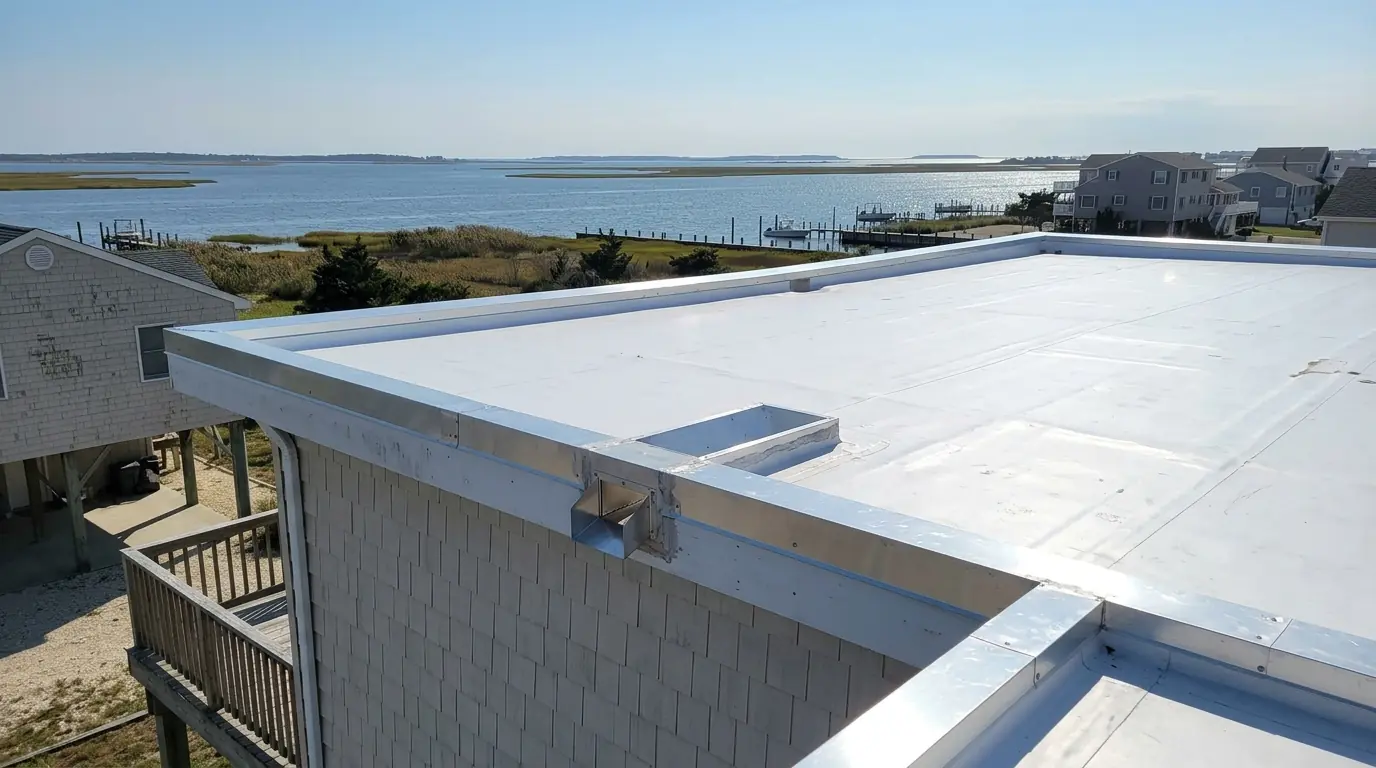
Stainless or hot-dipped galvanized fasteners, aluminum edge metal and fully adhered membrane details last far longer this close to the water. Our notes on roofing near salt water go deeper.
Day 2 to 3Clean the lot
Magnet sweeps, bagged debris and a slow walk around the whole building, including the sand and the sidewalk, where stray nails love to hide from bare feet.
Final hour