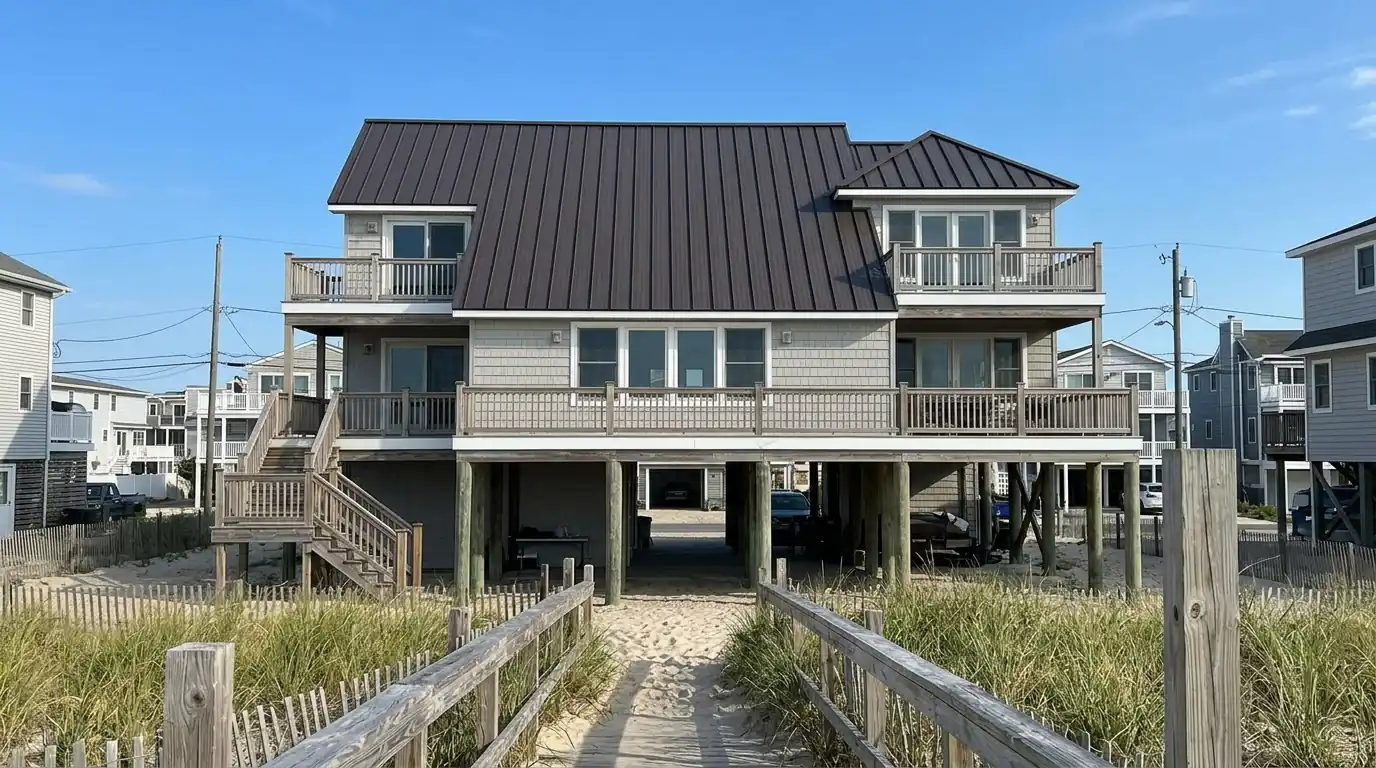
Metal is a strong choice for Toms River homes that face steady wind or salt spray, or for owners planning to stay 20 years or more. Standing seam with concealed fasteners is the most durable style. Near the ocean, aluminum or a coastal-rated coated steel avoids corrosion. A metal roof costs roughly two to three times an asphalt roof but can last 40 to 60 years.
Metal roof styles you'll see on Jersey Shore homes
Metal roofing covers several quite different systems. Here's what each one looks like and how it behaves near the coast.
Mechanically seamed standing seam
Panel edges are folded together with a seaming tool, locking them tight. It's the strongest option against uplift and the one we suggest for exposed barrier island and bayfront homes.
Snap-lock standing seam
Panels click together without crimping, which speeds installation and lowers labor. Snap-lock works well on moderately sloped roofs inland, though it carries lower uplift resistance than double-locked seams.
Metal shingles and shakes
Stamped steel or aluminum panels shaped like slate, shake or tile. They interlock on all four sides, give a traditional look and handle wind well, which suits colonials and cottages.
Exposed-fastener ribbed panels
Screwed-down corrugated or R-panel sheets are common on barns, sheds and some garages. Rubber washers on the screws age and need checking, so we rarely suggest them for living space.
Porch and accent roofs
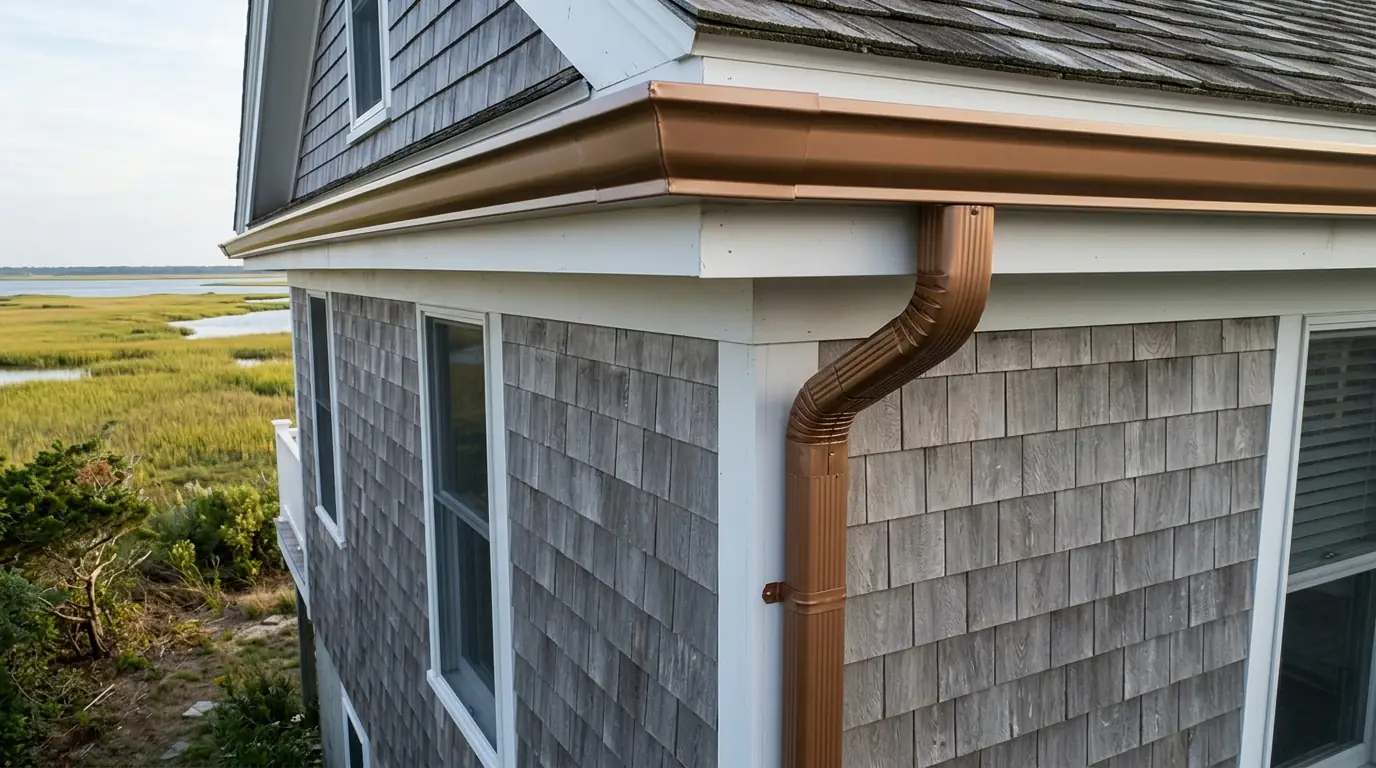
A small standing seam roof over a front porch, bay window or entry adds contrast to a shingled house. Copper, bronze, charcoal and dark green finishes are popular choices on shore homes.
Steel or aluminum: which metal belongs near salt water
The base metal and its finish matter more than the panel profile when your house sits within sight of the bay or ocean.
| Material | How it handles salt air | Where we use it |
|---|---|---|
| Galvalume steel, bare | Aluminum-zinc coating protects well inland but can corrode at cut edges in heavy salt spray | Mainland homes several miles from open water |
| Painted steel with Kynar 500 finish | PVDF paint holds color for decades; coastal programs depend on distance from salt water | Most Toms River mainland neighborhoods and bay sections |
| Aluminum, painted | Doesn't rust, so salt and moisture pose little threat; softer, so it dents more easily | Barrier island homes, oceanfront and lagoon lots |
| Copper | Weathers to a green patina rather than corroding, very long life, high material cost | Accent roofs, bay window bonnets, cupolas |
How a standing seam roof goes on, panel by panel
Metal is less forgiving than shingles, so most of the work happens before the first panel goes up.
Measure every plane precisely
Panels are cut to run from eave to ridge in one piece, so each slope is measured carefully and checked for square. Out-of-square roofs on older homes get noted so the trim can absorb the difference.
Inspection visitOrder panels and trim
Panels are run off the coil to length in your chosen color, with ridge, eave, rake and valley trim bent from that same coil so everything wears the same over the years.
2 to 4 weeksTear off and prepare the deck
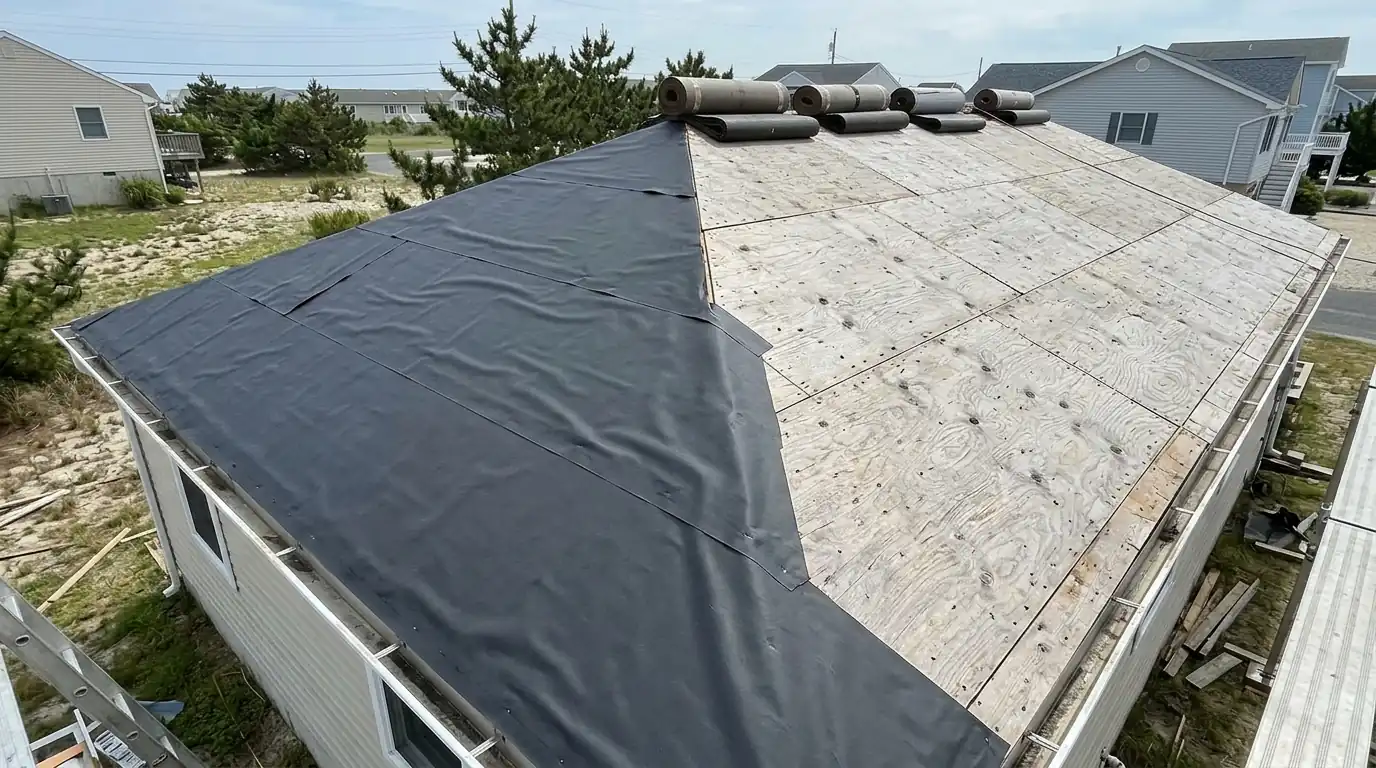
Old roofing comes off and soft sheathing is replaced. Panels telegraph every bump, so the deck has to be flat and every nail head driven flush before anything goes over it.
Day 1Lay high-temperature underlayment
Metal gets hot in the sun, so we use a high-temperature-rated self-adhered membrane rather than standard felt. It acts as the second waterproofing layer and dampens rain noise.
Day 1 to 2Install clips and panels
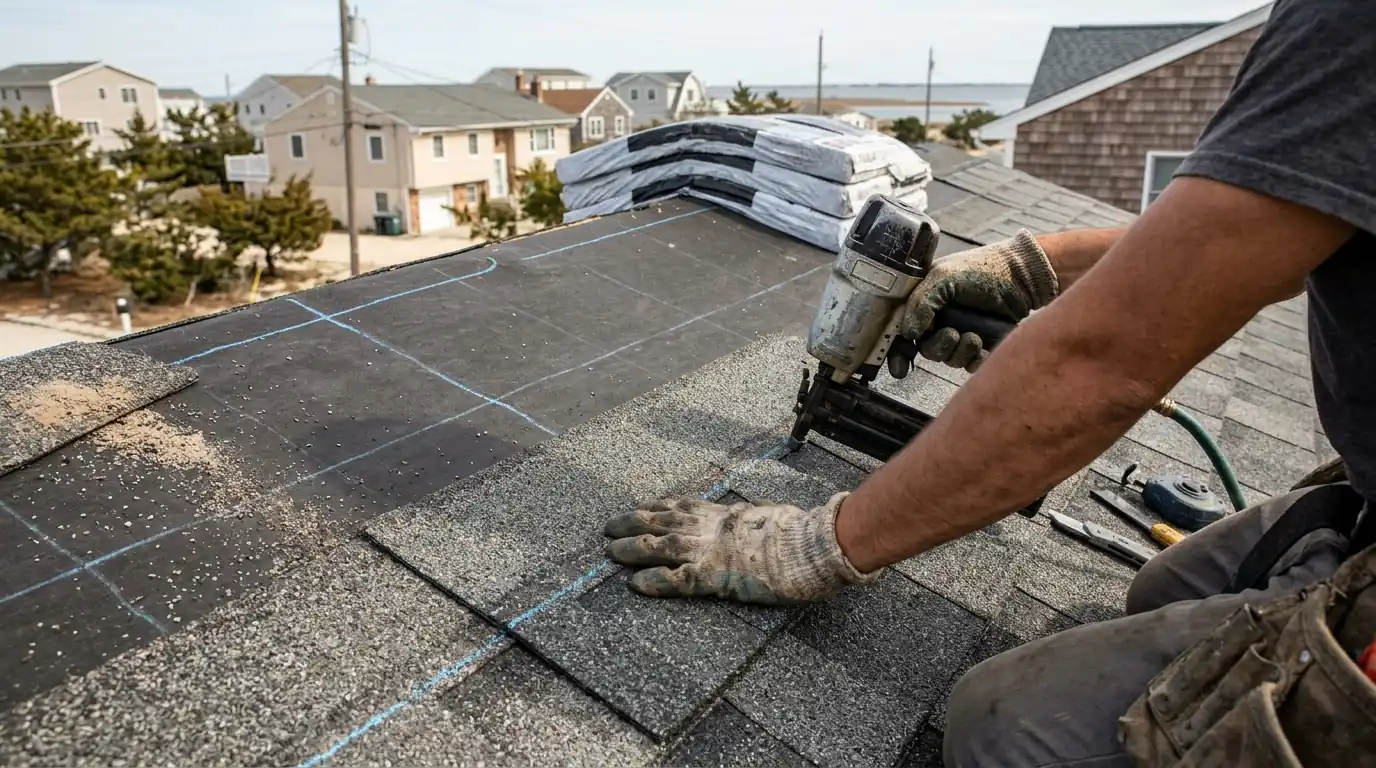
Concealed clips hold each panel while allowing it to expand and contract with temperature swings. Panels are then seamed or snapped, and trim closes off the eaves, rakes and ridge.
2 to 5 daysFlash penetrations and finish
Pipes, vents and chimneys get boots or custom-bent flashing sealed to the panels. We clean metal shavings off the surface immediately so they can't rust and stain the finish.
Final day
Metal roof price ranges for Toms River homes
Costs below reflect 2026 installed pricing including tear-off of one asphalt layer on a typical Ocean County home.
| Work | Typical range | What moves the number |
|---|---|---|
| Snap-lock standing seam, painted steel | $27,450 to $46,180 | Roof size, pitch and number of valleys and dormers |
| Mechanically seamed, painted steel | $32,960 to $54,870 | Seaming labor, panel width and gauge |
| Aluminum standing seam | $36,240 to $61,390 | Aluminum material cost and coastal finish choice |
| Stamped metal shingles | $25,780 to $43,520 | Profile style, color and complexity of hips |
| Porch or bay window accent roof | $3,140 to $9,670 | Size, copper vs painted metal, flashing into the wall |
These ranges help with planning, but your actual price comes after we measure your roof and confirm the material.
Rain noise, lightning and other things people ask about metal
The loud-roof worry comes from barns and sheds where metal is screwed straight to open purlins. On a house, panels sit over solid sheathing, underlayment and an insulated attic, so a downpour sounds about the same as it does on shingles. Most people say it's quieter than they expected.
Metal doesn't attract lightning, and it isn't more likely to be struck than any other roof. If lightning does hit, a metal roof won't catch fire. Dents are a fair concern with aluminum, especially under big oaks, so we steer those homes toward a heavier gauge or a textured shingle profile that hides small dings.
Metal also works well with rooftop solar, since clamps can attach to standing seams without drilling through the panels. If you have an array now, read about solar panel removal and reinstall before planning the swap.
Not ready for a whole metal roof? Start with the porch
Plenty of homeowners around Toms River keep an architectural shingle roof on the main house and add a standing seam roof only over the front porch or a bay window. It costs a small fraction of a full metal roof, gives the house a sharper look from the street, and protects the low-slope area that tends to leak first. When the main roof wears out years later, the accent color can carry over to the new metal or simply stay as a contrast.
Why metal makes sense on so many shore homes
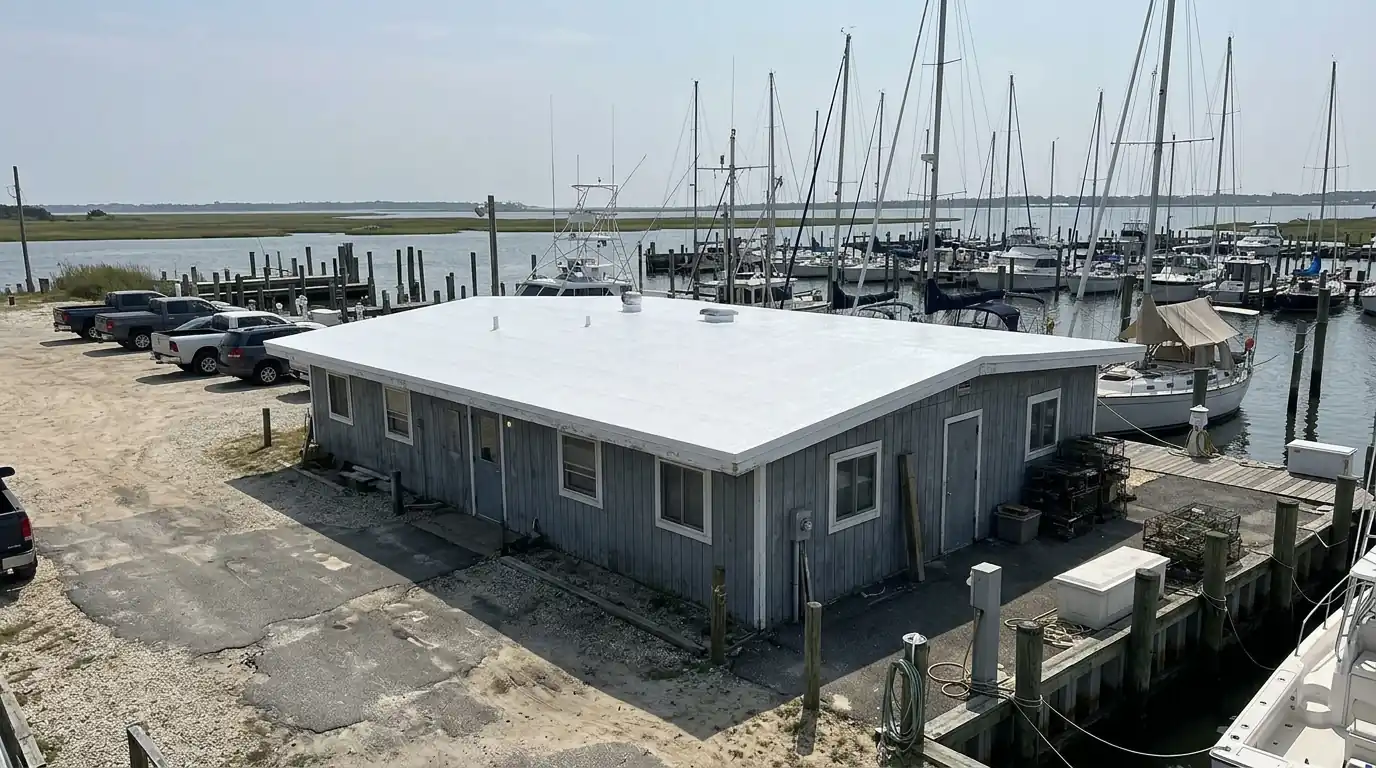
Homes on the barrier island, in Ortley Beach, Normandy Beach and the Seaside towns, sit in near-constant salt air and take the full force of nor'easters off the ocean. Standing seam with concealed fasteners has no exposed screws to back out and no tabs for wind to lift, which is exactly why so many post-Sandy rebuilds chose it. We use aluminum within sight of the ocean, and coated steel for most mainland homes.
On the mainland side, metal fits well on bay-front houses in Coates Point and similar sections where wind crosses open water before it hits the roof. Raised homes with tall rooflines benefit too, since their roofs are harder and more expensive to reach for repairs. Under heavy pine and oak cover, needles and leaves slide off smooth panels more readily than they do off shingles, which keeps valleys clearer through the fall.
Where we do this work most
We work across all of Toms River (08753, 08755 and 08757) and these neighboring towns every week, along with the rest of Ocean County and southern Monmouth County.
- Silverton, Toms River08753
- Pleasant Plains, Toms River08755
- West Dover, Toms River08755
- Ortley Beach, Toms River08751
- Lakewood08701
- Brick08723
- Jackson08527
- Howell07731
- Manchester08759
- Berkeley Township08721
- Lacey Township08731
- Stafford Township08050
- Barnegat08005
- Wall Township07719
- Freehold07728
- Point Pleasant08742