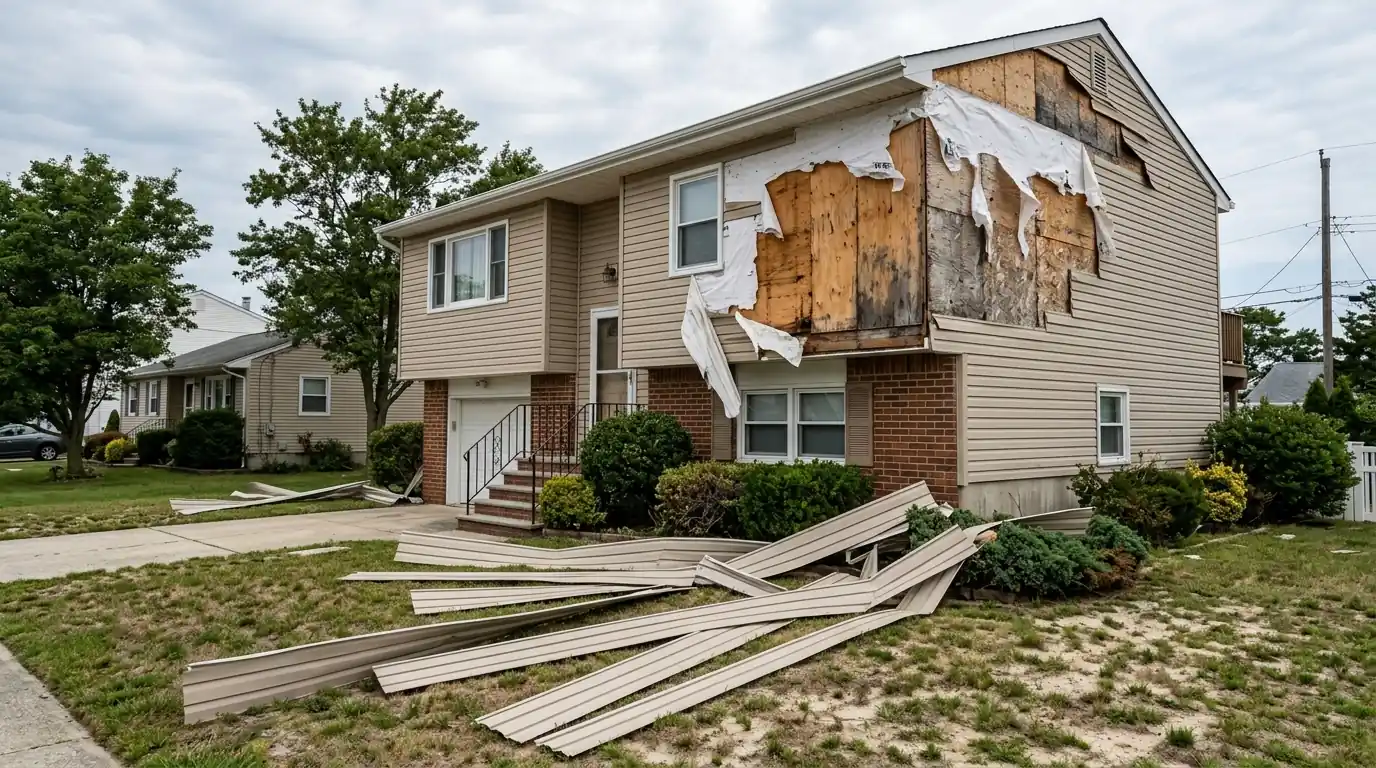
Yes, we work throughout Wall Township, including Allenwood, Glendola, West Belmar and the streets around Allaire. Most calls here are full replacements on aging shingle roofs, gutter guards for needle-clogged gutters and storm repairs after limbs come down. Call (732) 419-1462 at any hour and a roofer will talk through what you're seeing.
Why roofs under Wall's tall trees age unevenly
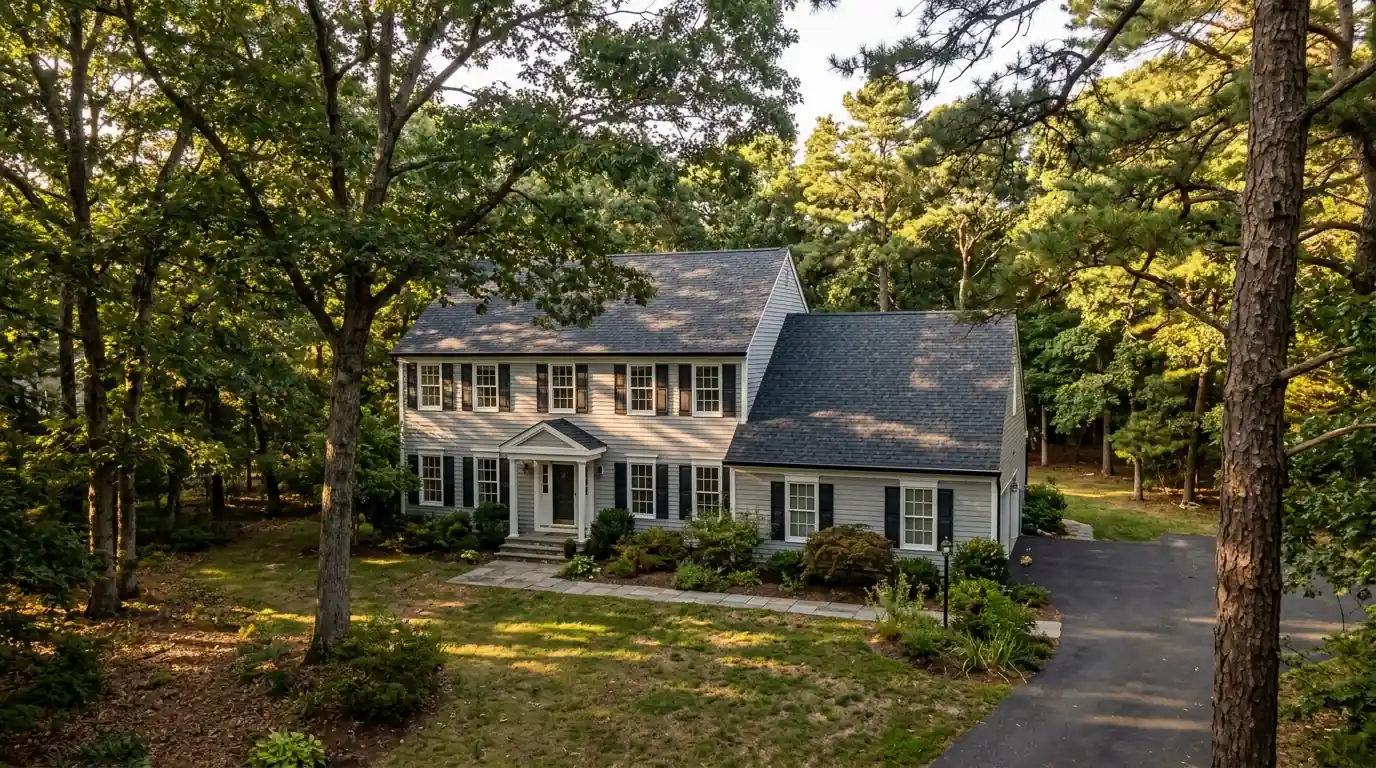
On Route 34 or Allaire Road, the canopy shows before the houses. Many lots were cut out of woods, and the oaks and pitch pines left standing now hang over the roofline. Shade keeps the north slope damp for days, so moss and black algae streaks take hold there first. The south slope, baking in full sun, sheds granules faster.
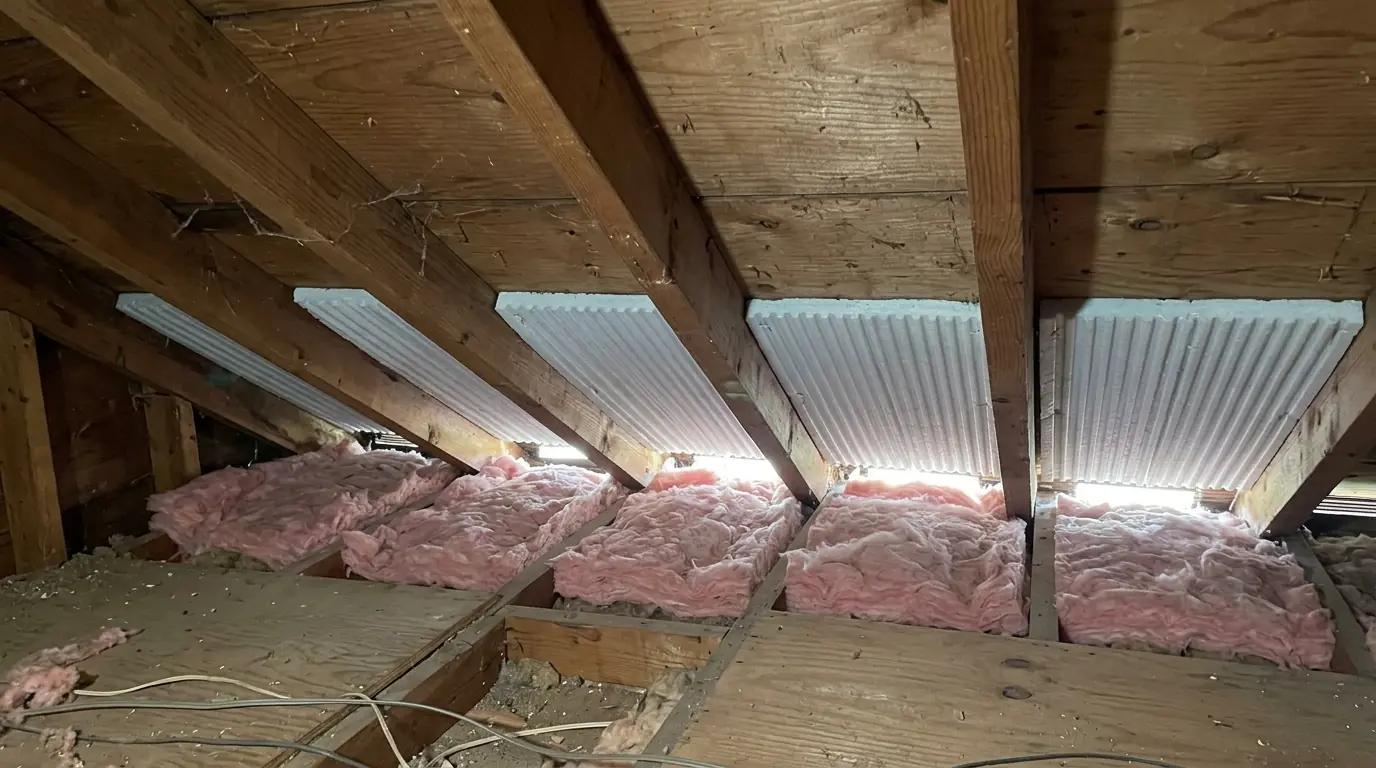
Weather adds its own wear. The eastern side of the township sits only a few miles from the ocean, so a nor'easter pushes wind-driven rain under lifted tabs on Glendola and West Belmar streets. Farther west toward Allaire, winter nights run colder, and ice can build at the eaves of low-slope ranch roofs with thin attic insulation. We look at the shingles and the attic air under them.
What we find most often on Wall Township roofs
These are the issues our roofers flag on inspections across the township, roughly in the order we run into them.
Clogged valleys
Oak leaves and pine needles collect where two roof planes meet. Wet debris holds water against the shingles, and the valley wears through long before the rest of the roof is ready to go.
Limb strikes
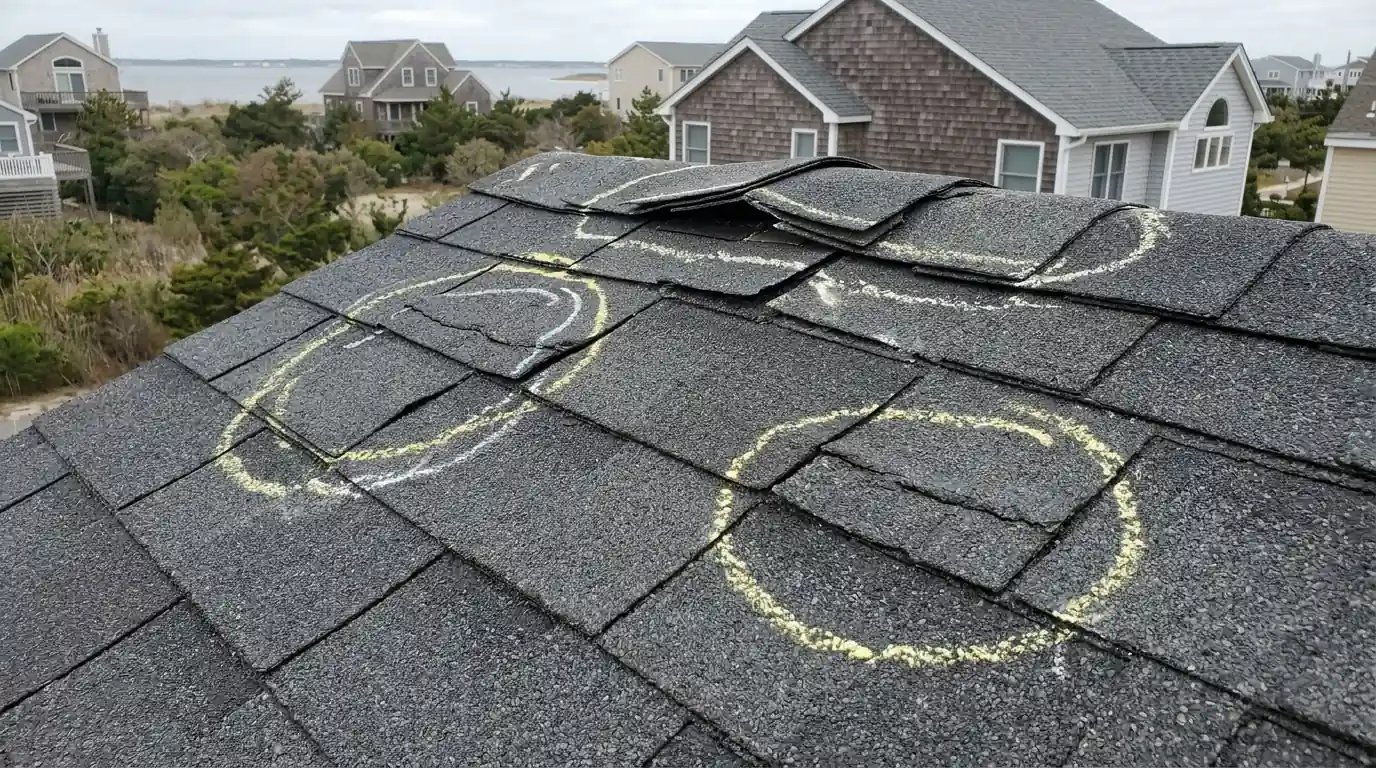
A heavy branch doesn't need to break through to cause trouble. It can crack shingles, bend the drip edge or knock a pipe boot loose, and the leak shows up weeks later on a ceiling.
Overflowing gutters
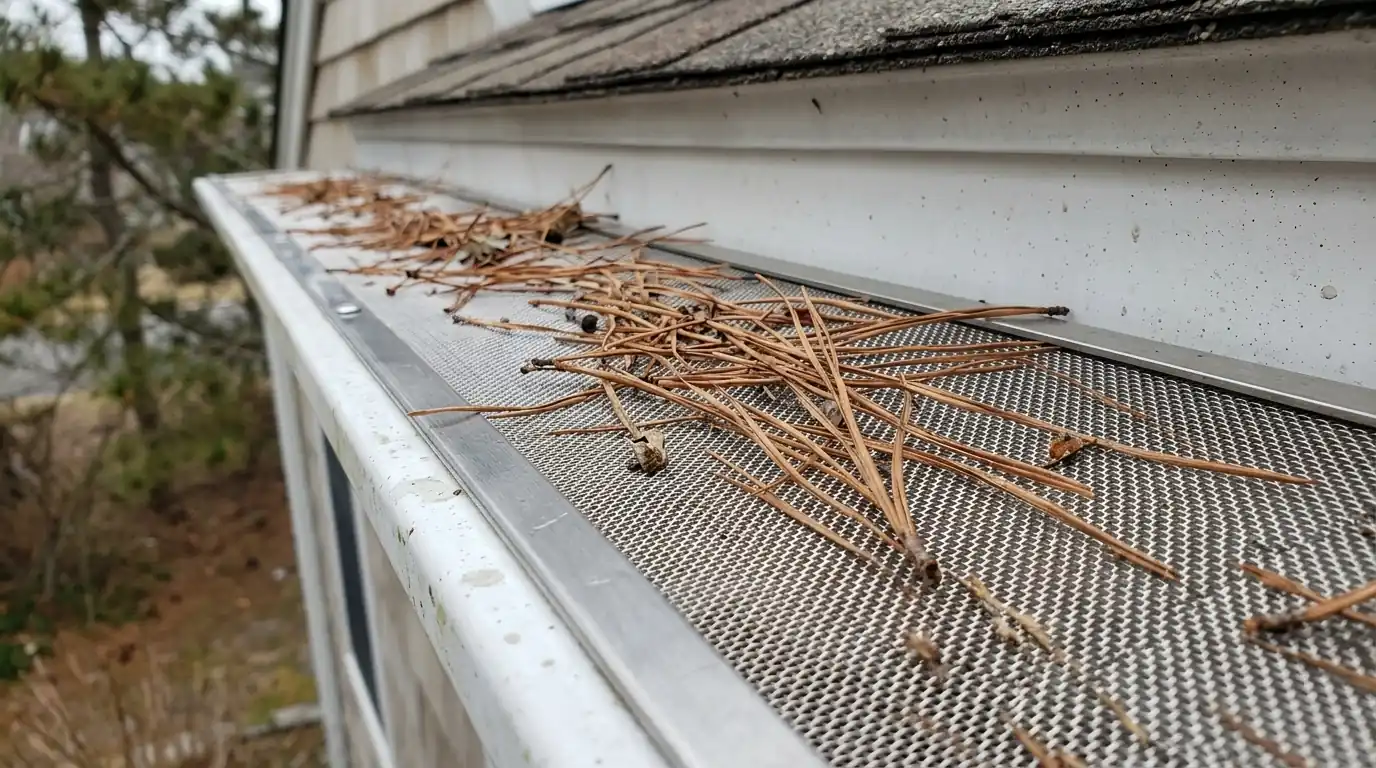
Needles mat into a dense layer that seals the downspout outlet. Water spills over the front edge, soaks the fascia and splashes the siding and foundation.
Tired attic ventilation
Plenty of older ranches and split-levels have a couple of gable vents and almost no soffit intake. Moist air lingers, sheathing darkens, and shingles run hotter through July and August.
How a roof replacement runs on a wooded Wall lot
Trees change the logistics of a tear-off, so we plan around them before the first shingle comes off.
Walk the property
We look at the roof, the attic and the trees around it. If a limb is resting on the roof or hanging low over it, we point it out so it can be trimmed before work begins.
About an hourProtect the yard
Tarps go over shrubs, patios and window wells, and plywood covers soft ground where the dumpster sits. Wooded lots often have tight, winding driveways, so we place equipment with care.
Day 1, early morningTear off and check the deck
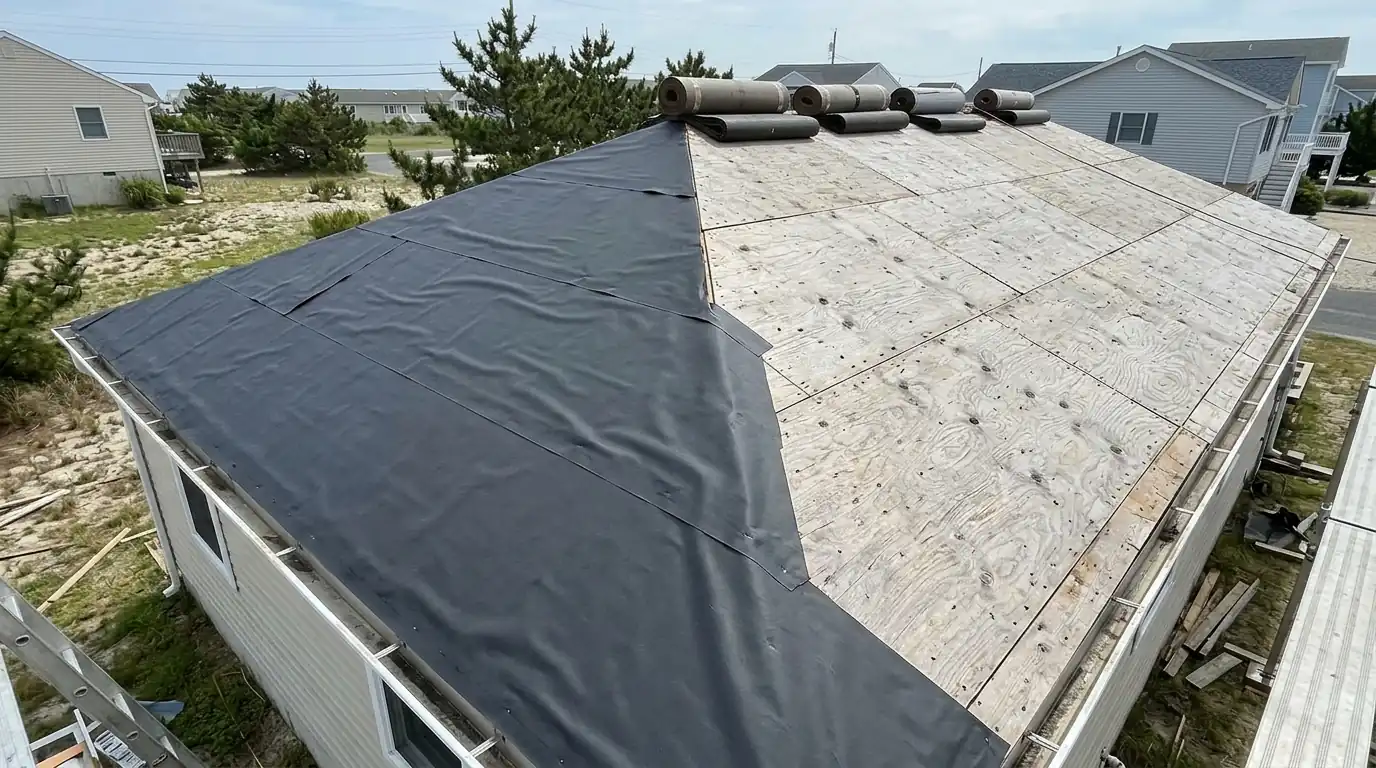
Old shingles come off down to the wood. Shade often softens a few sheets of plywood near the eaves and valleys, and we replace any that fail before anything new goes down.
Day 1Dry in and shingle
Ice and water barrier runs along the eaves and through the valleys, synthetic underlayment covers the rest, and algae-resistant architectural shingles from lines such as GAF or Owens Corning go on top.
Day 1 to Day 2Vent, flash and clean up
We add ridge vent where the attic needs it, set new pipe boots and flashing, then run a magnet sweep through the lawn and planting beds to pick up stray nails.
Final afternoon
Pine needles and gutters: a Wall habit worth breaking
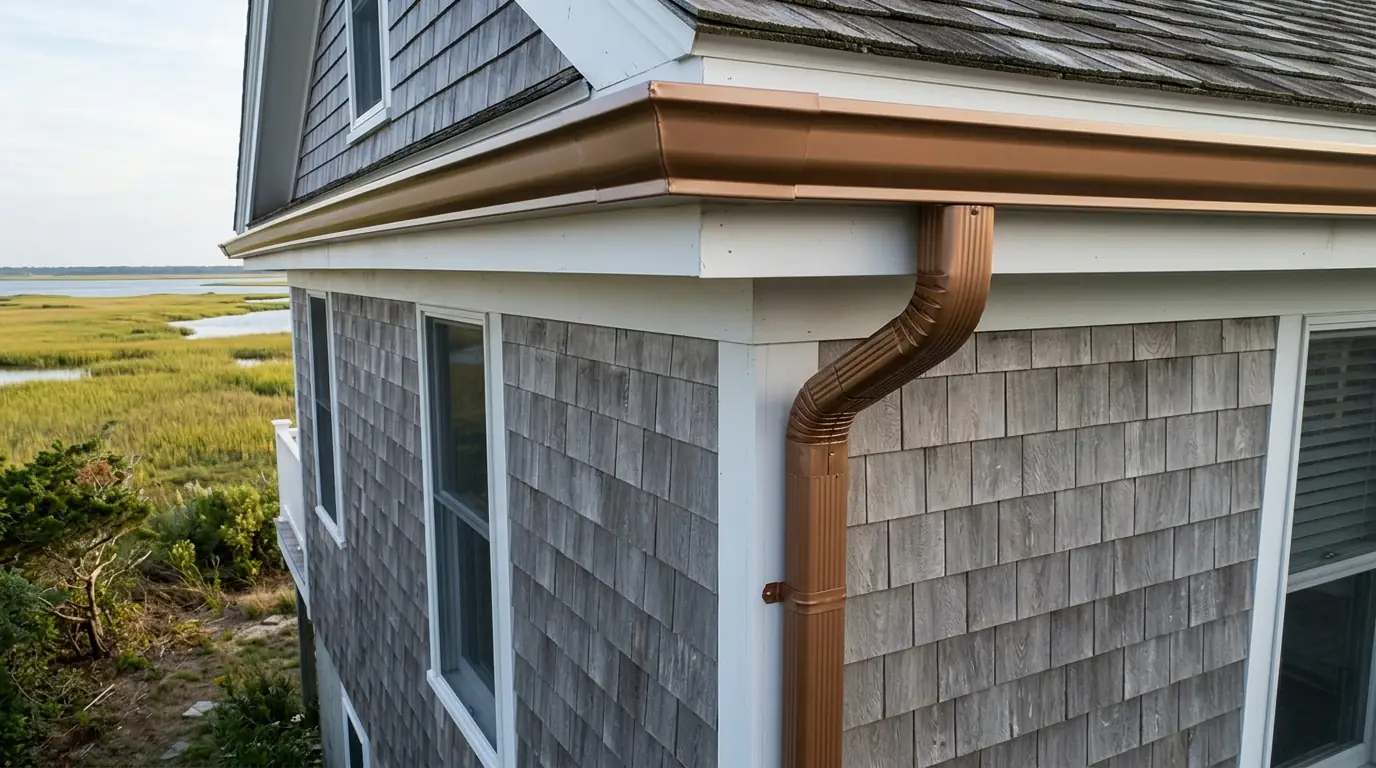
If you clean your gutters three or four times every fall and they still overflow, the gutter itself may be the problem. Many older Wall homes have narrow 5 inch runs with small downspouts that choke quickly under pitch pines. Moving up to 6 inch seamless gutters with larger outlets, then adding micro-mesh gutter guards, cuts down on ladder climbing and keeps water off your fascia. Give us a call at (732) 419-1462 and we'll look at the whole drainage picture, from roof edge to splash block.