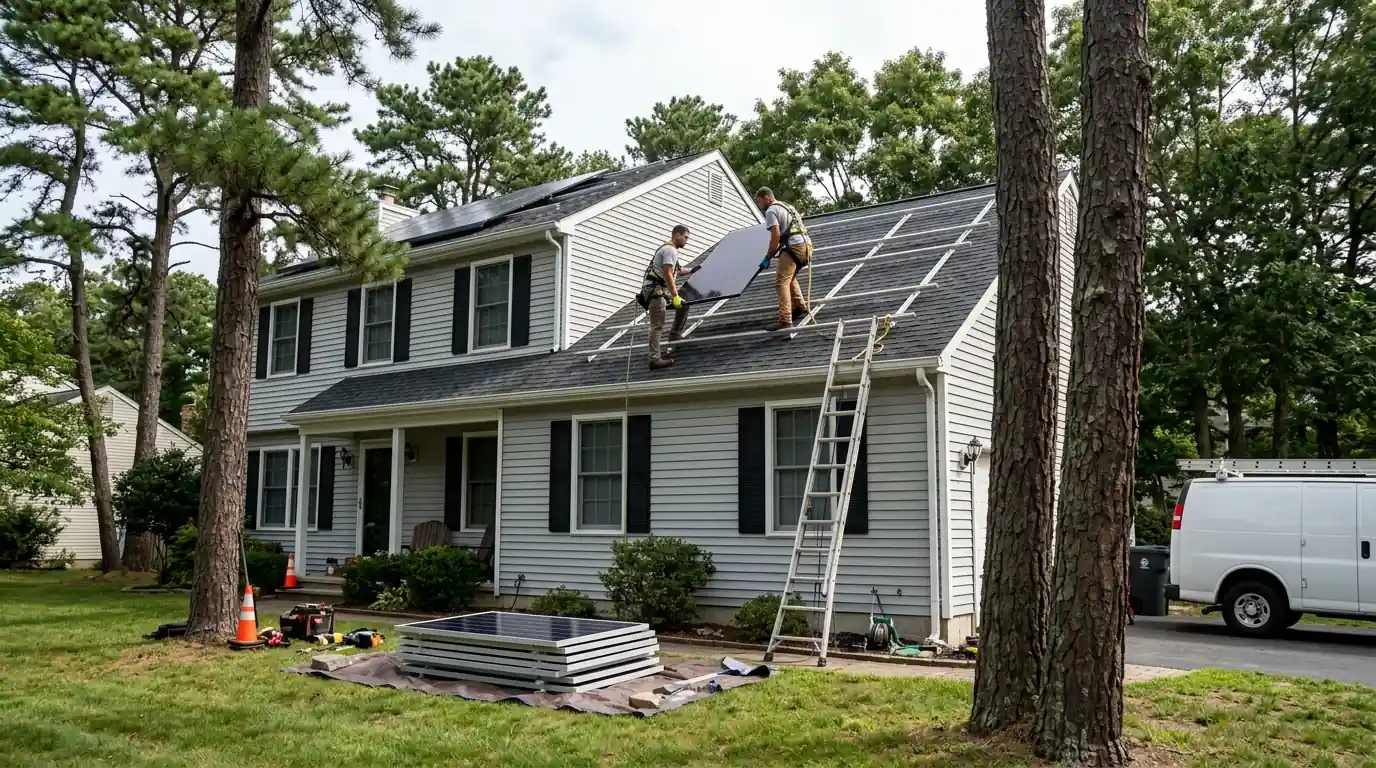
Panels have to come off for a proper roof replacement, since shingles under the rails can't be reached any other way. We remove the array, store it, reroof, install new flashed mounts and remount everything. Plan on one to two weeks from removal to reinstall for a typical house. Call (732) 419-1462 before you sign anything with the solar company.
Who owns your panels changes the first phone call
Before any wrench touches the racking, it helps to know how your system is held. The answer decides whose permission you need and which paperwork is involved.
| How you have the system | Who needs to know | What to ask before the roof job |
|---|---|---|
| You bought it outright or with a loan | You decide, though the original installer's paperwork still matters | Whether removal by another company affects the installer's coverage on the system |
| Lease | The leasing company owns the equipment | Whether they require their own technicians, a notice period, or written approval |
| Power purchase agreement (PPA) | The PPA provider owns the panels | Who pays for removal, and whether lost production during the reroof is credited |
| System came with the house | Check the closing documents for a transferred lease or PPA | Which company services it now, since leases often change hands |
What we look at before quoting a solar reset
Every array is a little different. These details shape the price and the schedule more than anything else.
Panel count and layout
Twelve panels on one south slope is a very different job from thirty split across three roof faces. Layout also tells us how much roof sits exposed during the gap between removal and reinstall.
Inverter type
Systems with microinverters or optimizers under each panel take longer to unplug and rewire than a single string inverter in the garage. Each module's connectors get checked and labeled as they come down.
Racking and attachments
Older installs often used lag bolts through shingles with sealant as the only protection. On reinstall, every attachment gets a new flashed base woven into the new shingle courses so it sheds water properly.
Roof condition under the array
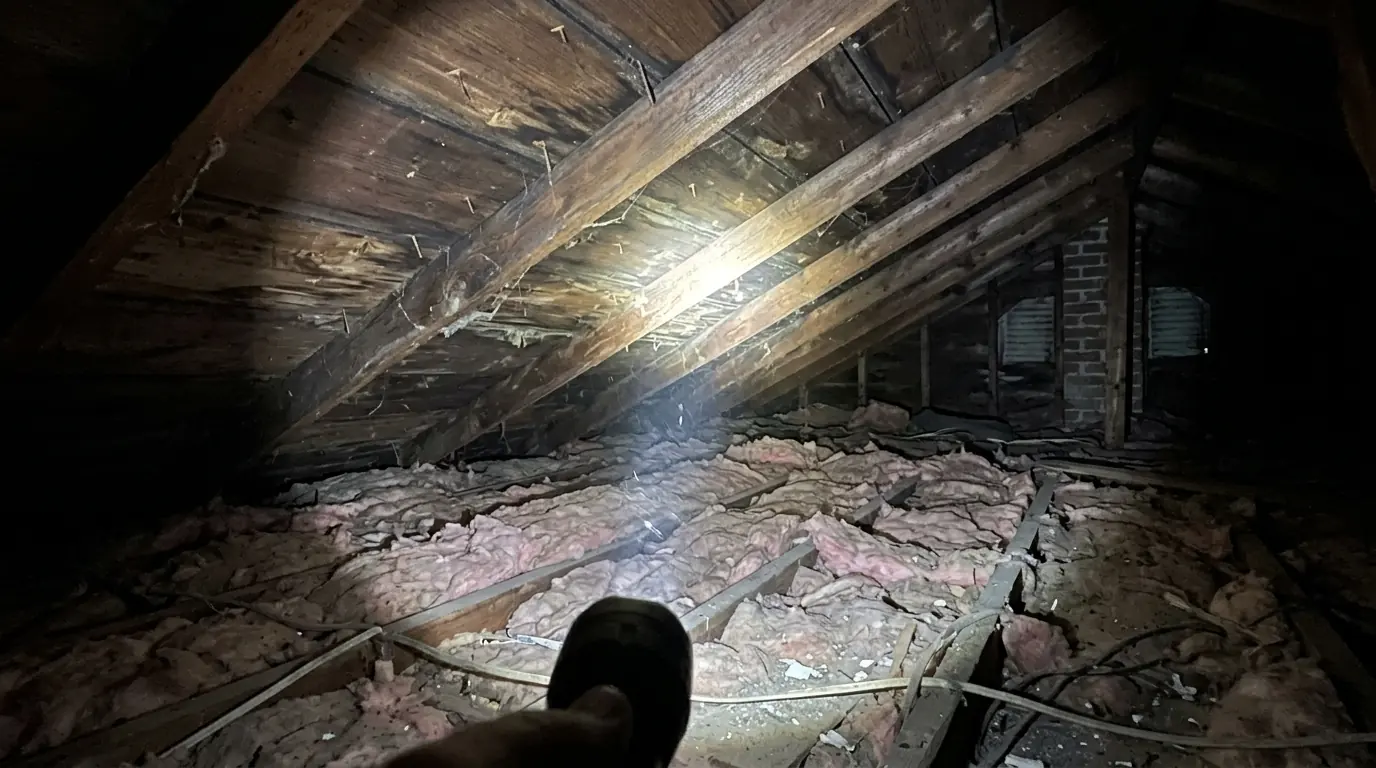
Shade from panels keeps shingles cooler, but debris and pine needles collect under the rails. We look for soft decking around old penetrations, because slow leaks there can go unnoticed for years.
Critter screening
Squirrels and birds love the gap under panels. If you've heard scratching overhead, we can add mesh guards around the array edge during reinstall so nests don't come back.
Where panels will be stored
Panels need a dry, flat, protected spot. A garage floor works well; otherwise we bring them to secure storage until the new roof is done.
From panels off to power back on
Timing depends on weather and how quickly any required inspection gets scheduled. A typical sequence on a single-family home looks like this.
Document the system
We photograph the array, label each panel's position and note the wiring path, conduit runs and inverter readings. Those records let us put everything back exactly as it was producing before the job.
Before removal dayShut down and remove
The system is shut down at the inverter and disconnects following the equipment maker's procedure. Panels come off one at a time, then rails and old mounts, and every hole left in the roof is sealed the same day.
Day 1, 4 to 7 hoursReroof the whole surface
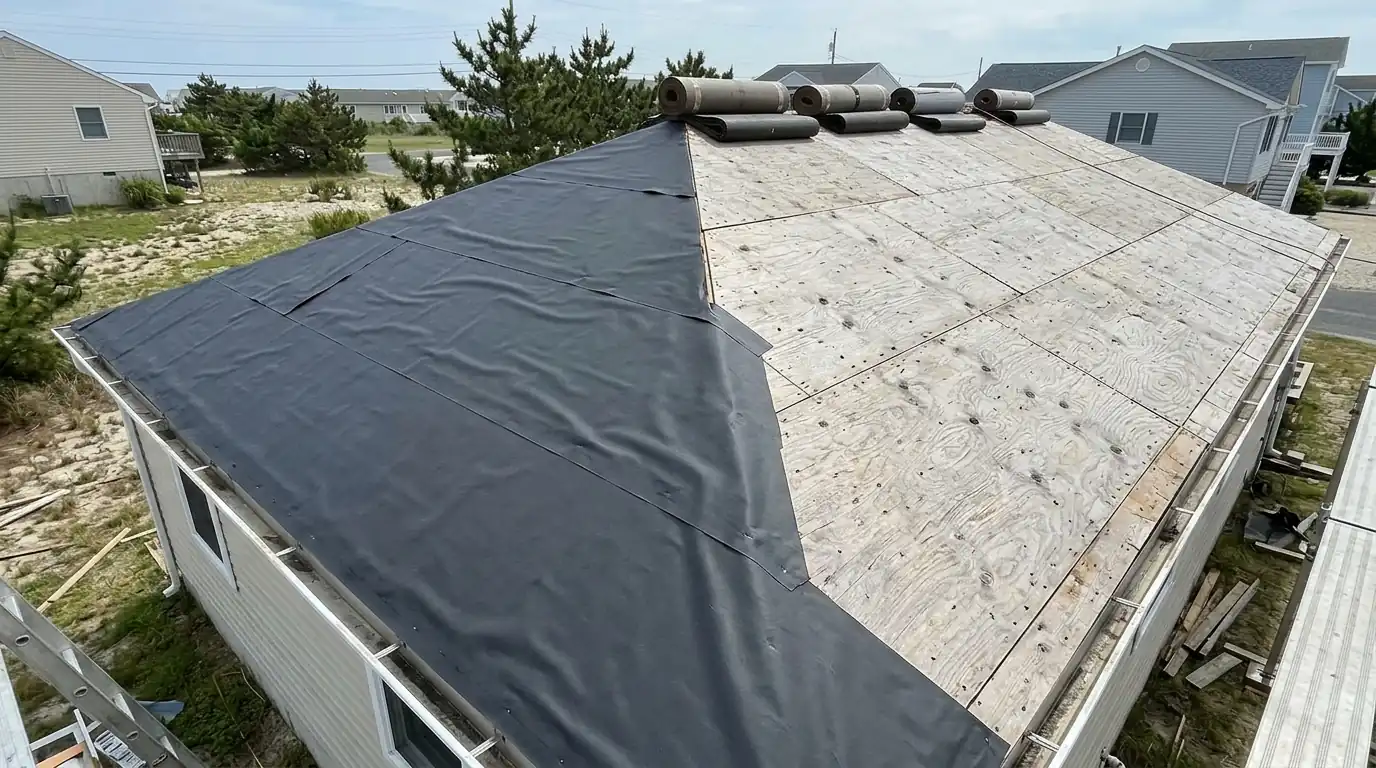
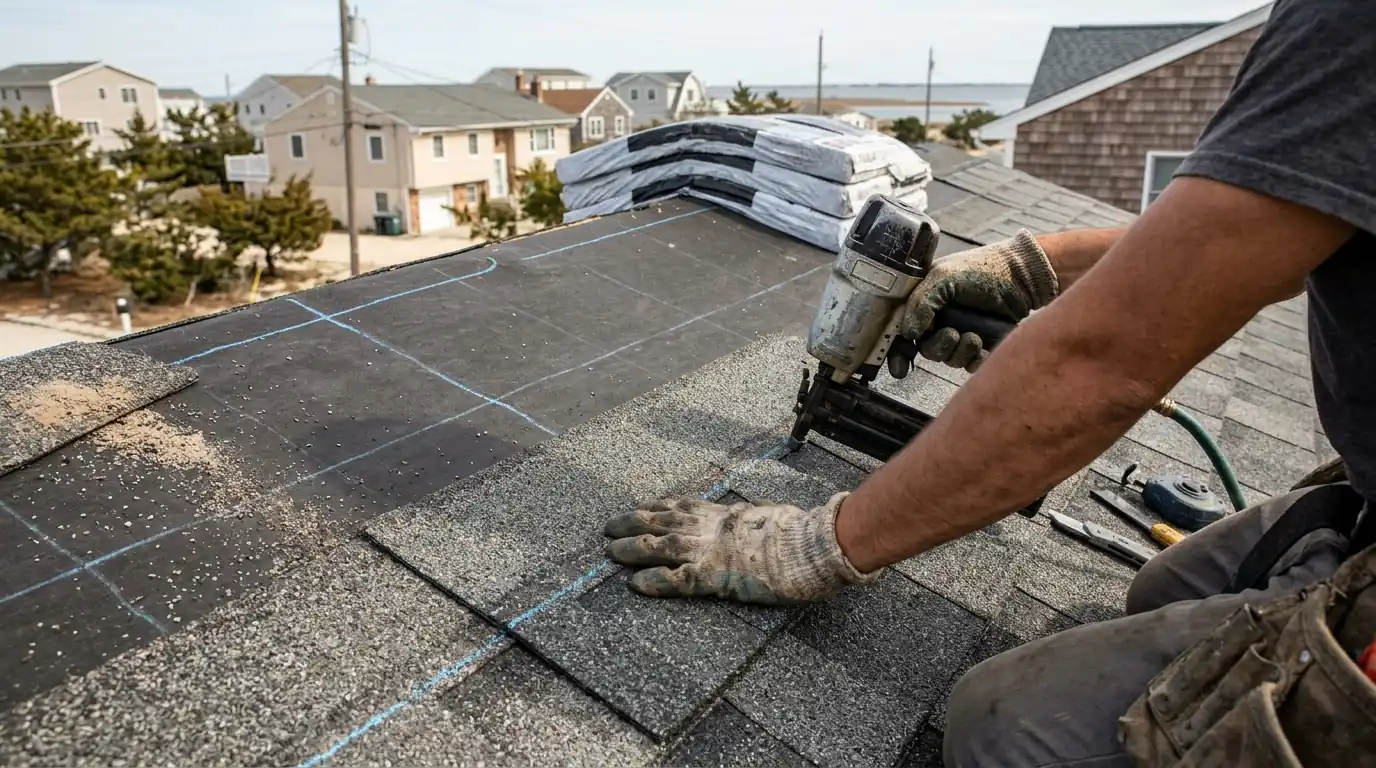
Tear-off, deck repairs, ice and water barrier, underlayment and new shingles go on the way any roof replacement would. Removing the panels first means the roof under the array gets the same care as every other slope.
Day 2 or 3Install new flashed mounts
Attachment points are laid out to hit rafters, then each one gets a flashed base slipped under the shingle course above. That way water runs over the flashing instead of relying on a dab of sealant.
Same day as reroofRemount rails and panels
Rails go back, panels are reset in their labeled positions, and wiring is reconnected and tidied with clips so cables don't rest on the shingles where they'd rub through.
Reinstall day, 5 to 8 hoursRestart and verify output
We bring the system back up and compare production readings with the numbers recorded before removal. We pull the township permit when the job requires one and arrange any inspection that goes with it.
Reinstall day, final hour
What a solar removal and reinstall typically costs
These 2026 ranges cover the solar portion only. The reroof itself is priced separately, the same way it would be on a house without panels.
| Work | Typical range | What moves the number |
|---|---|---|
| Small array, 10 to 16 panels | $1,940 to $3,680 | String inverter or microinverters, single roof face |
| Mid-size array, 17 to 28 panels | $3,420 to $6,150 | Number of roof faces, conduit runs |
| Large array, 29 panels or more | $5,870 to $9,940 | Steep pitch, two-story height, complex wiring |
| New flashed attachments, per mount | $27 to $58 | Mount style, rafter layout |
| Critter mesh around the array | $545 to $1,160 | Perimeter length, number of separate arrays |
Treat these as general ranges, not a quote. Lease and PPA agreements can change who pays for which part, so check yours before we price the job.
Why the roof under solar deserves the same care as the rest
Panels typically last 25 years or more, and plenty of systems in Ocean County went up on roofs that were already 10 or 15 years old. That mismatch is why so many homeowners now face a reroof with an array still in good shape. When the panels come down, the best result is a roof that will outlive the system above it, so you never have to pay for this twice.
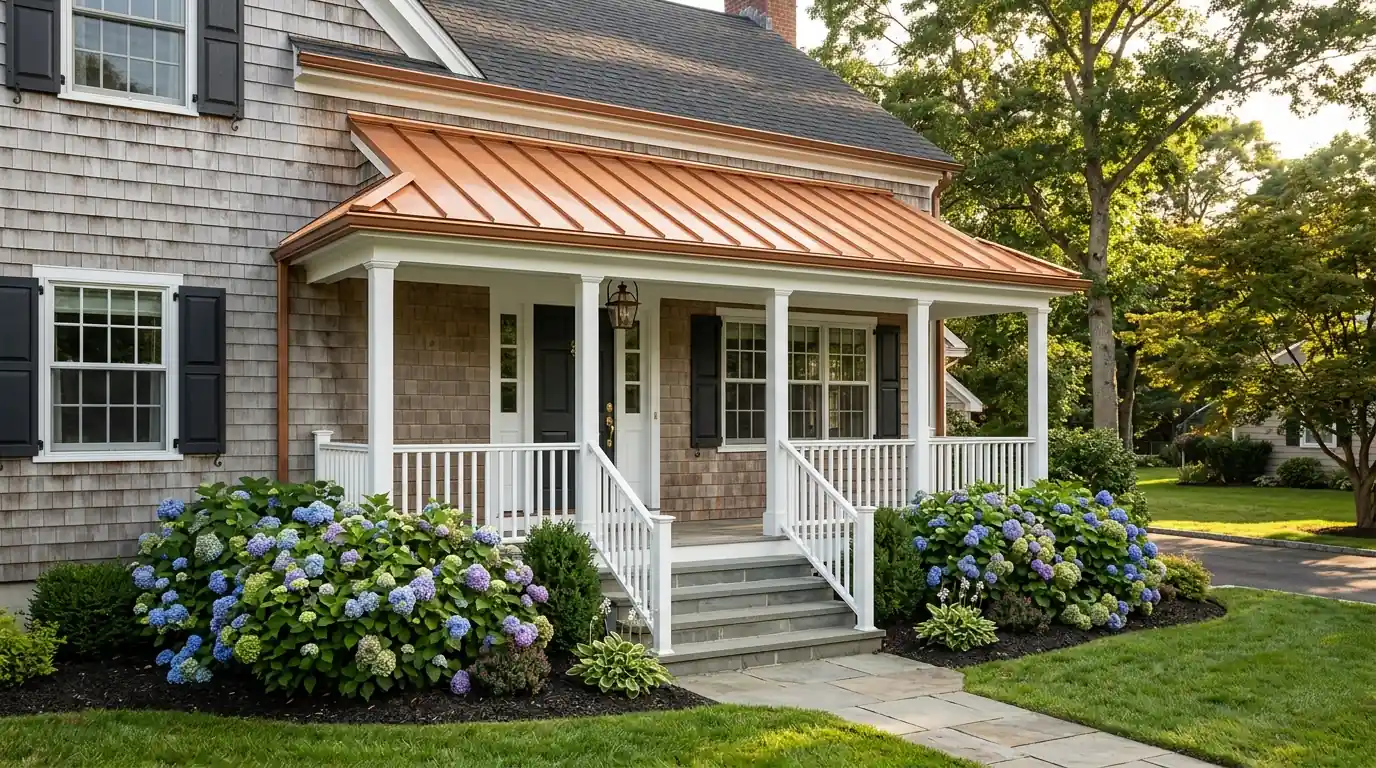
That points toward architectural shingles built for high wind, such as GAF Timberline HDZ or Owens Corning Duration, or a metal roof on homes where the owner plans to stay a long time. Our guide to planning a new roof under rooftop solar goes deeper into timing and materials if you're weighing it now.
One more thing: production stops while the panels are off. Picking a week in late fall or winter, when output is lower anyway, keeps the lost generation small.
Questions to settle with your solar company first
A short call with the company that installed or owns your system can save weeks of back-and-forth later.
- Does your agreement allow another company to remove and reinstall the panels?
- Is written notice required, and how many days ahead?
- Will removal by someone else affect their coverage on the equipment or roof penetrations?
- Is the monitoring app tied to your account, so you can watch production after restart?
- Who should we contact there if a question about the equipment comes up mid-job?
- Do they want photos of the reinstall for their records?
Solar reroofs across Toms River and the Pine Barrens edge
Rooftop solar spread quickly across Ocean County over the past fifteen years, and a lot of it landed on 1970s and 1980s colonials, split-levels and bi-levels whose roofs were already middle-aged. In neighborhoods off Route 37 and out toward Jackson, we see arrays sitting over shingles that are now curling or shedding granules while the panels themselves still produce well.
Wind matters here. Nor'easters push gusts under the panel edges, which puts real uplift on every attachment, and that's why we fasten into rafters rather than just the decking between them. Pine needles from the tall trees inland collect behind the arrays and hold moisture against the shingles, so we clear that debris completely during removal. Near the bay, salt air can corrode bare steel hardware, and we replace any rusted bolts or clamps with stainless before the panels go back up.
Where we do this work most
We work across all of Toms River (08753, 08755 and 08757) and these neighboring towns every week, along with the rest of Ocean County and southern Monmouth County.
- Silverton, Toms River08753
- Pleasant Plains, Toms River08755
- West Dover, Toms River08755
- Ortley Beach, Toms River08751
- Lakewood08701
- Brick08723
- Jackson08527
- Howell07731
- Manchester08759
- Berkeley Township08721
- Lacey Township08731
- Stafford Township08050
- Barnegat08005
- Wall Township07719
- Freehold07728
- Point Pleasant08742