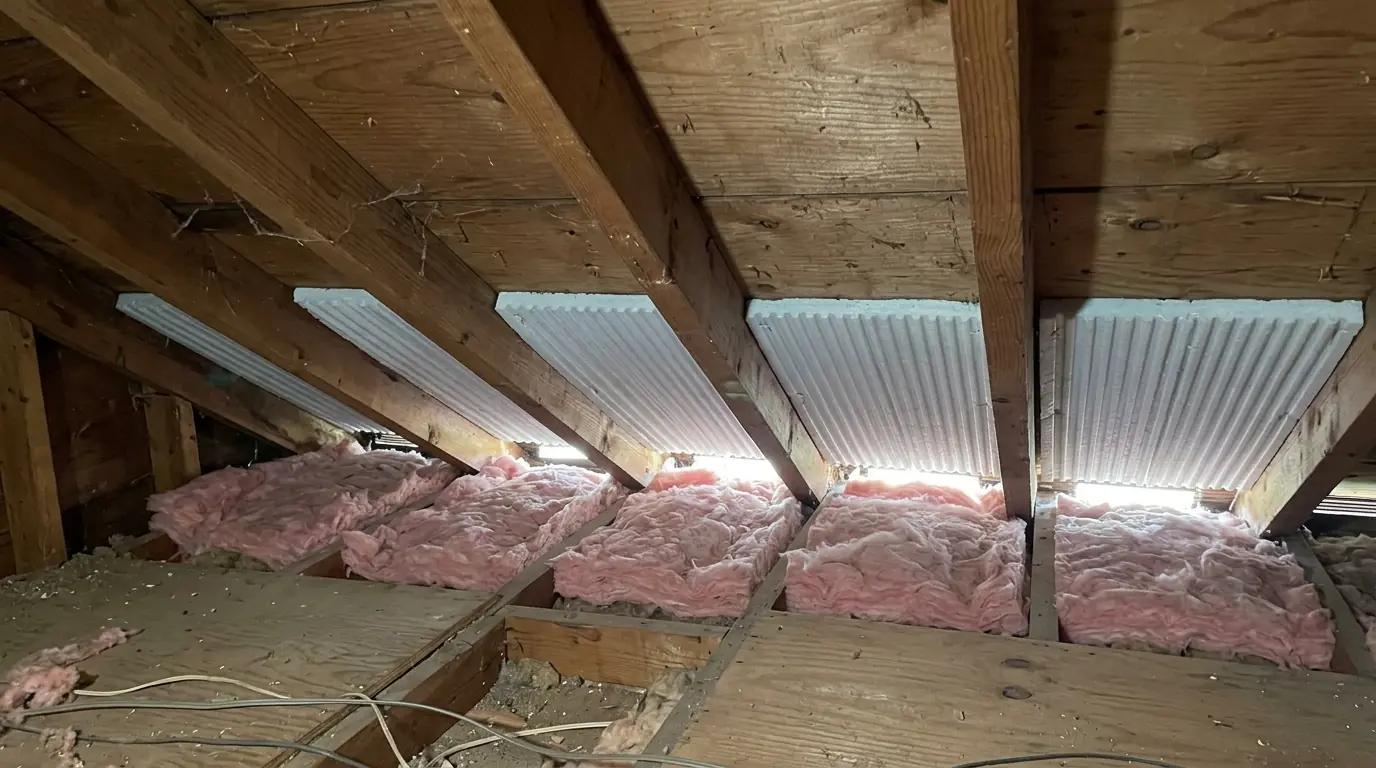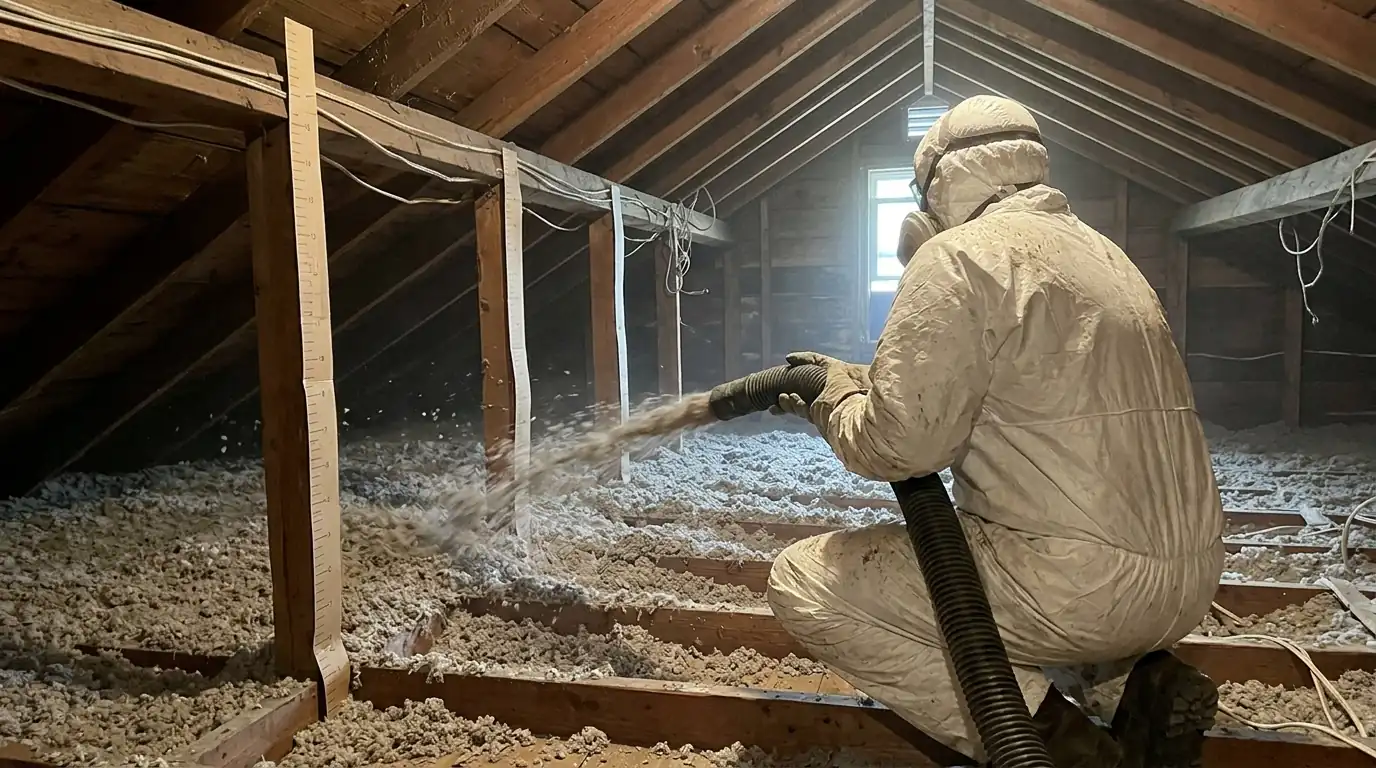
For most Toms River homes, the right move is to air seal the attic floor, install baffles at the eaves, then blow cellulose or fiberglass over what's there until the attic reaches roughly R-49, about 13 to 22 inches depending on material. Wet, moldy or rodent-soiled insulation comes out first. Call (732) 419-1462 to have us measure yours.
What we check before adding a single bag of insulation
Blowing new insulation over a problem just buries it. So the first visit is about what's already up there.
- Current depth and type, measured in several spots rather than guessed from the hatch
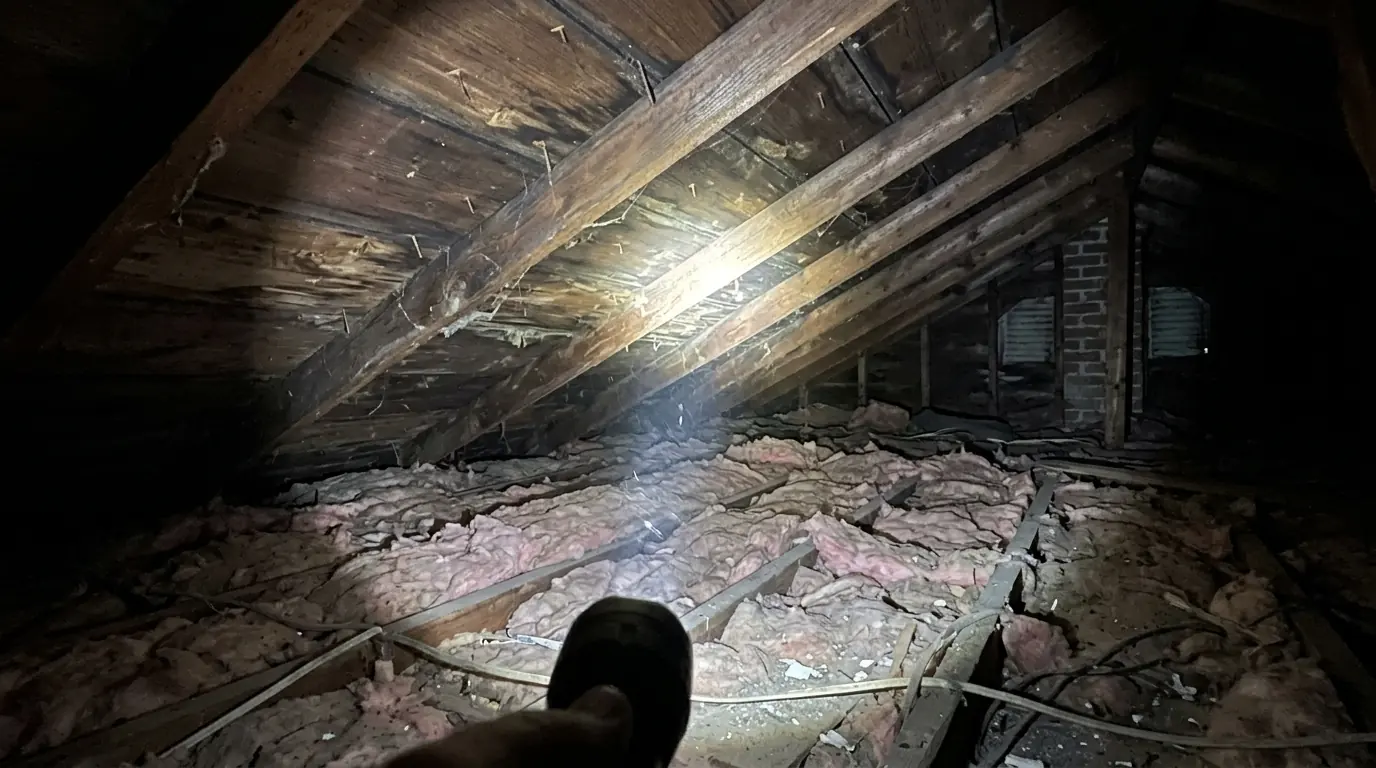
- Signs of water from roof leaks or condensation, such as stained or matted patches
- Rodent or squirrel activity, droppings and chewed wiring
- Open top plates, plumbing chases, and gaps around chimneys and recessed lights
- Whether the soffit vents are blocked by insulation pushed into the eaves
- Bath and kitchen fans that end in the attic instead of outdoors
- Old knob-and-tube wiring or other hazards that shouldn't be buried
- Loose, gray-brown vermiculite, which we stop and recommend testing before anyone disturbs it
Cellulose or fiberglass: which suits your attic?
Both work well when installed to depth with the eaves kept open. The choice usually comes down to the attic itself and your priorities.
| Question | Blown cellulose | Blown fiberglass |
|---|---|---|
| Insulating value per inch | Around R-3.2 to R-3.8 | Around R-2.2 to R-2.9 |
| Depth for an R-49 target | About 13 to 15 inches | About 17 to 22 inches |
| Air movement through the layer | Denser, slows drafts better | Lighter, relies more on air sealing below |
| Handling dampness | Absorbs moisture, wants a dry attic | Sheds moisture, dries faster after a small leak |
| Common products | Borate-treated recycled paper fiber | Owens Corning AttiCat, CertainTeed InsulSafe |
How a typical attic top-up goes
Most single-family attics around Toms River take one day. Here's the order we work in, and why each step comes where it does.
Protect the house
We lay drop cloths from the door to the attic hatch, cover furniture near the opening and park the blowing machine outside, so the noise and the bags stay in the driveway.
First 30 minutesPull what has to go
Insulation that's wet, moldy or soiled by rodents gets bagged and carried out. Dry, clean material stays in place, since it still does useful work under the new layer.
1 to 3 hours, when neededAir seal the attic floor
We foam and caulk the gaps that let house air into the attic: top plates, wire and pipe holes and plumbing chases, with fire-safe material around the flue. The hatch gets weatherstripping and an insulated cover.
2 to 3 hoursBaffle the eaves
Rafter baffles go into every bay above the soffits, so the new insulation can reach the outer wall without choking off the intake air your roof depends on.
1 to 2 hoursBlow to depth
We staple depth rulers across the attic and blow cellulose or fiberglass evenly to the target, building dams around the hatch and keeping material away from older recessed light cans that need clearance.
2 to 3 hoursWalk-through with you
We show you before and after photos, the depth markers and the hatch, and mention anything we noticed on the roof side that deserves attention.
15 minutes
What attic insulation costs around Toms River in 2026
Ranges for a typical 900 to 1,600 square foot attic floor. Access, existing depth and how much air sealing the house needs make the biggest difference.
| Work | Typical range | What moves the number |
|---|---|---|
| Blown top-up to about R-49 over existing insulation | $1,385 to $3,240 | Attic size, material, starting depth |
| Air sealing the attic floor | $585 to $1,870 | Number of bypasses, chases and recessed lights |
| Removing old or contaminated insulation | $1,240 to $3,460 | Volume, condition, attic access and height |
| Rafter baffles across the eaves | $265 to $740 | Number of bays, how tight the eave is |
| Insulated hatch or attic stair cover | $145 to $410 | Hatch style and size |
These ranges help with planning only. After measuring the attic, we'll give you an exact price.
Why sealing the leaks matters more than the last few inches
Insulation slows heat moving through it, but it does little against air blowing past it. In many Toms River homes, the biggest losses come from gaps you can't see from the hatch: the open chase above a bathroom, the hole drilled for a ceiling fan wire, the space around the chimney. Warm, moist air rises through those gaps all winter, carrying heat and humidity straight into the attic.
That humidity is what causes frosty nails, damp sheathing and the ice dams that show up on capes after a snowy week. Sealing first means the new insulation actually performs, and it takes some load off the vents. It's why we treat insulation and attic ventilation as one job rather than two separate sales.
Planning a new roof? Do the attic in the same window
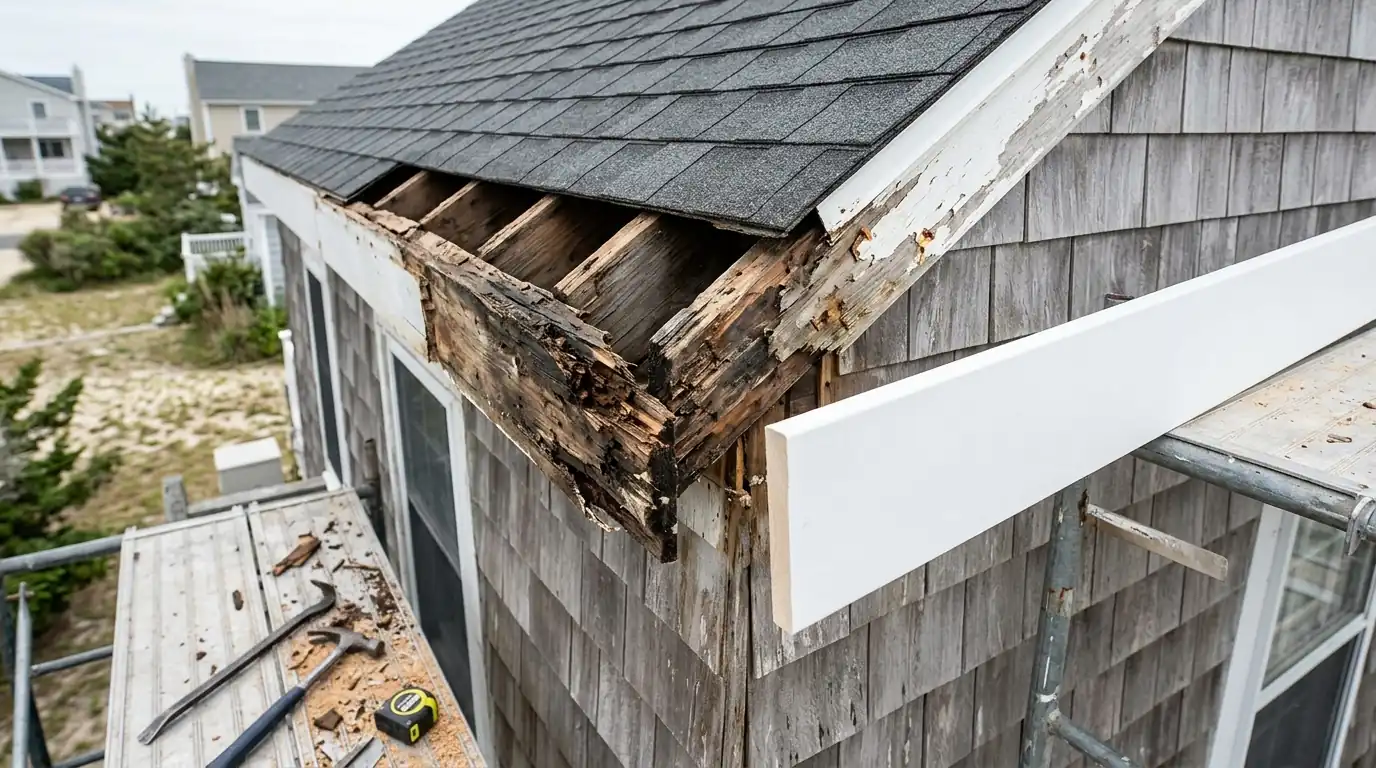
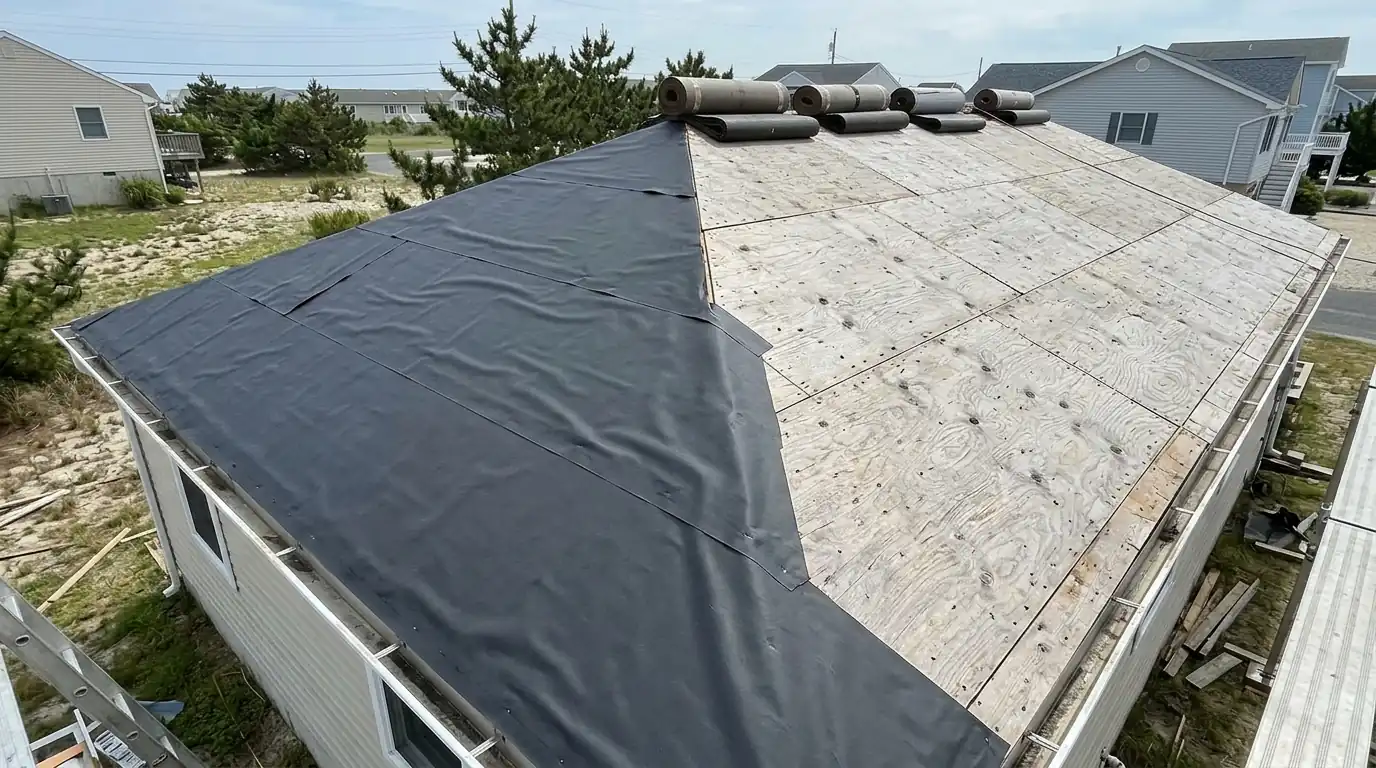
If your roof is due within a year or two, it pays to sequence the work. We like to fix ventilation and replace bad sheathing during the roof replacement, then air seal and blow insulation once the deck is sound and dry. Doing it in that order avoids burying a damp attic under fresh material, and it lets the people blowing insulation see exactly where the new baffles and vents ended up.
What attics in Ocean County are working against
Ocean County sits in a mixed, humid climate: cold, windy winters off the ocean and sticky summers that push attic temperatures well past anything you'd want to stand in. A thin insulation layer loses heat to the attic in January and lets it pour down into bedrooms in July. Second floors in capes and the upper level of bi-levels feel that the most.
Many neighborhoods built from the 1950s through the 1980s, in Toms River and in towns like Jackson, still carry original batts that have settled and been trampled during cable and alarm installs. Some homes near the bay had attic insulation soaked during Sandy that was only partly replaced. Pine-shaded roofs stay cool and damp longer, so moisture control matters as much as R-value here. Raised homes on pilings add another wrinkle, since cold air can sweep under the floor as well as over the attic, so the whole house envelope matters there.
Where we do this work most
We work across all of Toms River (08753, 08755 and 08757) and these neighboring towns every week, along with the rest of Ocean County and southern Monmouth County.
- Silverton, Toms River08753
- Pleasant Plains, Toms River08755
- West Dover, Toms River08755
- Ortley Beach, Toms River08751
- Lakewood08701
- Brick08723
- Jackson08527
- Howell07731
- Manchester08759
- Berkeley Township08721
- Lacey Township08731
- Stafford Township08050
- Barnegat08005
- Wall Township07719
- Freehold07728
- Point Pleasant08742