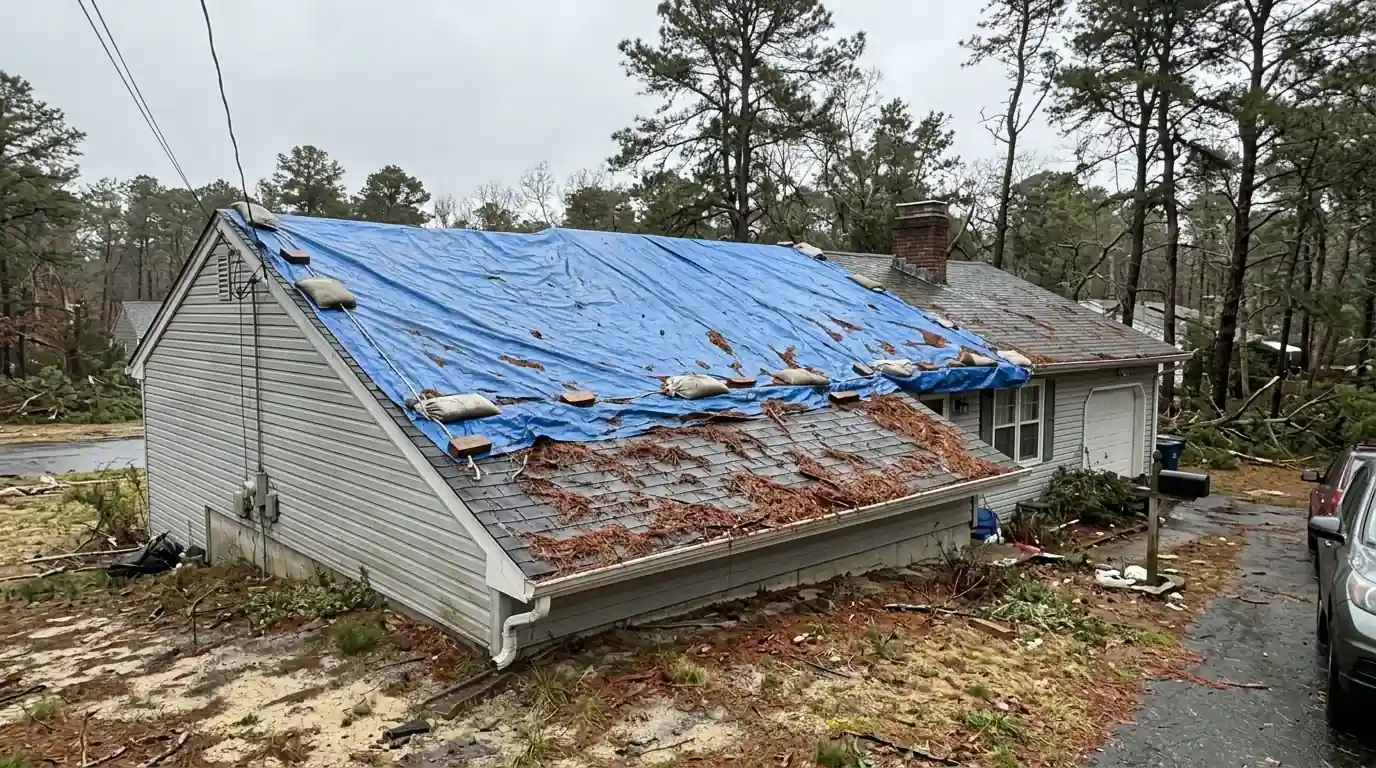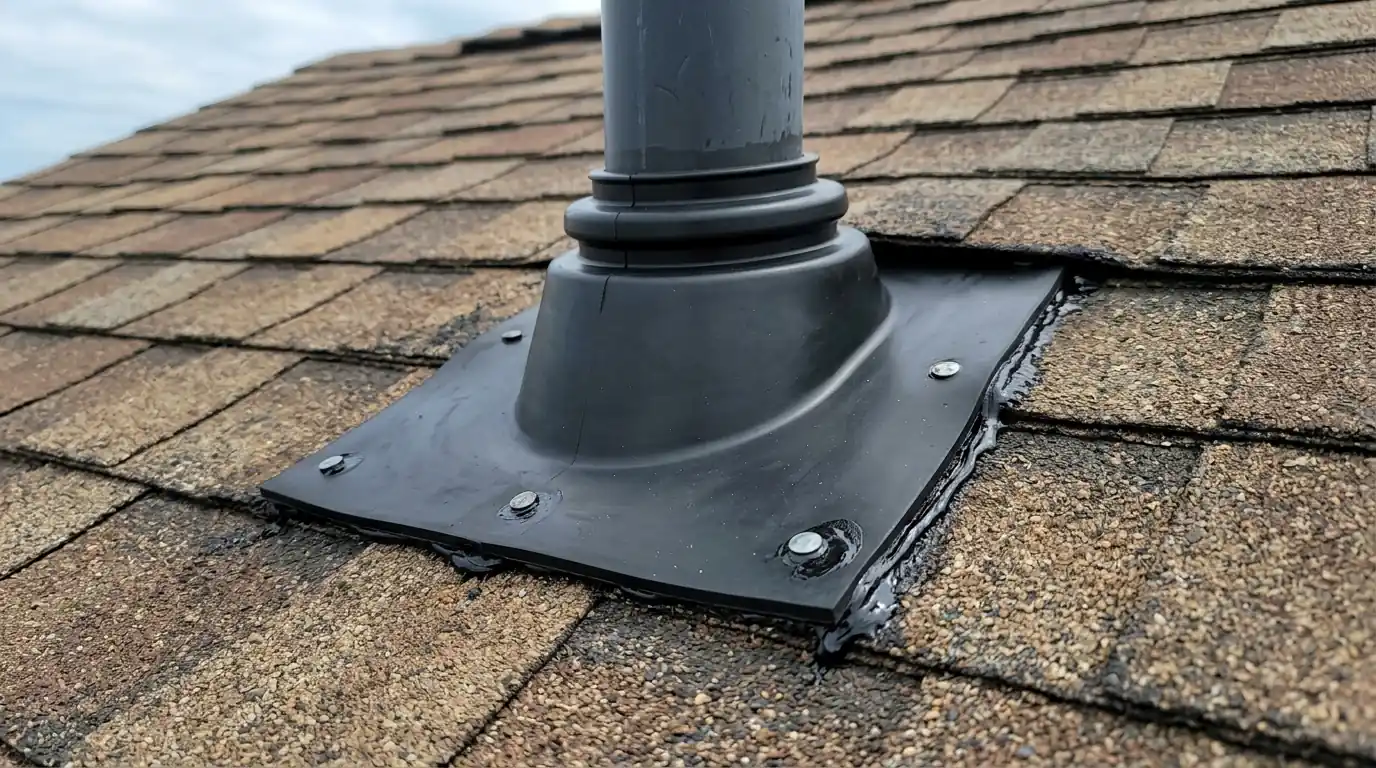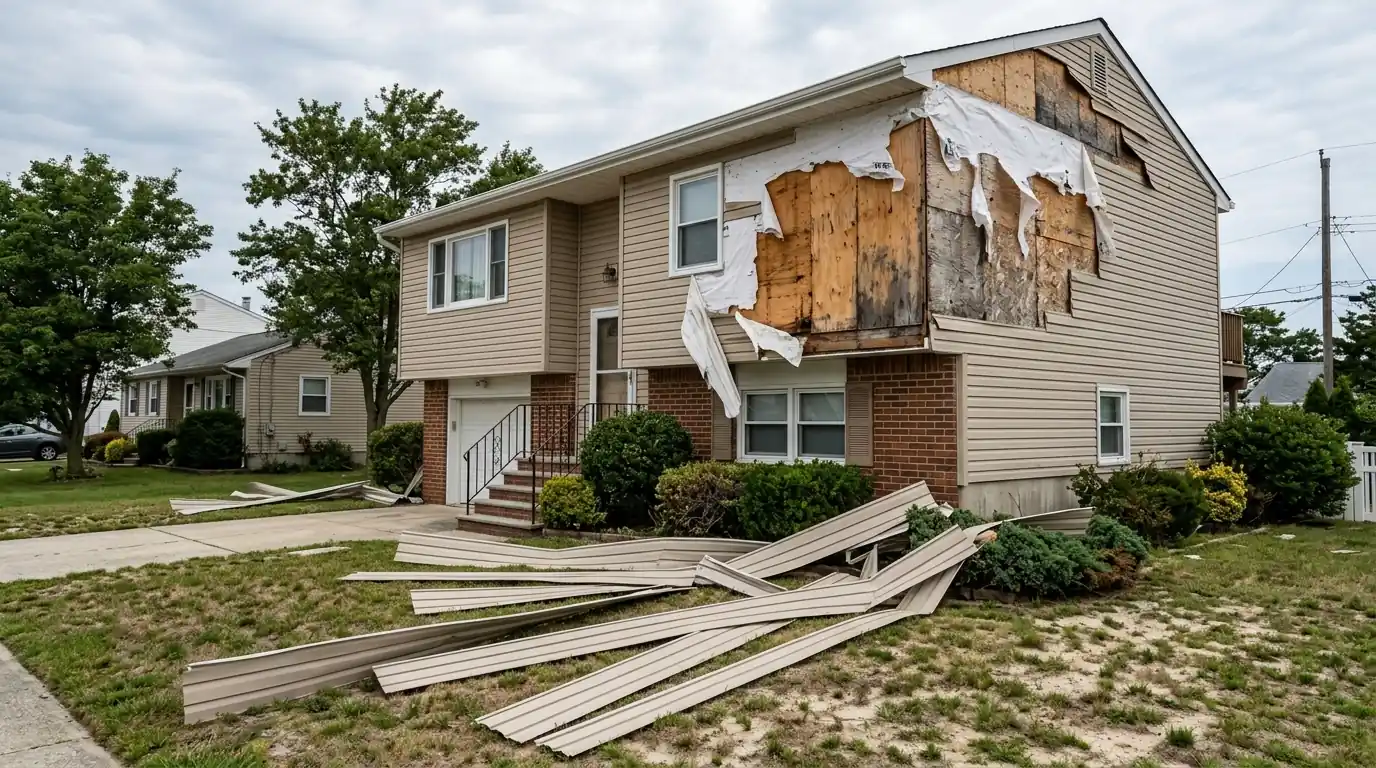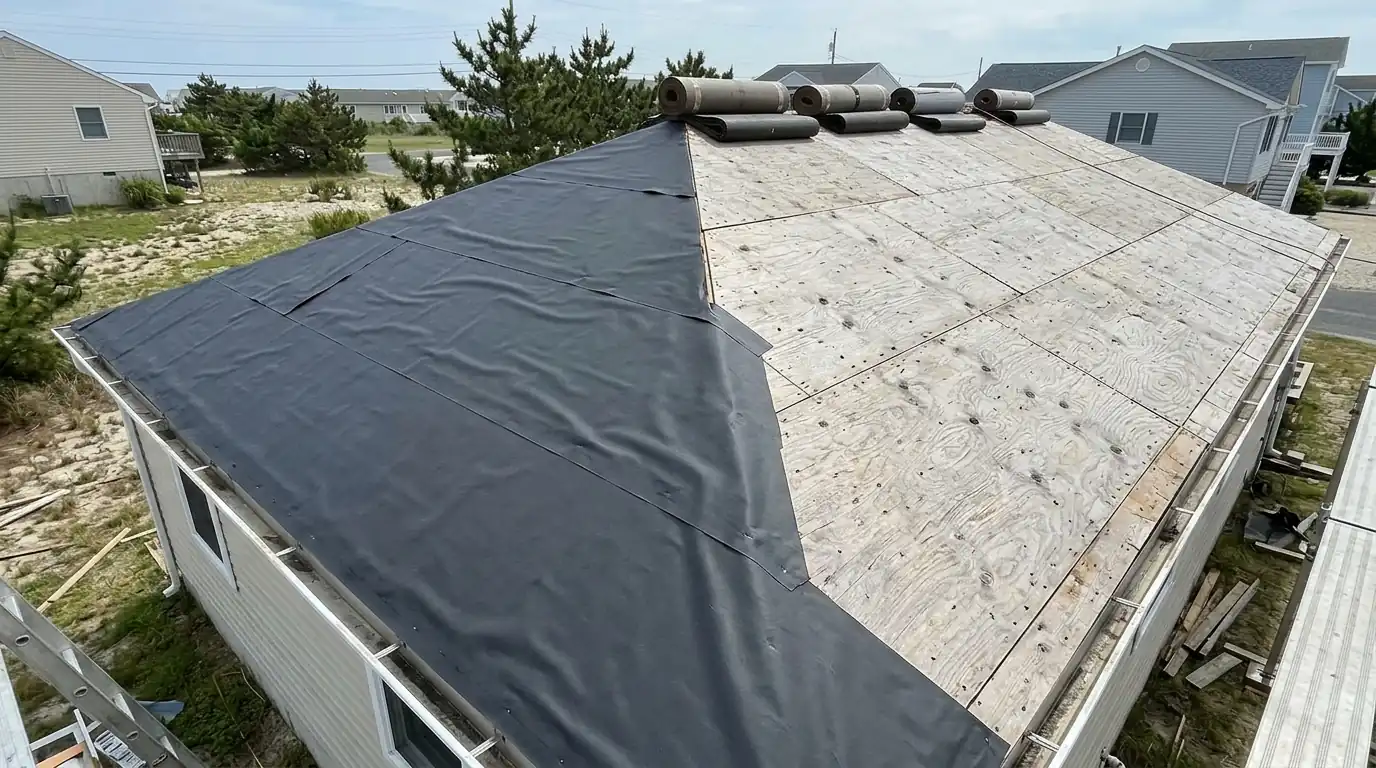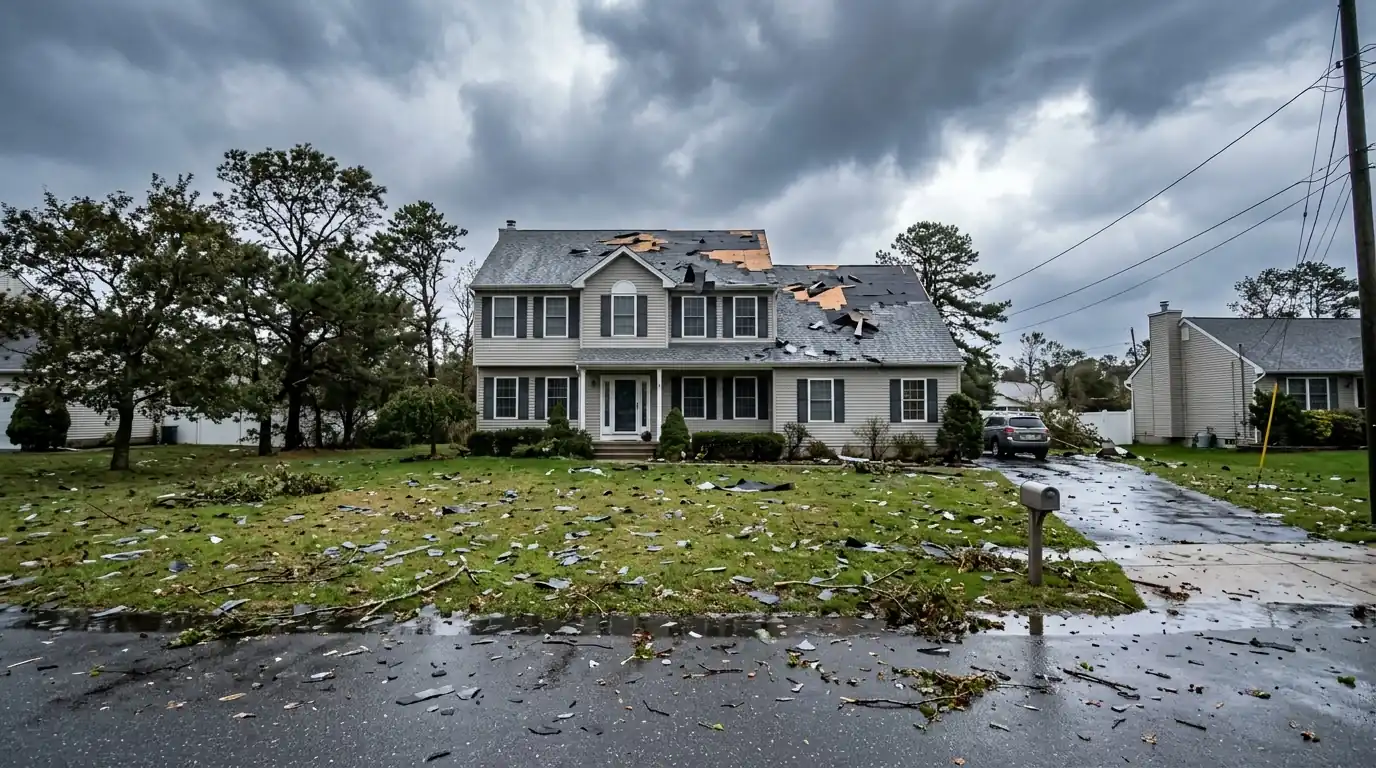
Wind damage in Toms River usually means missing shingles, creased tabs that lost their seal, lifted ridge cap and torn vinyl siding on the windward side. We inspect each slope and wall, take dated photos of every damaged area for your records, and repair what the storm broke. If you're filing an insurance claim, our photos and written scope give your adjuster a clear record. Call (732) 419-1462.
Storm damage that's easy to miss from the driveway
Plenty of wind damage hides in plain sight. These are the signs we find most often on slopes that look fine from the street.
Horizontal creases across tabs
A shingle that flapped in the gust gets a fold line just above the sealant strip. The crease cracks the mat inside, and that shingle will tear off cleanly the next time strong wind arrives.
Broken sealant strips
Shingles bond to the course below with a tar strip. Wind can pop that bond without leaving a mark, and a shingle that lifts easily by hand is one the next storm can take.
Lifted or missing ridge cap
The ridge takes wind from both sides. Cap shingles crack, slide or vanish entirely, exposing the ridge vent opening to wind-driven rain straight into the attic.
Torn underlayment edges at rakes
Wind catches the gable edge first. If drip edge or rake shingles lift, the underlayment beneath can tear and let water travel inward along the deck.
Siding panels unlocked or cracked
Vinyl panels unhook from the course below in gusts, then bang loose. Cracks and missing pieces show up most often on corners and gable ends that face the bay.
Dents and debris marks
Flying branches, patio furniture and trash cans leave bruises and scuffs on shingles, gutters and siding. A bruised spot loses granules quickly and ages faster than the rest of the roof.
The first day after the wind dies down
Once the storm has passed, walk around the house and look for shingles, ridge pieces or siding scraps in the yard. Note which side of the house they came from. Photograph the ground debris and any visible damage from the yard, then check your ceilings and the attic if you can reach it safely. If water is coming in or a section is open, call us right away for emergency tarping.
If the house is dry, call (732) 419-1462 and we'll set up a storm inspection. After a major nor'easter, calls stack up across Ocean County, so we sort them by urgency: open roofs and active leaks first, then loosened roofs, then cosmetic damage. Our after-a-nor'easter checklist covers what you can check safely from the ground.
How we document and repair a storm-damaged roof
Good storm repair is partly carpentry and partly record keeping. Here's how a typical job moves.
Slope-by-slope inspection
We walk each slope and check the ridge, rakes, valleys and flashing, lifting tabs to test the seal. Siding, gutters and soffits on the windward walls get the same careful look from ladders.
45 to 90 minutesDated photo record
Every damaged spot is photographed close up and in context, with chalk marks on creased tabs so they show clearly. You receive the full set along with a list of what we found on each slope.
Same visitWritten repair scope
You get a plain list of repairs with quantities: shingles by slope, feet of ridge cap, siding panels and trim. It reads the same whether you pay directly or share it with your insurance carrier.
1 to 2 daysRepair roof and walls together
We replace damaged shingles and ridge cap, reset drip edge, and fix siding and soffit in the same project so you don't have open trades on the house for weeks.
1 to 3 daysFinal walk and after photos
We reinspect every repaired area, run a magnet over the yard for nails, and send after photos that line up with the first set, so the record shows each spot before and after.
30 minutes
What wind damage repair tends to cost near Toms River
Storm repairs vary widely, from a few tabs to several slopes. These are typical 2026 ranges on Ocean County homes.
| Work | Typical range | What moves the number |
|---|---|---|
| Replace scattered wind-lifted shingles on one or two slopes | $485 to $1,690 | Number of damaged tabs, pitch and whether the product is still sold |
| Replace ridge cap and reseat ridge vent | $625 to $1,870 | Ridge length and the condition of the vent beneath the cap |
| Re-shingle one full slope | $3,240 to $7,980 | Slope size, deck repairs found and underlayment type |
| Replace storm-torn vinyl siding on one wall | $540 to $2,160 | Panel count, profile availability and corner or trim pieces involved |
Final numbers depend on the damage we document, how well replacement products blend with your existing roof and siding, and access; we review the price with you before work begins.
When storm repairs should become something bigger
If an older three-tab roof loses shingles on every slope, spot repairs can turn into a patchwork that leaks at each seam. In that case we'll show you the photos and explain the trade-off between repairing and replacing the roof with a high-wind rated shingle such as GAF Timberline HDZ or Owens Corning Duration.
We don't decide insurance coverage and we don't act for you with your carrier. What we can do is give a clear, honest record of the damage, which helps you have a straightforward conversation with your adjuster. Siding torn on several walls is covered on our siding repair page.
How Jersey Shore weather tests a roof in Toms River
Nor'easters, not hurricanes, do most of the wind damage we repair here. A coastal storm can push sustained northeast wind across Barnegat Bay for a day or more, with gusts that find any shingle that has lost its seal. Tropical systems in late summer add short, violent bursts, and summer thunderstorms bring microbursts that strip ridge cap in minutes.
Exposure matters as much as wind speed. Waterfront homes in Ortley Beach, Shelter Cove and Coates Point take the full force off the water. Homes raised after Sandy sit higher in the air, so roofs and siding catch stronger gusts than they did at ground level. Inland neighborhoods are partly sheltered by pines, but those same trees drop limbs and send debris into roofs and siding. Many 1960s and 1970s ranches still carry three-tab shingles, which lose tabs in wind far more easily than modern architectural lines.
Where we do this work most
We work across all of Toms River (08753, 08755 and 08757) and these neighboring towns every week, along with the rest of Ocean County and southern Monmouth County.
- Silverton, Toms River08753
- Pleasant Plains, Toms River08755
- West Dover, Toms River08755
- Ortley Beach, Toms River08751
- Lakewood08701
- Brick08723
- Jackson08527
- Howell07731
- Manchester08759
- Berkeley Township08721
- Lacey Township08731
- Stafford Township08050
- Barnegat08005
- Wall Township07719
- Freehold07728
- Point Pleasant08742