Dover Roofing serves all of Brick Township, ZIPs 08723 and 08724, just north of our Toms River office. The jobs we do most in Brick are wind and storm repairs, roof replacements on 1950s to 1980s homes and vinyl siding fixes. Call (732) 419-1462; we answer 24/7.
Signs a Brick storm did more than rattle the windows
After a blow, walk the yard and look up from the ground. Never climb a wet roof. These are the clues we see most often in Brick.
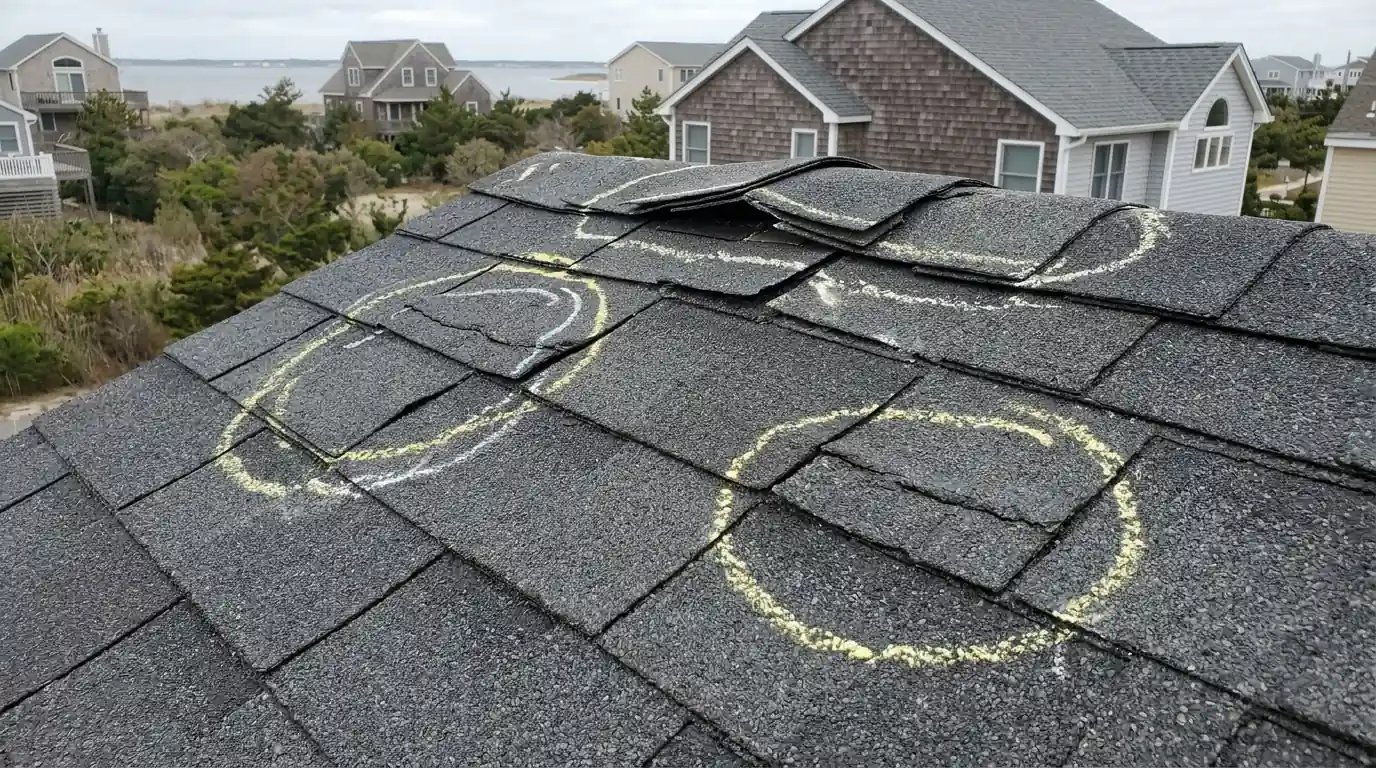
Shingle pieces on the lawn
Even a few tabs in the grass mean the sealant strip let go somewhere. Neighboring shingles are usually loosened too and will lift in the next wind.
A bare stripe at the ridge
Ridge caps take the hardest gusts on waterfront streets. A missing cap leaves the ridge vent or the top of the deck exposed to driving rain.
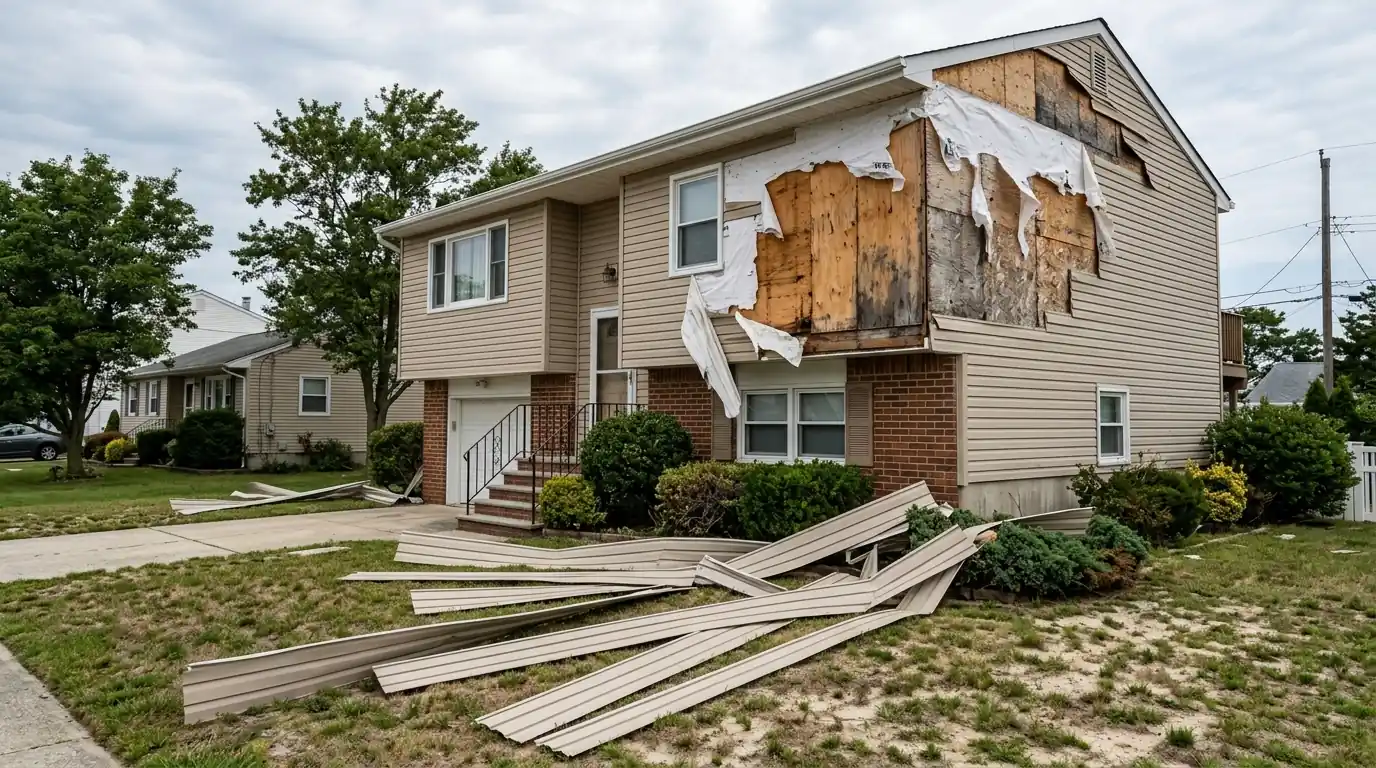
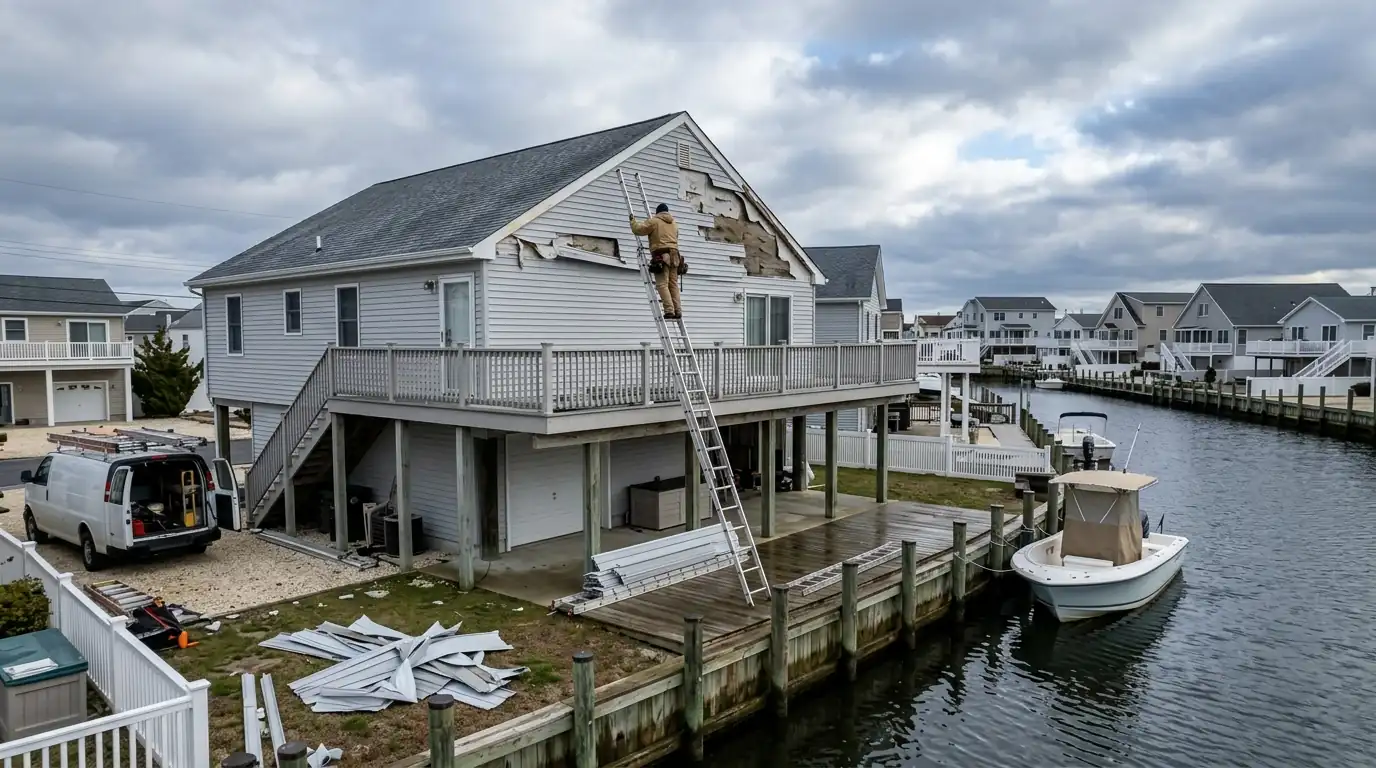
Siding flapping or missing
Vinyl panels pop loose from each other in high wind, especially on gable ends facing the bay. Gaps let rain run straight behind the house wrap.
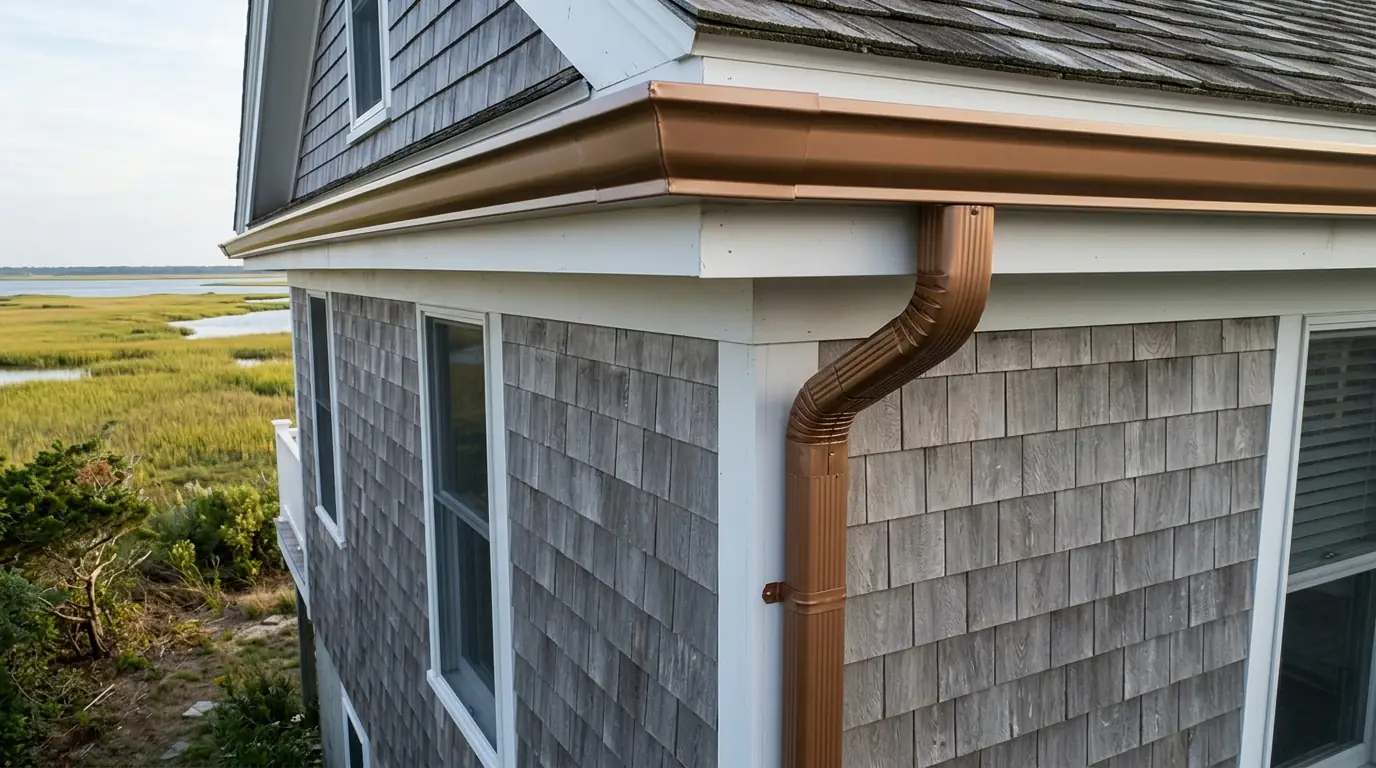
Gutter pulled from the fascia
Wind and water weight can twist a gutter run. That often means the fascia behind it was already soft and needs replacing.
New stain on an upstairs ceiling
Wind-driven rain gets in at pipe boots, step flashing and lifted shingles. A stain that grows after each storm is a leak, not condensation.
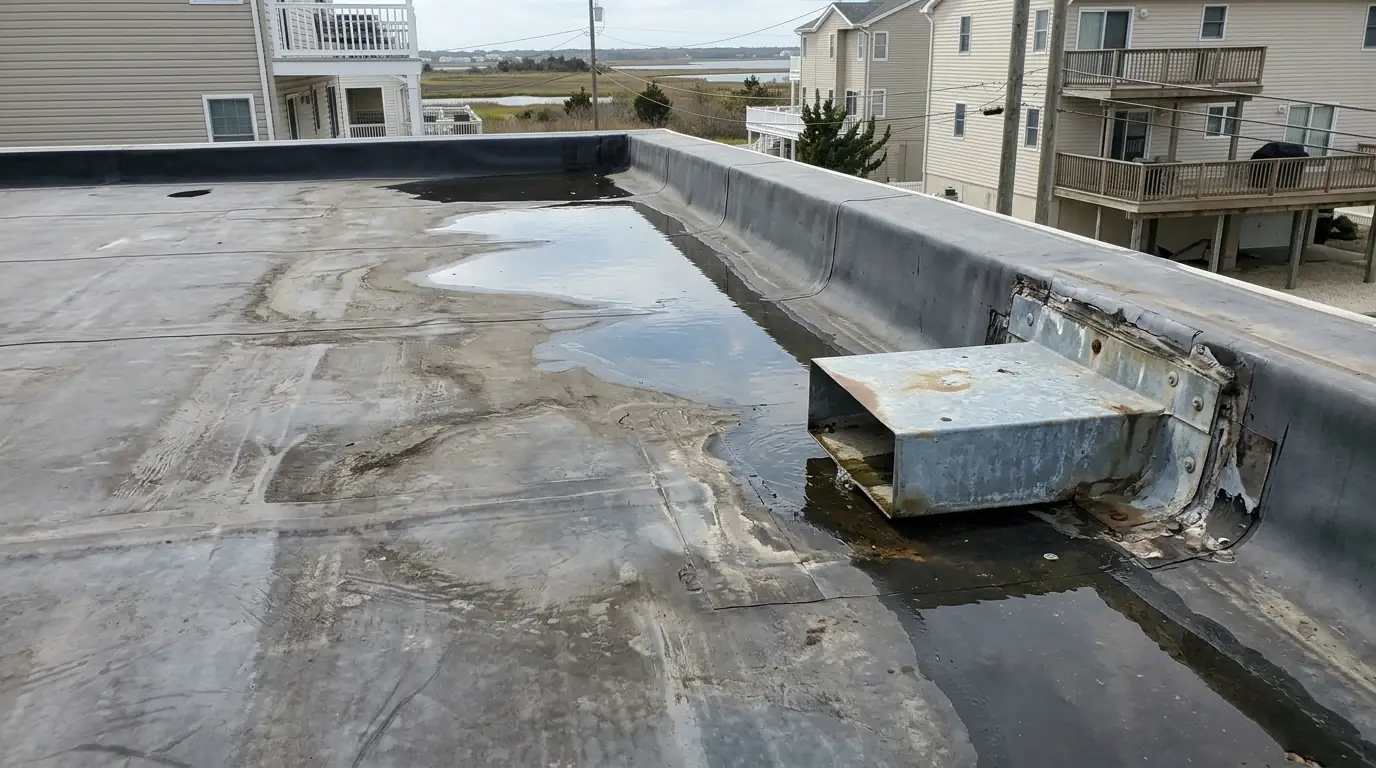
Brick homes and the water around them
Brick grew fast after the Garden State Parkway opened in 1954, and neighborhoods like Lake Riviera, Laurelton and Baywood filled with ranches, capes and bi-levels over the next few decades. Many of those houses are on their third roof now. Their original plank or thin plywood decks, small soffit vents and five-inch gutters are part of every estimate we write here.
The waterfront sections tell a different story. Hurricane Sandy hit Brick's barrier island beaches and the lagoon streets near the bay and river hard in 2012, and a lot of homes were rebuilt or raised afterward. A raised house puts the roof higher into the wind and adds tall, exposed siding walls. We use high-wind nailing patterns, sealed starter rows at every edge and stainless or hot-dipped fasteners where salt air reaches.
What happens when you call us after a Brick storm
Here's the order we work in, from the first ring to the finished repair.
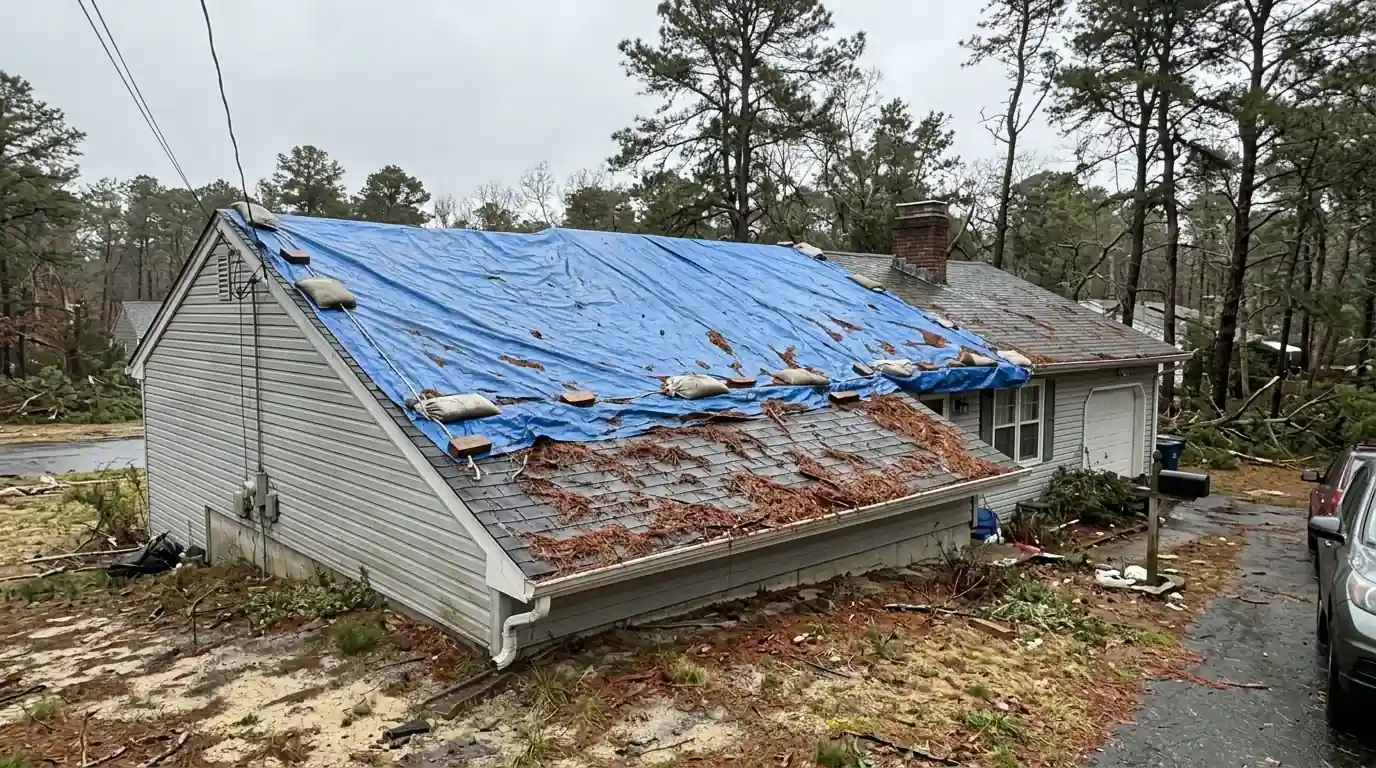
Stop the water
If the roof is open, we tarp or dry in the damaged area first, fastening the tarp so the next gust doesn't take it. Inside, we help you check for wet insulation.
Same day when safeDocument everything
We photograph each damaged area, the debris on the ground and any interior staining. Many homeowners pass these photos along with their insurance paperwork.
30 to 60 minutesPrice the permanent fix
You get a written price for the repair, or for replacement if the roof or siding is too far gone. We explain which damage is new and which was already there.
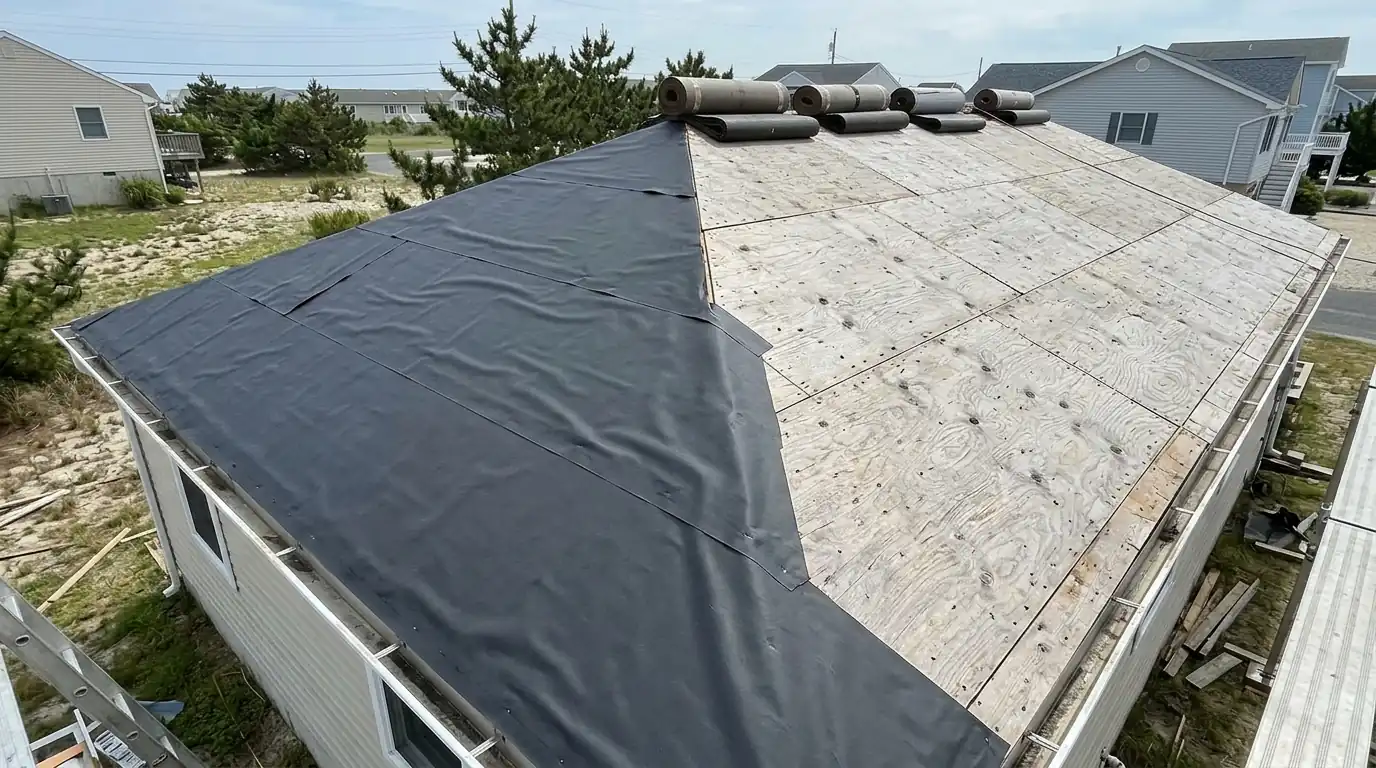
1 to 2 daysRepair to wind-rated standards
We replace shingles with matched or compatible products, reset ridge caps, and relock or replace siding panels, nailing to the manufacturer's high-wind pattern.
1 day for most repairs