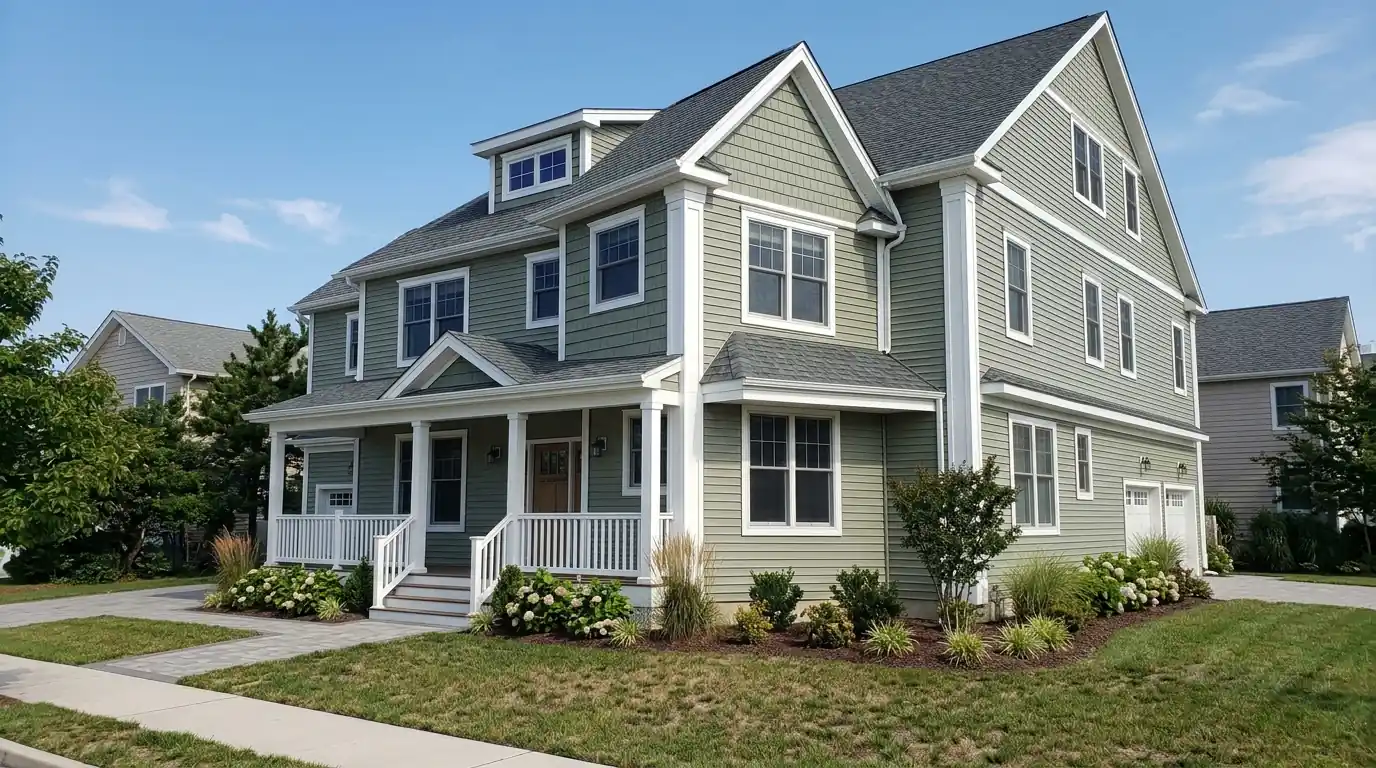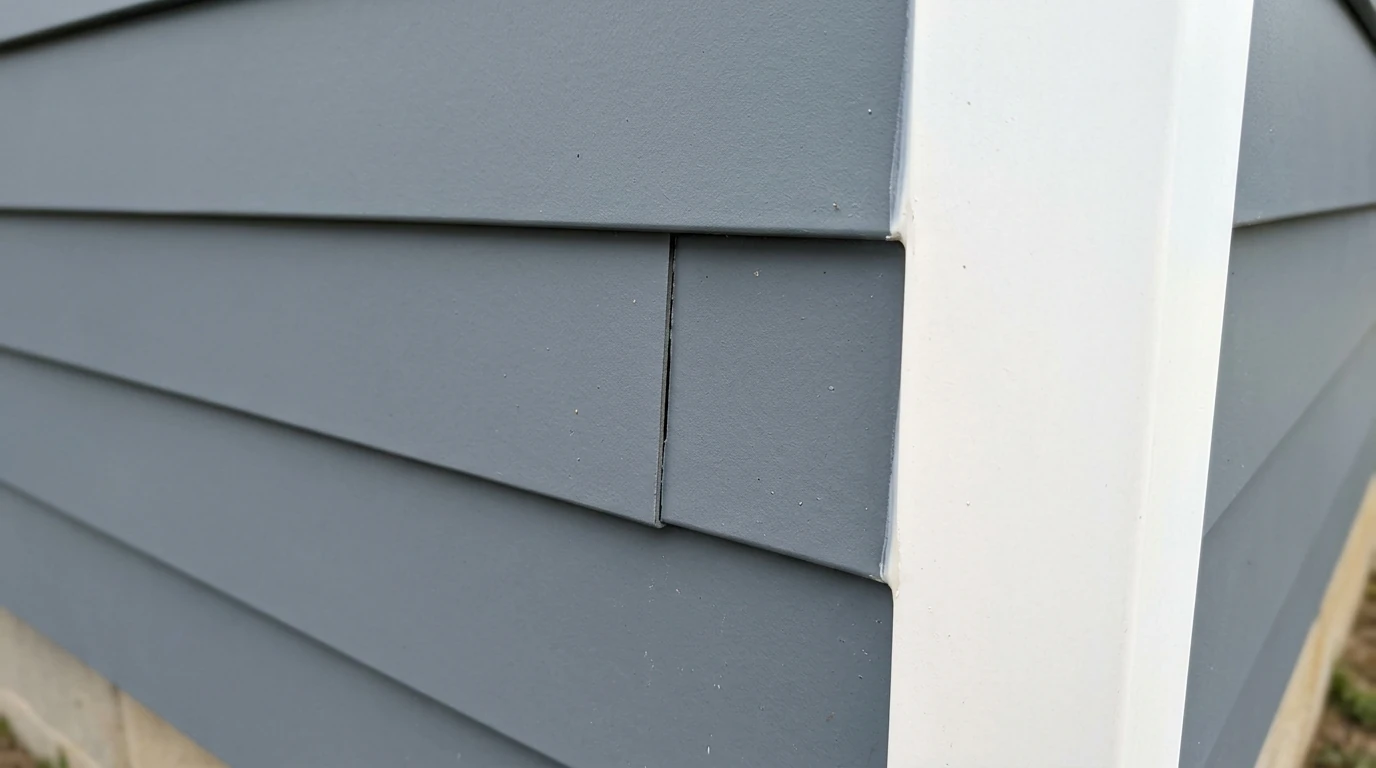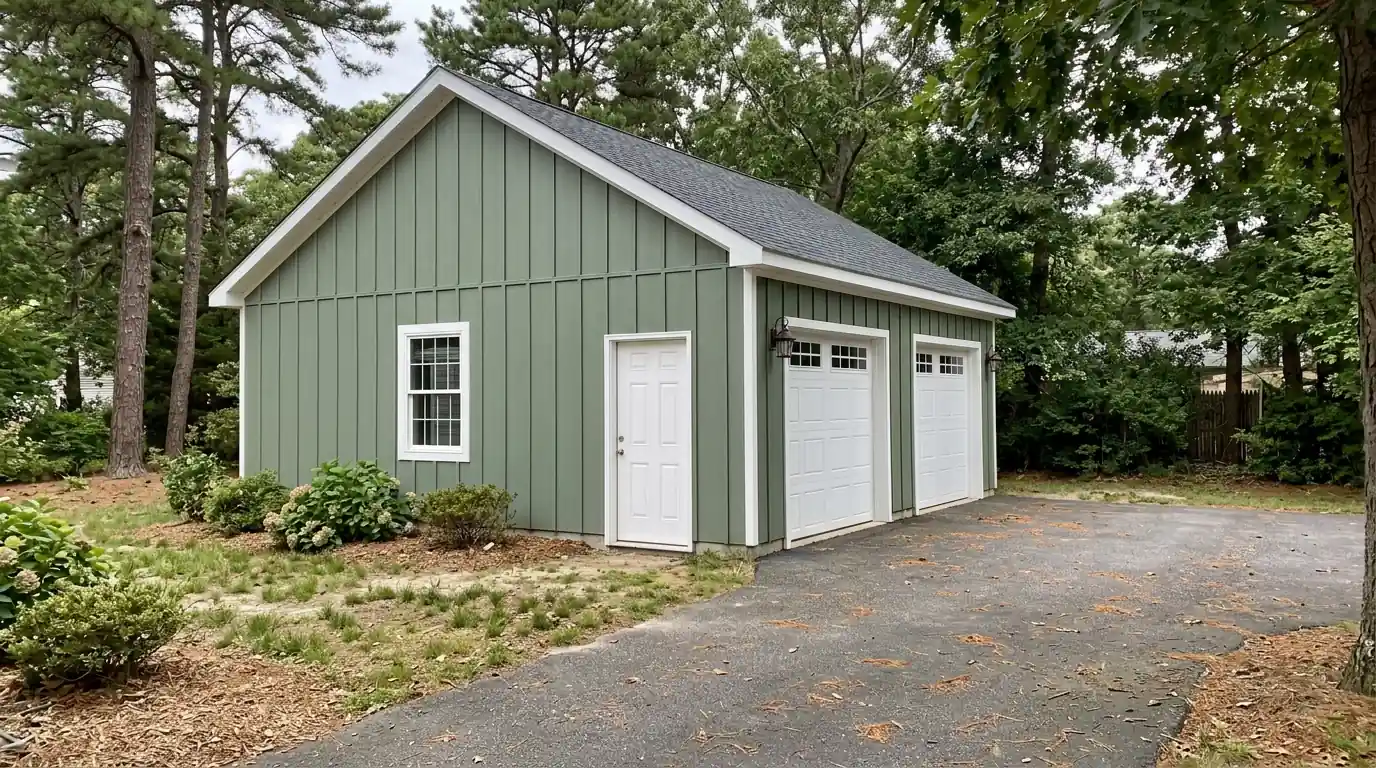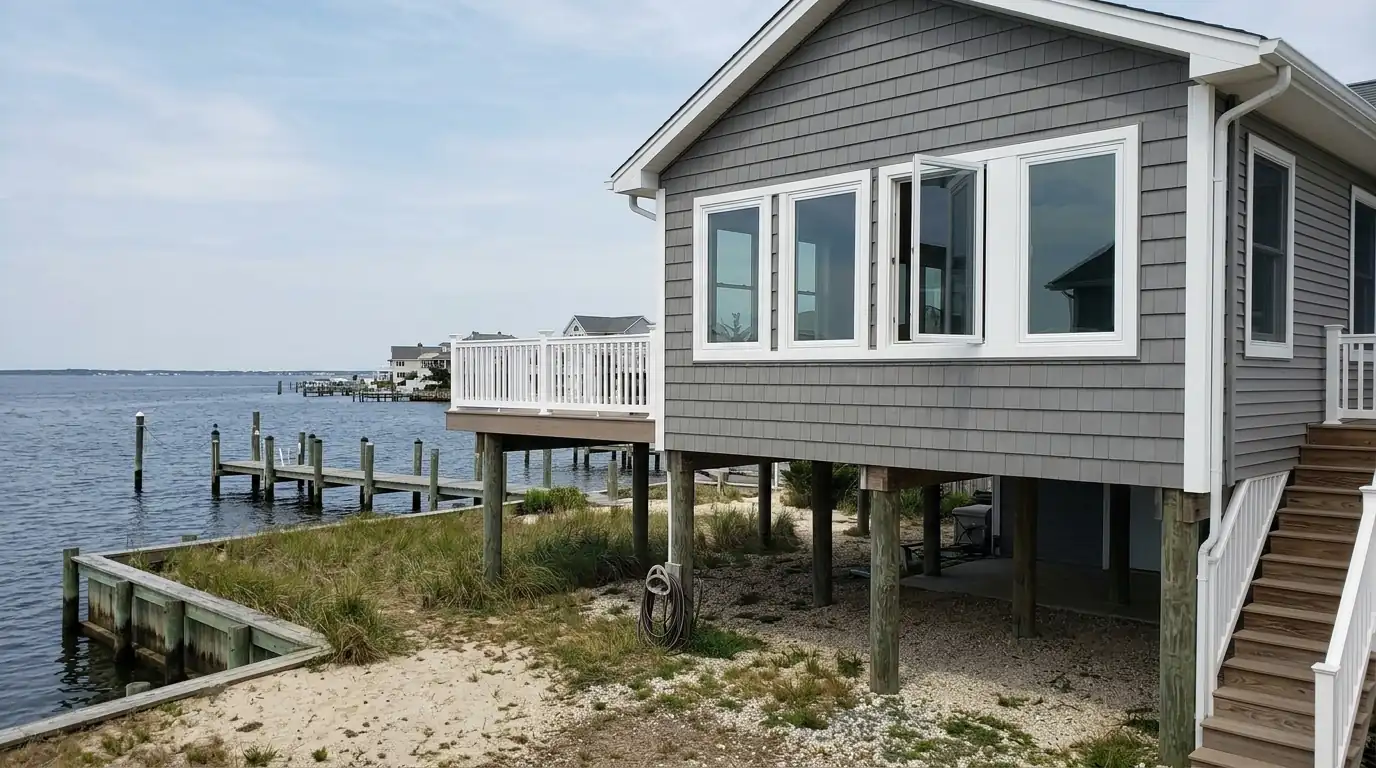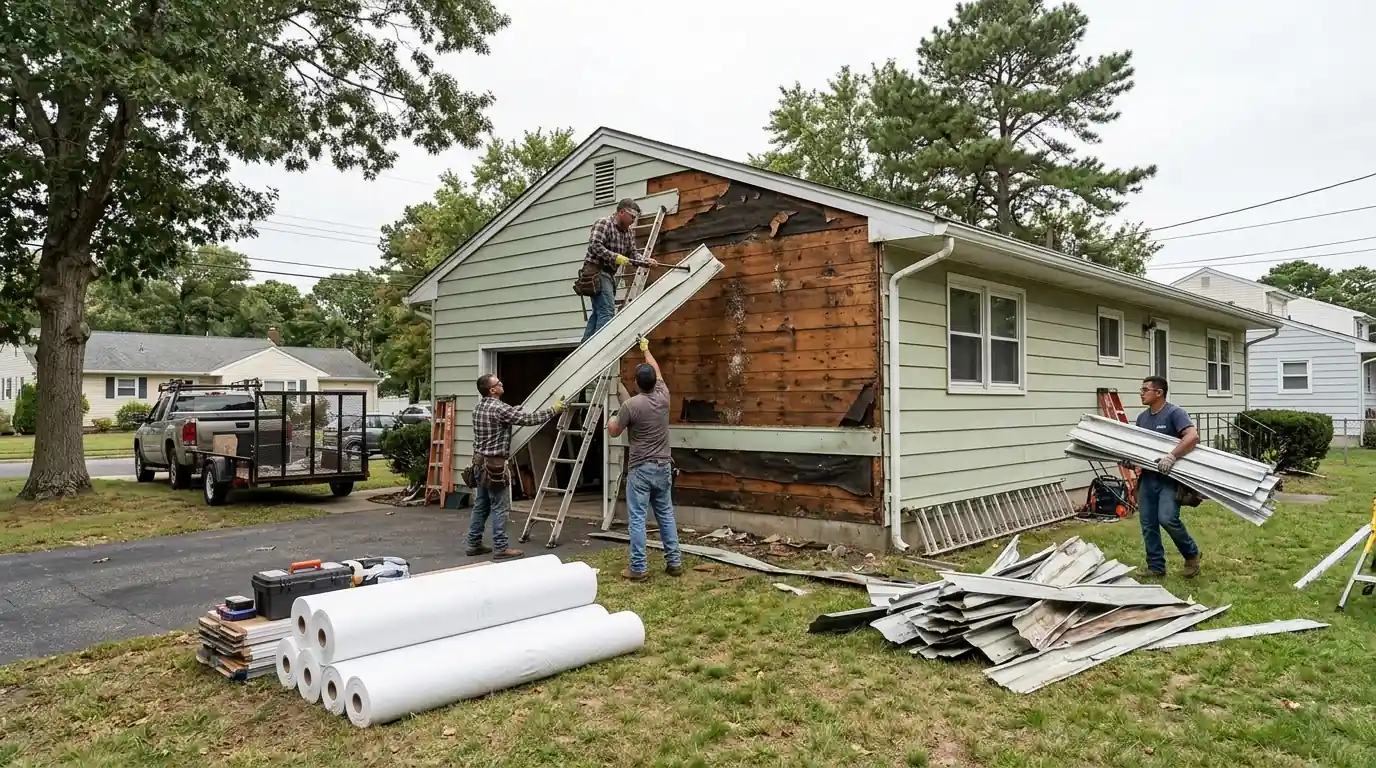
Replacing siding on a Toms River home means a full tear-off, a sheathing inspection and repair, new house wrap and flashing, then new siding and trim. Most ranches and capes take four to seven working days. Older cement shingle siding is handled according to applicable rules before re-siding. Call (732) 419-1462 to talk through your options.
What's on your walls now, and what replacing it involves
The old siding shapes the job as much as the new material does. Here's what we usually find on Ocean County houses and what each one means for the project.
| Existing siding | Common on | What removal involves |
|---|---|---|
| Painted aluminum | 1960s and 1970s ranches, capes and split-levels | Comes off quickly; often hides old wood clapboard or bare sheathing beneath it |
| Cement shingle (asbestos-cement) | Houses built roughly from the 1920s into the 1960s | Needs testing and handling according to applicable rules before or during removal |
| Original wood clapboard or shingles | Older cottages and homes near the bay | Often split and rotted at the bottom courses; sometimes left under new siding, often better removed |
| Thin or faded early vinyl | Homes re-sided in the 1980s and 1990s | Brittle in cold weather; tears off easily and usually reveals missing wrap and flashing |
| Failing composite or hardboard | Some 1980s and 1990s builds | Swollen, soft edges are common; underlying sheathing is often wet and needs repair |
Choosing the new siding
Once the old cladding is off, the walls can take almost anything. These are the materials homeowners around Toms River choose most often.
Premium or insulated vinyl
The most affordable full re-side and the lowest upkeep. Thicker panels lie flat and handle shore wind well. See our vinyl siding page for profiles, grades and colors.
Fiber cement lap or shingle
Heavier, harder and noncombustible, with crisp shadow lines and baked-on color from makers like James Hardie. It costs more and takes longer to install, but it resists dents and stands up well near the bay.
Engineered wood
LP SmartSide lap and panel siding gives a real wood grain, comes prefinished in many colors and handles impacts well. It suits farmhouse and craftsman looks on newer colonials and additions.
Mixed materials
Many homeowners pair vinyl or fiber cement on the main walls with shake gables, board and batten accents or a stone veneer wainscot. A mix breaks up big elevations without raising the cost too much.
How a full re-side moves from tear-off to final walk
On a single-story home this usually runs four to seven working days. Two-story homes, older cement shingle siding and a lot of rot all add time.
Plan the scope and order material
We measure each wall, go over materials and colors with you, and note anything special such as cement shingle siding or lots of windows, and we pull the township permit when the job requires one.
1 to 3 weeks before startHandle any cement shingle siding properly
If testing shows the old shingles contain asbestos, that material is removed, packaged and disposed of according to applicable rules before regular tear-off begins. We'll explain how it affects your schedule.
Varies, often 1 to 2 daysStrip one elevation at a time
Old siding, trim and any furring strips come off wall by wall. We close each side up the same day so the house never sits open to weather overnight.
Day 1 to 3Inspect and repair the sheathing
With the walls bare, we probe every soft or stained spot, especially below windows and at corners. Damaged sheathing is replaced and loose boards are refastened before wrap goes on.
Same day as tear-offWrap, flash and install
House wrap goes on with lapped, taped seams, windows and doors are flashed, then trim and siding are installed to the maker's instructions for that product.
Day 2 to 6Clean up and inspect together
Debris leaves the property, the yard is swept with a magnet for nails, and we walk every wall with you to check details before we finish.
Final day
What full siding replacement costs in Ocean County
Siding replacement pricing depends on wall area, the new material and what comes off the house. These are typical 2026 ranges around Toms River.
| Work | Typical range | What moves the number |
|---|---|---|
| Tear-off and premium vinyl, ranch or cape | $14,300 to $24,900 | Wall area, trim details and sheathing repairs |
| Tear-off and fiber cement, ranch or cape | $25,700 to $43,600 | Profile, factory finish versus field paint, and trim |
| Tear-off and new siding, two-story colonial | $23,800 to $61,400 | Material, height and staging, and number of openings |
| Sheathing replacement found during tear-off | $90 to $170 per sheet | How much water damage the old siding was hiding |
| Cement shingle siding removal and disposal | $3,450 to $11,200 | Wall area, condition of the shingles and disposal requirements |
These are general ranges, not quotes. Your price is set after we measure and see what's on the walls.
Why we strip to the sheathing instead of covering over
Plenty of houses around Toms River already have two layers of siding, usually vinyl nailed over the original wood or aluminum. Going over the top again saves a day of labor, but it hides whatever is happening on the walls. In tear-offs we routinely find wet sheathing under windows, missing house wrap and old flashing that never worked. Fixing those now is far cheaper than discovering them after the new siding is on.
Tear-off also keeps your trim proportions right. Each added layer pushes the siding further out, so windows and doors start to look sunken. Starting from the sheathing lets us set new trim at a proper depth, and if the windows themselves are worn out, this is the time to replace them. Our replacement windows work is easiest to do in the same project, and older trim can be wrapped or replaced with PVC trim and window capping.
How to tell it's time to replace, not repair
A few damaged panels can be fixed. When you see several of these at once, a full replacement usually costs less over time.
- Aluminum siding that leaves white chalk on your hand and has dents on every side
- Vinyl that cracks when it's touched in winter or has faded unevenly
- Wood siding that needs paint every few years and is splitting at the bottom courses
- Soft or bulging spots that move when pressed, especially under windows
- Paint peeling on interior walls or mold smell in rooms along an exterior wall
- Cracked or broken cement shingles that can't be replaced piece by piece
- Rising heating and cooling bills in rooms that feel drafty along the outside walls
Re-siding the older homes of Toms River and the bay towns
Much of Toms River was built out between the 1950s and the 1980s, when the township grew quickly along Route 37 and Hooper Avenue. Those ranches, capes and split-levels went up with aluminum, wood or cement shingle siding, and many were later covered with an early vinyl layer. After forty or more years of bay wind, humid summers and freeze-thaw winters, a lot of that siding is failing at the same time.
Closer to the water, older cottages in Island Heights, Ocean Gate and the bayfront sections of Toms River often have cedar or cement shingles over plank sheathing. Salt air shortens the life of paint and fasteners there, so we often suggest fiber cement or premium vinyl with stainless or hot-dipped fasteners. On raised homes that went up after Sandy, re-siding also means planning around tall foundation walls, decks and stairs, which affects staging and the timeline.
Where we do this work most
We work across all of Toms River (08753, 08755 and 08757) and these neighboring towns every week, along with the rest of Ocean County and southern Monmouth County.
- Silverton, Toms River08753
- Pleasant Plains, Toms River08755
- West Dover, Toms River08755
- Ortley Beach, Toms River08751
- Lakewood08701
- Brick08723
- Jackson08527
- Howell07731
- Manchester08759
- Berkeley Township08721
- Lacey Township08731
- Stafford Township08050
- Barnegat08005
- Wall Township07719
- Freehold07728
- Point Pleasant08742