How an ice dam builds on a roof with no rain in sight
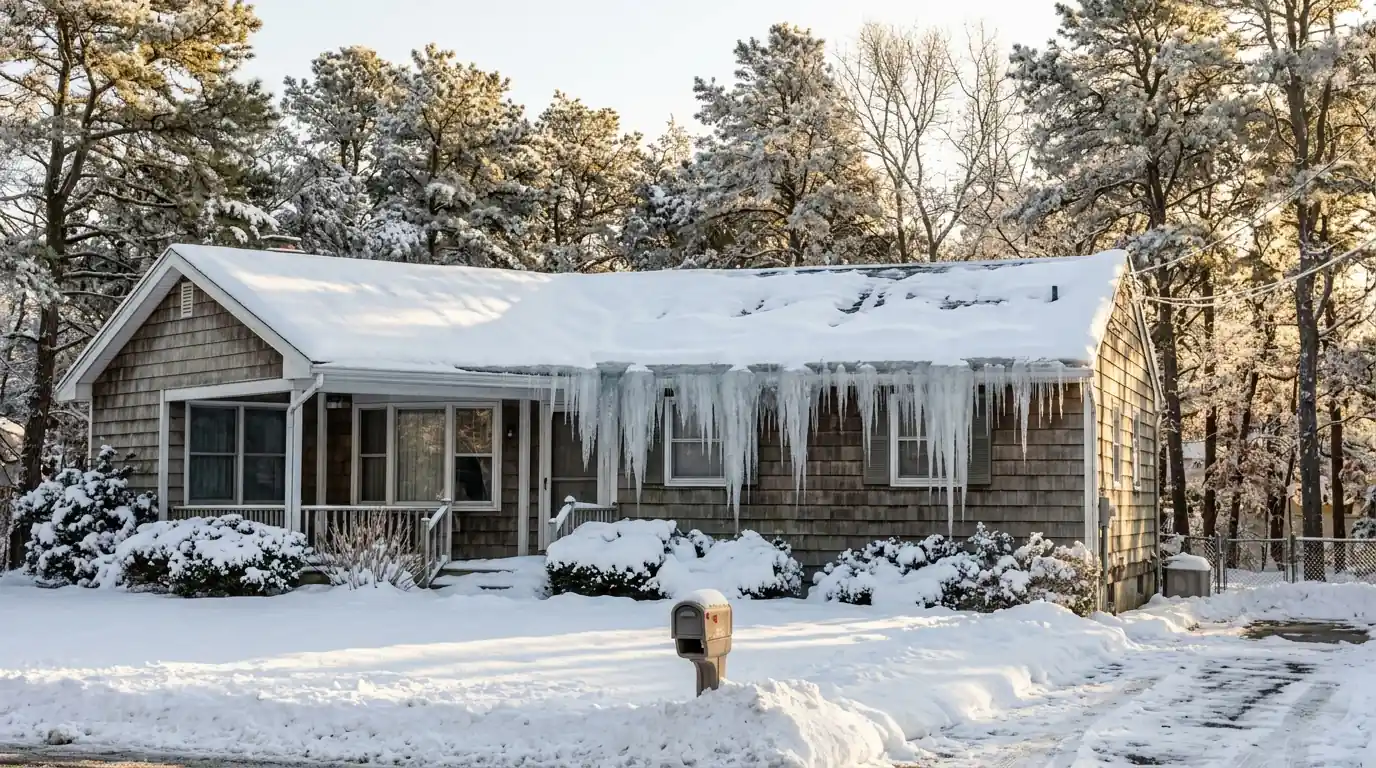
An ice dam starts with heat. Warm air from the living space leaks into the attic and warms the underside of the roof deck. Snow on the upper roof melts, even when it's below freezing outside, and the meltwater runs down toward the eaves. The eaves hang out past the warm walls, so they stay cold. The water refreezes there and builds a ridge of ice.
Every melt-and-freeze cycle adds to that ridge. Once it's tall enough, new meltwater pools behind it and backs up under the shingles, which were designed to shed water running downhill, not to hold standing water. It finds nail holes and seams, wets the deck, and drips into the soffit, the wall or the ceiling below.
Why shore houses get ice dams in a mild winter
Ocean County winters swing above and below freezing constantly. That back and forth is exactly what ice dams feed on.
Freeze and thaw swings
A sunny 38 degree afternoon followed by a 20 degree night melts and refreezes the same snow again and again. Each cycle thickens the ice at the gutter line.
Low-slope ranch roofs
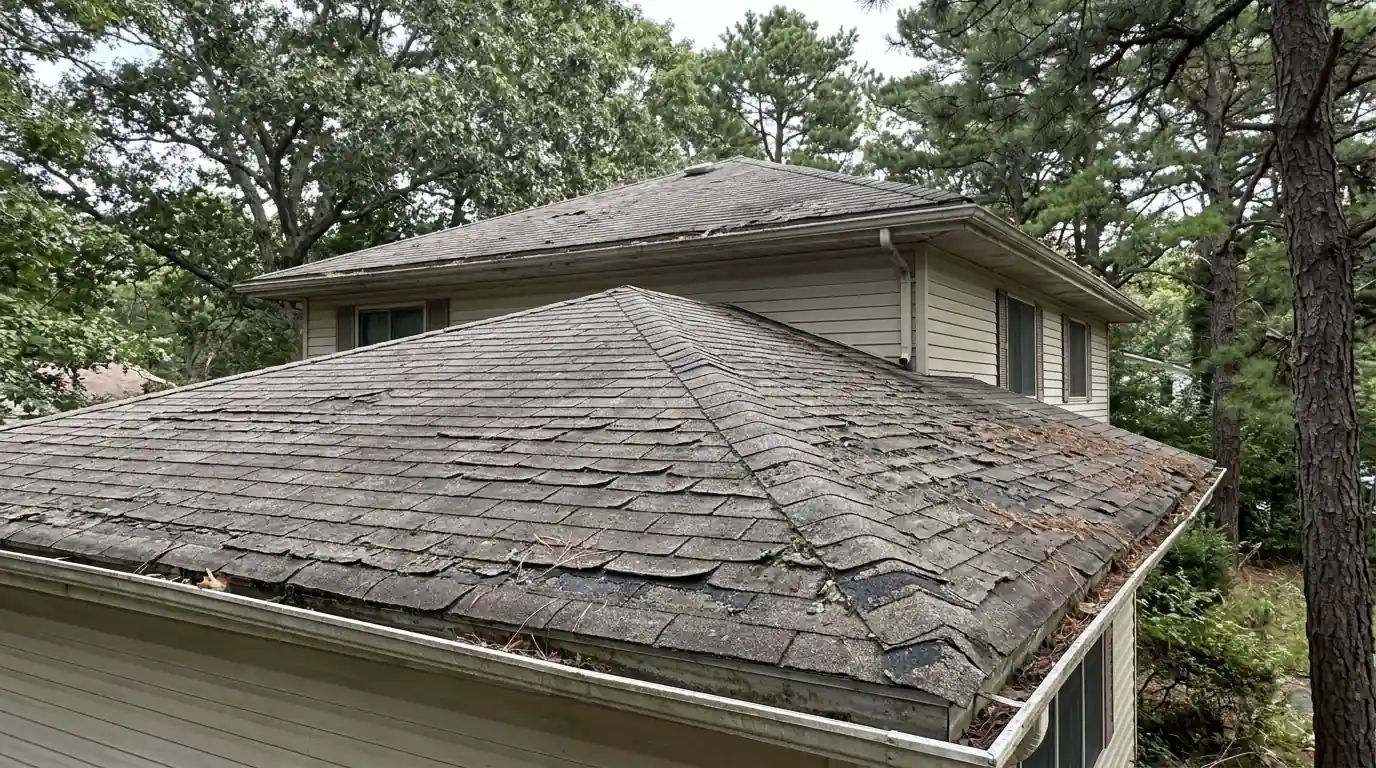
Many 1950s to 1970s ranches and bi-levels around Toms River have shallow pitches. Meltwater moves slowly on them, so it has more time to freeze before it reaches the edge.
Thin original insulation
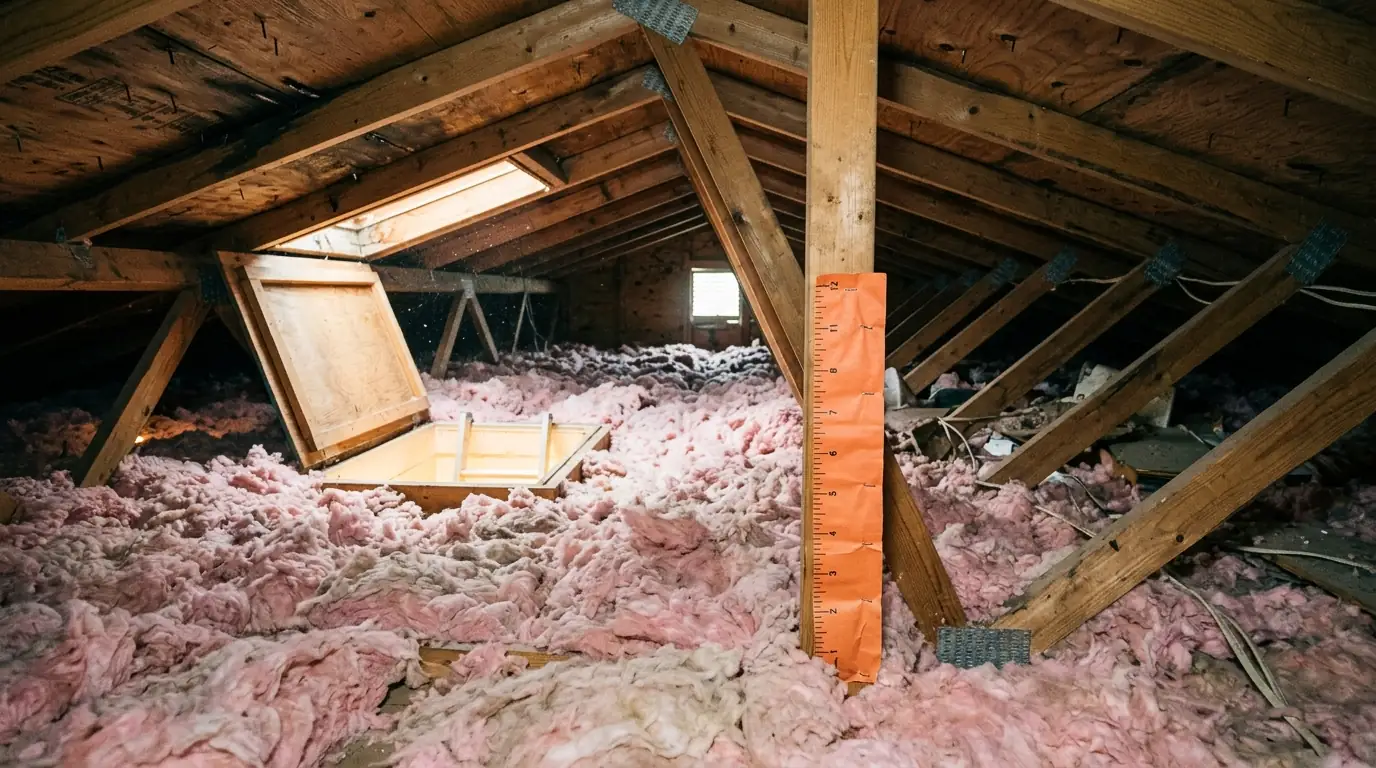
Older homes often still carry a few inches of fiberglass from when they were built. Heat goes straight through it into the attic and onto the underside of the deck.
Blocked soffit vents
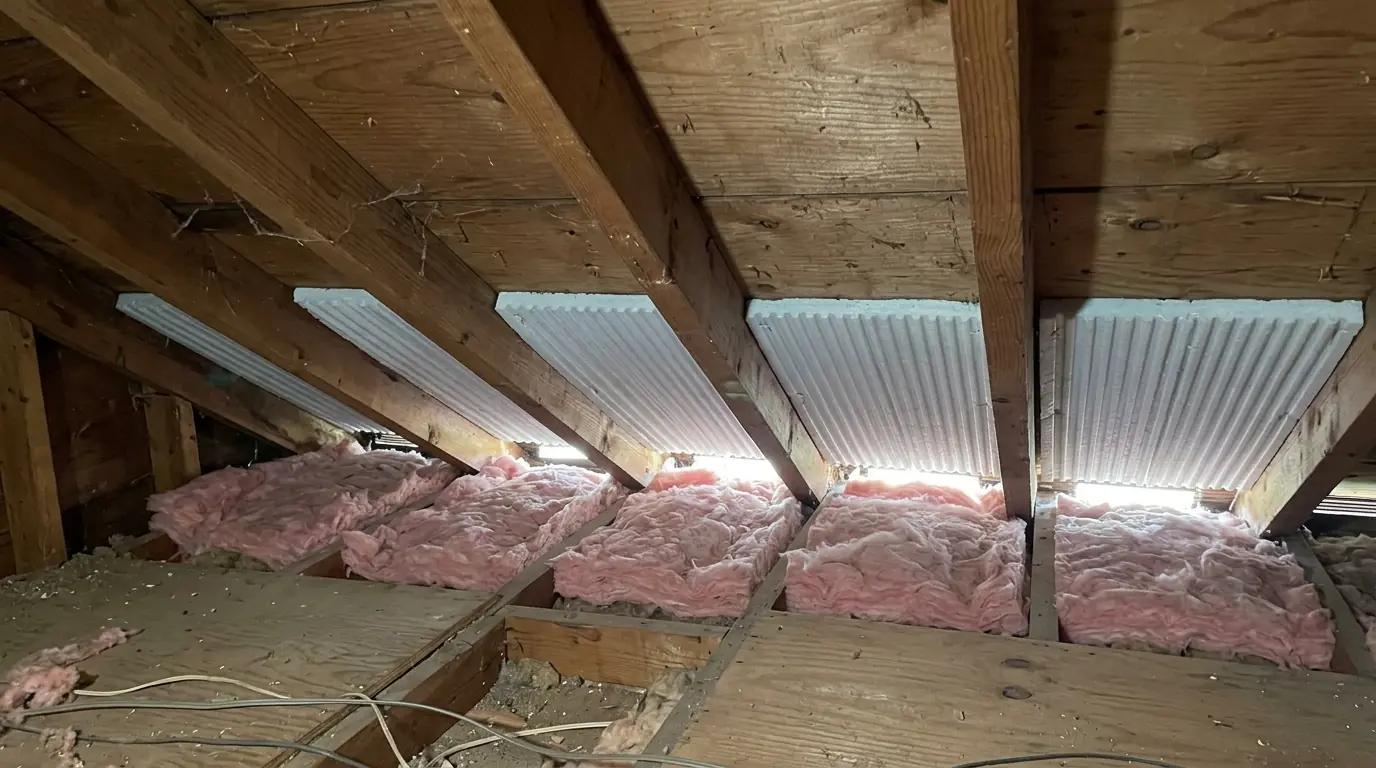
Insulation pushed against the eaves, or old solid soffit panels, cut off the cold air that should sweep under the roof deck and keep it near outdoor temperature.
Recessed lights and attic hatches
Older can lights and unsealed attic hatches act like small chimneys. Each one sends a plume of warm, damp air into the attic all winter.
What attic ventilation actually does in winter
People tend to think of attic ventilation as a summer thing for cooling, but it matters just as much in winter. Cold outside air should come in through the soffits, travel up under the roof deck and leave through a ridge vent. That steady flow keeps the deck cold enough that snow melts from the sun, not from the house, and it carries out the moisture that warm air brings up from below.
The balance matters. If there's plenty of exhaust at the ridge but little intake at the eaves, the attic pulls replacement air from the house, which makes things worse. Our roof and attic ventilation work starts by measuring both, then adding soffit intake, baffles and ridge vent so they match. Gable vents and powered fans can fight a ridge vent, so we look at the whole system before adding anything.
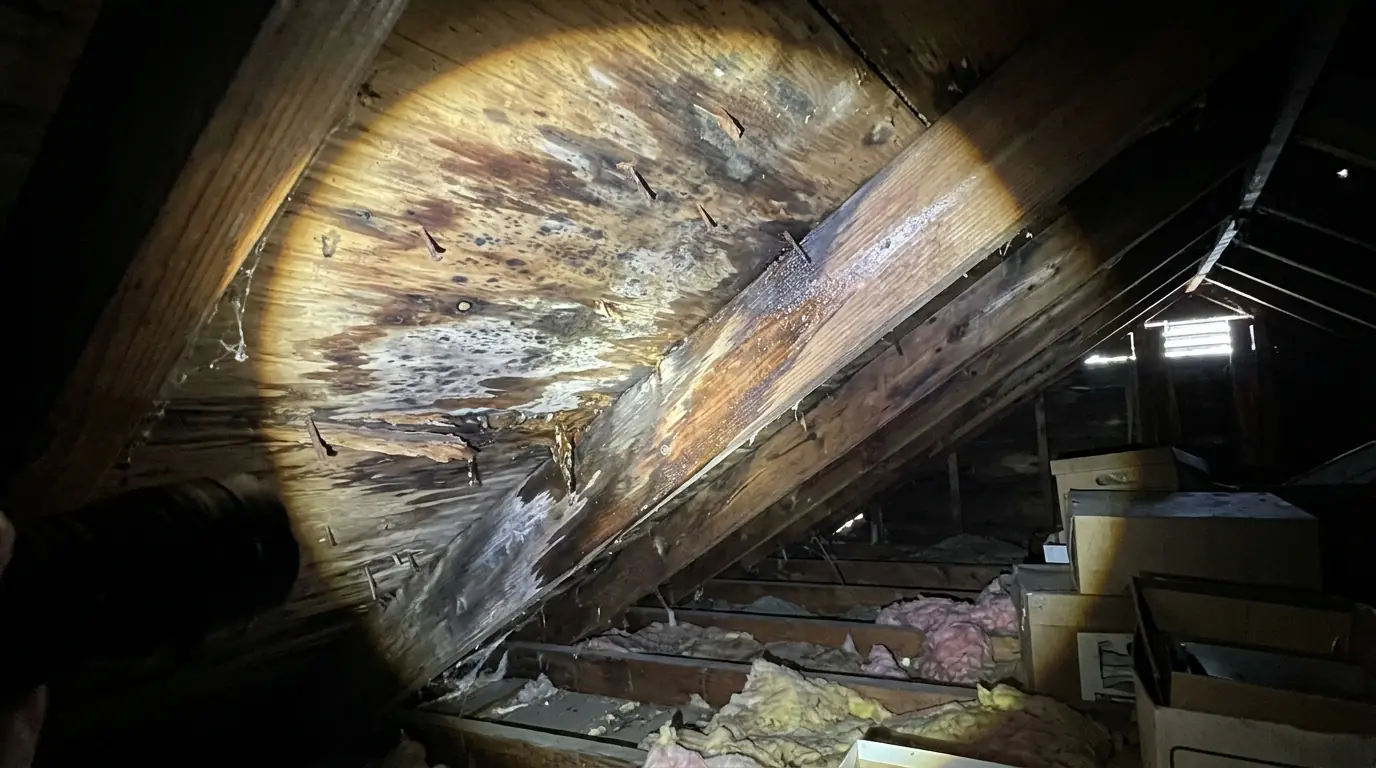
Shore attics also deal with humidity. Moist air leaking up from bathrooms and kitchens condenses on a cold deck in winter, and you see frost on the nail tips or dark stains on the plywood. That moisture weakens the sheathing over time, even in a house that never gets an ice dam.
Which fixes stop ice dams, and which only buy time
Some fixes treat the cause and some only manage the symptom. Here's how they compare.
| Fix | What it does | How long it helps |
|---|---|---|
| Air sealing the attic floor | Stops warm air leaking up around lights, pipes, wires and the hatch | Long term; usually the single biggest improvement |
| Insulation top-up | Slows heat moving from the rooms into the attic | Long term, especially paired with air sealing |
| Balanced soffit and ridge venting | Keeps the roof deck cold and dry all winter | Long term, and it helps attic heat in summer too |
| Ice and water barrier at the eaves | Seals under the shingles where water backs up | Long term, installed when the roof is replaced |
| Roof rake for snow | Pulls snow off the lower few feet of roof from the ground | Short term, storm by storm |
| Heat cables | Melts channels through the ice along the edge | Short term; manages the symptom, not the cause |
Insulation and air sealing come before more vents
If you only fix one thing, fix the warm air getting into the attic. Our attic insulation work starts with sealing the gaps around plumbing stacks, wiring holes, duct chases and the hatch, then baffles at each rafter bay so the new insulation can't block the soffits. Blown cellulose or fiberglass goes on last, to an even depth across the whole attic.
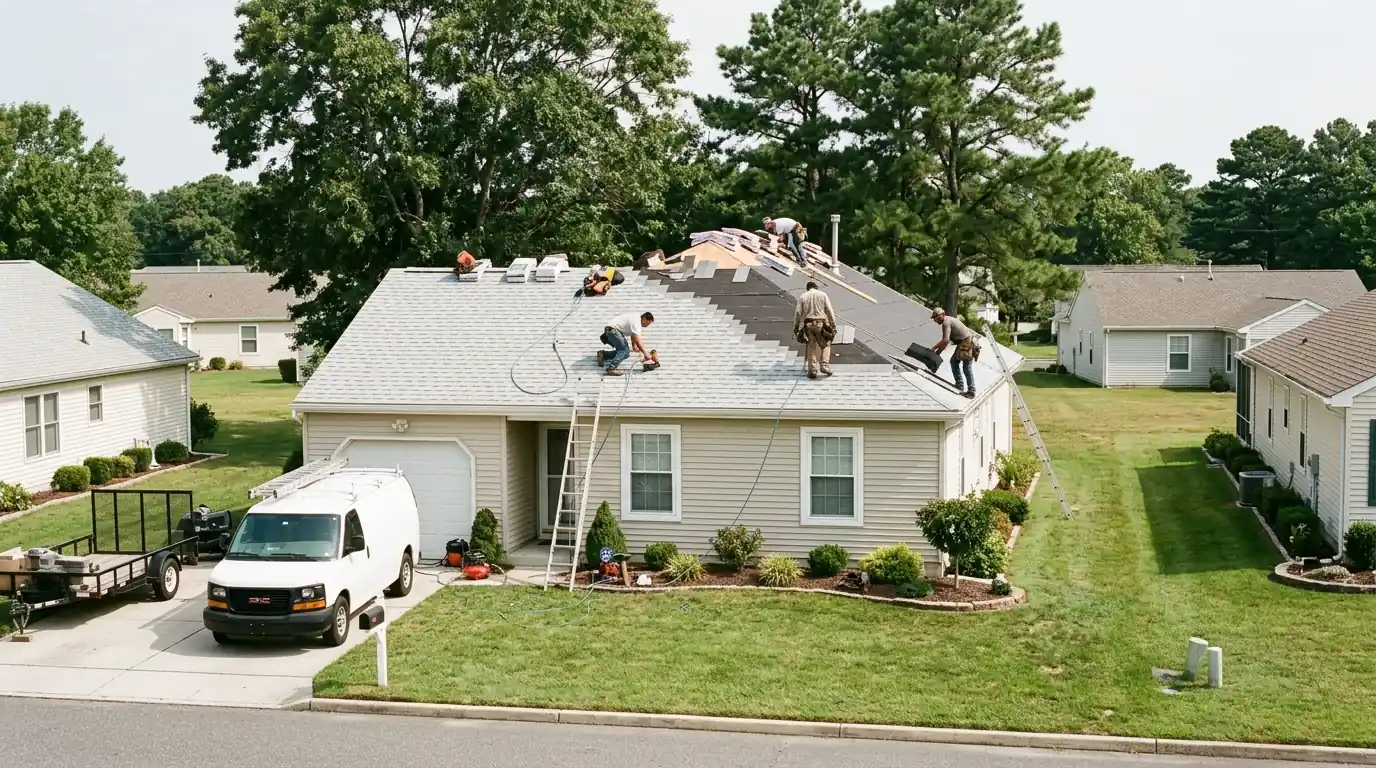
Ice and water barrier is the other half of the answer. When a roof is replaced, we run it along the eaves well past the warm wall line, and in valleys and around penetrations. It doesn't stop ice from forming, but it seals around nails so backed-up water has a much harder time getting through. If you're weighing a new roof against more patching, our post on whether to repair or replace your roof walks through how we think about it.
What to do when an ice dam is leaking right now
Keep it safe and simple. Don't climb an icy roof, and don't chip at the ice with a hammer or hatchet, because that tears shingles.
- Put towels and buckets under the drip and move furniture and electronics away
- If a ceiling is bulging with water, keep people clear and switch off nearby light fixtures
- Use a long-handled roof rake from the ground to pull snow off the lower few feet of roof
- Keep gutters and downspouts as clear as you safely can before the next melt
- Photograph the stain, the ice along the eaves and any icicles inside the soffit
- Note which room leaks, so we can trace it to that section of roof and attic
- Call (732) 419-1462 for a roof leak repair visit; we answer 24/7
Why the gutter isn't usually the culprit
Homeowners often blame packed gutters for ice dams, and full gutters can make the ice bigger. But a house with a cold, well-vented attic rarely builds a dam, gutters or not. Pulling the gutters off or adding heat cables treats what you see from the yard while warm air keeps melting snow up top. Once the weather breaks, have someone look in the attic. Stained sheathing, rusty nail tips and pressed-down insulation near the eaves tell us far more about next winter than the ice ever did.
Reader questions
Can a ranch house in Toms River get ice dams even after a light snow?
Yes. A low-slope ranch with little insulation and blocked soffits can build an ice dam from three or four inches of snow if the weather swings above and below freezing for a few days. Pitch, attic heat loss and airflow matter more than snow depth. If you've seen icicles along the eaves after a small storm, the attic is worth checking before next winter.
Will adding a ridge vent alone stop ice dams on my house?
Usually not by itself. A ridge vent only works when there's enough intake at the soffits to balance it, and it can't fix warm air pouring into the attic from below. Without sealing and insulation, a bigger exhaust can even pull more heated air out of the living space. Air sealing, insulation, soffit intake and ridge exhaust work together, so we plan them as one job.
Is frost on the attic side of my roof deck related to ice dams?
It comes from the same cause. Frost appears when warm, moist air from the house reaches the cold underside of the roof deck and freezes. That same warm air is what melts snow and feeds ice dams. Seeing frost, damp sheathing or rusty nail tips in winter is a clear sign the attic needs air sealing and better airflow.