What this guide covers, and what it doesn't
We're roofers, not lawyers or adjusters. We don't interpret policies, we don't settle anything with insurance companies, and we don't act on your behalf in a claim. What we can do is explain what wind damage looks like on a roof and siding, how to record it, and how to keep a house dry while your claim moves along. For anything about coverage, deductibles or deadlines, read your policy and call your agent or carrier directly.
Why the first 48 hours after a storm matter
Wind damage changes quickly. A creased shingle that's still in place on Monday may be in your neighbor's yard by Wednesday, and a small drip can turn into a stained ceiling and wet insulation after one more rain. Records made right after the storm show the damage as the wind left it, before weather, cleanup or repairs change the picture.
Most homeowners policies also expect you to take reasonable steps to keep damage from getting worse. In plain terms, that usually means covering an opening, catching water and saving what you can. Your policy spells out the exact wording, so it's worth pulling it out of the drawer now rather than in the middle of the next storm.
How to photograph roof and siding damage safely
Stay off the roof. Ladders are slick after rain, and wind-loosened shingles slide under your feet. Everything below can be done from the ground, a window or inside the house.
- Start with wide shots of each side of the house so the location of the damage is clear
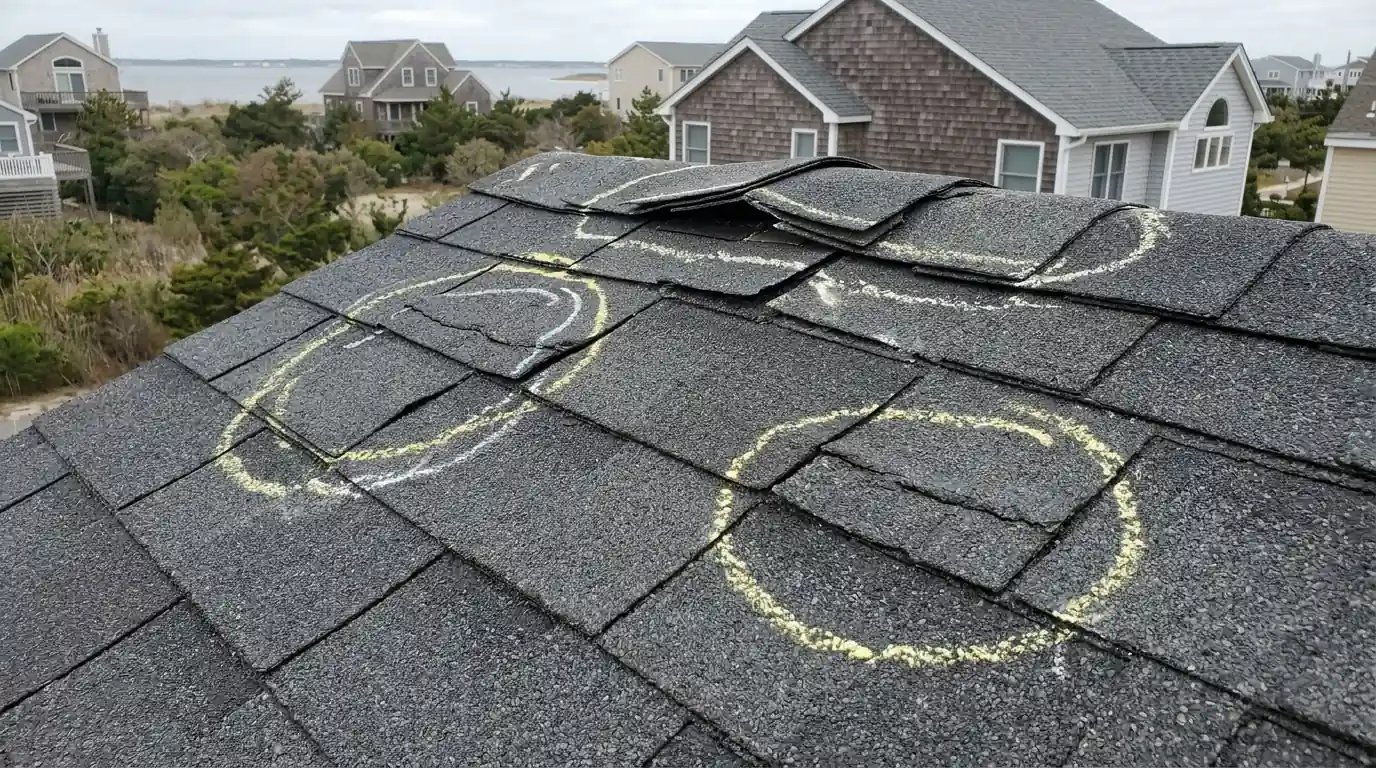
- Zoom in on missing shingles, exposed felt, lifted ridge cap and torn siding panels
- Photograph shingles, siding pieces and gutter sections lying in the yard where they landed
- Capture fallen limbs on or near the roof before anyone cuts them up
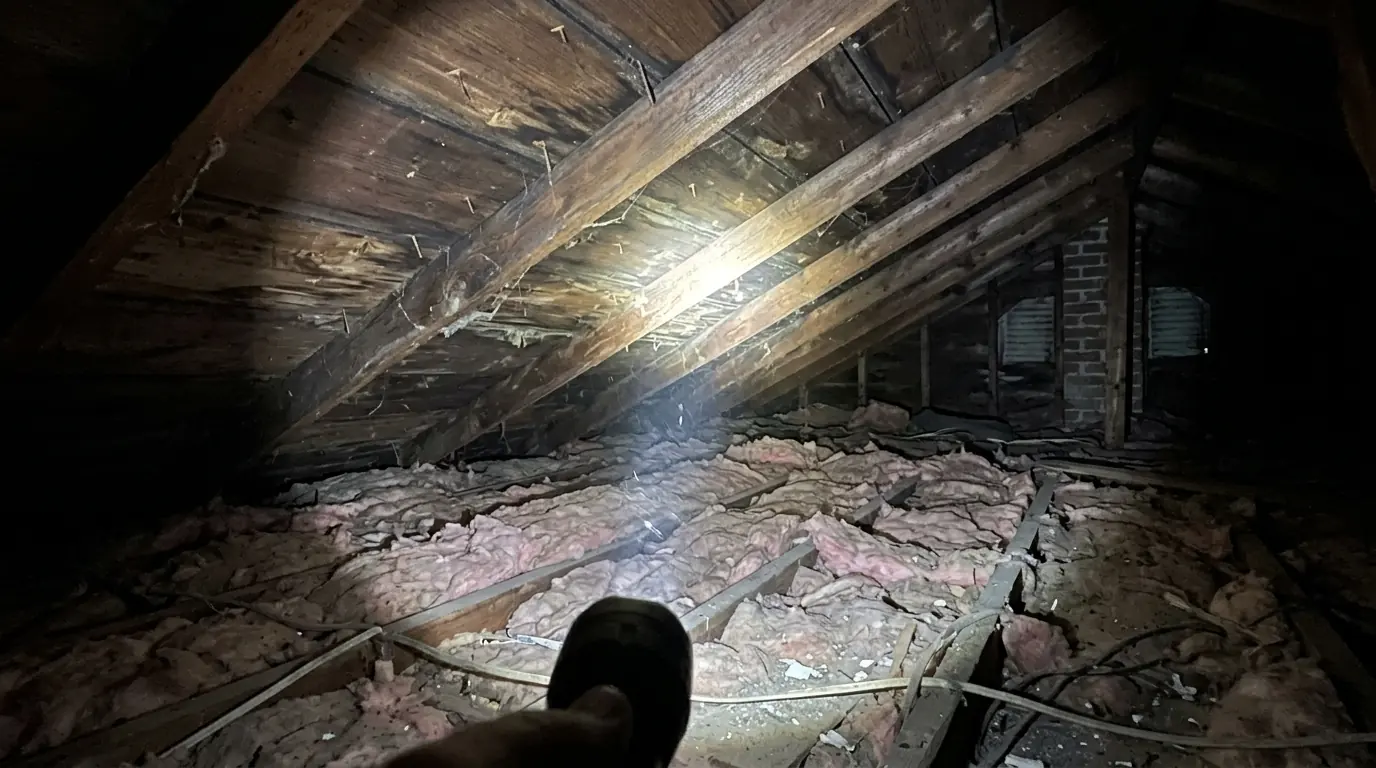
- Go into the attic with a flashlight and shoot any daylight, wet sheathing or damp insulation
- Photograph ceiling stains, dripping light fixtures and wet carpet inside the house
- Take a short video walking around the house, saying the date out loud
- Keep the original files with their timestamps, and back them up somewhere other than your phone
Notes that make your photos easier to understand later
Photos show what happened, and a few written notes explain when and how. Jot down the date and rough time of the storm, which way the wind seemed to come from, and when you first noticed each problem. If the weather service issued a wind advisory or the news reported gusts in Ocean County that day, save a screenshot or the link with your notes.
Keep a simple running log after that. Write down who you called and when, what they told you, and any claim or reference number you're given. A plain notebook or a note on your phone is enough. The goal is a record you could hand to someone else and have it make sense without you in the room.
Temporary repairs that protect the house without muddying the picture
Stopping more water from coming in is usually expected. The trick is to protect the house while keeping proof of what the storm did.
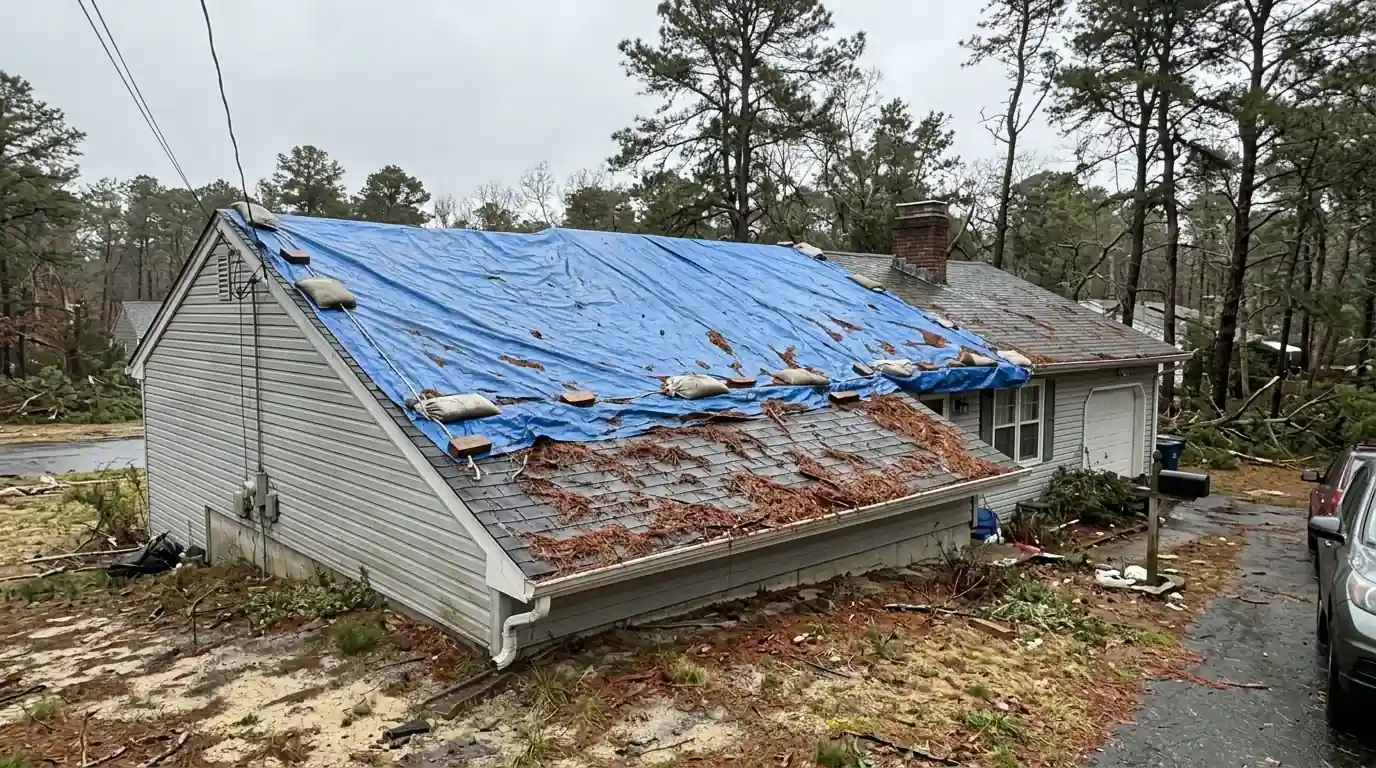
Tarp the opening
A properly secured tarp over missing shingles or a hole from a limb keeps rain out until a permanent repair. Photograph the damage before the tarp goes on, then photograph the tarp in place.
Catch the water inside
Buckets, towels and plastic sheeting under drips protect floors and furniture. If a ceiling bulges with water, keep people away from it and photograph it before anything else is done.
Save the damaged materials
Bag a few torn shingles, a piece of cracked siding or a bent gutter section and keep them in the garage. Hold on to them until the claim is settled, in case someone asks to see them.
Hold off on full replacement
Temporary work stops the damage. Permanent repairs or a full replacement usually come after the damage has been seen and documented, so ask your carrier before tearing anything off.
Dry what you can
Fans and a dehumidifier help wet drywall and insulation dry out before mold starts in a humid shore summer. Photograph wet areas first, then start drying.
Where a roofer fits in after a wind storm
A roofer's role is practical. When a roof is open, our emergency roof repair and tarping crews dry it in so the house stops taking water. Once things calm down, a roof inspection gives you a written description of what we found, with photos from up top showing lifted tabs, creased shingles, broken seals and flashing that pulled loose. Many homeowners find those roof-level photos useful, because they show damage you can't see from the lawn.
If the damage needs fixing, our wind and storm damage roof repair work follows. We'll give you a written, itemized estimate for the work itself. What your policy pays toward it is between you and your carrier, and we stay out of that conversation. If you're not sure the storm did any harm at all, start with our after-a-nor'easter checklist for what to look at from the ground.
Which receipts and papers to keep in one folder
Put everything in one place, paper or digital. It saves a lot of searching later.
| Keep this | Why it's useful | Tip |
|---|---|---|
| Tarping and emergency repair invoices | Shows what you spent to protect the house right away | Ask for an itemized invoice with the date and address |
| Store receipts for tarps, buckets, fans | Small costs add up during the first few days | Photograph paper receipts before they fade |
| Hotel and meal receipts if you had to leave | Some policies address extra living costs; check yours | Note the dates you were out of the house |
| Written contractor estimates | Describes the scope and cost of permanent repairs | Keep every version if the estimate changes |
| Your policy and declarations page | Lists your coverages and deductibles | Keep a digital copy you can reach from your phone |
| Your call and claim log | Shows who said what and when | Add each new reference number the day you get it |
A few habits that make the next storm easier
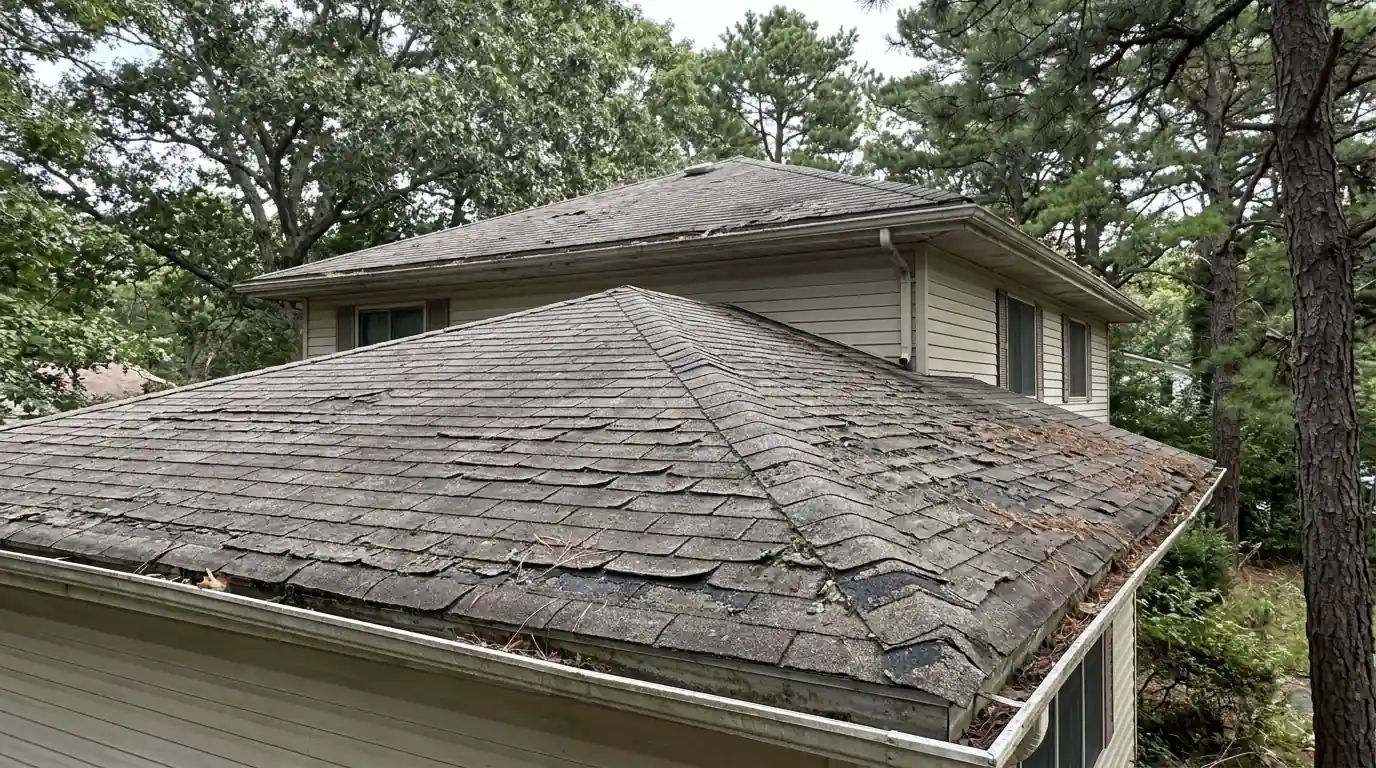
The best time to document your roof is before anything happens. Take a set of photos of each side of the house, the roof from the street and the attic every spring or after any roof work. Keep them in a folder with your policy and any old roofing invoices. When a storm does hit, you'll have a clear before and after.
It also helps to know roughly how old your roof is and what's on it. If you don't know, an inspection can tell you the shingle type and its general condition. If wind has just opened up your roof in Toms River or anywhere nearby, ring us at (732) 419-1462. We answer 24/7 and send someone to dry it in as fast as conditions allow.
Reader questions
Should I photograph wind damage before or after a tarp goes on my Toms River roof?
Before, whenever it's safe. Photos of the open roof, the missing shingles and the debris in the yard show the damage exactly as the wind left it. Then take a second set once the tarp is on, so there's a clear record that you protected the house. If rain is pouring in and photos would cause delay, cover it first and photograph the damage you can still see.
Can a roofer's inspection photos be used in a homeowners insurance claim?
Many homeowners include them with the rest of their records, because roof-level photos show creased tabs and loose flashing that are hard to see from the ground. We provide the photos and a written description of what we found. How you use them, and how your carrier treats them, is up to you and your carrier. We don't take part in settling claims or act on your behalf.
How long should I keep receipts after a wind storm repair?
Keep them at least until the claim is closed and every payment has cleared, and longer is better. Many homeowners keep storm-related invoices and receipts with their house records for as long as they own the home, since they also show when the roof or siding was repaired. Your agent or carrier can tell you if your policy sets any specific timeframes.