What each material really is
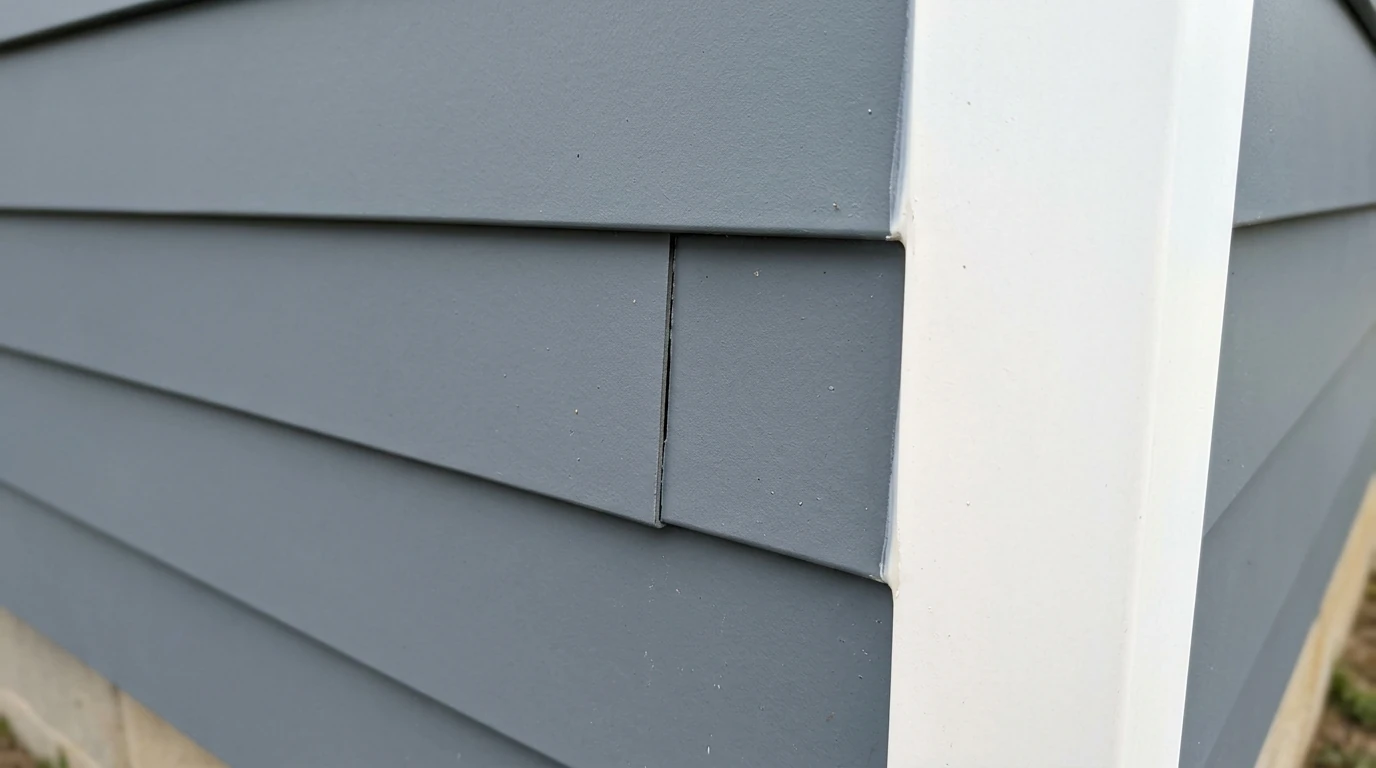
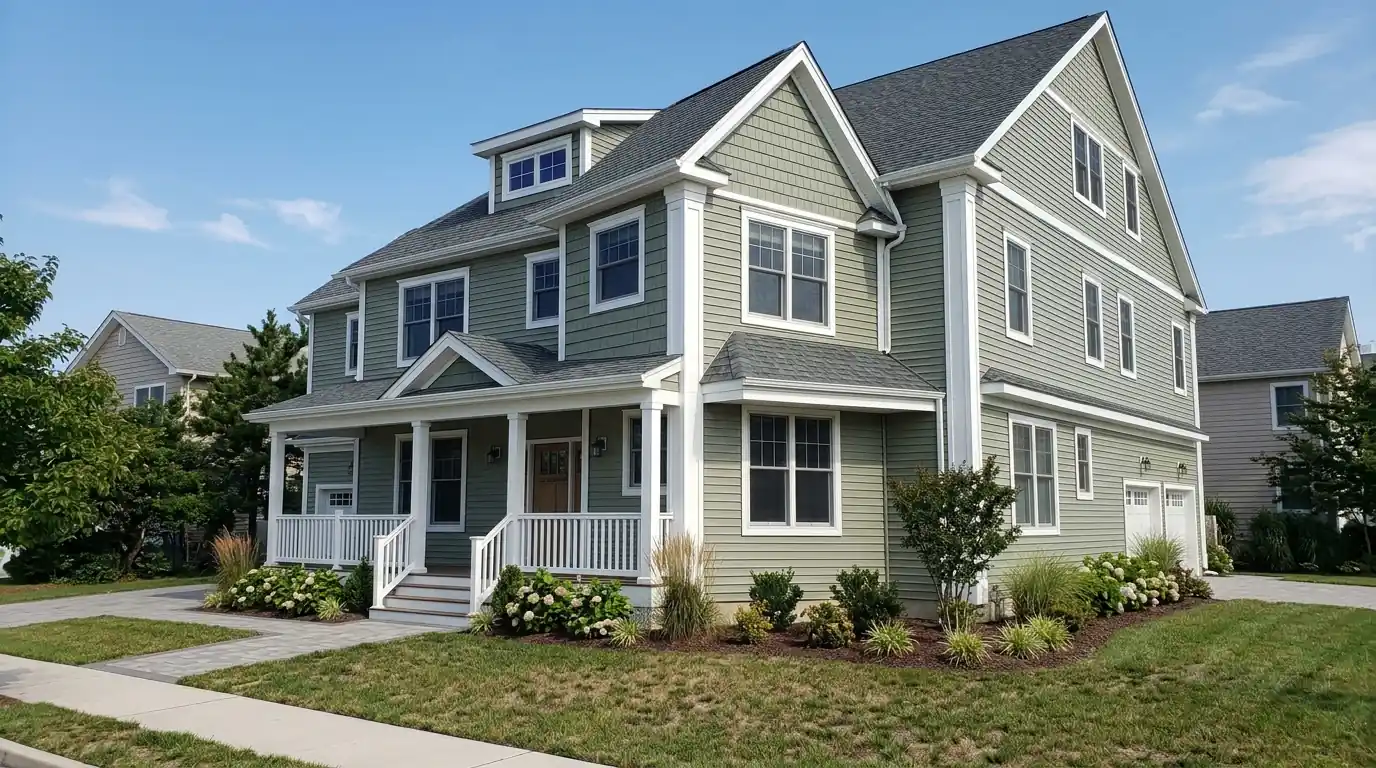
Vinyl siding is extruded PVC: light, flexible, with the color running through the panel. Makers such as Mastic, Alside and CertainTeed offer it in a wide range of thicknesses, from thin builder-grade panels to heavier premium lines and insulated vinyl with a foam backing. It's hung loosely on purpose so it can expand and contract as the temperature swings.
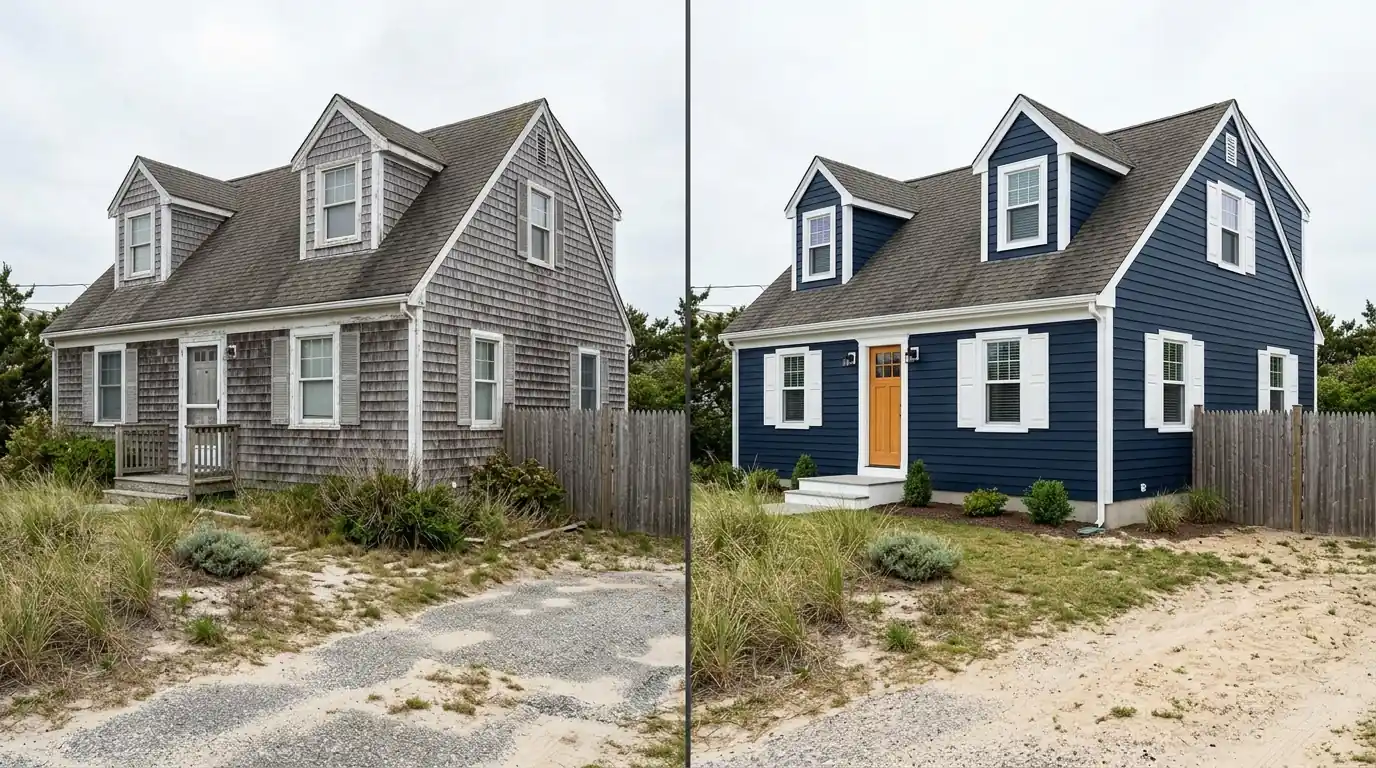
Fiber cement is a blend of cement, sand and cellulose fibers pressed into planks, panels and shingles. James Hardie is the best known name, and its HardiePlank lap siding is the profile most people picture. It's heavy, rigid and nailed tight, and it either arrives factory-finished or gets painted after installation.
Side by side on the things that matter at the shore
This comparison assumes good installation for both. A poorly hung panel of either material won't perform the way the product sheet says.
| Factor | Vinyl | Fiber cement |
|---|---|---|
| Wind | Premium lines with a reinforced nail hem hold well; thin panels can come loose in strong gusts. | Heavy and nailed tight, so it rarely blows off; corners and trim need careful fastening. |
| Salt air | Won't corrode; color can chalk and fade on sunny walls over time. | Won't corrode; the paint finish eventually weathers and needs recoating. |
| Impact | Can crack when cold and struck by debris or a ball. | Shrugs off typical knocks without denting or cracking. |
| Fire | Melts and warps near a grill or a burning structure next door. | Noncombustible, a real advantage on tightly spaced lots. |
| Upkeep | Wash once or twice a year; no painting. | Wash yearly; repaint field-painted boards every 10 to 15 years, longer for factory finishes. |
| Look | Visible seams and a slight sheen on lower grades. | Crisp shadow lines and a painted-wood appearance. |
What each costs on a typical Toms River house in 2026
Ranges are for about 1,800 square feet of wall area, including tear-off of old siding, house wrap and standard trim. They depend on stories, corners, window count and the product line.
| Option | Installed range | Notes |
|---|---|---|
| Standard vinyl | $11,400 to $17,900 | Thinner panels; fine for sheltered inland lots. |
| Premium or insulated vinyl | $16,300 to $26,800 | Thicker panels, better wind performance, foam backing on insulated lines. |
| Fiber cement, painted on site | $23,600 to $38,700 | Primed boards painted after install; plan for repainting down the road. |
| Fiber cement, factory-finished | $26,900 to $43,200 | Baked-on color lasts longer and arrives ready to hang. |
Which houses suit which siding
We see a few clear patterns across Ocean County housing.
Inland ranches and split-levels
On a ranch near Route 37 or a split-level in West Dover, good premium vinyl often makes the most sense. Trees and neighbors shelter the walls, and the savings can go toward the roof or windows.
Barrier island and bayfront homes
Houses on the island and along Barnegat Bay take the hardest wind and salt. Fiber cement or a heavy, wind-rated vinyl both work there; thin builder-grade vinyl usually doesn't last long.
Raised post-Sandy homes
Raised houses put siding higher into the wind and add tall, exposed walls. The extra rigidity of fiber cement helps, though premium vinyl installed with care also performs well.
Homes you'll sell soon
If you're selling within a few years, vinyl delivers fresh curb appeal at a lower cost. Buyers notice clean, straight siding far more than the material behind it.
Long-term family homes
If you plan to stay twenty years or more, fiber cement's durability, fire resistance and painted-wood look often justify the higher upfront price, and it pairs well with a new roof.
How each one handles a Jersey Shore summer and winter
Vinyl moves with the weather. A 12-foot panel can grow and shrink by well over a quarter inch between a January cold snap and a July afternoon in full sun, which is why it hangs on slotted nail holes rather than being pinned tight. Dark vinyl colors absorb more heat and move more, and reflected sunlight from some low-E windows can even warp panels on a neighboring wall.
Fiber cement barely moves with temperature, which keeps its lines straight and its caulk joints tighter. It does respond to moisture at cut ends, so installers seal those cuts and keep the bottom edge clear of roofs, decks and ground. In cold weather it's more forgiving than vinyl, which gets brittle and can crack if a shovel, a ladder or a stray ball hits it in February.
Both materials need the same supporting cast: a good weather barrier, flashing above every window and door, and solid PVC trim and window capping where the siding meets openings and corners. Skip those, and either siding will let water reach the walls.
Installation matters more than the label
Many of the siding problems we fix at the shore come from how it was hung, not from the material. Vinyl nailed too tight buckles in July and pulls loose in January. Fiber cement set without proper clearance above roofs and decks wicks water and swells at the board ends. Both need flashing at windows and doors and a sound weather barrier underneath. Whichever you choose, ask how the installer handles nailing, clearances and window flashing before you sign anything.
Our honest take for a shore house
If the budget is tight or the house is sheltered, premium vinyl is a smart, low-upkeep choice that holds up well when it's installed with care. Thin builder-grade vinyl is the one option we'd steer island and bayfront homeowners away from, because it's the panel we most often see peeled off after a nor'easter.
If you want the best long-term performance in wind and the look of painted wood, fiber cement earns its price, especially on exposed lots. Salt also affects the trim, gutters and fasteners around the siding, which our piece on building near salt water covers.
You can read more about our fiber cement siding and vinyl siding work, or call (732) 419-1462 to have someone walk your house and price both options side by side. We answer 24/7.
Reader questions
Will vinyl siding on a bayfront Toms River home blow off in a nor'easter?
Well-installed premium vinyl usually stays put. Trouble comes from thin panels, nails driven too tight or too loose, and missing starter strip. On exposed bayfront walls we use heavier panels with a reinforced nail hem and follow the manufacturer's high-wind fastening schedule. If panels have come loose on your house before, look at how they were installed first, not just the product.
How often does fiber cement on a shore house need repainting?
It depends on the finish and the exposure. Boards primed and painted on site typically need fresh paint somewhere around every 10 to 15 years, sooner on walls that face south or take direct ocean wind. Factory-finished boards hold their color longer. Keeping caulk joints sound and rinsing off salt once a year both help the paint last.
Can I mix vinyl and fiber cement siding on the same shore house?
Yes, and it can work nicely. A common approach is fiber cement on the most exposed or visible walls, such as the street side or the wall facing the bay, with premium vinyl on the sheltered sides to keep the cost down. The key is choosing colors and profiles that line up well and detailing the transitions with trim so water doesn't collect where the two materials meet.