Why nor'easters are so hard on shore roofs
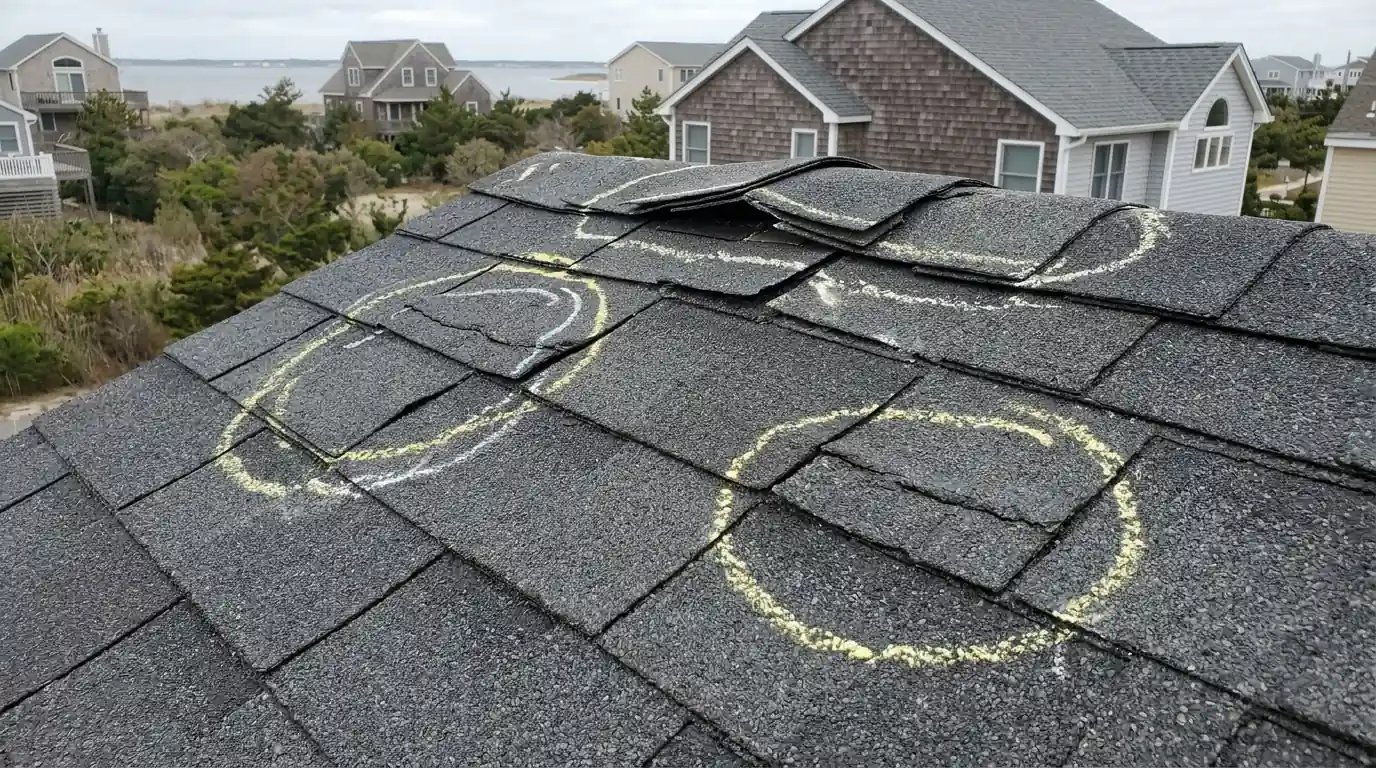
Most roof damage from a summer thunderstorm comes from one short, strong gust. A nor'easter works differently. Northeast winds blow for hours, sometimes days, so shingle tabs flex back and forth until the sealant strip lets go. Once a tab is unsealed, the next gust can fold it back, crease it or tear it off entirely.
Rain arrives sideways, too. Wind-driven water climbs under shingles, behind step flashing and around window trim in ways ordinary rain never does. That's why many people notice a ceiling stain after a nor'easter on a roof that has never leaked before. On the barrier island and along the bay in sections like Shelter Cove, add salt spray and high tides to the list.
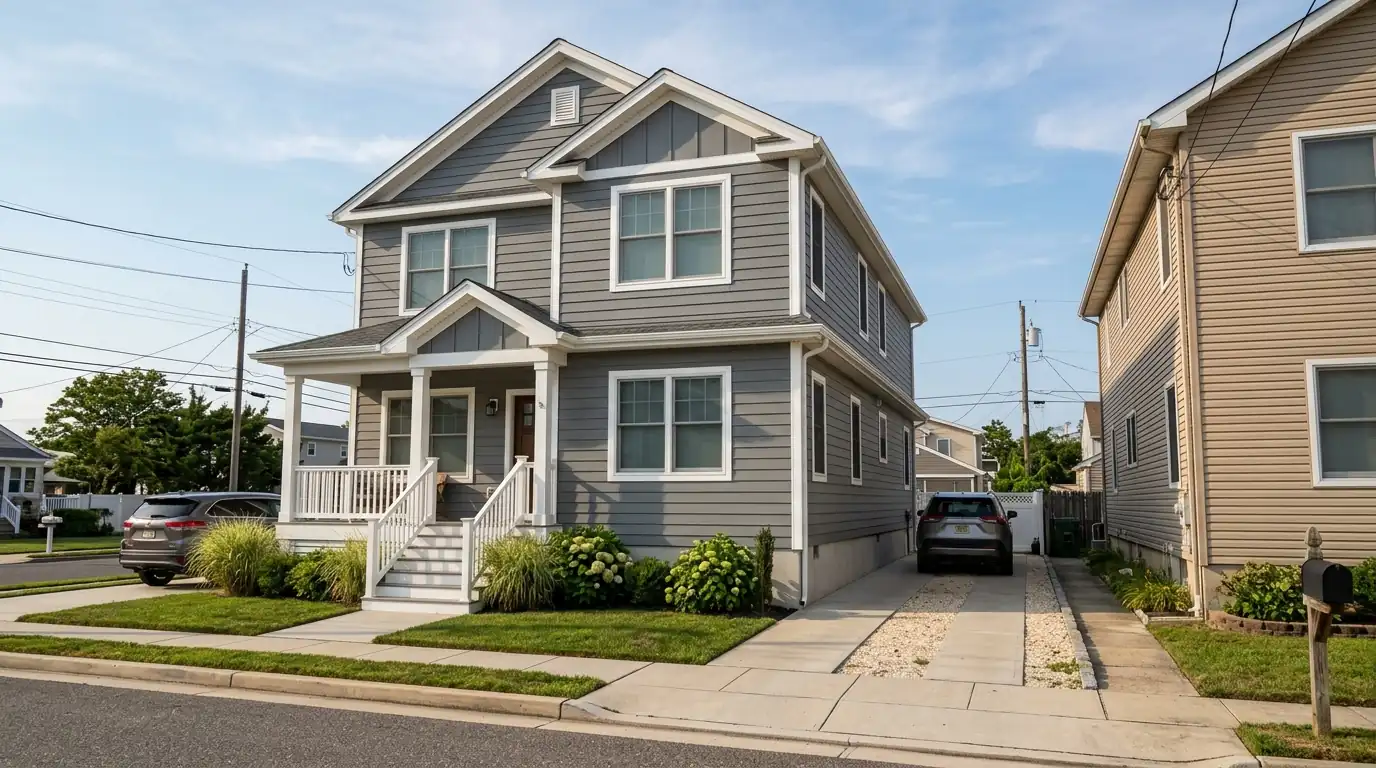
The parts of a shore house that take the worst of it
After years of storm calls, we see the same spots fail again and again. Start your inspection with these.
Rakes and eaves
Shingle edges along the gable rakes and the bottom eaves catch wind first. If the starter strip wasn't sealed well, these edges lift and peel before anything in the middle of the roof moves.
Ridge caps
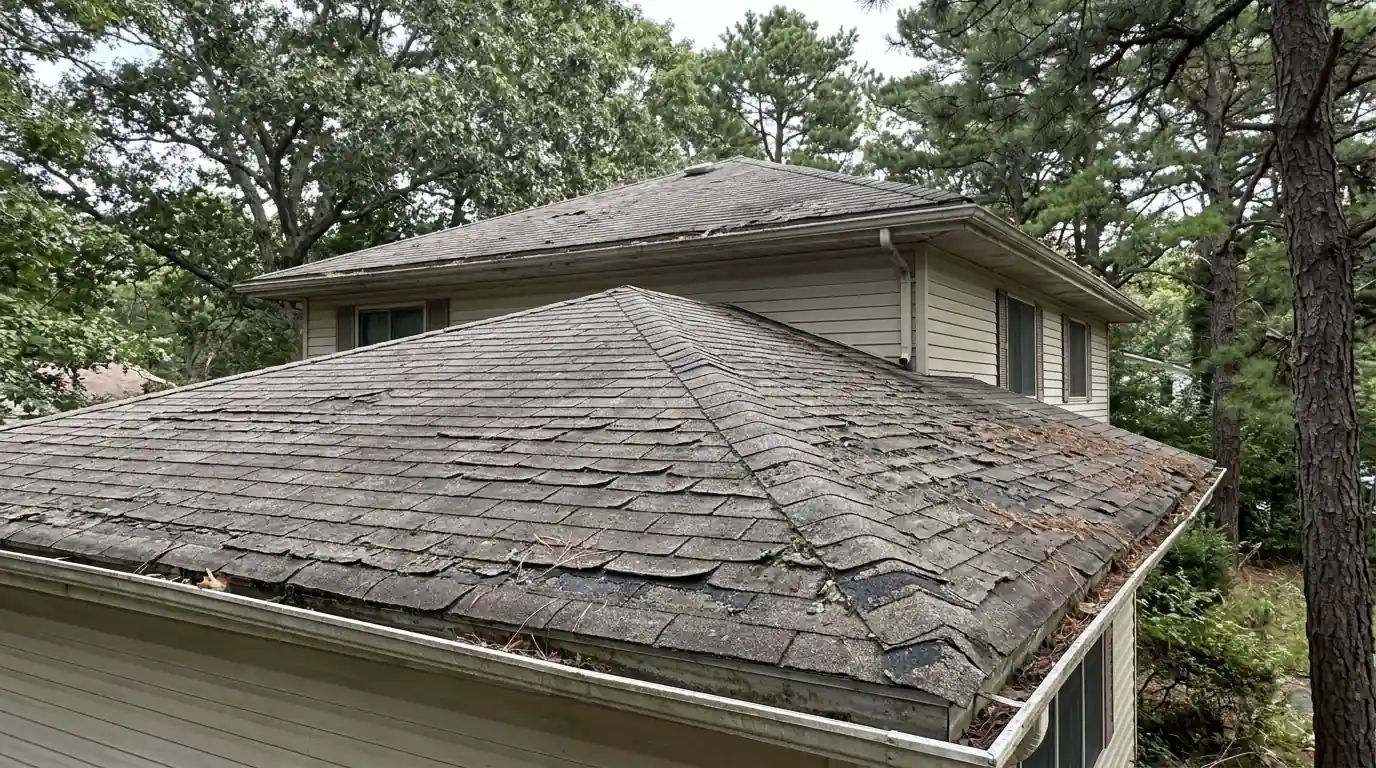
The peak takes wind from both sides. Older ridge caps get brittle and crack, and a missing cap leaves the ridge vent or the top course of shingles open to wind-driven rain.
North and east walls
Nor'easters push hardest on walls facing the ocean and the bay. Siding, window trim and soffits on those sides deserve a closer look than the sheltered back of the house.
Chimney and wall flashing
Hours of sideways rain test every flashing joint. Loose counter flashing or dried-out caulk at a chimney is one of the most common sources of a first-time leak after a big storm.
What to look for from the ground first
Stay off the roof. Wet shingles are slick, and storm-loosened tabs can slide underfoot. A pair of binoculars and a slow lap around the house will tell you a lot.
- Missing shingles, or bright patches where the color looks different from the rest of the roof
- Tabs that are lifted, folded back or creased along a straight line
- Ridge cap pieces missing or out of line along the peak
- Flashing bent away from the chimney, a dormer wall or a skylight
- Gutters sagging, pulled from the fascia or holding piles of shingle granules
- Vinyl siding panels unhooked, flapping or cracked, especially on north and east walls
- Soffit panels dropped or missing, which lets wind-driven rain and birds into the attic
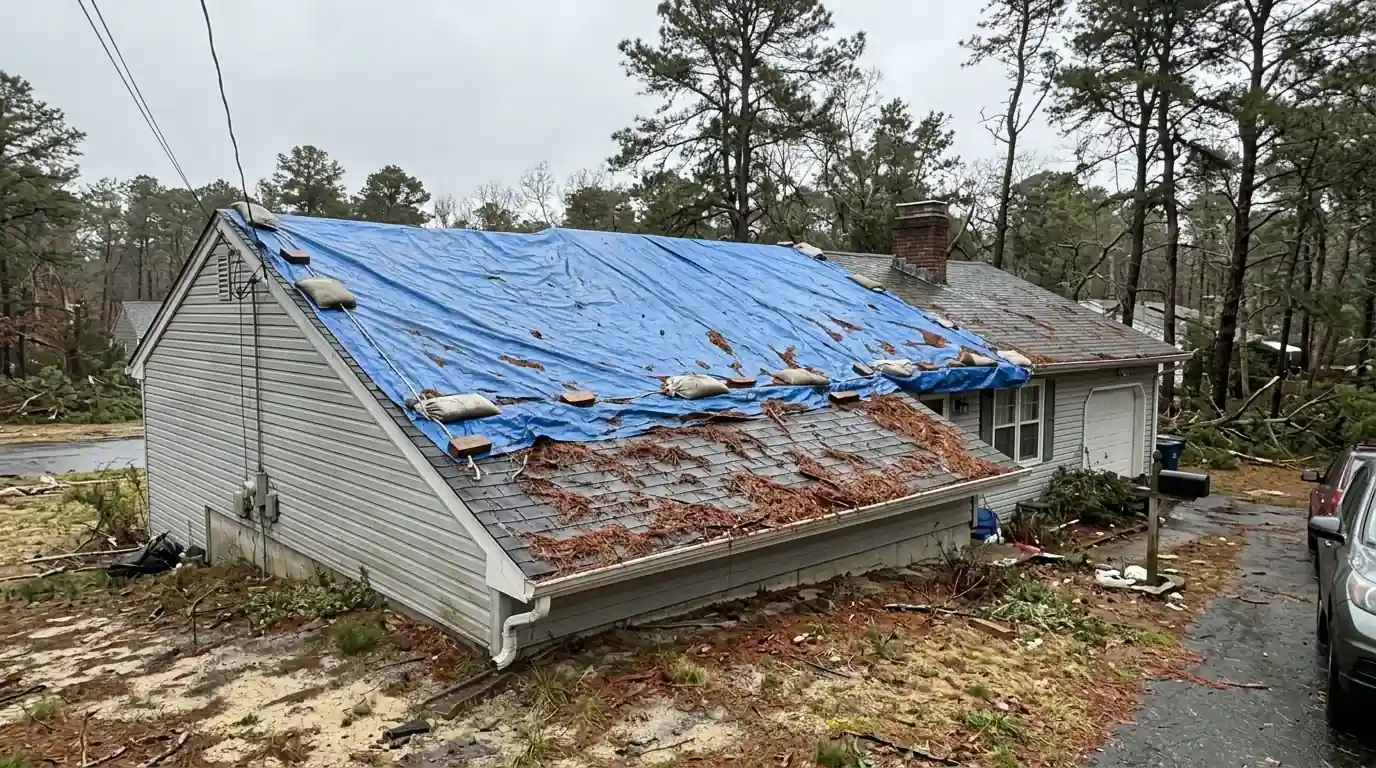
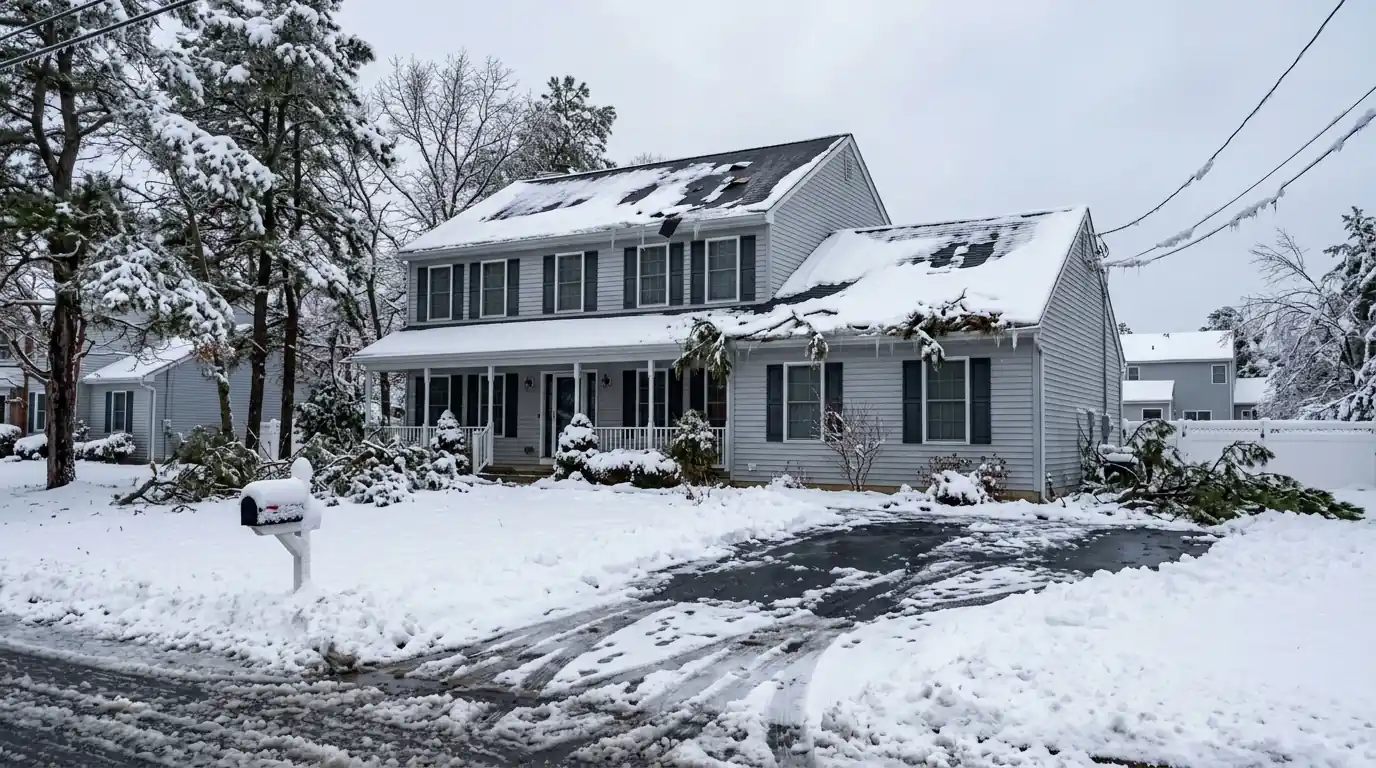
- Tree limbs resting on the roof, or pine branches packed into the valleys
What to check in the attic and on upstairs ceilings
Go up with a flashlight during daylight, ideally within a day of the storm, while any moisture is still easy to spot.
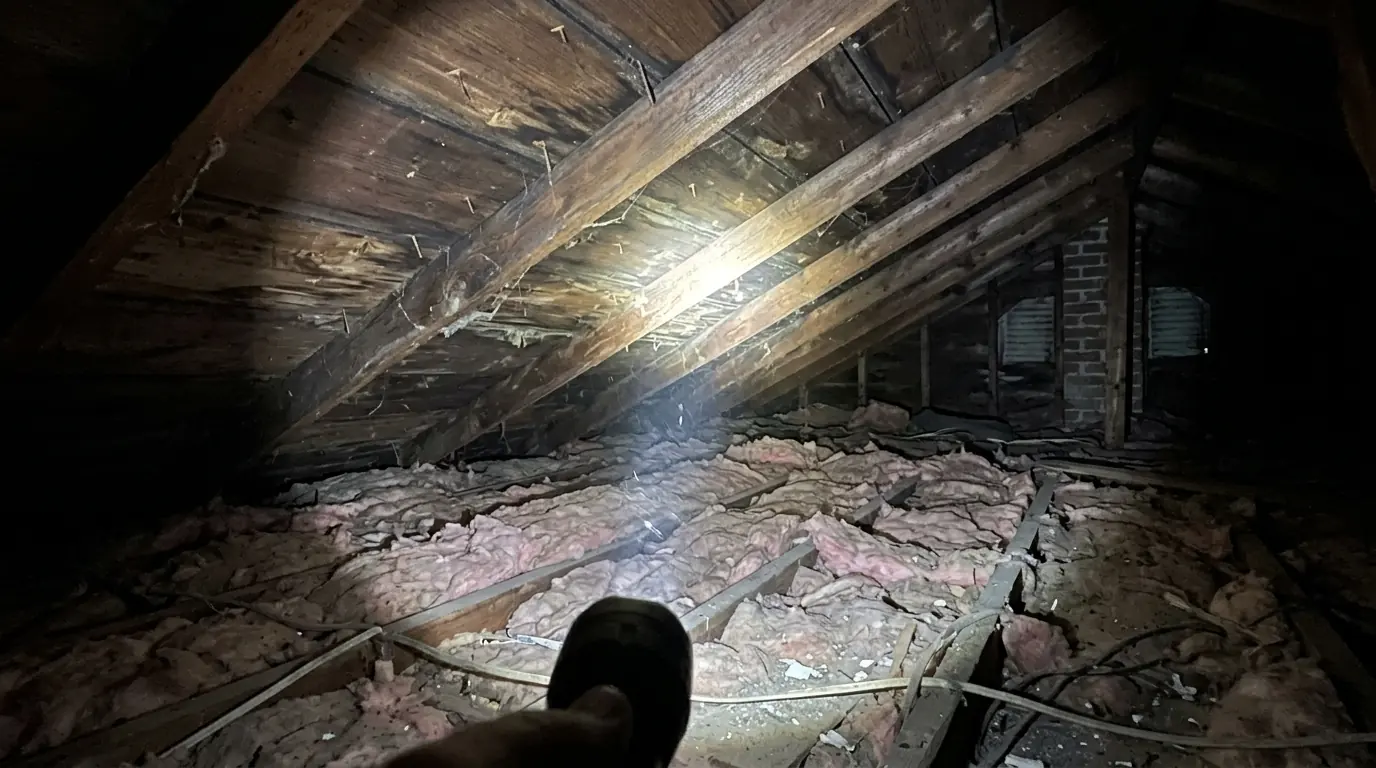
- Damp or darkened sheathing around the chimney, vent pipes and valleys
- Wet or matted insulation, which often marks exactly where water came through
- Daylight showing through the roof deck or along the ridge
- Water trails down rafters or along the top of an exterior wall
- New stains or bubbling paint on ceilings, especially near outside walls
- Damp spots above windows, which can point to siding or flashing problems rather than the roof
How urgent is what you found?
Not every finding needs someone on the roof tonight. This is roughly how we sort what homeowners describe when they call.
| What you see | Usually means | How soon to act |
|---|---|---|
| Active drip or a spreading ceiling stain | Water is getting past the roof or flashing right now | Same day. Catch the water, then call for a tarp. |
| Several shingles missing in one area | Exposed underlayment that won't hold through the next rain | Within a day or two, before the next storm. |
| Lifted or creased tabs, nothing missing | Sealant bond broken; tabs may tear off in the next wind | Within a week or two. |
| Gutter pulled loose or a downspout off | Overflow can soak the fascia and the foundation | Soon, especially before more rain. |
| Siding panel unhooked | Wind can strip the neighboring panels and water gets behind | Within a week; sooner if storms are forecast. |
| Granules in the gutters, roof looks fine | Normal shedding or an older roof wearing out | At your next routine inspection. |
When water is coming in, do this first
Put a bucket under the drip, move furniture and electronics, and if a ceiling stain is bulging, poke a small hole at its lowest point so the water drains into the bucket instead of spreading. Then call (732) 419-1462. We answer 24/7 and send someone as fast as conditions safely allow. On a dangerous night that can mean a tarp at first light rather than a climb in gusting wind. Our emergency tarping holds the house until permanent repairs can be made.
Photograph everything before anything gets fixed
If you plan to file a homeowners insurance claim, photos taken right after the storm matter. Shoot wide pictures of each side of the house, then close-ups of missing shingles, damaged siding and any interior stains. Keep the dates on the files, and save any shingle pieces you find in the yard.
Insurers generally expect you to take reasonable steps to stop more damage, such as a tarp, so don't wait for an adjuster before stopping a leak. Keep every receipt. We photograph what we find on the roof as well, which helps when an adjuster later asks what was there before the repair.
Small storm damage you shouldn't let ride
A handful of lifted tabs can seem minor, especially if nothing is leaking yet. The trouble is that winter at the shore tends to send one nor'easter after another. Each storm works on the same weak edge, and a few loose shingles in January can turn into a bare patch by March.
Loose siding behaves the same way. Once one panel pulls away, the wind gets a grip on the next one. It's usually a quick fix with a siding repair visit, and far cheaper than redoing a whole wall after the next storm. If the storm exposed a roof that is close to the end of its life, our guide to repair or replace decisions can help you think it through.
Reader questions
How long after a nor'easter can roof damage take to show up inside?
Sometimes weeks. Wind can break a shingle's seal or bend a piece of flashing without letting water in right away. The leak appears when the next wind-driven rain hits that same weak spot from the right direction. That's why a ground-level walk-around and a quick attic check after every big storm are worth doing, even when every ceiling in the house looks dry.
Is it safe to pull pine branches off my roof myself after a nor'easter?
Small twigs in a gutter you can reach from a sturdy ladder on dry, level ground are one thing. Branches on the roof surface are another. Wet shingles are slippery, storm-loosened tabs can slide, and a heavy limb may be hiding a puncture in the deck. Leave anything on the roof itself to a roofer, who can check the decking underneath once the limb is off.
Should I check my roof after every nor'easter, or only the bad ones?
A quick look after every one is worth the ten minutes. Damage builds from storm to storm, so a minor nor'easter can finish what a stronger one started a month earlier. Walk around the house with binoculars, check the gutters for shingle pieces and glance at upstairs ceilings. Save the attic check for the stronger storms or any time you spot something from the yard.