What salt actually does to a roof
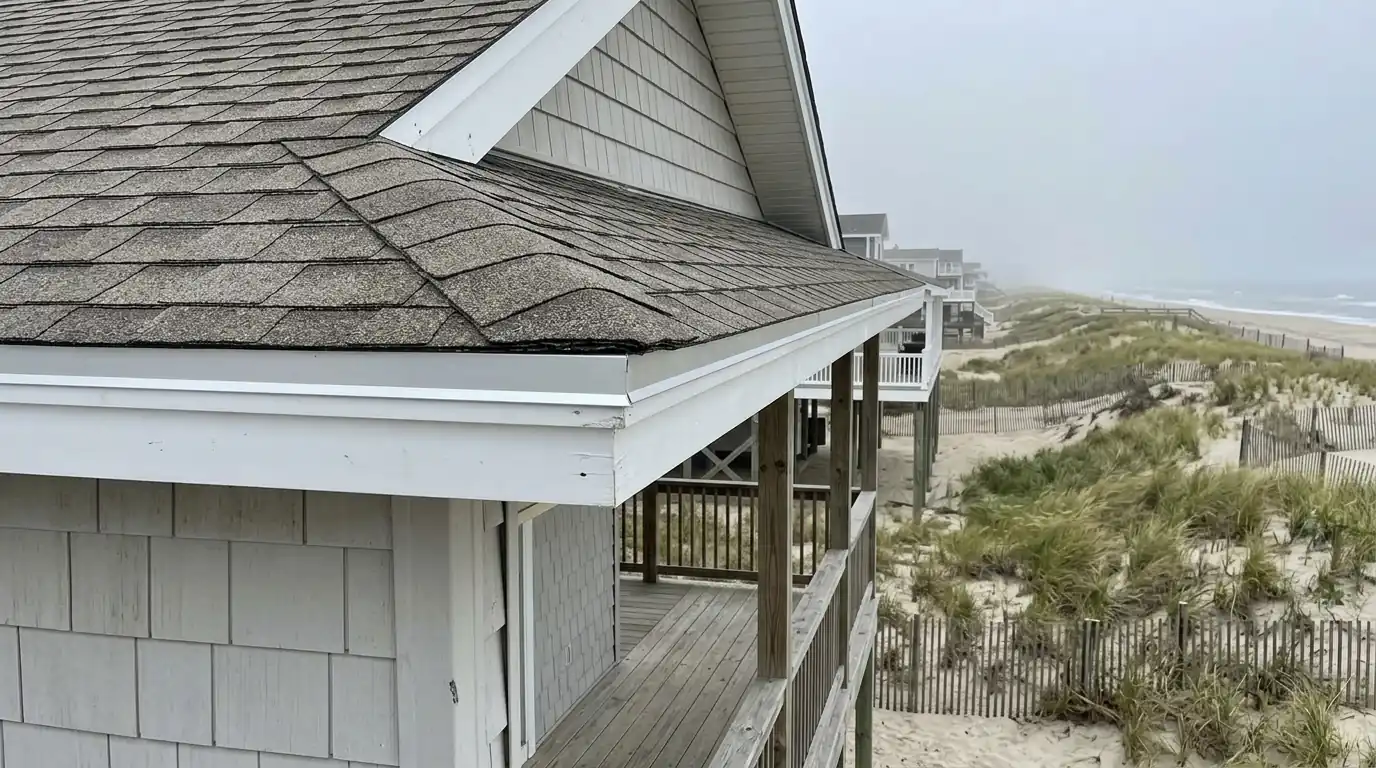
Salt spray settles on everything near the water, then pulls moisture out of the air and holds it against metal surfaces. That combination speeds up corrosion on steel fasteners, drip edge, flashing and gutters far more than rain alone. On the barrier island, from Ortley Beach down through Seaside Park, it's usually the metal parts of a roof that fail first, not the shingles.
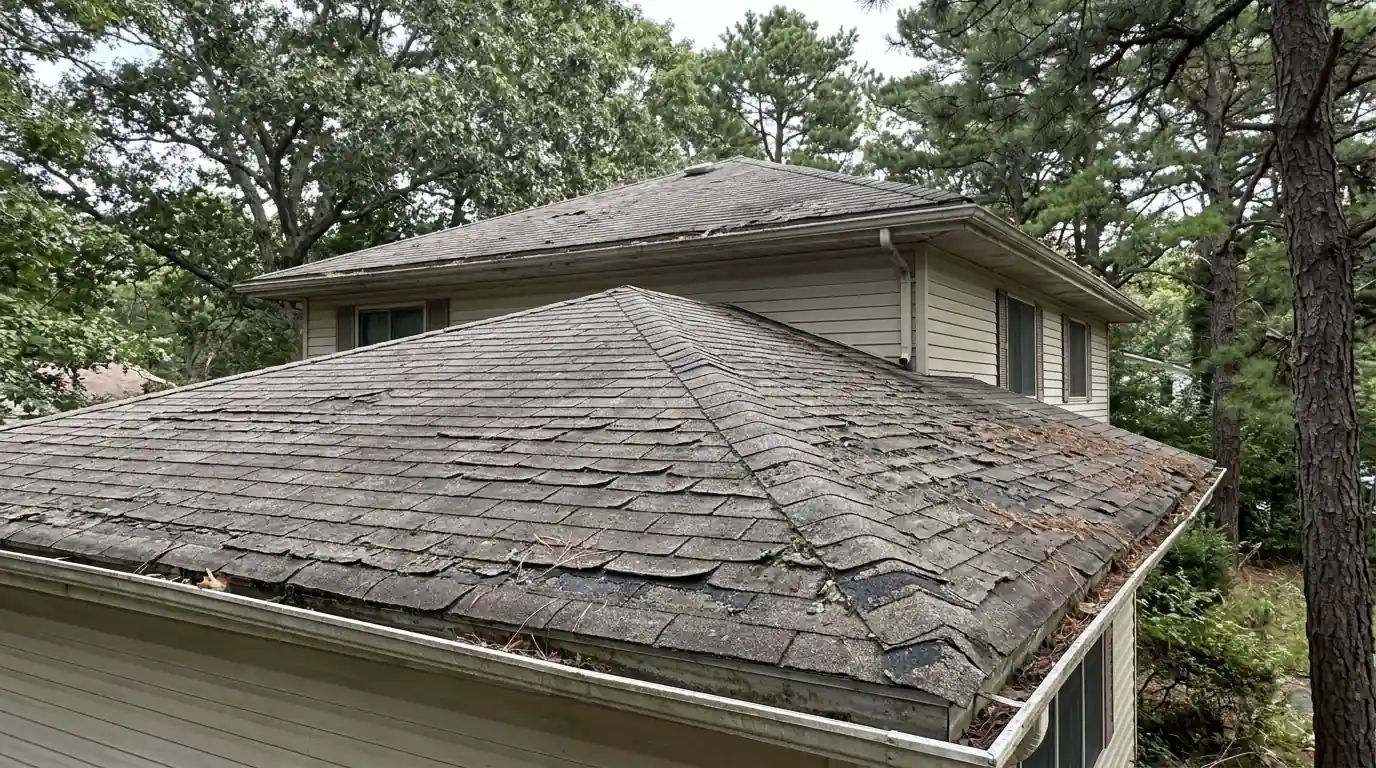
Distance matters, but so does wind direction. A house well back on the mainland can still collect salt during a strong easterly. Homes right on Barnegat Bay also deal with brackish spray and heavy, humid air most of the summer, which feeds algae and moss on shaded slopes.
How common roofing materials hold up near the water
Every option below can work at the shore. The difference is in which details you have to get right.
| Material | Near salt water | What to watch |
|---|---|---|
| Architectural asphalt shingles | Good, and the most common choice on the island | Use a high-wind nailing pattern and algae-resistant granules; corroded fasteners and flashing usually fail before the shingle does. |
| Aluminum standing seam metal | Very good close to the ocean | Aluminum doesn't rust the way steel does; it costs more and needs compatible clips and fasteners. |
| Galvalume or painted steel panels | Fair to good, depending on distance | Cut edges and scratches can corrode in salt spray; many panel warranties limit coverage near salt water. |
| Synthetic slate or shake | Good | The polymer tiles don't corrode; stainless fasteners and copper or aluminum flashing finish the job properly. |
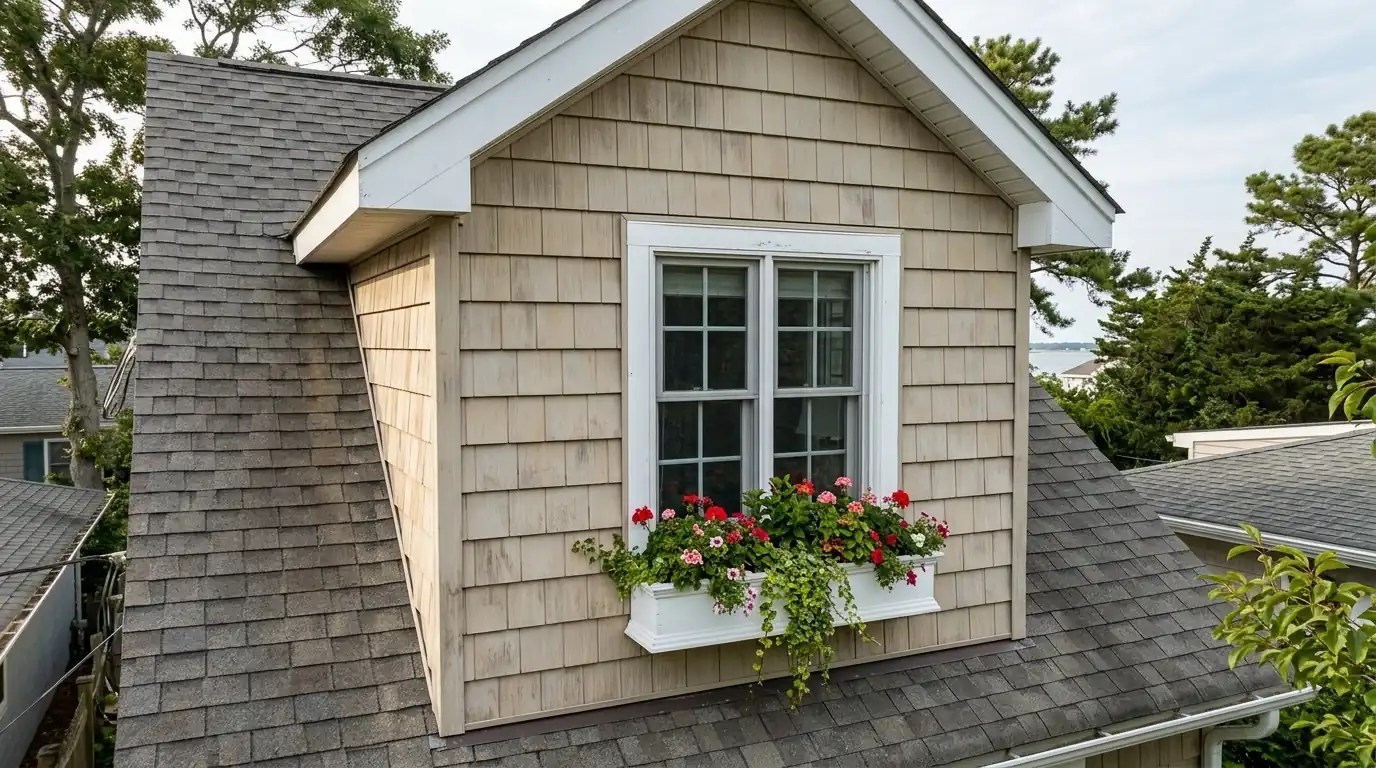
| Cedar shake | Fair | Cedar weathers to silver gray in salt air and can last, but humid summers and shade invite moss and rot without upkeep. |
| EPDM or TPO on low slopes | Good | Membranes handle salt well; metal edging and termination bars need corrosion-resistant finishes. |
The small parts that decide how long a coastal roof lasts
On shore homes we spend as much time choosing the metal components as we do choosing the shingles.
Fasteners
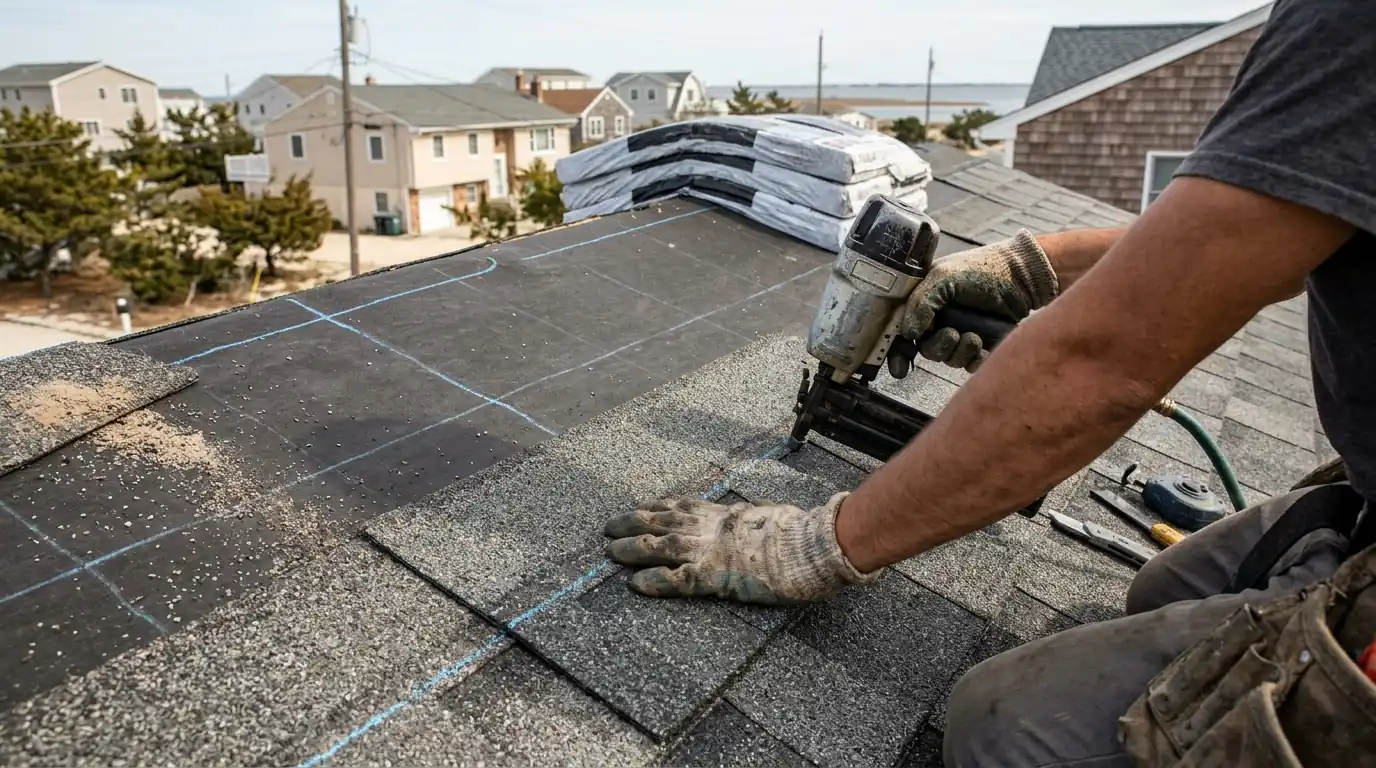
Electro-galvanized nails are standard inland. Near salt water, hot-dipped galvanized or stainless steel nails resist rust far longer, and some manufacturers call for them in coastal installations to keep shingle warranties intact.
Drip edge and flashing
Thin galvanized steel flashing can rust through at its bends. Aluminum, copper or heavier-coated metal holds up better, as long as dissimilar metals don't touch each other and set off galvanic corrosion.
Ridge and roof vents
Vents sit in the windiest spot on the roof. We look for ridge vent designed for high wind, fastened with corrosion-resistant nails, because a lifted vent lets wind-driven rain straight into the attic.
Pipe boots
Rubber boots crack under years of sun and salt. On shore houses we favor longer-lasting collars, since a split boot is one of the most common sources of the slow leaks we track down.
Gutters and hangers
Aluminum seamless gutters with stainless or coated hangers hold up well near the water. Plain steel hangers rust and streak the fascia, and mixed metals corrode where they touch.
Read the coastal fine print in any manufacturer warranty
Manufacturers know the shore is tough on their products, and their warranty terms often say so. Some metal panel finishes carry reduced coverage, or none at all, within a stated distance of salt water. Some shingle warranties require specific fasteners, a six-nail pattern or extra starter strip at the edges to keep their wind coverage valid in high-wind areas.
None of this is a reason to avoid a product. It's a reason to read the actual warranty document for your exact address before you choose, and to make sure the installation follows what the manufacturer asks for. We go over those requirements with you while putting the estimate together, because a manufacturer's warranty is only useful if the roof went on to its terms.
Questions to settle before you pick a material
These are worth answering for any home within sight or smell of the ocean or the bay.
- How far is the house from open ocean or Barnegat Bay, and which way do its slopes face?
- Is the house raised on pilings, which puts the roof higher into the wind?
- What fasteners and flashing metal will be used, by name?
- Does the manufacturer's warranty mention salt water, coastal zones or distance limits?
- Will the shingles go on with a high-wind nailing pattern?
- Are the gutters, hangers and drip edge all compatible metals?
- How will the vents and pipe boots hold up to years of salt and sun?
Upkeep that adds years to a roof by the water
Coastal roofs reward a little attention. A gentle rinse of gutters, drip edge and exposed flashing with a garden hose a couple of times a year washes off salt before it can sit and work on the metal. Never use a pressure washer on shingles, though, since it strips the granules that protect them from the sun.
Once a year, ideally in spring after the worst of the winter storms, it's worth having someone look at the ridge vent, pipe boots, exposed nail heads and the edges of the roof. Catching a rusted nail or a split boot early costs very little. Waiting until it shows up as a ceiling stain usually means wet insulation and sometimes soft decking as well. Our roof maintenance visits cover exactly those spots.
A note for homes raised after Sandy
Many houses on the barrier island and along the bay were lifted after Hurricane Sandy in 2012. A raised home puts the roof higher into the wind, and it often has more exposed fascia, soffit and trim than before. That makes corrosion-resistant fasteners and solid edge metal even more important. If your home was raised and the roof wasn't replaced at the same time, it's worth having the edges and flashing looked at. Our guide to raised shore homes goes deeper.
Where we usually land for shore homes
For most year-round and summer homes on the island, a quality architectural shingle such as GAF Timberline HDZ or Owens Corning Duration, installed with a high-wind pattern, stainless or hot-dipped fasteners, aluminum drip edge and algae-resistant granules, gives the best balance of cost and life. Homeowners planning to stay for the long haul often look hard at aluminum standing seam metal roofing instead.
Inland neighborhoods a few miles back can use standard details with less worry. If you'd like to talk through options for your address, call (732) 419-1462. We answer 24/7 and can come out to look at your roof, your exposure and the parts that are already showing salt wear.
Reader questions
How close to the ocean should I start worrying about salt on my roof?
There isn't one clean cutoff. Homes on the barrier island and right along Barnegat Bay see the most salt, but a strong easterly can carry spray well inland. A practical test: if outdoor furniture, grills or screen frames rust quickly at your house, your roof flashing and fasteners are under the same stress. That's when coastal-grade metal is worth the modest extra cost.
Can copper flashing sit next to aluminum gutters on a shore house?
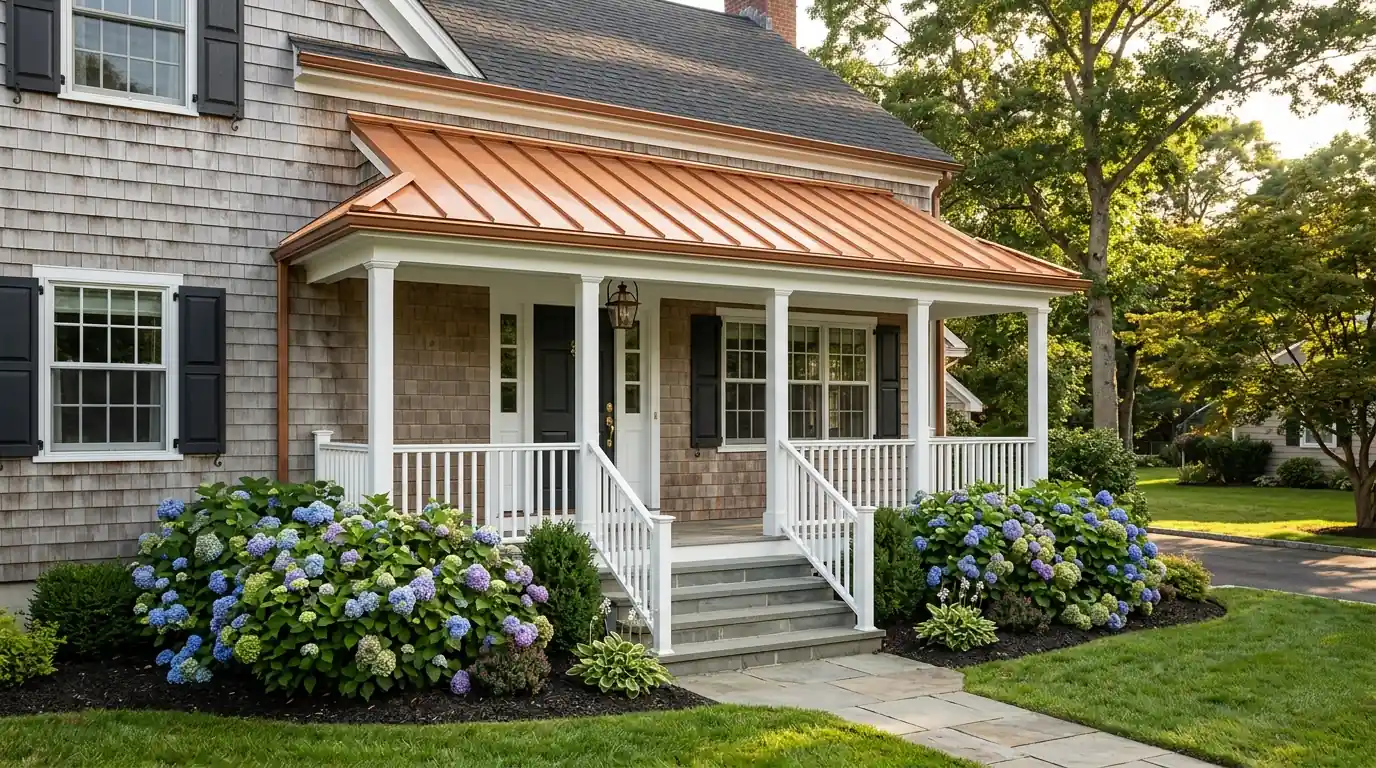
It's best not to let them touch. When two different metals are in contact and salty water bridges them, one corrodes faster than it would on its own, and copper with aluminum is a poor pair. If you like copper accents, we keep them separated from aluminum with spacers or membrane, or choose compatible metals all along the roof edge.