Start with the roof's age and what it's made of
Most architectural asphalt roofs at the shore give somewhere around 18 to 25 years of service, and older three-tab roofs often less. Salt air, strong sun on south slopes and the wind off Barnegat Bay all shorten that range. If you don't know your roof's age, the township's permit records or the paperwork from when you bought the house can often tell you.
Age alone doesn't decide it. A 20-year-old roof with good ventilation and sound decking can be worth repairing, while a 12-year-old roof laid over a second layer, with poor attic airflow, may already be wearing out. That's why we look at the whole system, not just the date.
Signs that point toward repair, and signs that point toward replacement
Most roofs show a mix of both. This is how we weigh what we find.
| What we find | Usually repair | Usually replace |
|---|---|---|
| Missing shingles | A few in one area after a storm | Repeated losses across several slopes |
| Leaks | One leak at a chimney, vent or skylight | Several leaks, or leaks that keep coming back |
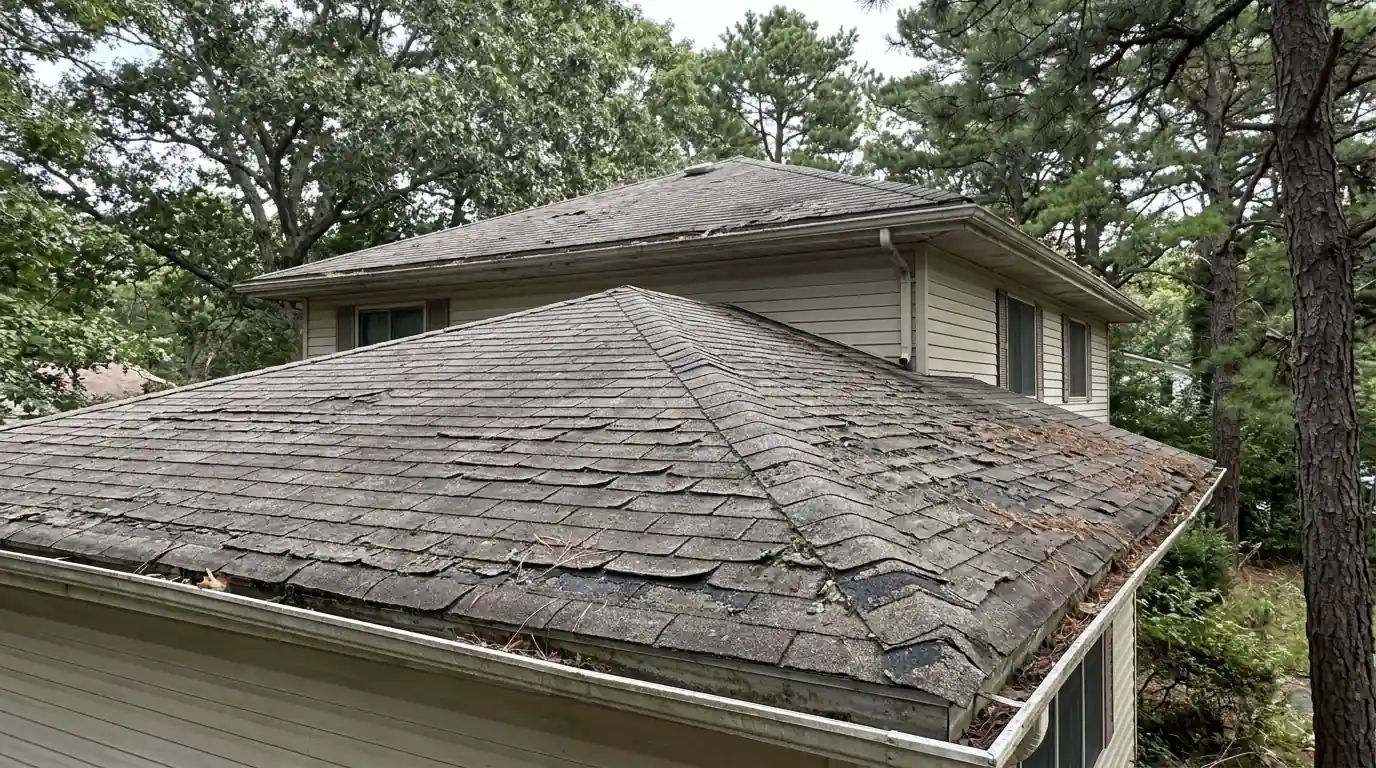
| Shingle condition | Mostly flat, granules intact | Curling, cracking or bald patches across the roof |
| Roof deck | Soft spot under a single leak | Widespread sagging or spongy plywood |
| Layers | One layer of shingles | Two layers already on, so a tear-off is next |
| Age | Under about 15 years | Past 20 years with visible wear |
What a repair can fix, and where it struggles
Repairs work well when the problem is local. They struggle when the whole surface is tired.
Flashing failures
Many leaks around chimneys, walls and skylights are flashing problems, not shingle problems. New step and counter flashing often stops the leak for good, even on an older roof, which is why chimney flashing repair is so often the fix.
Storm-damaged sections
A patch of torn or missing shingles from one storm can be replaced cleanly, as long as the surrounding shingles are still flexible enough to lift and reseal without cracking.
Pipe boots and vents
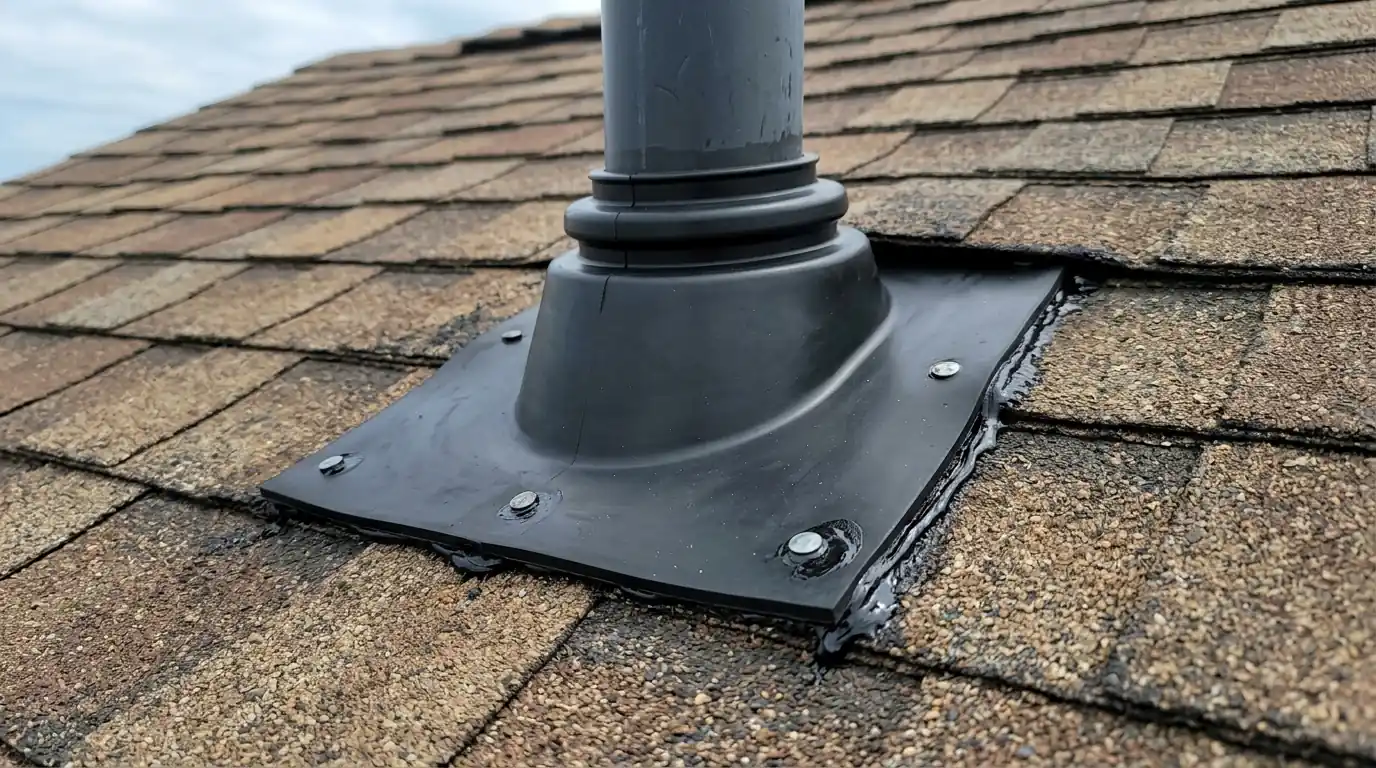
Cracked rubber boots and loose vents are common, inexpensive fixes. They solve a surprising number of slow leaks without touching the rest of the roof at all.
Brittle, worn shingles
When shingles crack the moment they're lifted, a repair can damage more than it fixes. That is usually the clearest sign a roof is nearing the end of its life.
Hidden deck rot
If water has been getting in for a long time, the plywood under the shingles may be soft across a wide area. Patching over a weak deck rarely holds through another winter.
Why the attic often makes the call
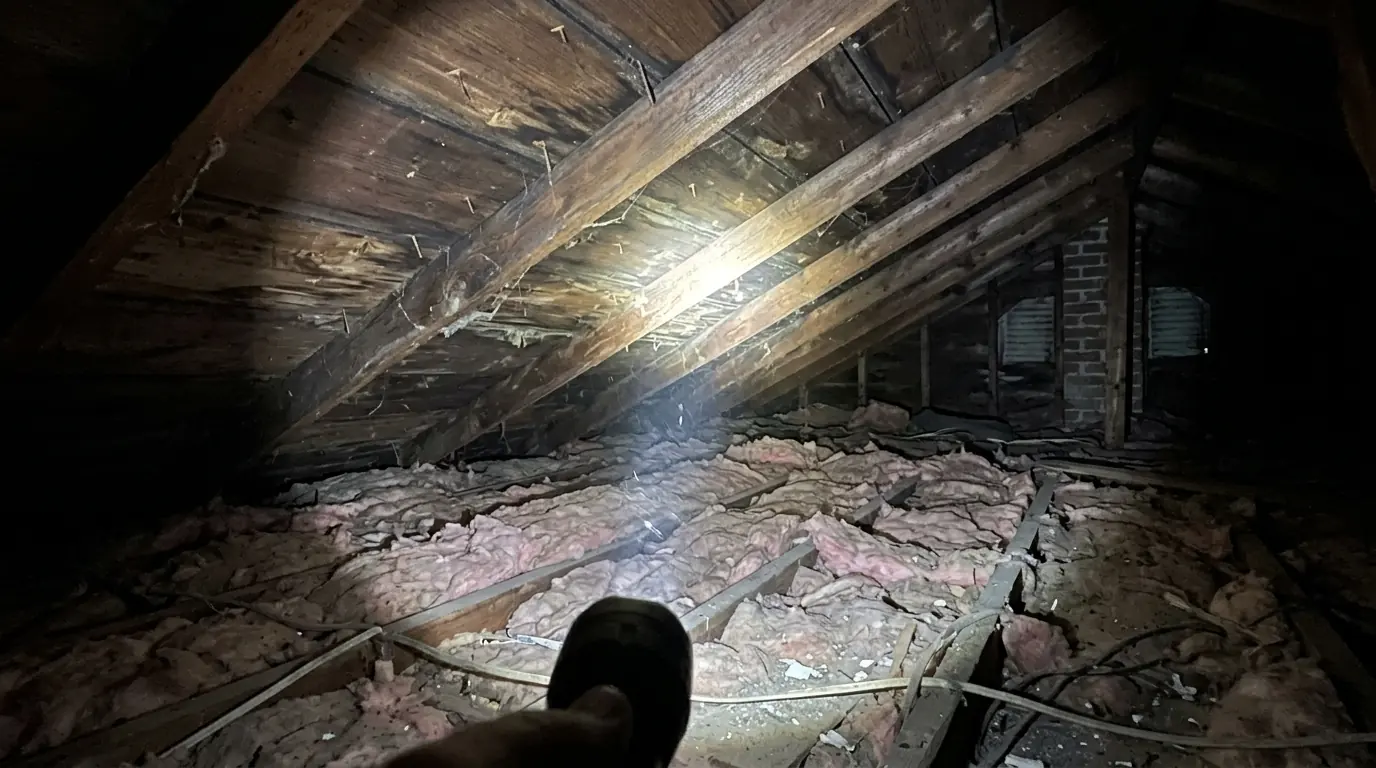
Shingles tell only half the story. From the attic, a flashlight shows things no one can see from the yard: dark rings on the plywood around nails, stained rafters, matted insulation and daylight where it shouldn't be. Those clues show whether water has been sneaking in for months or only started with the last storm.
Ventilation matters here too. Many 1960s and 1970s ranches and split-levels in Ocean County were built with a few small gable vents and little or no soffit intake. Trapped heat bakes shingles from below in summer, and trapped moisture condenses on the deck in winter. A roof aging early for that reason won't be saved by repairs alone, and a replacement is the natural moment to correct the attic ventilation.
We also check the deck by walking it and pressing on suspect spots. A roof that feels springy over a wide area is telling you the plywood has lost strength, and that tips the decision toward a tear-off.
Comparing the cost of repairs to a new roof
Typical 2026 ranges around Toms River. Every roof is different, and these depend on access, pitch and what turns up once shingles come off.
| Work | Typical range | What moves it |
|---|---|---|
| Small shingle repair | $385 to $1,140 | Number of shingles, pitch, blending with weathered color |
| Pipe boot or vent replacement | $290 to $760 | Number of penetrations, roof height |
| Chimney reflashing | $640 to $1,870 | Chimney size, counter flashing cut into brick, cricket needed |
| Valley or larger section rebuild | $1,450 to $4,280 | Size of the area, deck repairs underneath |
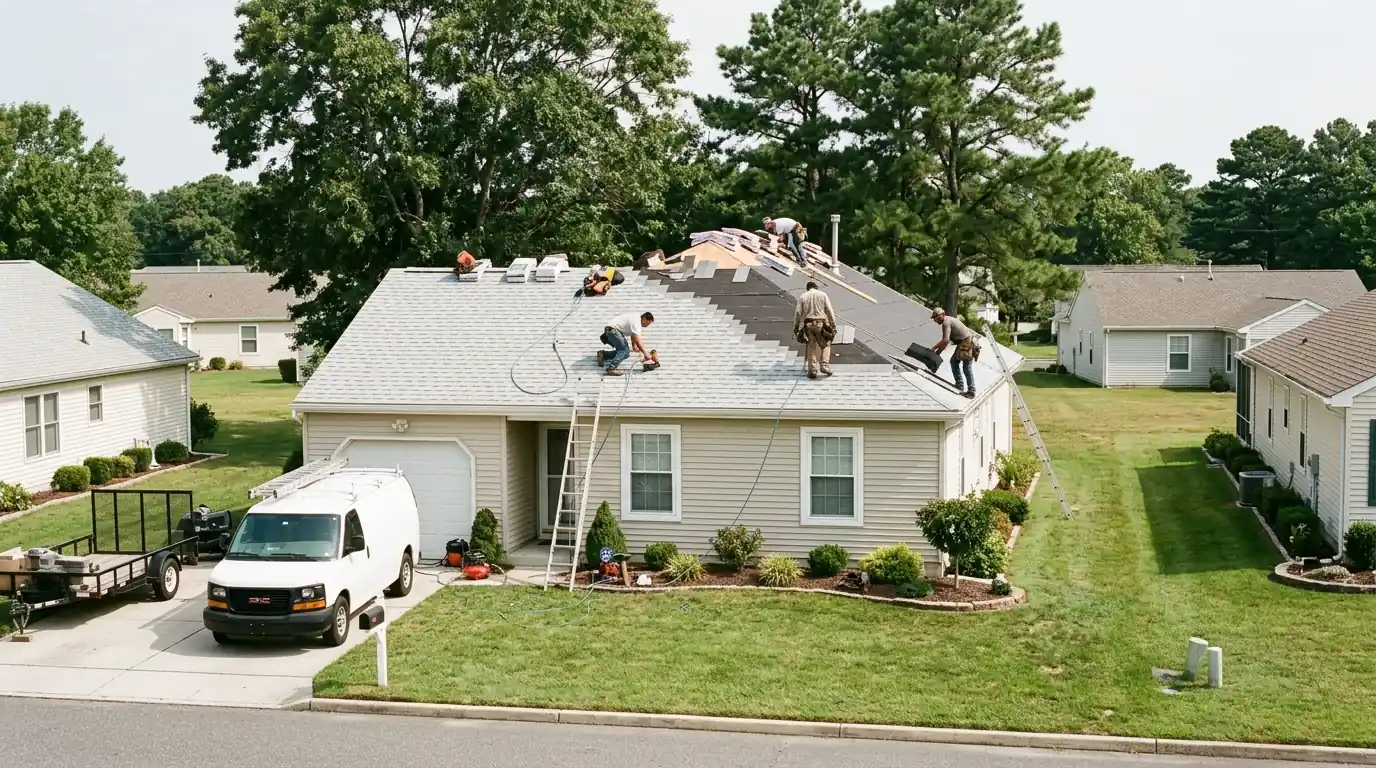
| Full architectural shingle replacement | $12,600 to $24,800 | Roof size, layers, deck condition, material |
A rule of thumb for the gray zone
When a roof sits in between, we look at what it will cost to keep it going over the next few years, not just today. If repairs over the coming three to five years are likely to add up to a quarter or more of the price of a new roof, replacement usually makes more financial sense. You stop paying twice for the same edges and flashing.
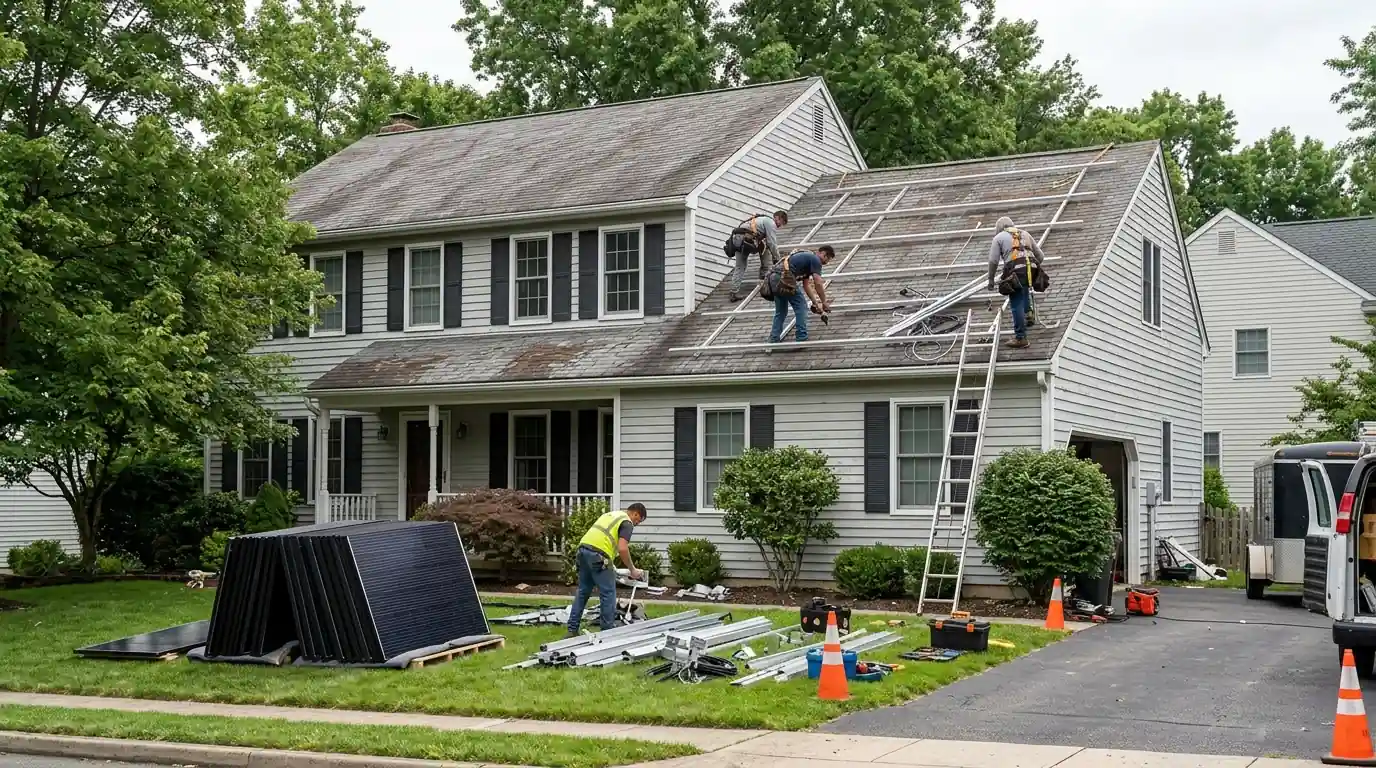
Also think about how the roof affects the rest of the house. An aging roof can raise questions from home insurers and buyers, and if rooftop solar is in your plans, a roof with only a few years left should be replaced before the panels go on. Our cost guide for Toms River roof replacements breaks down what a new roof typically runs.
Questions to answer before you decide
Jot these down before anyone climbs your roof. They make the conversation much clearer.
- How old is the roof, and how many layers are on it?
- How many times has it leaked in the last few years, and where?
- Are the leaks in the same place, or new spots each time?
- Do you plan to stay in the house more than five years?
- Are solar panels, a sale or an addition in your plans?
- Has the attic ever felt damp, or shown frost on the nail tips in winter?
- Would you rather spread costs out, or do the project once?
How we give you a straight answer
When you call (732) 419-1462, we look at the roof surface, the flashing, the attic and the deck from underneath. If a repair will hold, we say so and price that repair. If it won't, we show you the photos and explain why, so you can decide with the same information we have. When you're truly unsure, a roof inspection is often the best first step. We answer 24/7, every day of the year.
Reader questions
Is an overlay a middle ground between repairing and replacing an aging roof?
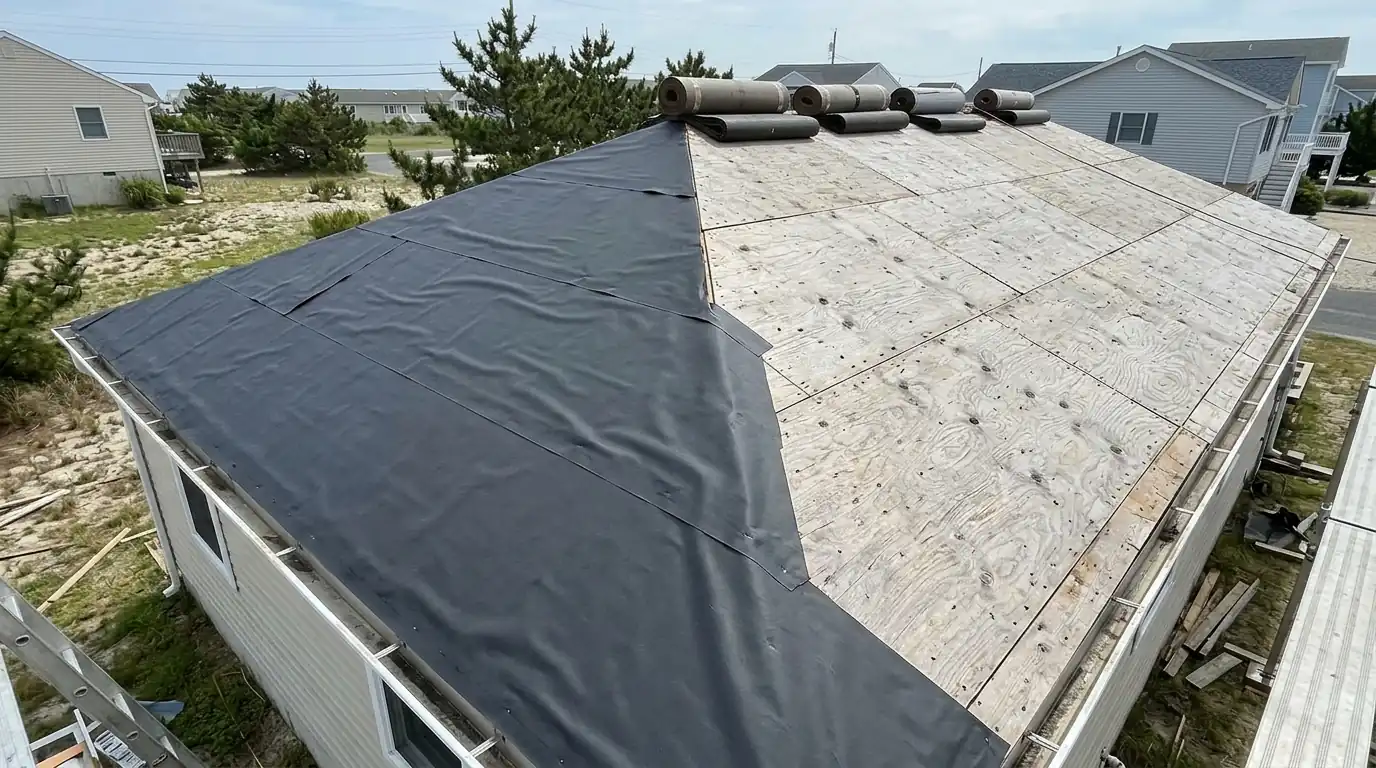
Sometimes, but less often than people hope. An overlay skips the tear-off, which saves money, but it hides the deck, adds weight and tends to hold heat in the shingles. Many older roofs here already carry two layers, and adding another on top isn't a sound choice. On most Toms River homes we recommend a full tear-off so the deck and flashing can be checked and corrected.
How can I tell if an aging roof's leak is a flashing problem or a worn-out roof?
Location is the best clue. A stain near a chimney, skylight, plumbing vent or where a roof meets a wall usually points to flashing or a seal, which is a repair. Stains in open areas of the ceiling, several stains at once, or leaks after every heavy rain point to the shingles themselves, and that often means the roof is near the end of its life.
Can I replace just one slope of an aging roof instead of the whole thing?
It's possible, and sometimes reasonable when one slope takes most of the sun or wind and the others are in better shape. The drawbacks are a visible color difference between old and new shingles, a tricky tie-in at the ridge and valleys, and the likelihood that the other slopes will need work within a few years anyway. On roofs past about 18 years, a full replacement is usually the better value.