Where most Toms River roof replacements land in 2026
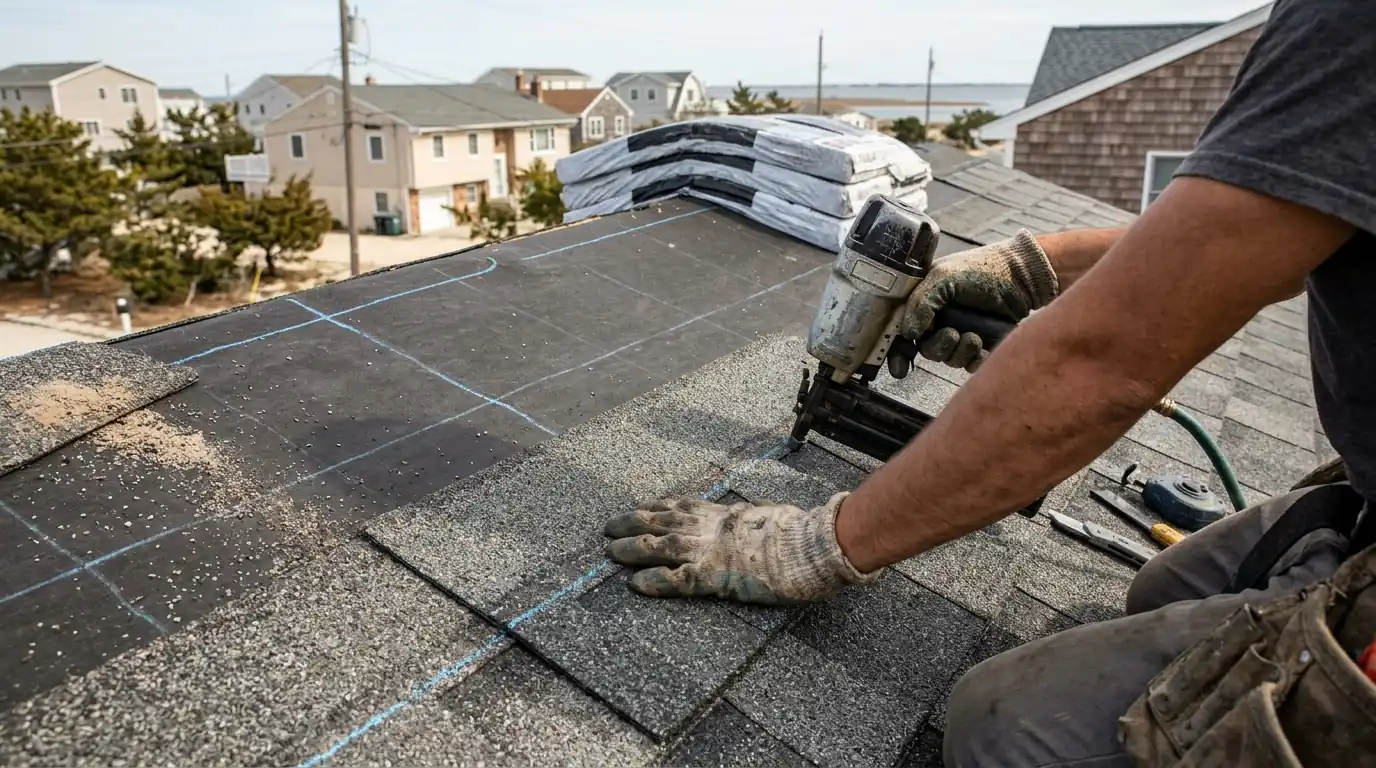
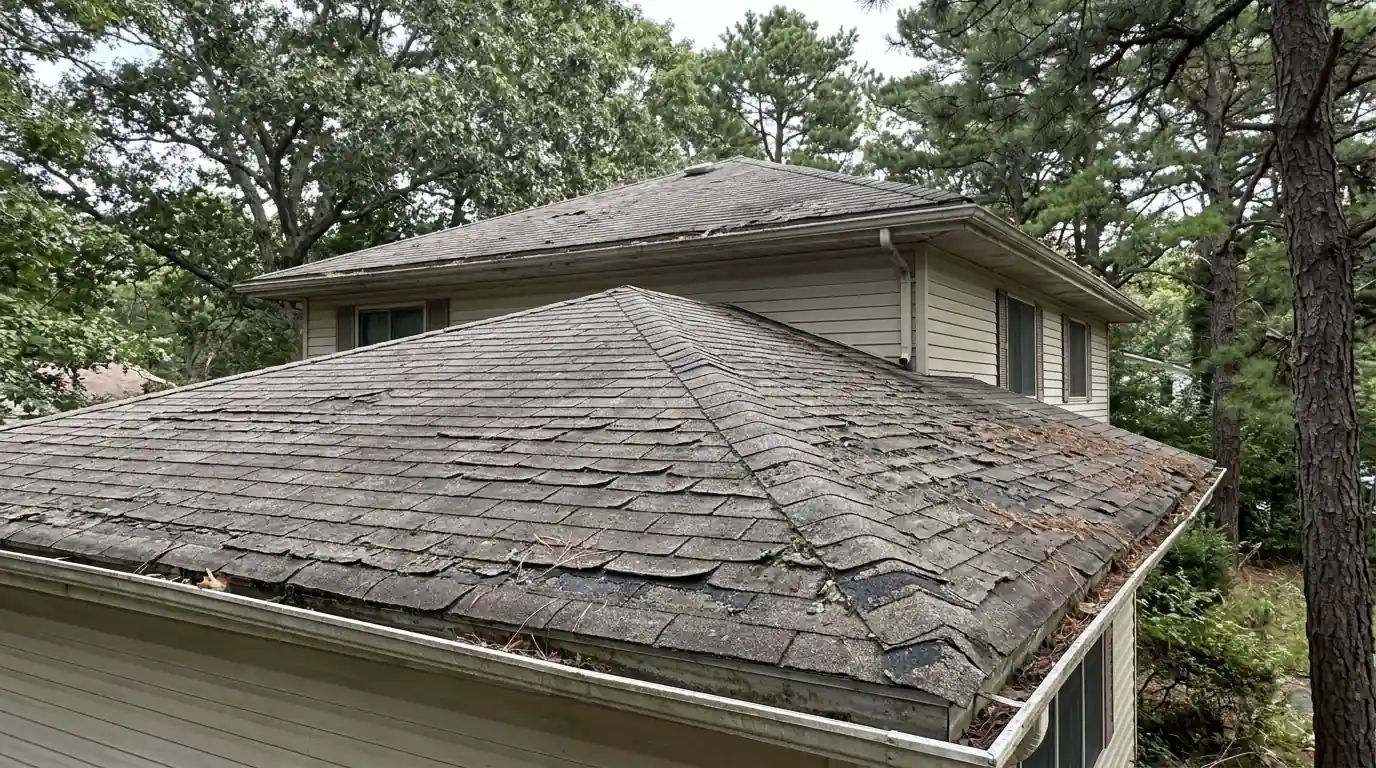
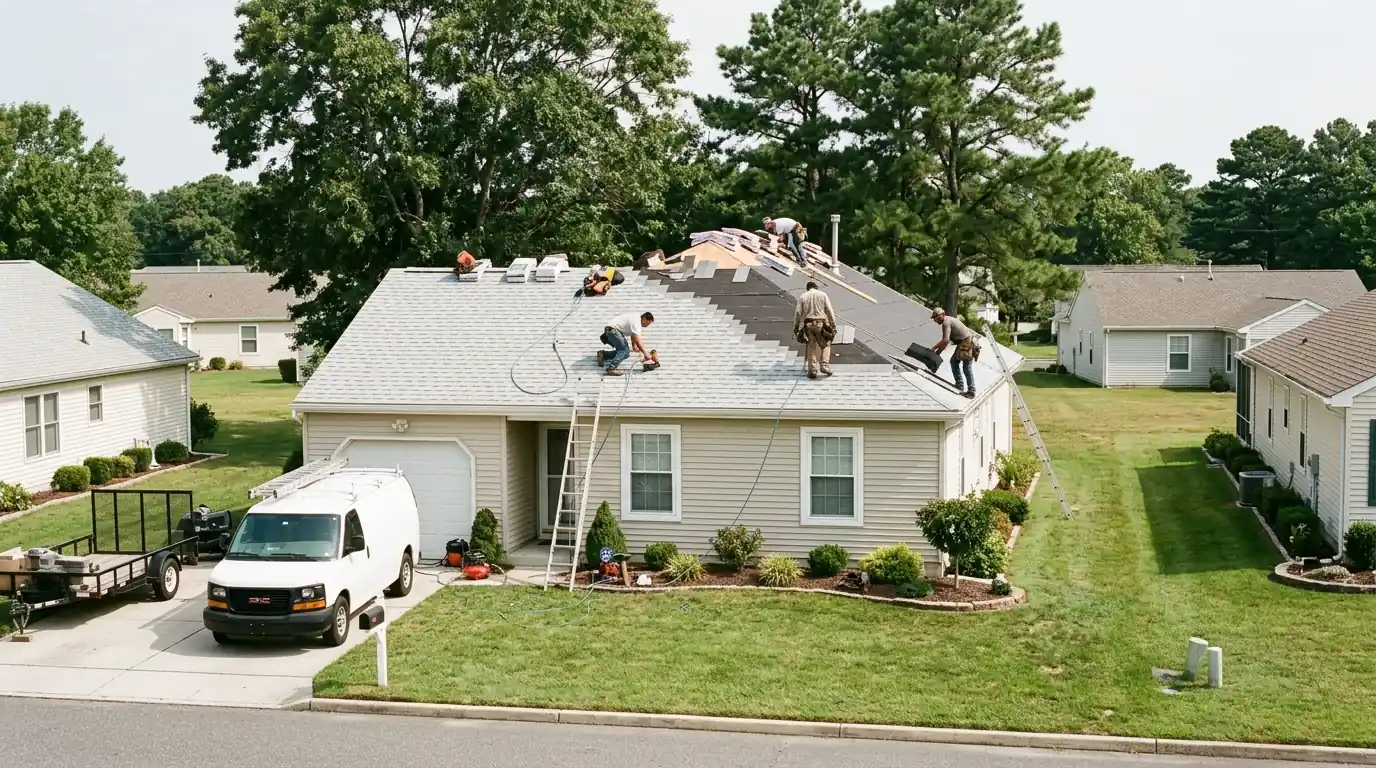
For a ranch, cape or split-level in Ocean County with one layer of old shingles, a full tear-off and a new architectural asphalt roof usually runs somewhere between $11,300 and $23,900. Larger two-story colonials run higher. That price normally covers removing the old roof, replacing damaged sheathing within a normal allowance, new underlayment, ice and water barrier at the eaves and valleys, drip edge, flashing, ridge vent and the shingles themselves.
Roofers price by the square, which is 100 square feet of roof surface. Around here, an architectural shingle roof installed over a sound deck tends to come in between $585 and $865 per square in 2026, depending on pitch, access and how much detail work the roof has. A 1960s ranch in Silverton might measure roughly 18 to 24 squares, while a two-story colonial can easily run past 30.
None of these figures is a quote. They're the ranges we see most often, and your roof could sit outside them in either direction once someone measures it, climbs into the attic and gets a look at the deck.
Typical price ranges by house type
These ranges assume one layer of shingles to remove, a mid-grade architectural shingle and normal deck repairs. They depend on size, pitch and access.
| House type | Typical roof size | Installed range, 2026 |
|---|---|---|
| 1950s to 1970s ranch | 17 to 24 squares | $11,300 to $19,600 |
| Cape Cod with dormers | 16 to 22 squares | $12,100 to $21,400 |
| Split-level or bi-level | 20 to 27 squares | $13,700 to $23,900 |
| Two-story colonial | 26 to 36 squares | $17,800 to $31,500 |
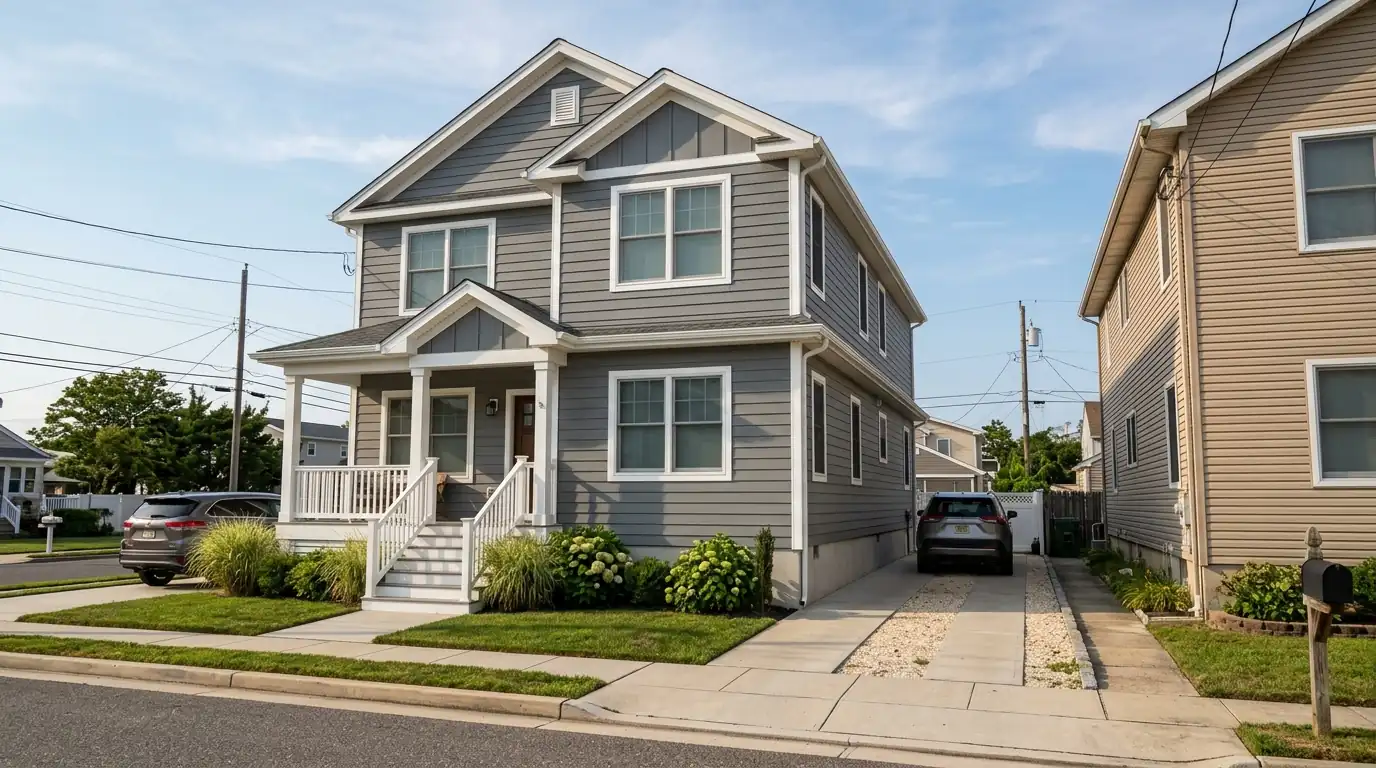
| Raised post-Sandy home | 18 to 28 squares | $15,900 to $29,700 |
What pushes the price up or down
Two houses with the same footprint can get very different numbers. These are the items that make the difference on Jersey Shore roofs.
Layers to tear off
A second layer of shingles roughly doubles the disposal weight and adds real labor to the tear-off. Expect $1,240 to $3,380 more on an average house, depending on roof size and how the old layers were nailed.
Deck condition
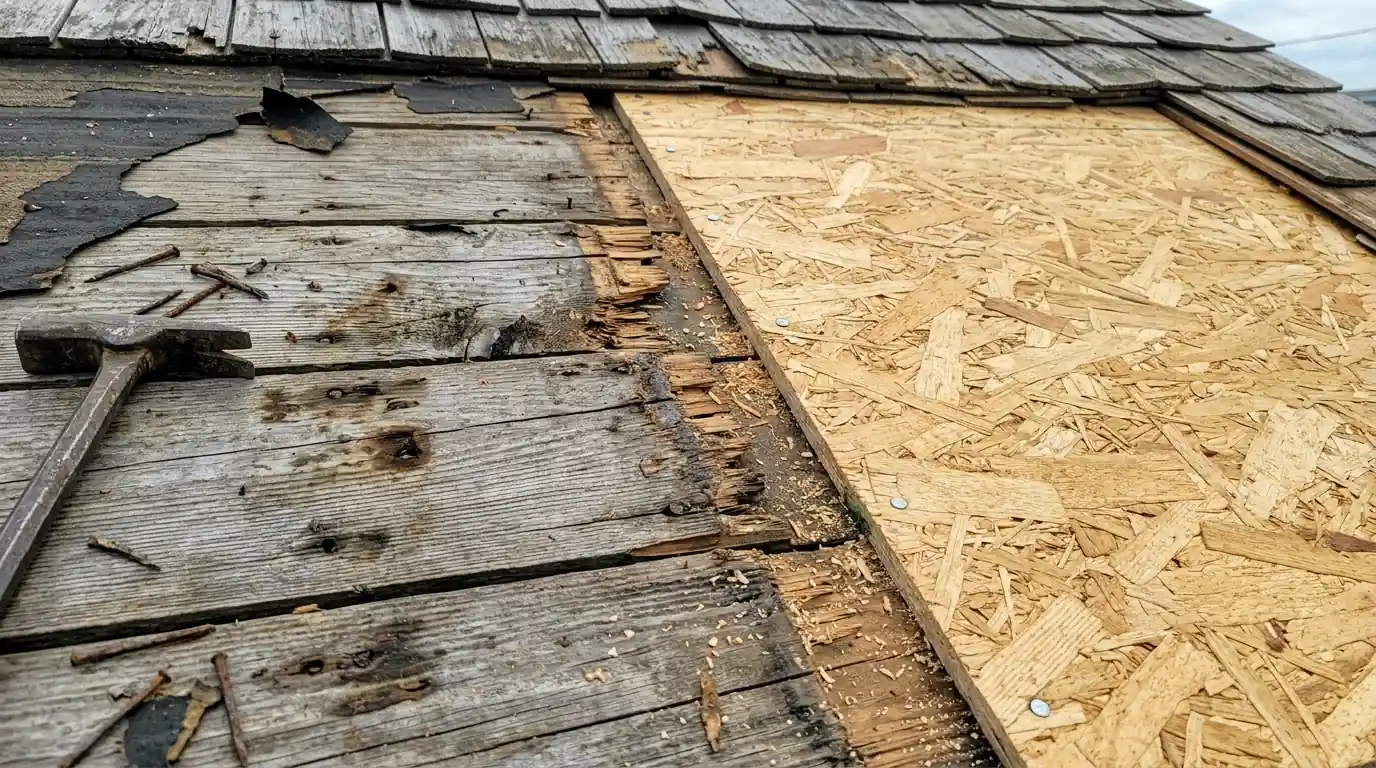
Rotted or delaminated plywood has to come out before new shingles go on. Most estimates include a few sheets; beyond that, replacement typically runs $95 to $145 per sheet installed, depending on thickness and access.
Pitch and height
Steep roofs and two-story eaves need staging, roof jacks and slower material handling. Raised homes on the barrier island add lift time and sometimes a boom truck, which shows up in the labor line.
Chimneys, skylights and valleys
Every penetration needs new flashing worked by hand. A roof with a brick chimney, two skylights and several valleys simply takes longer than a plain gable with a single plumbing vent.
Ventilation upgrades
Many older capes and ranches were built with too little attic airflow. Adding ridge vent and opening soffit intake during a replacement costs far less than doing it later as a separate project.
Material grade
Moving from a standard architectural shingle to a designer line, an impact-resistant shingle or metal changes the bill more than any other single choice. The next table breaks those materials out side by side.
How material choice changes the bill
Prices below are for a roughly 22-square roof with one tear-off layer. They shift with roof shape, color selection and current supplier pricing.
| Material | Installed range | What to know |
|---|---|---|
| Architectural asphalt (GAF Timberline, Owens Corning Duration, CertainTeed Landmark) | $13,200 to $20,700 | The most common choice in Ocean County; algae-resistant versions help with dark streaking in humid summers. |
| Designer or impact-resistant asphalt | $16,900 to $26,400 | Heavier, thicker shingles with a slate or shake look and better resistance to hail and wind-blown debris. |
| Standing seam metal | $29,400 to $48,600 | Long service life and strong wind performance; aluminum panels hold up better than steel close to salt water. |
| Synthetic slate or shake (DaVinci and similar) | $34,800 to $57,300 | Polymer tiles that read like slate or cedar without the weight; flashing and underlayment details matter a lot. |
What a complete roof estimate should spell out
When you line up bids, make sure each one answers the same questions. Missing lines are where surprises come from.
- How many layers come off, and whether disposal is included
- How many sheets of deck replacement are included, and the price per sheet after that
- The exact shingle line and color, not just the brand name
- Where ice and water barrier goes: eaves, valleys, chimneys and skylights
- Synthetic underlayment over the rest of the deck
- New drip edge, step flashing and pipe boots rather than reused metal
- The ridge vent and intake ventilation plan
- Who pulls the township permit when the job requires one
- Cleanup, a magnetic nail sweep and protection for shrubs and beds
Why the lowest number is not always the cheapest roof
A bid that skips ice and water barrier in the valleys, reuses rusty flashing or quotes an overlay instead of a tear-off can look thousands lower. Those shortcuts tend to show up as leaks after the first hard winter, and a second repair visit erases the savings fast. Overlays also hide soft decking you would want to know about. Compare bids line by line, ask what happens if the deck is worse than expected, and choose the contractor who answers clearly.
Costs that only show up once the old roof is off
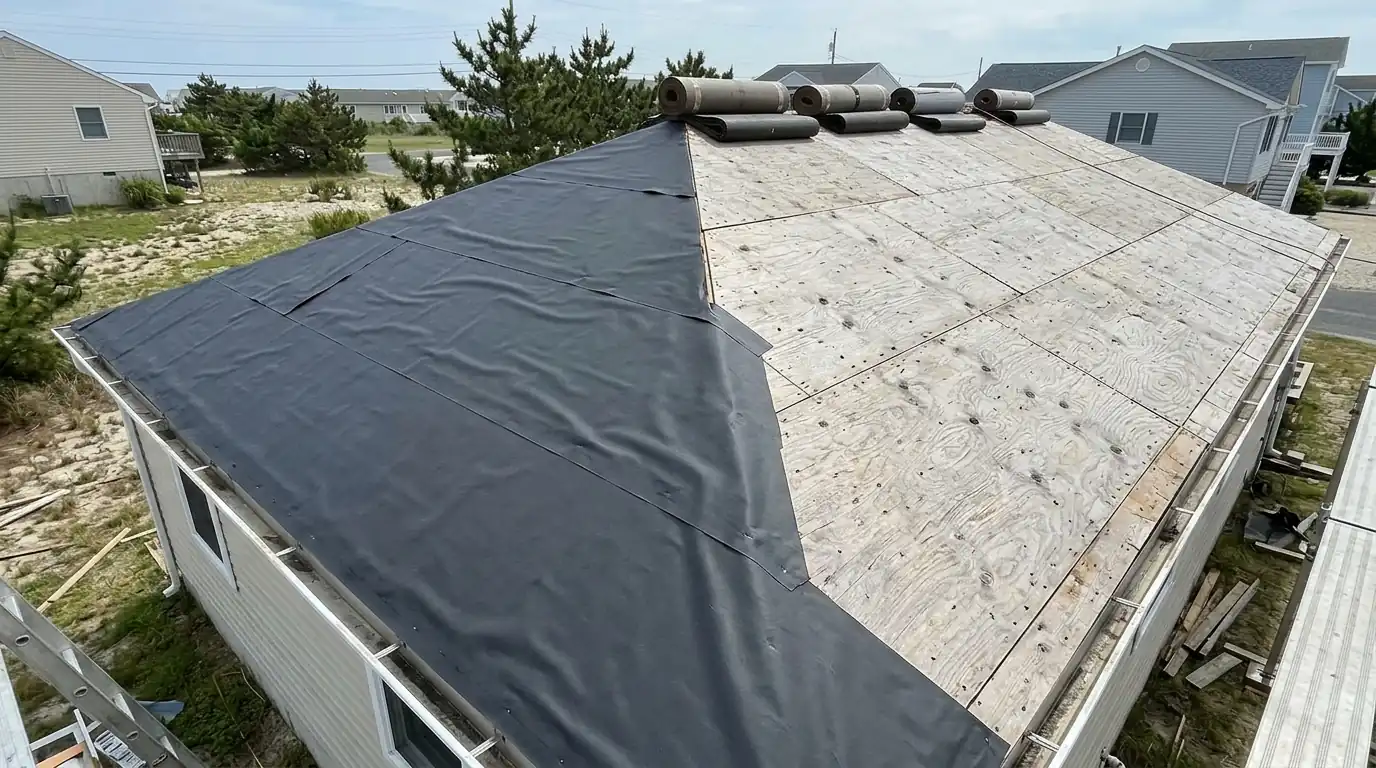
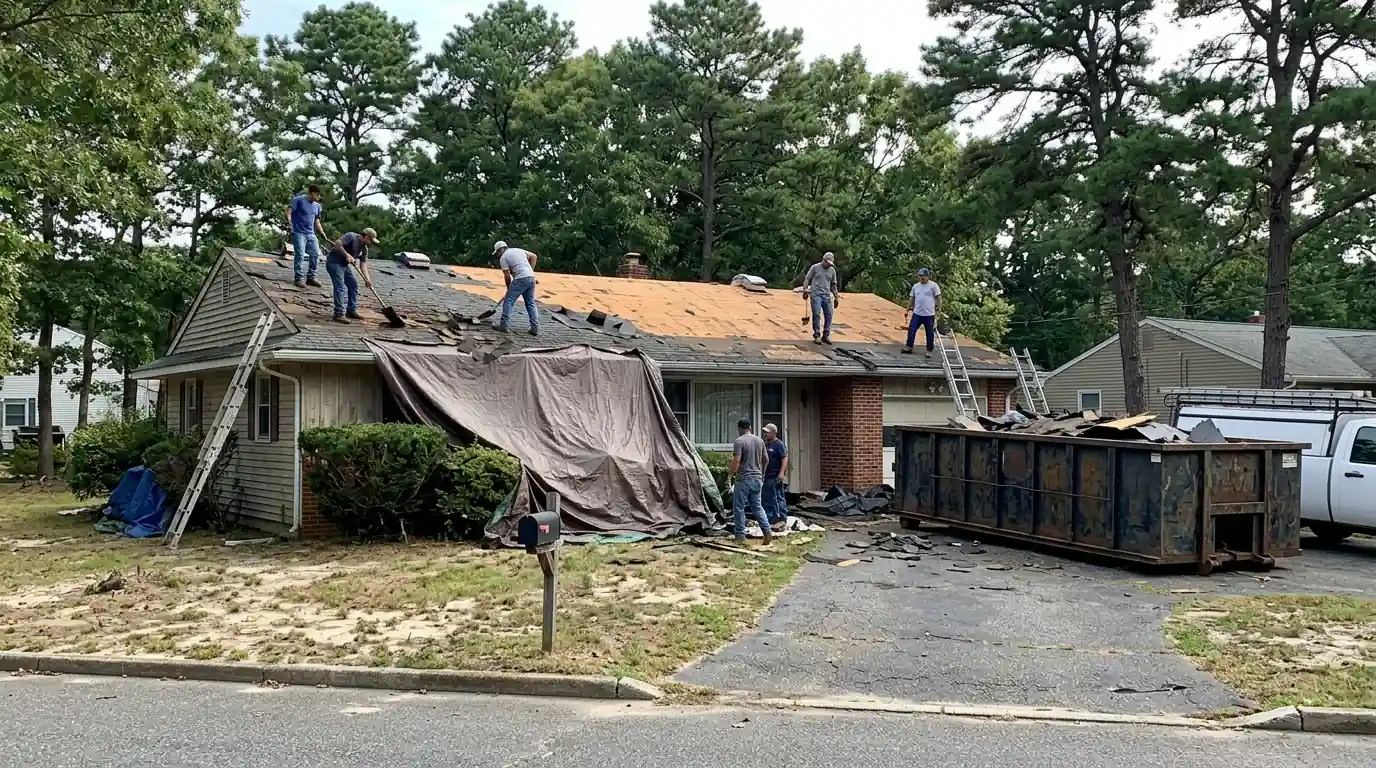
Even a careful estimate can't see through shingles. On older capes and ranches around Toms River, we sometimes find plank sheathing with wide gaps instead of plywood, which has to be covered with new sheets before shingles can be nailed properly. Now and then a previous roofer left a third layer hidden under the edge, or a long-ago leak has rotted a rafter tail at the eave.
A good contractor tells you up front how these surprises are priced, so a change on day one doesn't turn into an argument. We photograph anything unexpected and talk it through with you before going further, and the per-sheet or per-foot price is already written into the estimate.
Timing, season and the extras worth planning for
Spring and early fall are the busiest stretches on the Jersey Shore, and calendars fill quickly after a winter of nor'easters. Roofs can go on in colder months when temperatures cooperate, but shingle sealant strips need warmth to bond, so a winter install sometimes calls for hand-sealing the tabs.
Budget a little extra for gutters if yours are pulling away from the fascia, since it's easier to replace them while the drip edge is off. The same goes for soft fascia boards or a chimney that needs new flashing. If your roof is only acting up in one spot, read our guide on whether to repair or replace before committing to the full project.
When you want a real number for your own house, call (732) 419-1462. We answer 24/7, measure the roof, check the attic and walk you through each line of the estimate. You can also read more about how our roof replacement work runs from tear-off to final cleanup.
Reader questions
Why do two roof replacement bids on the same Toms River house differ by thousands?
Usually because they aren't pricing the same job. One bid may include full ice and water barrier, new flashing and a set number of deck sheets, while the other leaves those out or treats them as extras. Line the estimates up item by item, ask how each contractor handles rotted plywood and confirm the exact shingle line. The gap often shrinks, or even flips, once the scopes match.
Does a raised shore home cost more to reroof than the same house at ground level?
Often, yes, by a modest amount. Many homes along Barnegat Bay and on the barrier island were lifted after Hurricane Sandy, which puts the eaves well above normal ladder height. Crews need more staging, more care moving material and sometimes a lift, so labor runs higher. The roof itself is still priced per square; the access is what changes the total.